Former U.S. president Bill Clinton was questioned on Friday in a congressional investigation into Jeffrey Epstein's case, and he denied having prior knowledge of the criminal activities of the convicted sex offender before the inquiry.
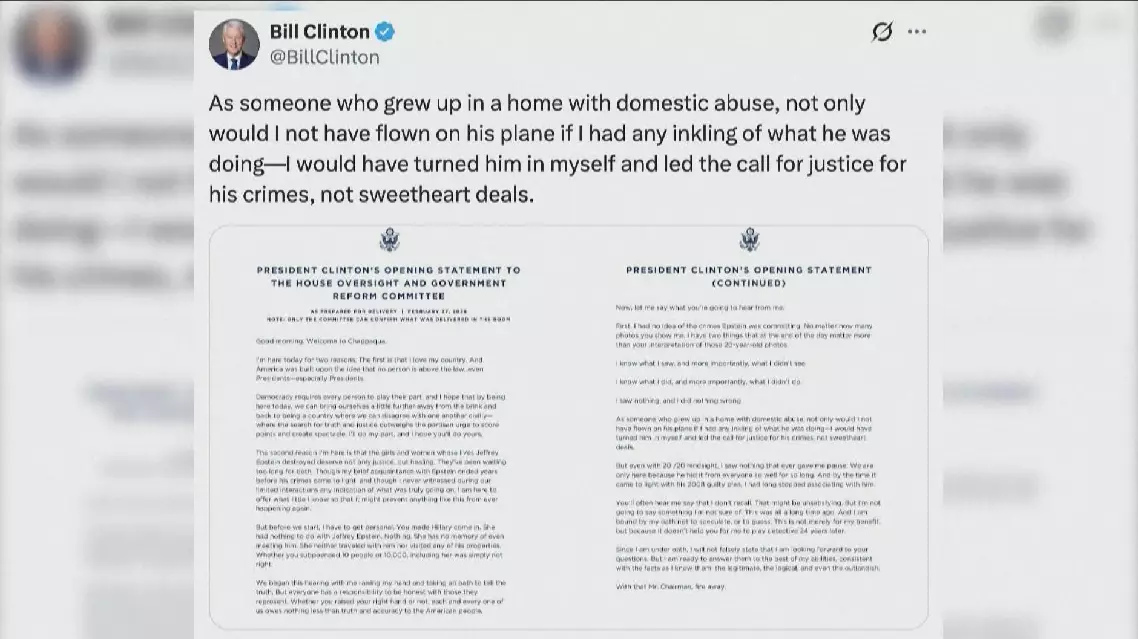
Before testifying before the House Committee on Oversight and Reform, Clinton said in his opening statement that he "saw nothing" and "did nothing wrong" in relation to the disgraced financier.
The former president noted that he had very limited interaction with Epstein and had stopped associating with him by the time he was convicted in 2008.
Clinton also defended his wife in the statement, saying she "had nothing to do with Jeffrey Epstein," never traveled with him, and never visited any of his properties.
The questioning lasted more than six hours. Lawmakers questioned his wife, former secretary of state Hillary Clinton, a day earlier.
In the closed-door questioning on Thursday, which lasted around seven hours, Hillary Clinton testified that she knew nothing about Epstein's crimes and did not recall ever meeting him.
She also said she had neither taken Epstein's flights nor visited his island, properties, or office.
Epstein pleaded guilty to a state charge of soliciting a minor for prostitution in 2008. He was arrested again in July 2019 on federal sex trafficking charges and died in jail on Aug 10, 2019 before trial, which was concluded as suicide.
On Dec. 19, 2025, the U.S. Department of Justice (DOJ) started to release the so-called Epstein files, in which the former president was frequently brought up.
Former US president Bill Clinton questioned in congressional investigation of Epstein case
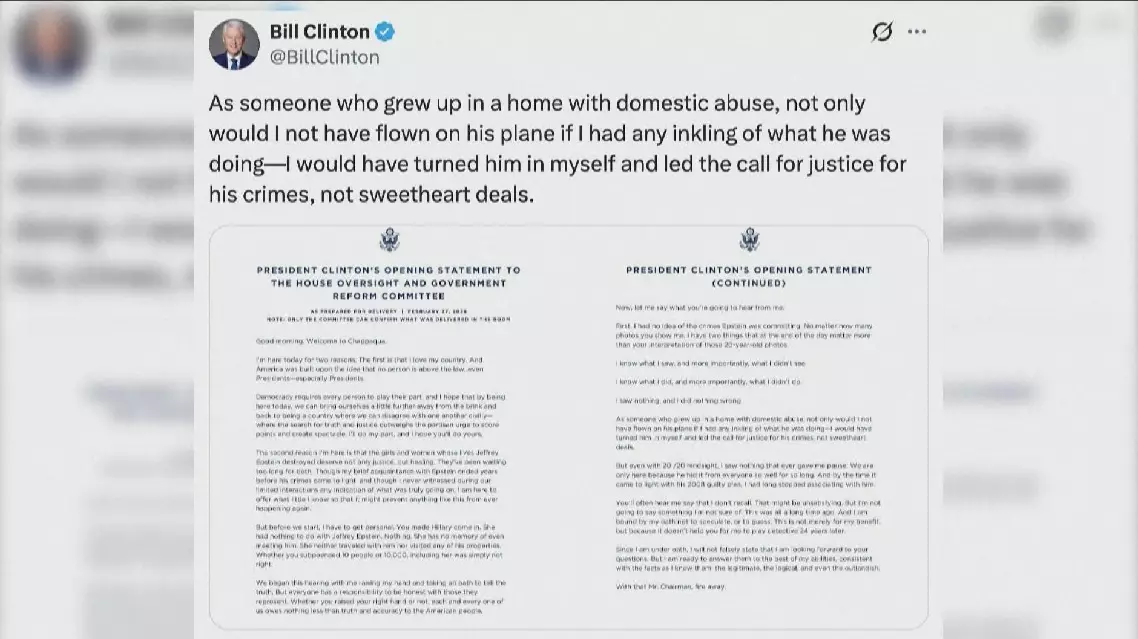
Former US president Bill Clinton questioned in congressional investigation of Epstein case
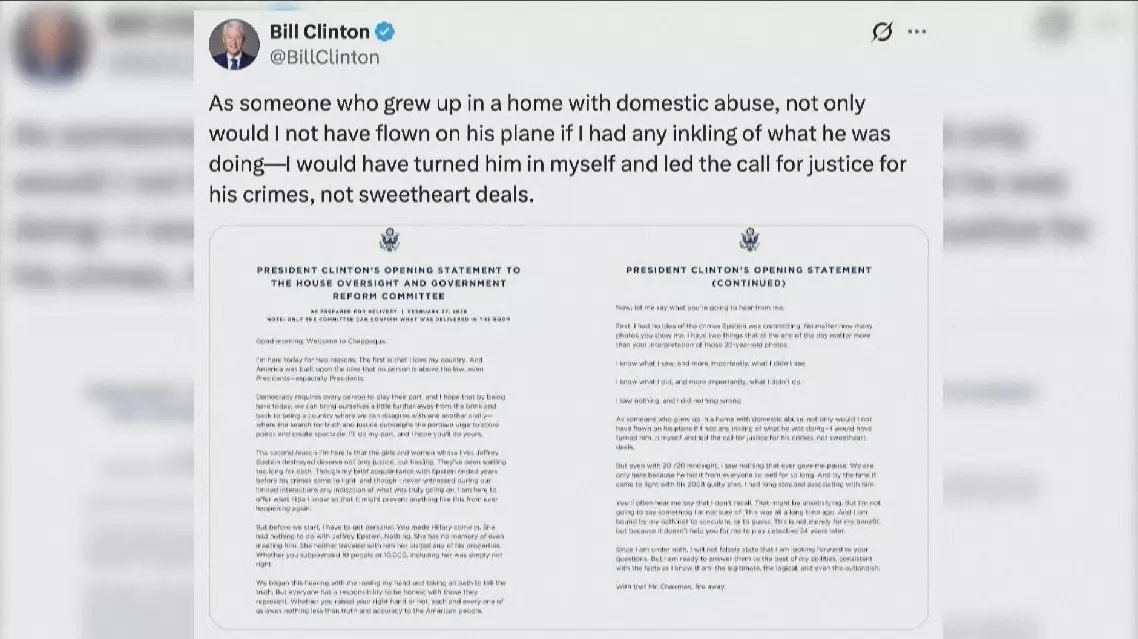
Former US president Bill Clinton questioned in congressional investigation of Epstein case
Nicaragua's co-foreign minister Valdrack Jaentschke has warned that militarism must never be allowed to rise again, as Japan's recent moves to lift its arms export ban and revise the pacifist Constitution continue to draw international concern.
This year marks the 80th anniversary of the opening of the Tokyo Trials, where Japan's Class-A war criminals from World War II were brought to justice.
In an interview with China Global Television Network (CGTN), Valdrack Jaentschke voiced his concern that today's world order is being undermined by interventionism and other challenges.
"It is necessary for us to remember that after the end of World War II, countries worked hard to build a new international order based on international law. However, regrettably, more than 80 years later, we are seeing that this once explored and attempted order is being challenged by interventionism, a confrontational mindset, and tendencies like 'might makes right.' These are precisely the conditions that gave rise to fascism and militarism in the past, which ultimately led to the tragedy of World War II," he said.
He said the international community has a responsibility to pursue a new international order -- one fundamentally grounded in peace.
"Looking back at the history more than eight decades ago and comparing it with today's reality, it is our responsibility to recognize that the world should, and must, build a new international order that is more just, fairer, rooted in international law, based on a logic of mutual benefit and shared success, and fundamentally grounded in peace," said the minister.
"Today, as we revisit the Tokyo Trials, it is meant to remind the world that such a tragedy must never be repeated -- and that we must do everything in our power to prevent it from happening again. We must stop that dark world -- born from militarism, interventionism, and fascism -- from ever returning," he said.
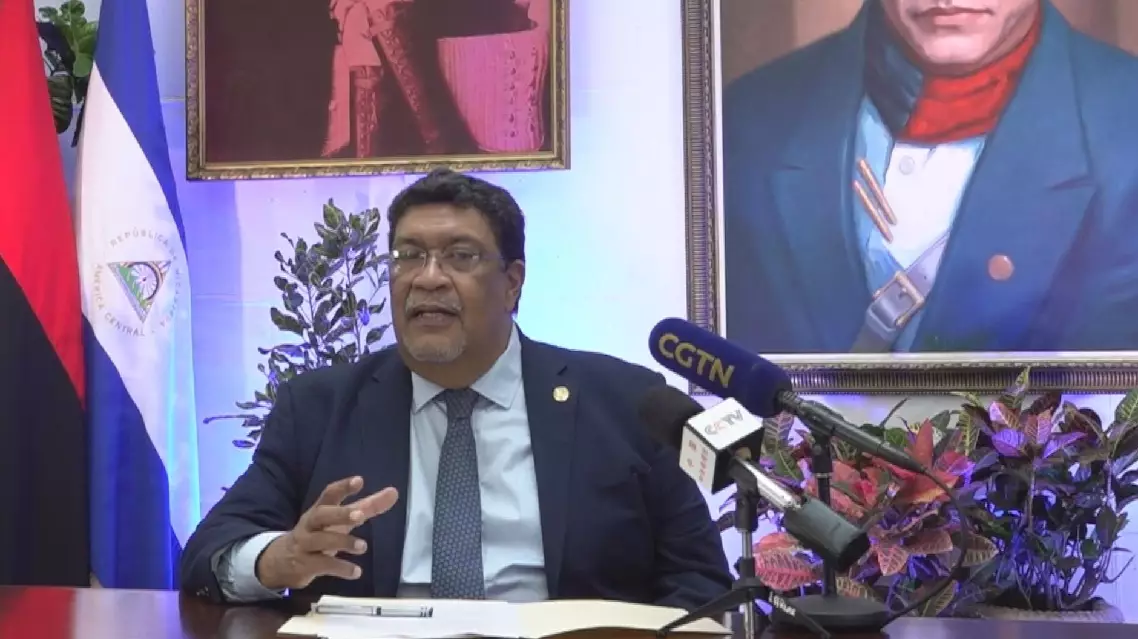
Nicaraguan FM warns of militarism revival