With the seven-day National Day holiday kicking off on Tuesday, millions of Chinese people were on their way to explore the rich cultural heritage sites and natural wonders of their vast country, signaling a surge in domestic tourism and cultural appreciation.
A large number of holiday makers are opting to immerse themselves in the natural beauty and unique charm of the country.
In Benxi City, in northeast China's Liaoning Province, some 20,000 hectares of maple forest resplendent in rich autumnal colors drew numerous tourists to the stunning landscapes.
Visitors have also flocked to the Tianshan Grand Canyon in Urumqi, northwest China's Xinjiang Uygur Autonomous Region, for a firsthand experience of the unique autumn ambience.
Further south, in the warm waters of Wuzhizhou Island in the country's southernmost island province of Hainan, beach-goers are braving waves on jet skis, reveling in the thrill of speed.
The Yueyang Tower in Hunan Province, one of the four most famous Chinese towers, has attracted a crowd of tourists, many of whom are bringing their children to learn about the country's ancient intellectuals.
Tourism projects that reflect local characteristics are growing in popularity.
In Hancheng, northwest China's Shaanxi Province, tourists have watched folk performances and participated in cultural activities.
The city is rich in intangible cultural heritage, including the Hancheng Dialect, a linguistic relic that preserves the ancient tones and vocabulary of the region, and the Qinqiang Opera, a traditional Chinese opera known for its bold singing style and vivid character portrayals.
Some fishing enthusiasts are enjoying the pleasures of competitive fishing at ponds in Lulong, Hubei Province.
Consumption has continued to lead the holiday trend, further showing the country's economic vitality.
In Lanzhou City, in northwest China's Gansu Province, visitors are floating on sheep-skin rafts on the Yellow River, going shopping at the open-air market along its banks, and savoring authentic beef noodles, experiencing life as a local.
The city of Huzhou, east China's Zhejiang Province, has opened several helicopter routes for tourists to enjoy aerial views of the city's landmarks.
"[The low-altitude flight] provided us a chance to see our beautiful countryside from a different perspective. It was truly refreshing. We work in cities at ordinary times, and it's pretty good to come to this tranquil countryside and see the beautiful Taihu Lake, where egrets fly freely," said Zhang Tong, a tourist.
Major shopping districts in Shenzhen have been crowded with people, with Cantonese dim sum and snacks drawing large crowds of visitors.
Long queues formed in front of some time-honored brands before their opening hours.
"During the first few days of the National Day holiday, we've seen a noticeable increase in customer numbers especially at lunchtime, with the table turnover rate rising by two to threefold. It shows people's eagerness to dine out," said Zhou Yinming, a restaurant manager.
Additionally, a grand lantern show featuring 200-plus groups of lanterns in various designs is illuminating the night sky of the Beijing Garden Expo.

Millions of Chinese people explore natural, cultural treasures during National Day holiday
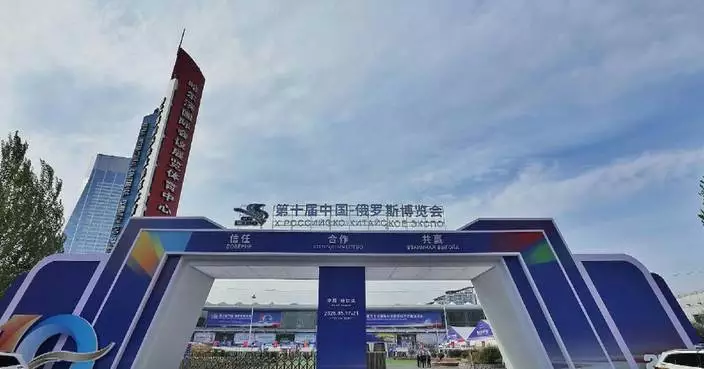
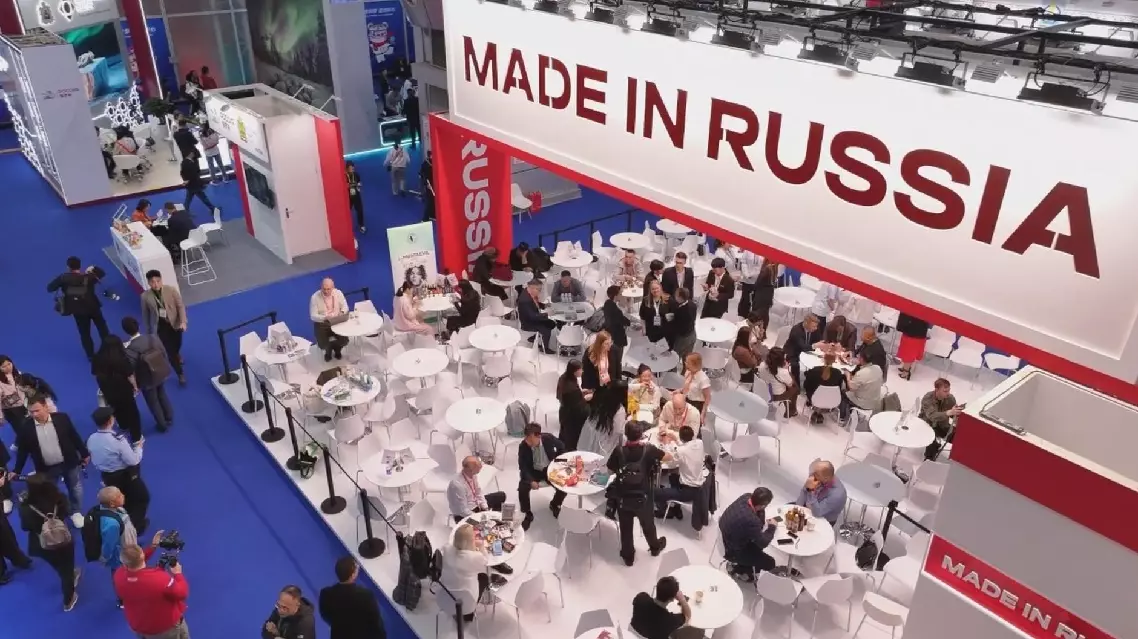
The 10th China-Russia Expo opened on Sunday in Harbin, the provincial capital of Heilongjiang in northeast China, highlighting the resilience, vitality and mutual benefits of China-Russia economic ties.
Held from May 17 to 21, this year's expo covers a floor space of 55,000 square meters, with more than 1,500 companies from 46 countries and regions taking part. Nearly 300 Russian companies are attending, while over 5,000 buyers are expected.
Since 2014, the event has attracted more than 7,200 Chinese and Russian companies and over a million visitors.
The China-Russia Expo is the largest comprehensive exhibition platform between the two countries.
President Xi Jinping and Russian President Vladimir Putin each sent congratulatory letters to the event, encouraging all sectors from both countries to seize the opportunity, make full use of their geographical proximity and economic complementarity, and further expand all-round practical cooperation.
"Leaders of the two countries have signed agreements to deepen practical cooperation, which we fully support. Russia and China stand side by side for common development, benefiting young people and all people. Such cooperation is timely and far-reaching. We are here in Harbin for the China-Russia Expo, coming from Russia's Sakha Republic. Our region is dominated by agriculture. We are seeking advanced farming technologies including irrigation equipment and harvesters. We hope to reach deals in the coming days to boost local development," said Vasiliy Petrovich Alexeev, head of Ust-Aidan Region of the Russian Federation.
"We are greatly inspired by the congratulatory letters from the heads of state of China and Russia. We will keep building targeted and efficient cooperation platforms, and smooth channels for sub-national exchanges between China and Russia," said Chen Shijun, president of Heilongjiang Council for the Promotion of International Trade.
China-Russia trade volume has surpassed 200 billion U.S. dollars for three consecutive years. China has been Russia's largest trading partner for 16 years running.
In the first quarter of this year, bilateral trade volume hit 60 billion U.S. dollars, a year-on-year increase of more than 14 percent.
This year's Expo features eight major exhibition zones. Beyond the exhibition halls, Russian delegations have also conducted field visits to Chinese companies. A delegation from the Republic of Buryatia visited one of northeast China's largest building materials distribution centers to explore potential areas of cooperation.
"Regular China-Russia economic and trade events continuously bring fresh cooperation opportunities for both sides. This field trip to Xilong Building Materials Market has helped us explore more practical directions and modes for bilateral cooperation," said Alexei Tsydenov, head of the Republic of Buryatia of the Russian Federation.
"Relying on Buryatia's abundant mineral resources and sound logistics conditions, we plan to build industrial parks focusing on home building materials, mineral resources and energy sectors in Russia. We will introduce advanced Chinese technologies and management models to drive coordinated industrial upgrading between the two countries," said Wu Jinrong, vice president of Harbin Xilong International Trade and Logistics Park.
From everyday consumer goods to advanced helicopters, and from mineral resources to intelligent robotics, China-Russia cooperation now spans a wide range of sectors. Economic ties and people-to-people exchanges between the two countries continue to advance toward higher-quality development and broader prospects.
China-Russia Expo promotes trust, cooperation, mutual benefit