Sao Paulo has embraced the first of 14 five-car trainsets that China's e-vehicle brand BYD is supplying for the city's long-awaited monorail project.
Being plagued by delays, the construction for Sao Paulo's Monorail Gold Line was supposed to be finished for the 2014 World Cup in Brazil. According to the government, the monorail will start running in the first half of 2026, more than a decade beyond the original plan.
"Let's see if it finally happens this time. It's already been ten years since it was supposed to be finished. Let's see if it will help the people at last. It would make my commute much easier. Here in Sao Paulo at any time of the day, you'll hit a traffic jam somewhere," said Matheus Brandao, TV camera operator.
All the trains that will service this line are manufactured in China, each of which are composed of five cars with a total capacity of 600 passengers.
Tyler Lee, president of BYD Brazil, said that the latest technologies are duly incorporated into their design.
"For this train, we don't have a driver. Like I said, it's totally automatic. And with the air suspension, passengers will feel comfortable taking this kind of train," he said.
As China continues to emerge in the field of new energy, the Brazilian government is eagerly seeking new cooperation opportunities.
Tarcisio de Freitas, Sao Paulo Governor, highly appraised the impressive performance demonstrated by Chinese companies.
"This opens the door to other investments, as we have the ambition in our government plan to greatly expand the monorail system. Obviously, we want to rely on the expertise and investment of those who do this with excellence, and who do it a lot. So, of course, Chinese companies are very welcomed," said Freitas.
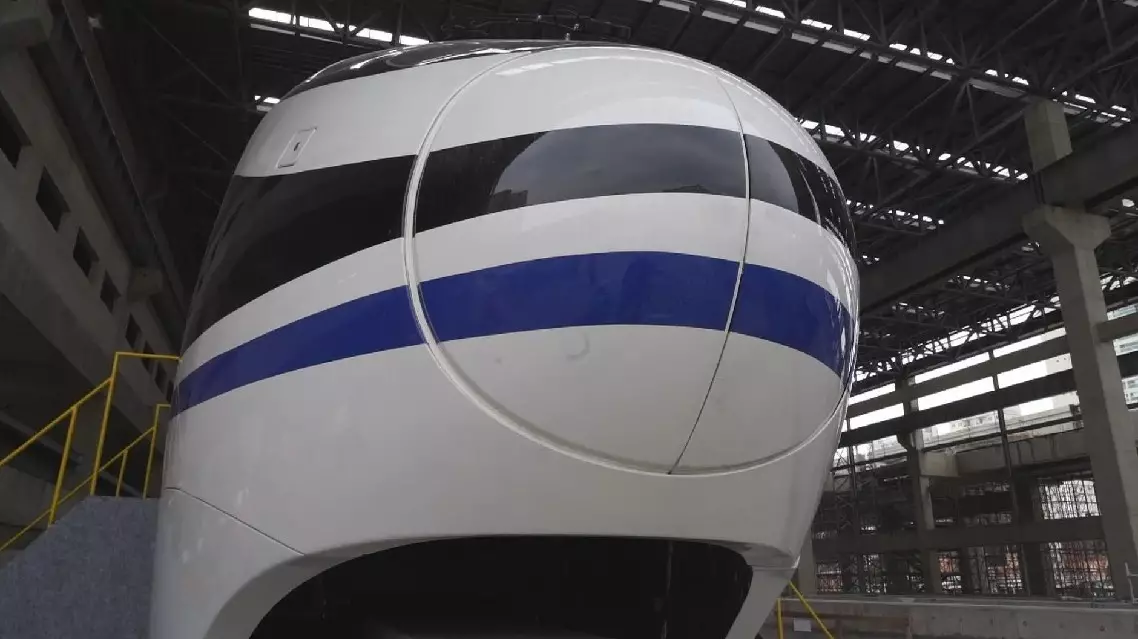
BYD delivers first train of Sao Paulo's monorail line project
BYD delivers first train of Sao Paulo's monorail line project
BYD delivers first train of Sao Paulo's monorail line project
Highlighting the "Future Energy" as a key direction for China's strategic emerging industries, the country's nuclear energy development, guided by its three-step strategy, has seen major strides in the past year, said a member of the 14th National Committee of the Chinese People's Political Consultative Conference (CPPCC).
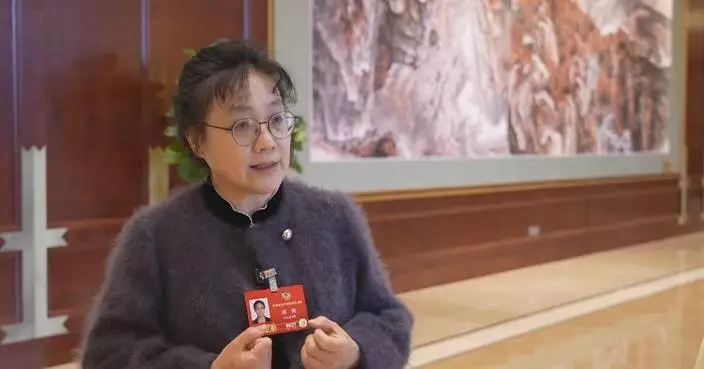
In a recent press briefing, Xin Feng, also deputy general manager of China National Nuclear Corporation (CNNC), updated the media on the progresses China has achieved under the strategy.
"China's three-step strategy for nuclear energy development -- from the thermal reactor to the fast reactor and the fusion reactor -- was formulated in 1983 as a medium- and long-term plan. For the thermal reactor, over the past year, our 2.0 version of the Hualong One technology has been approved. This is a unified and fully self-owned intellectual property based third-generation nuclear power technology solution. And the Linglong One small modular reactor also successfully completed its cold-state functional test last year and is expected to be put into commercial operation this year," he said.
For the second and third steps, Chinese researchers and engineers have achieved milestones in the past year with the government support, Xin noted.
"Then for the fast reactor, last year, a closed-cycle system for an integral fast reactor successfully achieved preliminary standard design. We will continue to solve its engineering technology challenges. As for the fusion reactor, in 2025, with national support, we established the China Fusion Energy Company in Shanghai. And our Huanliu-3, a platform for conducting research and development of fusion technology, made a big stride, with an iron temperature in it achieving 117 million Celsius and an electron temperature reaching 160 million Celsius. We will continue to adhere to the development strategy and focus on technological research and engineering technology development," Xin said.
The fourth session of the 14th NPC and the fourth session of the 14th National Committee of the CPPCC kicked off in Beijing on March 5 and March 4, respectively.
The "two sessions" -- which refer to the annual meetings of China's supreme organ of state power, the National People's Congress (NPC), and its top political advisory body, the National Committee of the CPPCC -- are a key event on the country's political calendar and offer a window into the country's development direction.
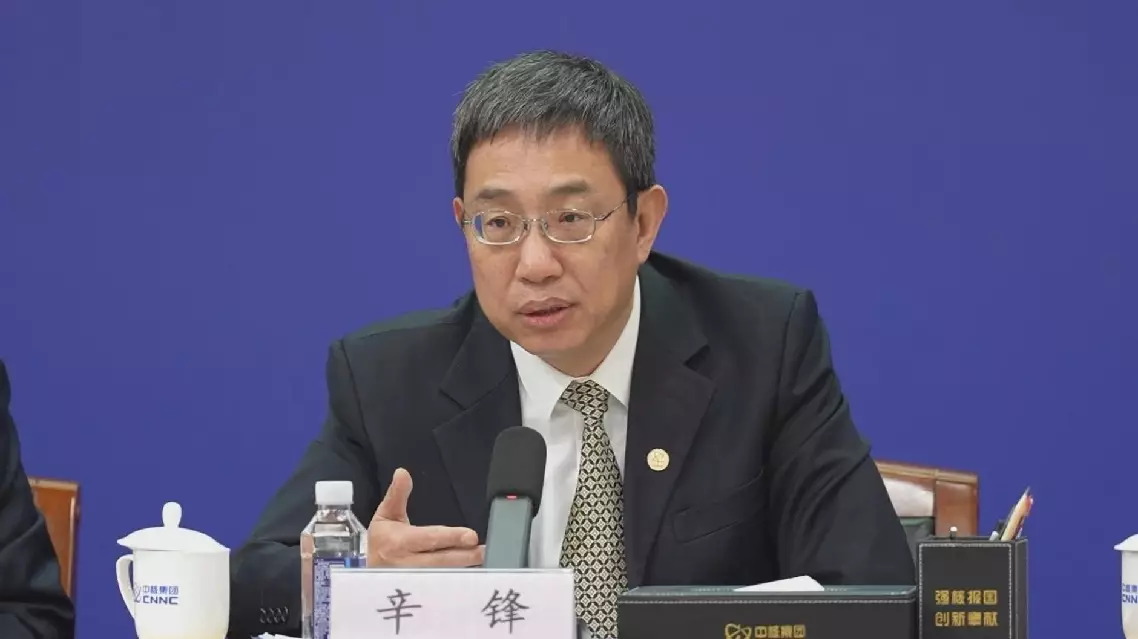
China's nuclear energy development makes great strides with three-step strategy: CPPCC member