A group of Lebanese activists have taken the initiative to assist African migrants affected by the ongoing conflict in the country, while leading advocacy efforts to release the workers from a Kafala labor system that allows their employers and agents to withhold their passports, making it impossible for them to leave.
As the conflict in Lebanon rages on, many countries have started airlifting their citizens out of the country, while people from some African countries have been left on the streets of different cities and towns after fleeing their homes. They are desperate for food, shelter and safety.
The Lebanese government said that more than 1.2 million people have been displaced because of the Israeli bombardment of the country.
With minimal resources, the government has prioritized the space it has to shelter its own citizens, leaving tens of thousands of migrants on the streets.
After a journey that saw them scattered on the streets, moving from one city to the other, a group of 80 women from Sierra Leone finally found a roof over their heads.
"I came here to work to take care of my family, my kids, but since this war, I don't have a job. Because of the war, there are no jobs everywhere. I was working in Kounine village. Because of too many bombs, I was too afraid. I came to Beirut to Sabra one month, within two months, they also strike in Sabra," said Mary Koroma, a Sierra Leonean migrant in Lebanon.
Leaving her two children and husband, 28-year-old Koroma came to Lebanon to work and support her family back home. When she had a job, she used to send all the 200 dollars she earned as her monthly salary back to her family in Sierra Leone.
Koroma's colleague in this shelter, Hassanatu Conteh is in a much worse condition. She had a car accident right before the war in Lebanon intensified, limiting her ability to move.
"I don't know yet what will happen in the future. Yes, I feel scared because of the war and my condition, because I cannot work for myself. They are helping me, if I need help, like if I want to go to the toilet, if I want to stand up, they help me. I don't plan to stay, because now I am scared of Lebanon. One, I had an accident, then two, the war," said Conteh.
Unfortunately, most of the African migrants at the shelter have not found anyone to pay for their evacuation. And to make matters worse, none of these women even have their passports.
Under the country's labor system called "Kafala," which is an Arabic word meaning sponsorship, most migrant workers are tied up to their employer and cannot work elsewhere or use their passports to leave Lebanon as the travel documents are held by their bosses.
If they complain about the often deplorable working conditions, they are kicked out and left on the streets without any rights.
"It is called modern day slavery, because, first of all, it gives no rights to migrants. They are treated as second class humans. Often, they are abused at homes, not even paid for the hard work they do, and evidently not provided any basic rights. So, most of them don't get days off, and all of that is acceptable under the Kafala system. Some women tell me the house got bombed. Probably even their employers don't even have their own passports. This crisis is the biggest the country has seen," said Dia Haj Shahin, a Lebanese activist.
Luckily for these women, Shahin and her team are advocating for these women. With the help of the authorities, they are chasing sponsors to retrieve the forcefully confiscated passports.
"We also collected all the information from everyone under our care, to start the repatriation process with immigration and general security. The issue is that none of them hold their passports, and some of them don't even have pictures and have no contact with their employers," said Shahin.
All these women are luckier than many others. The United Nations said on Friday that many Lebanese families who evacuated the country have left their house workers locked inside their residences.
The International Organization for Migration (IOM) said that the number of cases where house workers have been abandoned is spiking, estimating that there are nearly 170,000 migrant workers in Lebanon.
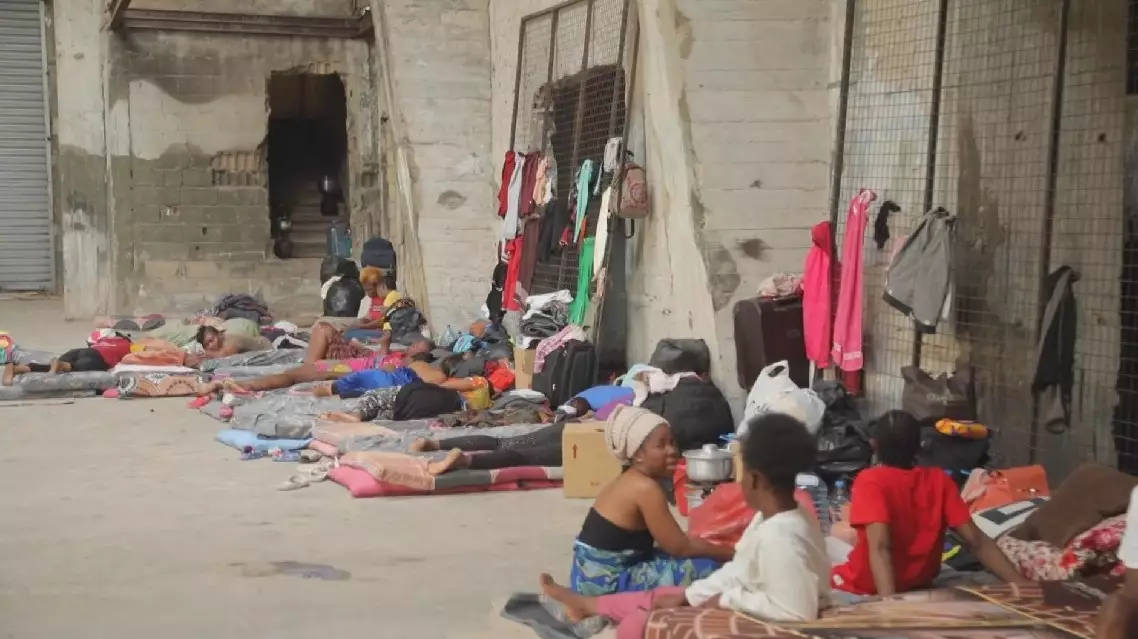
Lebanese activists assist African migrants in escaping "modern day slavery" as conflict intensifies