China's gaming industry has achieved continuous development and success in the domestic market and garnered widespread attention and acclaim internationally by incorporating rich elements of traditional Chinese culture.
Integrating traditional cultural elements with modern game design, many of the Chinese domestic games have incorporated traditional music, poetry, ink painting and martial arts, among others.
It not only enriches the cultural content of the games but also allows global players to experience the profound Chinese culture while enjoying the gaming experience.
Over the past five years, the number of games featuring Chinese traditional cultural elements has nearly tripled.
"We have incorporated a variety of popular elements into the game, such as electronic music, because apart from having a good rhythm, the music must also be visual and carry a melodic narrative. We have always been inheriting traditions through innovation. We are speaking the language of music that expresses the essence of this era," said Zhao Cong, director of China National Traditional Orchestra, which has participated in composing music for several domestically produced games.
"Traditional games have evolved from being purely for entertainment to embodying aspects of cultural transmission. The various scenes, props, patterns, and textures found within the games are drawn from ancient classics. From this perspective, it is evident that our traditional culture still holds significant influence on a global scale," said Li Xuesong, lecturer from the Department of Cinematography, Beijing Film Academy.
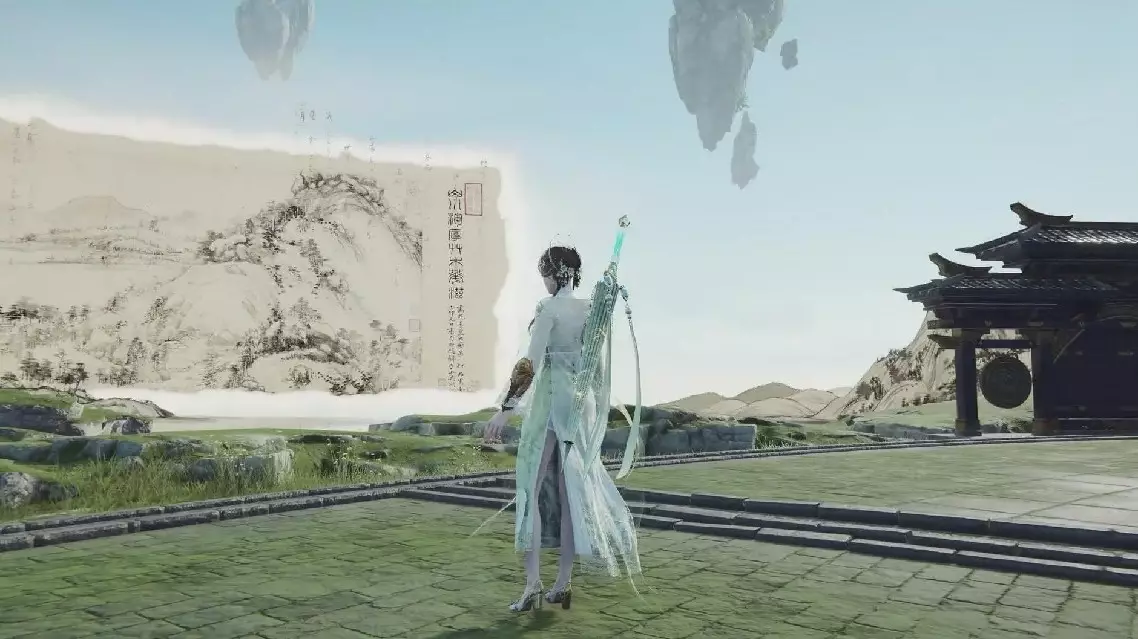
Chinese video games add to global fascination with traditional culture
The International Monetary Fund (IMF) has lowered its global economic growth forecasts for 2026 to 3.1 percent in the World Economic Outlook (WEO) report published on Tuesday, while keeping its projection for 2027 at 3.2 percent.
This marks a deceleration from the estimated 3.4 percent growth achieved in 2025. Before the outbreak of the Middle East conflict, the bottom-up forecasts for global growth would have been 3.4 percent in 2026 and 3.2 percent in 2027.
The forecast incorporates the impact of the war and assumes that it will be limited in duration, intensity and scope, with disruptions fading by mid-2026.
Under the reference forecast, global headline inflation is expected to increase to 4.4 percent in 2026 and decline to 3.7 percent in 2027.
If the conflict and the ensuing spike in oil prices last longer, global economic growth in 2026 will fall to 2.5 percent, while global inflation will climb to 5.4 percent, according to the report.
In extreme cases, global economic growth in 2026 could drop to two percent, the report warned.
To be specific, the U.S. economy is projected to grow by 2.3 percent in 2026 and 2.1 percent in 2027, although higher trade barriers introduced since April 2025 are expected to continue to weigh on activity.
In the euro area, growth is projected to decline from 1.4 percent in 2025 to 1.1 percent in 2026 before edging up to 1.2 percent in 2027. The forecasts for 2026 and 2027 are each 0.2 percentage point lower than those compared in the January 2026 WEO Update.
The 2026 growth forecast for emerging market and developing economies is revised down by 0.3 percentage point, to 3.9 percent, while the outlook for advanced economies remains broadly unchanged. With risks still tilted to the downside since the January 2026 WEO Update, the IMF suggested a comprehensive policy package combining domestic measures with coordinated international actions to strengthen resilience and foster adaptability.
It also stated in the report that "trade restrictions play a limited role in correcting imbalances but can worsen output," and urged countries to cooperate and take coordinated actions to restore stability to international economic relations.
IMF lowers global growth forecast for 2026 to 3.1 pct