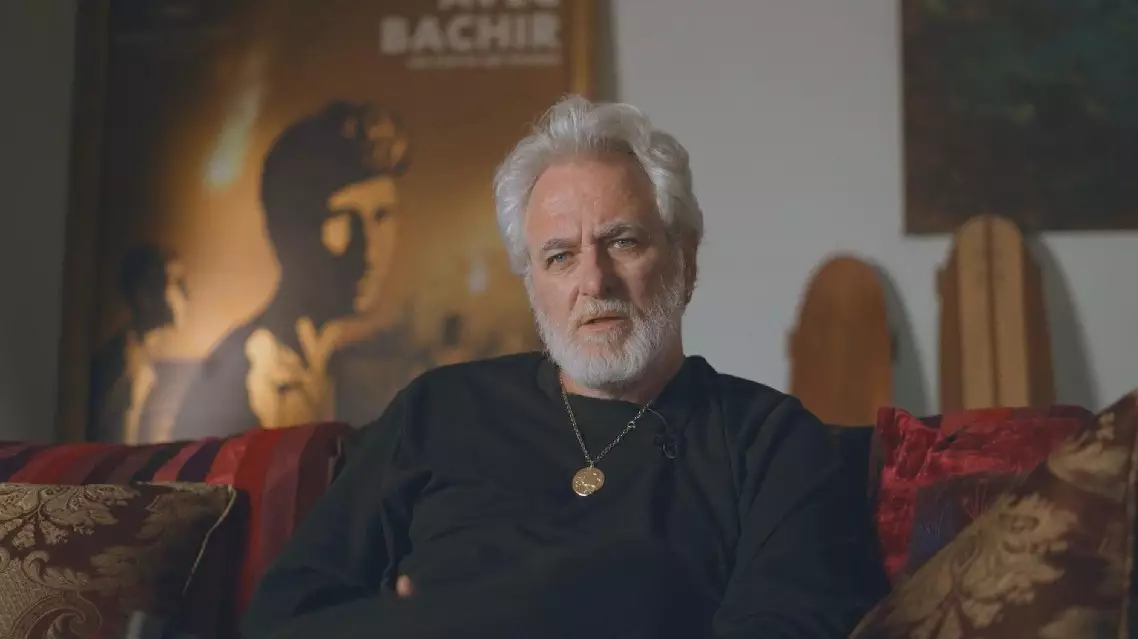
Award-winning Israeli film director Ari Folman has poignantly highlighted the relentless cycle of war as the most horrific and useless thing, shedding light on the tragic reality of children as major victims of war, particularly evident in the Gaza Strip.
Folman, a veteran of the 1982 Lebanon War, is renowned for his film "Waltz with Bashir." He integrated animation and documentary in this film to offer a unique glimpse into his personal odyssey through the painful memories of that conflict. The film won a Golden Globe for Best Foreign Language Film and was nominated for an Oscar.
Folman had an exclusive interview with China Global Television Network (CGTN) 24 hours before Oct. 1, coinciding with Iran's large-scale missile strike on Israel, escalating tensions throughout the Middle East.
"War is the most horrific, useless thing that humankind ever invented. I think children in general, since history, they're the major victims of war. They didn't choose to be where they were, where they are. And the fact that we have 15,000, at least, children in Gaza that were killed during this war, is a disastrous, and absolute disaster for me," he said.
The director noted that many people share his view that war is disastrous but remain silent, while others may have lost empathy towards ongoing conflict in Gaza due to being shielded from the true toll of the war.
"But if you are a news watcher, like most Israelis, and you watch every day the eight o'clock news, you will have no clue whatsoever what is going on in Gaza. Nothing. And you will be told that the numbers are fake. They have nothing to do. And if you somehow happen to see bodies of children in Gaza, you will be told that it's AI. It never really happened. And if it did, it's not to that extent. So, it's really hard, I think, to create a movement of empathy towards what is going on in Gaza if they never screen what is going on in Gaza," Folman said.
The director said nothing gives him hope this year as witnessing the recurrence of war, reminiscent of his time as a soldier in Lebanon, which left him haunted by painful memories.
"My relapse memories, PTSD memories, are always on one stage, which is this current stage we are in today. It's before ground invasions. Because of my time in Lebanon as a soldier, we had this waiting period of six weeks before the army invaded to western Beirut, and the tension and the anxiety was piling up before the ground invasion. So I have this thing ever since -- it's 42 years now -- that whenever there is an expectation or a suspense before a ground invasion, either to Lebanon or like it was in Gaza nearly a year ago, I kind of freak out, because my memories flood me. I always wish that it will not happen again. But it always happens again," Folman said.
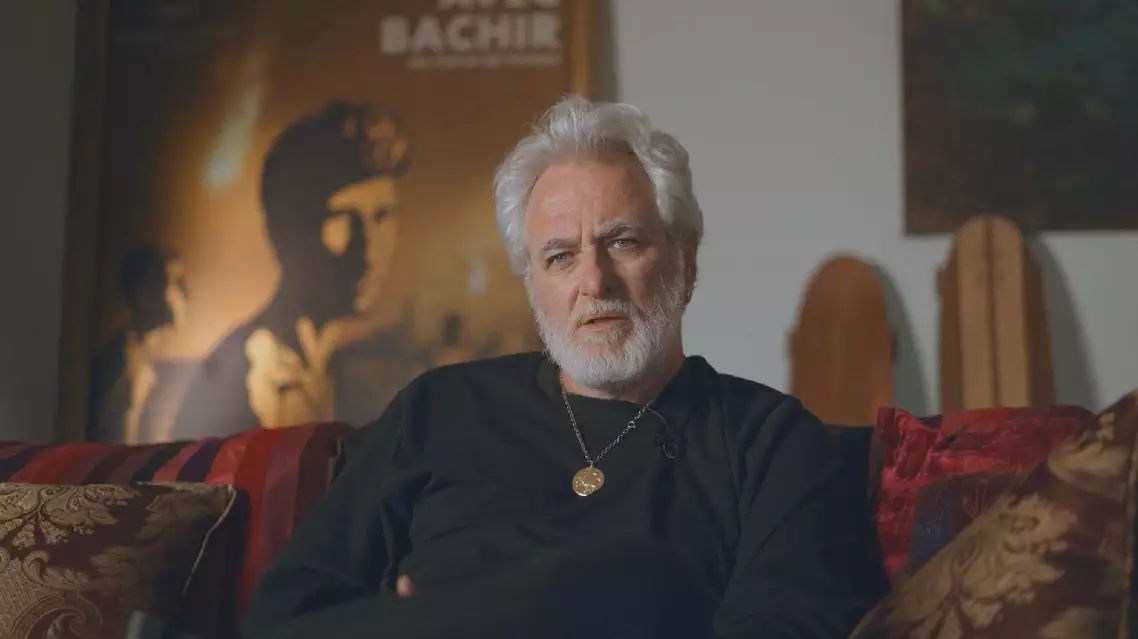
Israeli film director decries tragic reality of children as major war victims
Israeli film director decries tragic reality of children as major war victims
The three astronauts of China's recently-returned Shenzhou-20 mission on Friday shared the experiences of their dramatic 204-day space mission, including detailing the emergency procedures which were implemented to bring them safely home after their return capsule was struck by space debris.
The trio -- Chen Dong, Chen Zhongrui, and Wang Jie -- met with the press in Beijing on Friday afternoon, marking their first public appearance since returning to Earth in November.
When detailing the emergency response mechanisms which were enacted prior to their scheduled return, the astronauts explained that upon discovering a triangular crack on the spacecraft's viewport window, they immediately took photos for documentation and transmitted them to the ground team, who swiftly activated an emergency plan to get the trio home safely.
Experienced mission commander Chen Dong explained how the crew had complete faith in their colleagues on the ground to find a solution to these unforeseen circumstances which led to their return being delayed.
"First, we must trust the ground team, who would anticipate everything and develop the safest return plan for us. Second, we must believe in ourselves; as well-trained astronauts, we have the ability to manage various unexpected failures. I believe that with the collaboration of astronauts and researchers on the ground, our space home will surely go farther, more steadily, and for a longer time," he said.
Following their extended stay in space as a result of the debris incident, the Shenzhou-20 crew spent a total 204 days in orbit, setting a new record for the longest duration by a single group of Chinese astronauts.
During their mission, they completed multiple payload operations, conducted extensive scientific experiments, and carried out four extravehicular activities.
"Our crew worked together with the ground team in unity and coordination, completing four extravehicular activities, several payload entry and exit tasks, and a large number of scientific experiments. It was a fulfilling yet challenging mission. The path to exploring the heavens is long and arduous, but I firmly believe that China's space missions will succeed," said Chen Zhongrui, a former air force pilot who was making his first spaceflight during the mission.
"From the ground to space, from learning to application, I have deeply felt the solid progress of Chinese space endeavors and the quiet dedication of countless personnel behind the scenes. In the future, I will accomplish each mission with full commitment, living up to the trust of the motherland and the people," said fellow astronaut Wang Jie, who was also making his debut spaceflight.
After returning to Earth on Nov 14, the trio successfully completed their isolation recovery and rehabilitation and will now resume normal training following health assessments.
The crew's return, originally scheduled for Nov 5, was postponed due to safety concerns, with the astronauts later using the return capsule belonging to their successor crew of the Shenzhou-21 mission to get back to Earth. China later launched the unmanned Shenzhou-22 spacecraft which will serve the future return of the crew now aboard the Tiangong Space Station.
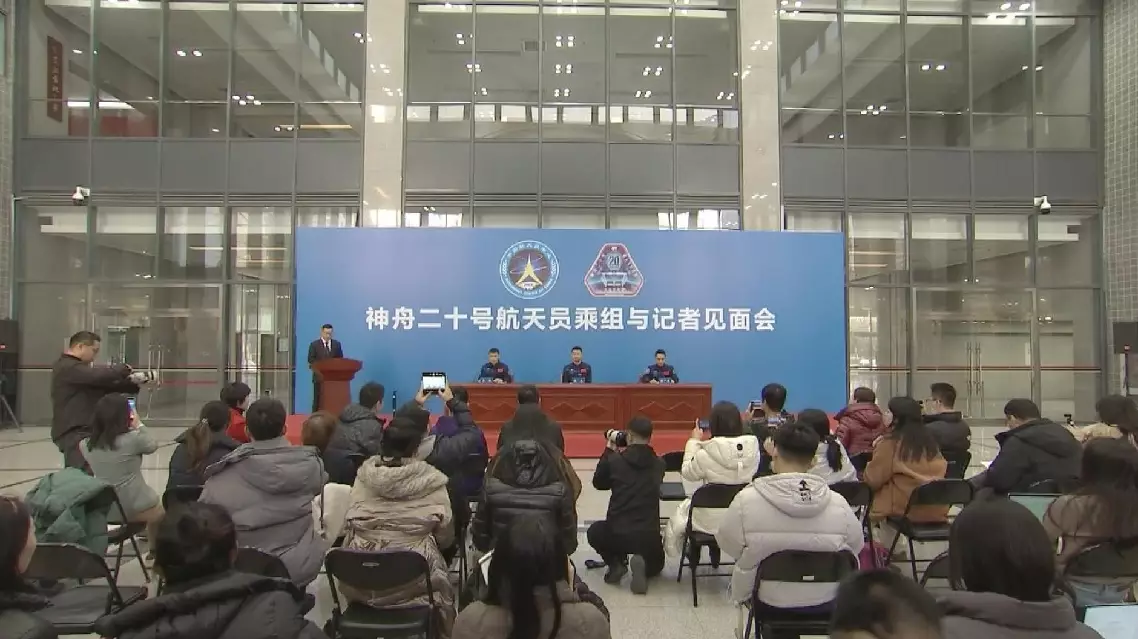
Shenzhou-20 astronauts share experiences after safely returning from debris incident