Skip to Content Facebook Feature Image

Mali's traditional theater gives psychiatric patients the stage

News

Mali's traditional theater gives psychiatric patients the stage
News

News

Mali's traditional theater gives psychiatric patients the stage

2024-10-10 12:15 Last Updated At:12:20

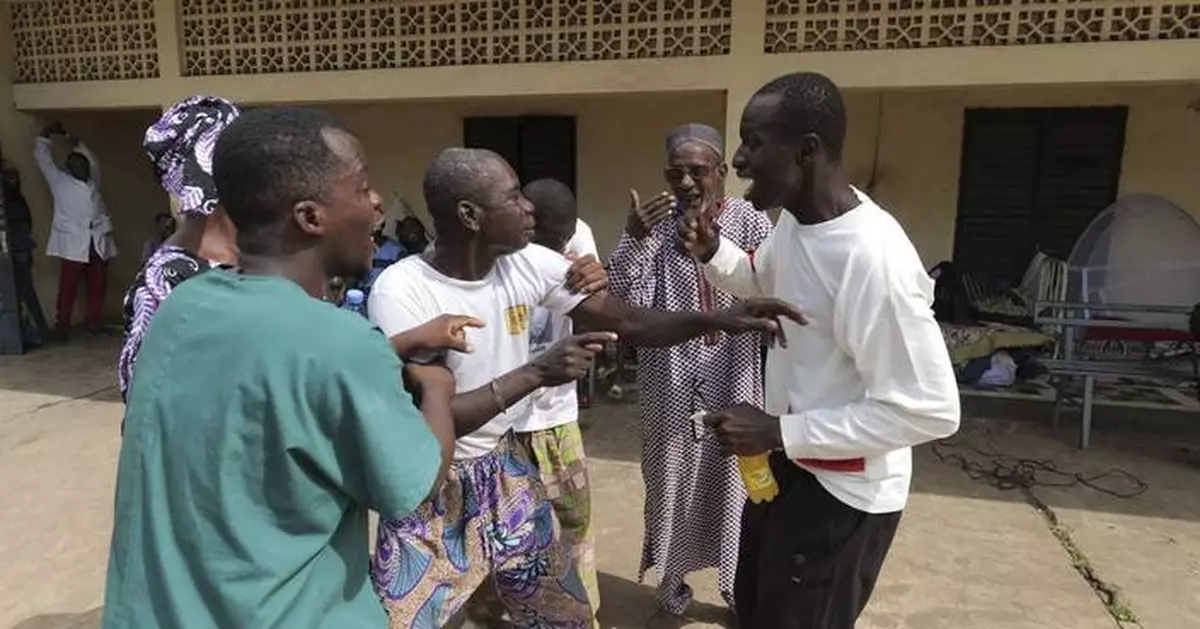
BAMAKO, Mali (AP) — In the courtyard of a psychiatric ward in Mali’s capital, a small group of patients acts out scenes of a village dispute to the beat of a djembe, a traditional West African drum.

One patient, Mamadou Diarra, cries out to another in the Bambara language, mocking: “You don’t know anything! Just nonsense!”

More Images
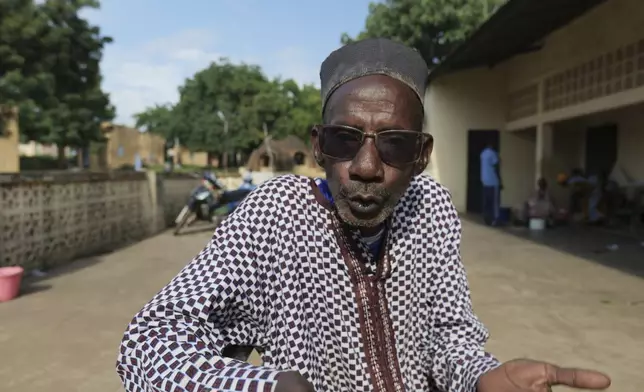
Adama Bagayoko, director of the theater troupe that has been performing with patients at the psychiatric ward of the Point G hospital, stands in the hospital's courtyard in Bamako, Mali, Friday, Sept. 20, 2024. (AP Photo/Moustapha Diallo)
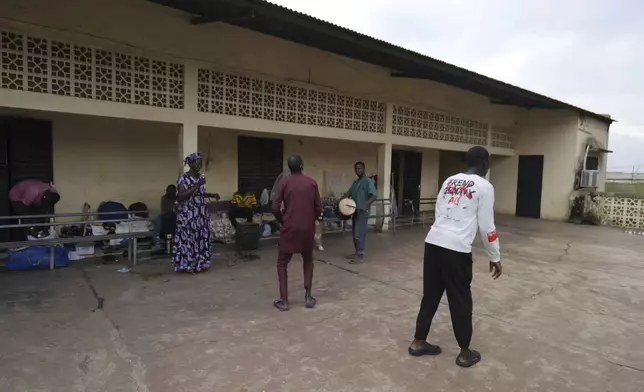
Adama Bagayoko, director of the theater troupe that has been performing with patients at the psychiatric ward of the Point G hospital, stands in the hospital's courtyard in Bamako, Mali, Friday, Sept. 20, 2024. (AP Photo/Moustapha Diallo)

Mamadou Diarra, right, dances with other patients at Bamako's Point G hospital psychiatric ward in the hospital's courtyard in Bamako, Mali, Friday, Sept. 20, 2024. (AP Photo/Moustapha Diallo)
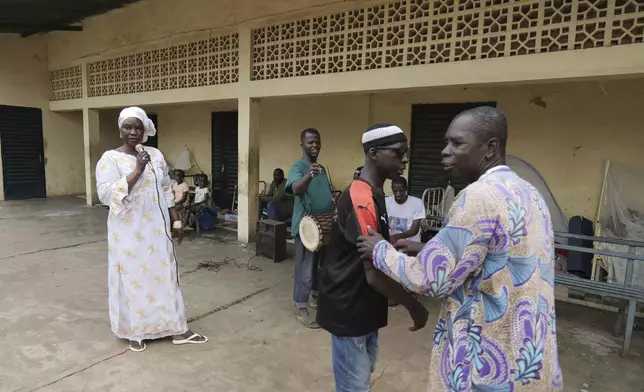
Mamadou Diarra, right, dances with other patients at Bamako's Point G hospital psychiatric ward in the hospital's courtyard in Bamako, Mali, Friday, Sept. 20, 2024. (AP Photo/Moustapha Diallo)

Patients at Bamako's Point G psychiatric ward act out scenes at the psychiatric ward of the Point G hospital in Bamako, Mali, Friday, Sept. 20, 2024. (AP Photo/Moustapha Diallo)
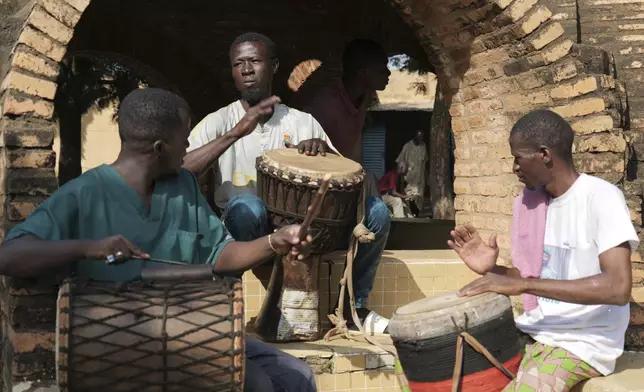
Patients at Bamako's Point G psychiatric ward act out scenes at the psychiatric ward of the Point G hospital in Bamako, Mali, Friday, Sept. 20, 2024. (AP Photo/Moustapha Diallo)

Patients at Bamako's Point G psychiatric ward play instruments in the hospital's courtyard in Bamako, Mali, Friday, Sept. 20, 2024. (AP Photo/Moustapha Diallo)
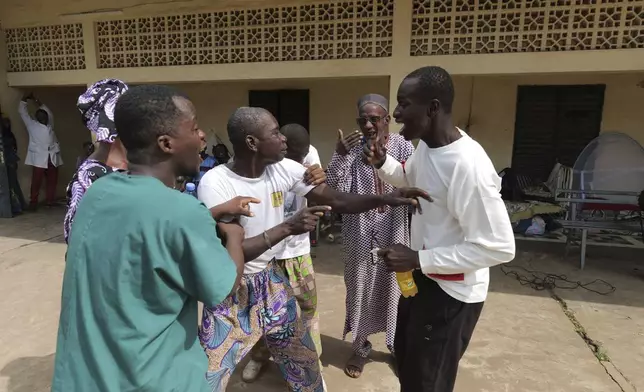
Patients at Bamako's Point G psychiatric ward play instruments in the hospital's courtyard in Bamako, Mali, Friday, Sept. 20, 2024. (AP Photo/Moustapha Diallo)

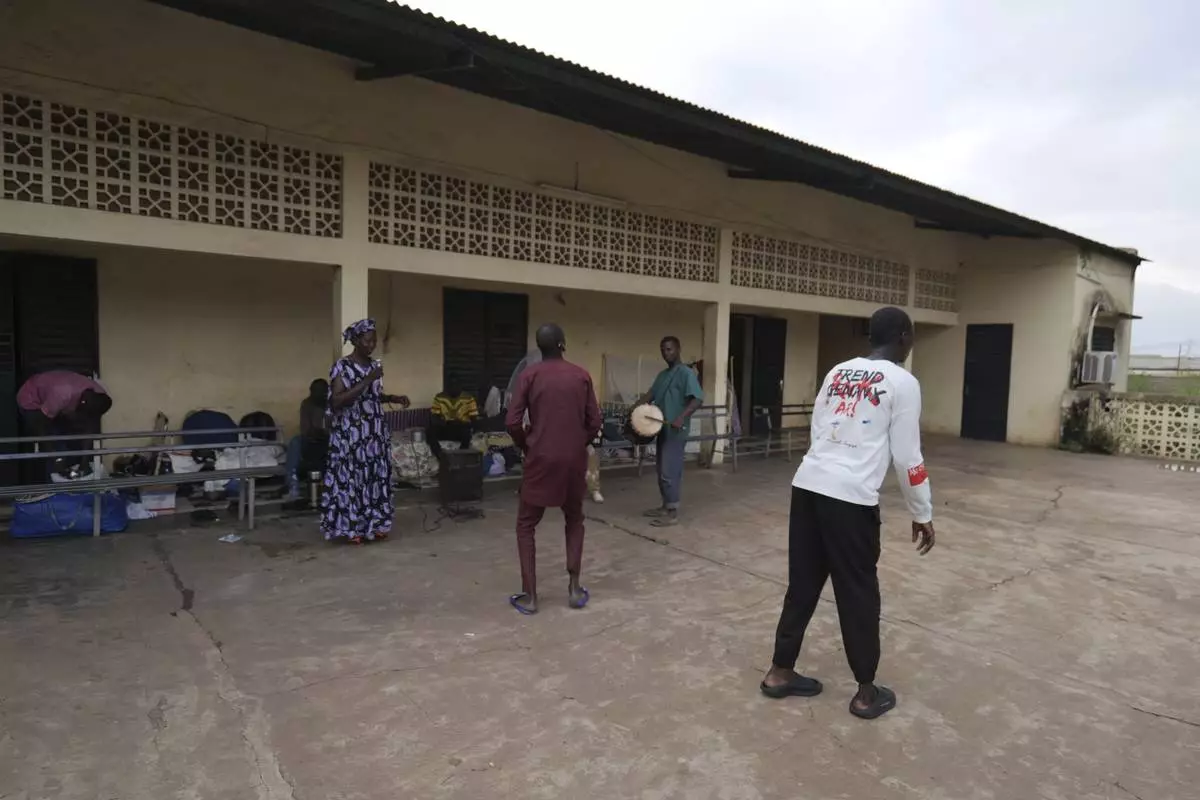
Patients at Bamako's Point G psychiatric ward act out scenes at the psychiatric ward of the Point G hospital in Bamako, Mali, Friday, Sept. 20, 2024. (AP Photo/Moustapha Diallo)

Patients at Bamako's Point G psychiatric ward act out scenes at the psychiatric ward of the Point G hospital in Bamako, Mali, Friday, Sept. 20, 2024. (AP Photo/Moustapha Diallo)

But both break into smiles, and Diarra dances as he continues launching insults at his fellow performer.

The group is taking part in koteba, a traditional form of theater practiced by Mali's largest ethnic group, the Bambara. It mixes acting, singing and dancing and is usually performed in villages as an outlet to work through problems and an open space for satire.

But here at Point G, one of the largest hospitals in Bamako, koteba is also a way of offering support and a sense of community to people receiving psychiatric care.

Mali has fewer than 50 mental health professionals for a population of more than 20 million, according to a 2022 report by the World Health Organization. People with mental illnesses are often left without treatment and excluded from society.

Though the use of koteba as therapy hasn't been formally studied, Souleymane Coulibaly, a clinical psychologist at the Point G hospital, said the traditional form of theater is uniquely positioned to help people in the psychiatric ward work through their problems.

“Patients who attend koteba leave the hospital more quickly than those who refuse to attend the theater session,” he said.

In the courtyard, Diarra was the star, and other patients gathered as he spoke.

“I’ve never done any kind of theater before. I’ve never danced. But once I started, God gave me the knowledge of these things,” he said.

Adama Bagayoko, 67, the director of the visiting theater troupe, said the weekly performances at Point G are a rare space where patients feel heard and respected.

“We talk to each other, we dance together, we laugh together,” Bagayoko said. “To touch someone shows that we are equal, to listen to them shows that they are important, and what they say is important."

Bagayoko was part of a troupe that brought koteba to the Point G psychiatric ward in 1983, as mental health workers looked for a way to use Mali’s cultural practices to help people receiving psychiatric care.

The first performance was so effective that patients asked the doctors if the actors could return the next day, he said.

Patients and actors have been meeting for koteba performances every Friday since then.

The koteba performances at Point G unfold in three phases, Bagayoko said. First, the troupe plays music to invite patients into the courtyard. Then the troupe asks what the topic or theme of that day's performance should be. After the performance, they sit in a circle and give the floor to any patients who wish to speak.

Because the patients feel at ease, they often tell the actors details about their lives they are not comfortable sharing with their family or doctors, which can help doctors get to the core of any issue they might be dealing with, Bagayoko said.

On a recent Friday, the patients acted out a familiar scene in Mali: A man in a village is accused of stealing. The thief screams and claims he hasn’t stolen anything, while the villagers ask Diarra, playing the village chief, what punishment he deserves.

“Kill him!” Diarra yells amid the screams. But as the angry mob gathers around the man, he escapes and flees.

Bagayoko said the troupe performs other themes proposed by patients including those about women beaten by their husbands, drug problems and alcoholism.

The hospital at Point G is only a short walk from Mali’s political stage — the presidential palace and main military base — where a 2020 military coup has left the country struggling with increased extremist violence and economic hardship. Last month, Islamic militants attacked Bamako for the first time in almost a decade.

But those problems are far away during the koteba performances at the hospital, as Diarra and his fellow patients are immersed in the world they create.

“You know what my problem is? That I see things for what they are,” Diarra said, laughing, during a break.

Bagayoko chimed in: “Okay, we’ll lighten that load for you.”

The Associated Press receives financial support for global health and development coverage in Africa from the Gates Foundation. The AP is solely responsible for all content. Find AP’s standards for working with philanthropies, a list of supporters and funded coverage areas at AP.org.
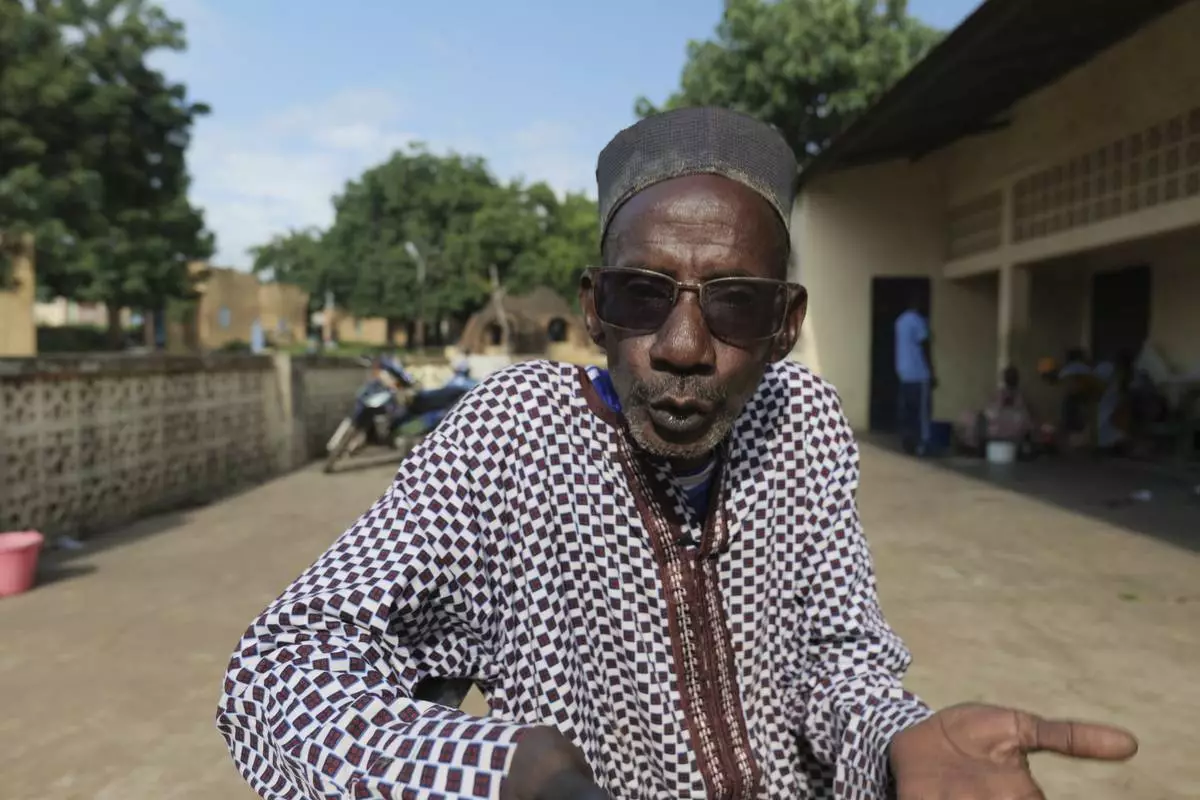
Adama Bagayoko, director of the theater troupe that has been performing with patients at the psychiatric ward of the Point G hospital, stands in the hospital's courtyard in Bamako, Mali, Friday, Sept. 20, 2024. (AP Photo/Moustapha Diallo)
Adama Bagayoko, director of the theater troupe that has been performing with patients at the psychiatric ward of the Point G hospital, stands in the hospital's courtyard in Bamako, Mali, Friday, Sept. 20, 2024. (AP Photo/Moustapha Diallo)

Mamadou Diarra, right, dances with other patients at Bamako's Point G hospital psychiatric ward in the hospital's courtyard in Bamako, Mali, Friday, Sept. 20, 2024. (AP Photo/Moustapha Diallo)
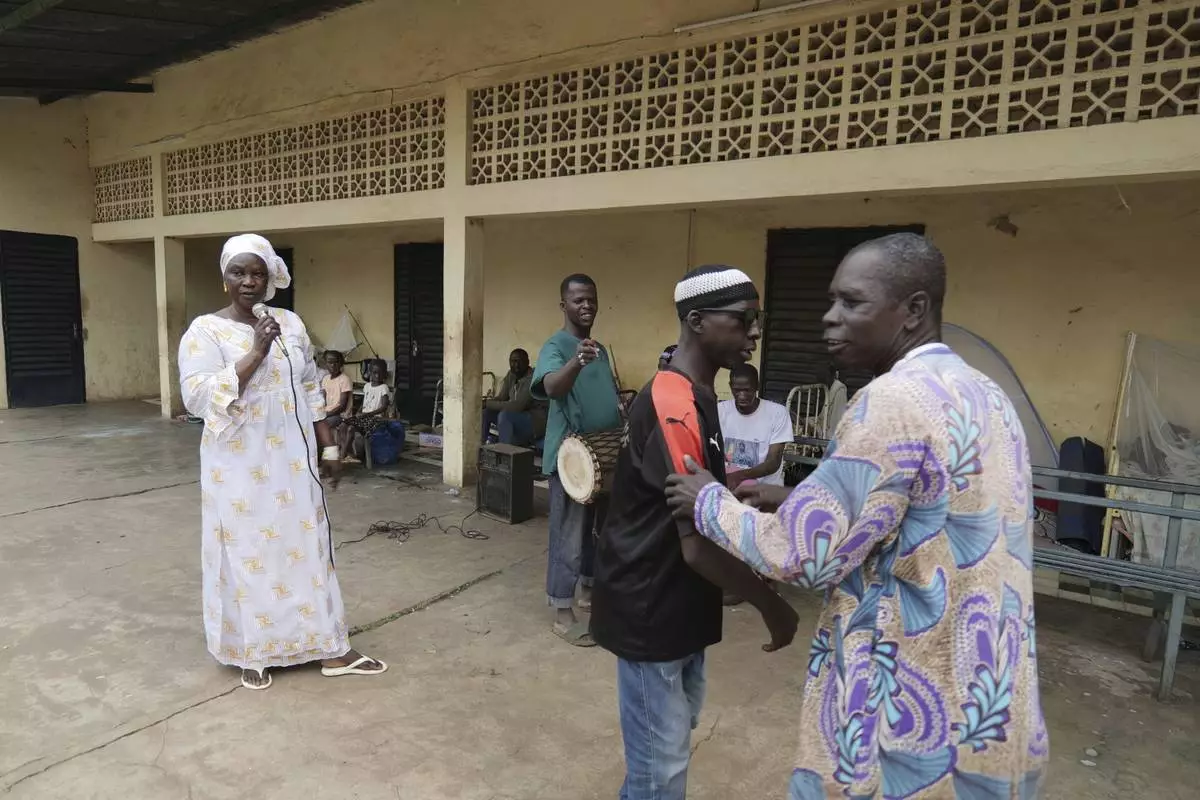
Mamadou Diarra, right, dances with other patients at Bamako's Point G hospital psychiatric ward in the hospital's courtyard in Bamako, Mali, Friday, Sept. 20, 2024. (AP Photo/Moustapha Diallo)

Patients at Bamako's Point G psychiatric ward act out scenes at the psychiatric ward of the Point G hospital in Bamako, Mali, Friday, Sept. 20, 2024. (AP Photo/Moustapha Diallo)
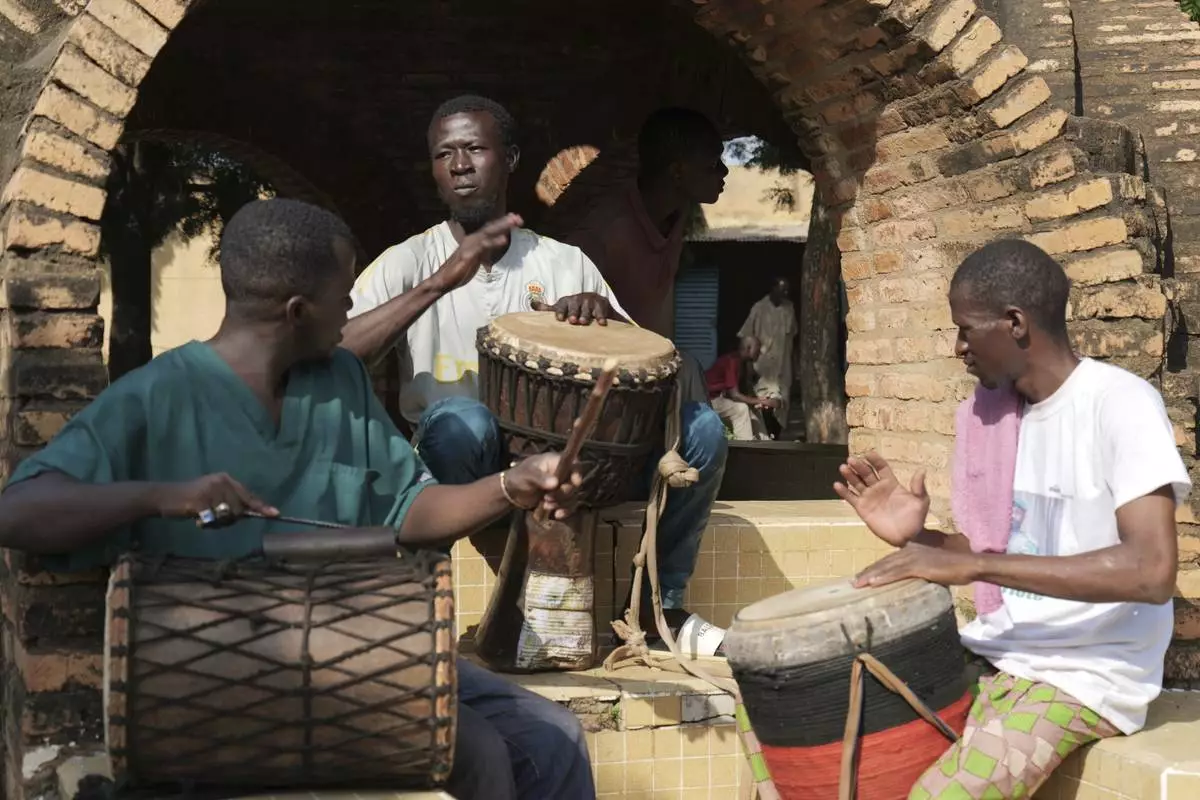
Patients at Bamako's Point G psychiatric ward act out scenes at the psychiatric ward of the Point G hospital in Bamako, Mali, Friday, Sept. 20, 2024. (AP Photo/Moustapha Diallo)

Patients at Bamako's Point G psychiatric ward play instruments in the hospital's courtyard in Bamako, Mali, Friday, Sept. 20, 2024. (AP Photo/Moustapha Diallo)
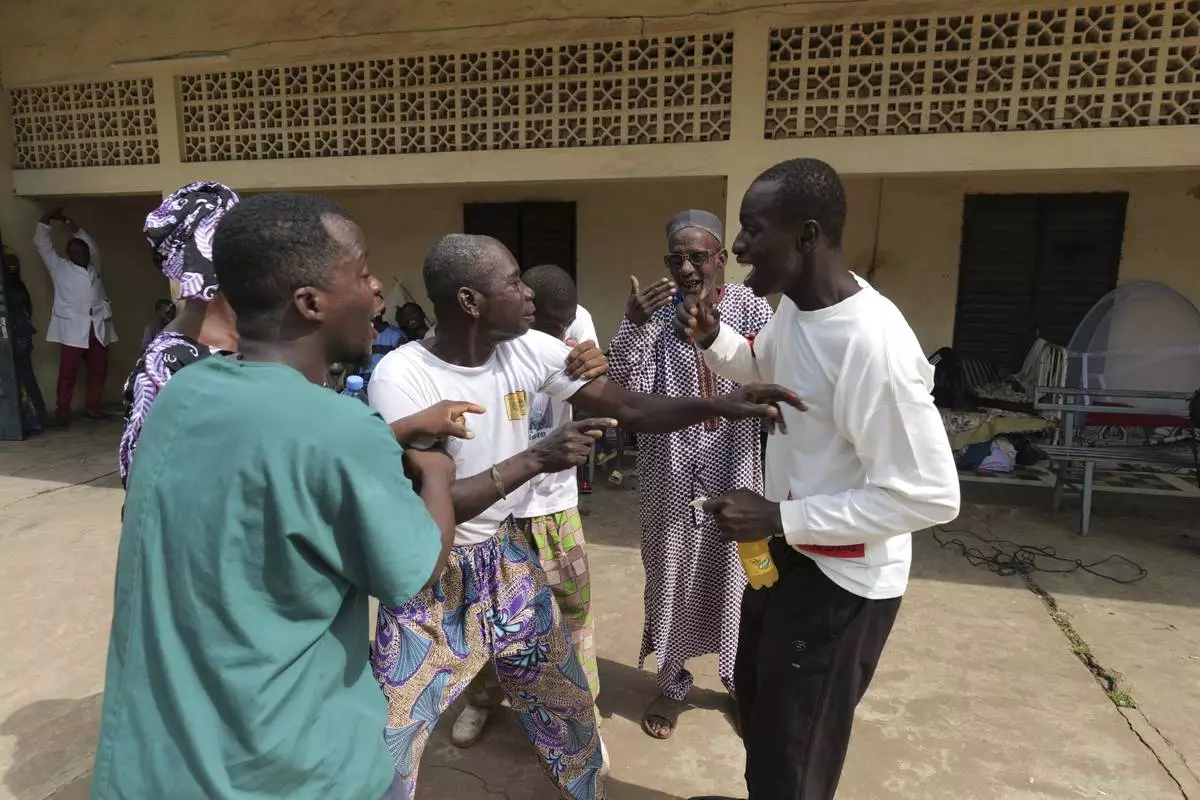
Patients at Bamako's Point G psychiatric ward play instruments in the hospital's courtyard in Bamako, Mali, Friday, Sept. 20, 2024. (AP Photo/Moustapha Diallo)

Patients at Bamako's Point G psychiatric ward act out scenes at the psychiatric ward of the Point G hospital in Bamako, Mali, Friday, Sept. 20, 2024. (AP Photo/Moustapha Diallo)
Patients at Bamako's Point G psychiatric ward act out scenes at the psychiatric ward of the Point G hospital in Bamako, Mali, Friday, Sept. 20, 2024. (AP Photo/Moustapha Diallo)
DUBAI, United Arab Emirates (AP) — U.S. President Donald Trump said Iran wants to negotiate with Washington after his threat to strike the Islamic Republic over its bloody crackdown on protesters, a move coming as activists said Monday the death toll in the nationwide demonstrations rose to at least 544.

Iran had no immediate reaction to the news, which came after the foreign minister of Oman — long an interlocutor between Washington and Tehran — traveled to Iran this weekend. It also remains unclear just what Iran could promise, particularly as Trump has set strict demands over its nuclear program and its ballistic missile arsenal, which Tehran insists is crucial for its national defense.

Meanwhile Monday, Iran called for pro-government demonstrators to head to the streets in support of the theocracy, a show of force after days of protests directly challenging the rule of 86-year-old Supreme Leader Ayatollah Ali Khamenei. Iranian state television aired chants from the crowd, who shouted “Death to America!” and “Death to Israel!”

Trump and his national security team have been weighing a range of potential responses against Iran including cyberattacks and direct strikes by the U.S. or Israel, according to two people familiar with internal White House discussions who were not authorized to comment publicly and spoke on condition of anonymity.

“The military is looking at it, and we’re looking at some very strong options,” Trump told reporters on Air Force One on Sunday night. Asked about Iran’s threats of retaliation, he said: “If they do that, we will hit them at levels that they’ve never been hit before.”

Trump said that his administration was in talks to set up a meeting with Tehran, but cautioned that he may have to act first as reports of the death toll in Iran mount and the government continues to arrest protesters.

“I think they’re tired of being beat up by the United States,” Trump said. “Iran wants to negotiate.”

He added: “The meeting is being set up, but we may have to act because of what’s happening before the meeting. But a meeting is being set up. Iran called, they want to negotiate.”

Iran through country's parliamentary speaker warned Sunday that the U.S. military and Israel would be “legitimate targets” if America uses force to protect demonstrators.

More than 10,600 people also have been detained over the two weeks of protests, said the U.S.-based Human Rights Activists News Agency, which has been accurate in previous unrest in recent years and gave the death toll. It relies on supporters in Iran crosschecking information. It said 496 of the dead were protesters and 48 were with security forces.

With the internet down in Iran and phone lines cut off, gauging the demonstrations from abroad has grown more difficult. The Associated Press has been unable to independently assess the toll. Iran’s government has not offered overall casualty figures.

Those abroad fear the information blackout is emboldening hard-liners within Iran’s security services to launch a bloody crackdown. Protesters flooded the streets in the country’s capital and its second-largest city on Saturday night into Sunday morning. Online videos purported to show more demonstrations Sunday night into Monday, with a Tehran official acknowledging them in state media.

In Tehran, a witness told the AP that the streets of the capital empty at the sunset call to prayers each night. By the Isha, or nighttime prayer, the streets are deserted.

Part of that stems from the fear of getting caught in the crackdown. Police sent the public a text message that warned: “Given the presence of terrorist groups and armed individuals in some gatherings last night and their plans to cause death, and the firm decision to not tolerate any appeasement and to deal decisively with the rioters, families are strongly advised to take care of their youth and teenagers.”

Another text, which claimed to come from the intelligence arm of the paramilitary Revolutionary Guard, also directly warned people not to take part in demonstrations.

“Dear parents, in view of the enemy’s plan to increase the level of naked violence and the decision to kill people, ... refrain from being on the streets and gathering in places involved in violence, and inform your children about the consequences of cooperating with terrorist mercenaries, which is an example of treason against the country,” the text warned.

The witness spoke to the AP on condition of anonymity due to the ongoing crackdown.

The demonstrations began Dec. 28 over the collapse of the Iranian rial currency, which trades at over 1.4 million to $1, as the country’s economy is squeezed by international sanctions in part levied over its nuclear program. The protests intensified and grew into calls directly challenging Iran’s theocracy.

Nikhinson reported from aboard Air Force One.

In this frame grab from video obtained by the AP outside Iran, a masked demonstrator holds a picture of Iran's Crown Prince Reza Pahlavi during a protest in Tehran, Iran, Friday, January. 9, 2026. (UGC via AP)

In this frame grab from video obtained by the AP outside Iran, a masked demonstrator holds a picture of Iran's Crown Prince Reza Pahlavi during a protest in Tehran, Iran, Friday, January. 9, 2026. (UGC via AP)

In this frame grab from footage circulating on social media from Iran shows protesters taking to the streets despite an intensifying crackdown as the Islamic Republic remains cut off from the rest of the world in Tehran, Iran, Friday, Jan. 9, 2026.(UGC via AP)

In this frame grab from footage circulating on social media from Iran shows protesters taking to the streets despite an intensifying crackdown as the Islamic Republic remains cut off from the rest of the world in Tehran, Iran, Friday, Jan. 9, 2026.(UGC via AP)

In this frame grab from footage circulating on social media from Iran showed protesters once again taking to the streets of Tehran despite an intensifying crackdown as the Islamic Republic remains cut off from the rest of the world in Tehran, Iran, Saturday Jan. 10, 2026. (UGC via AP)

In this frame grab from footage circulating on social media from Iran showed protesters once again taking to the streets of Tehran despite an intensifying crackdown as the Islamic Republic remains cut off from the rest of the world in Tehran, Iran, Saturday Jan. 10, 2026. (UGC via AP)

Recommended Articles