Skip to Content Facebook Feature Image

Lebanese hospitals struggle on amid barrage of Israeli attacks

China

China

China

Lebanese hospitals struggle on amid barrage of Israeli attacks

2024-10-10 11:17 Last Updated At:17:27

Israel's relentless attacks on Lebanon are threatening the operations of healthcare facilities, forcing a number of hospitals in the country's south to cease functioning, while local people who didn't evacuate from the area are struggling amid a barrage of missile strikes.

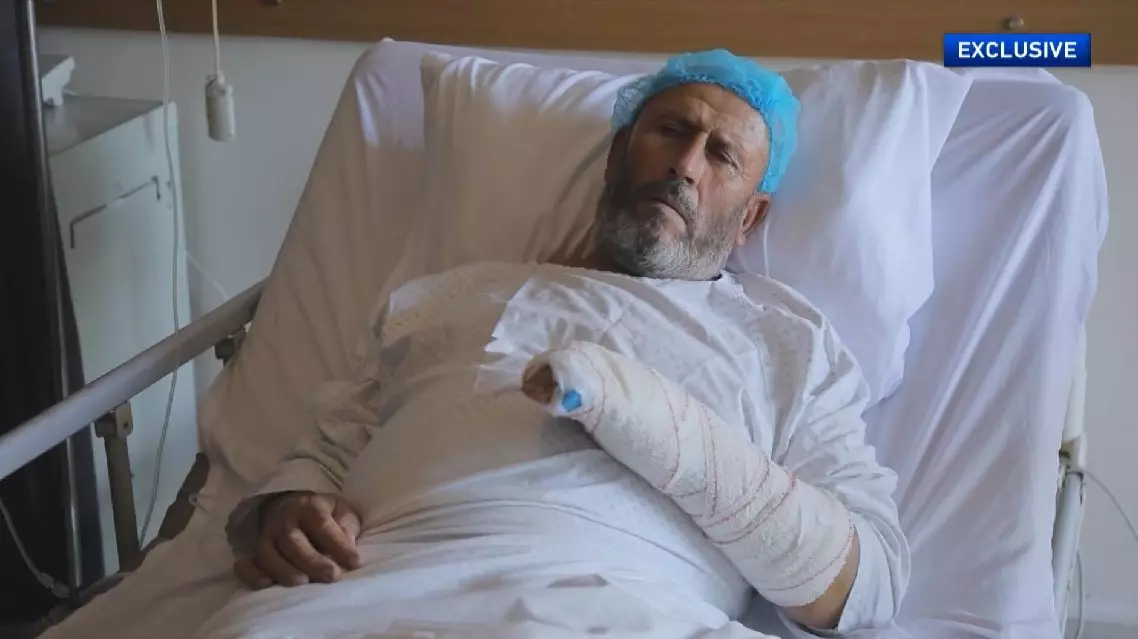
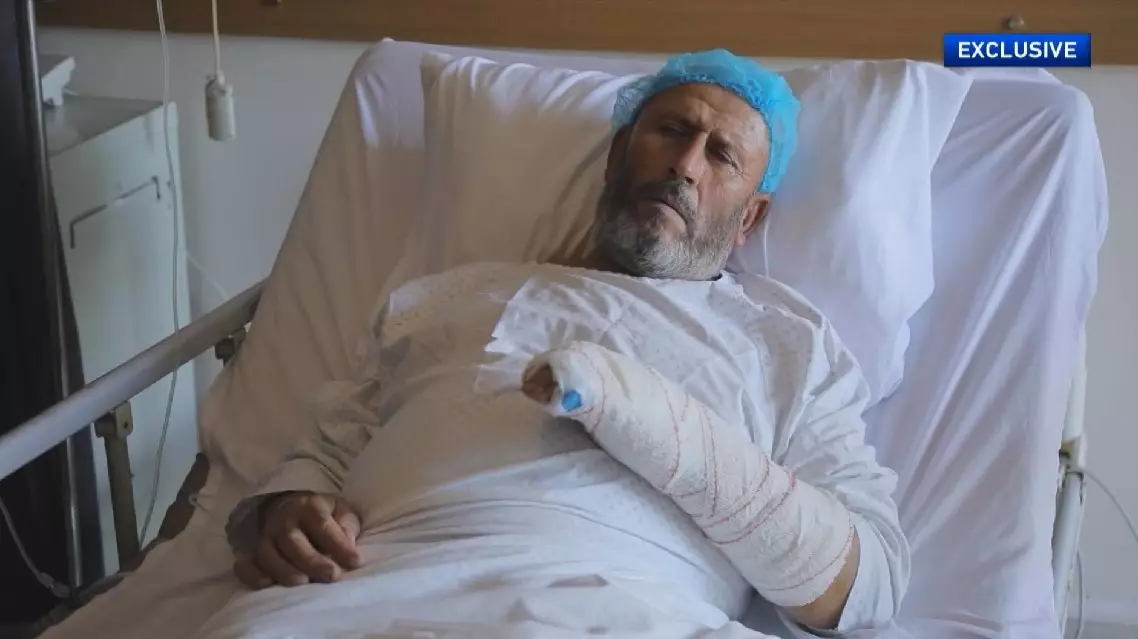
On October 7, the anniversary of the start of the Gaza war, intensified Israeli attacks targeted the southern city of Sur, where 54-year-old Abbas Mazen's home was struck, leaving him hospitalized.

"We were cooking, preparing for lunch. A missile hit us. I was injured. I don't know where the rest of my family went," he said from his hospital bed on Tuesday.

Mazen said he was unable to take his wife and two daughters to flee the city despite the ongoing evacuation, which started two weeks ago.

"We stayed because we didn't think there was anything that could cause trouble in our house. We would carefully move around if we had to. I couldn't leave. I have no place else to go. I am employee, but I also have some olive trees and goats. My work has shut down, so I'm relying what I can produce like milk and cheese. I also bake my own bread," he said.

The four hospitals which remain open in Sur are less crowded than expected due to the mass exodus of residents, but are still facing up to the challenges of dealing with trauma patients from the attacks. At one of the hospitals, nurse Hassan Eissa described the grim reality facing medical staff.

"Despite the bombing around us we kept working. Recently the workload has not been as intense, because most people have left the city. The population is no longer as dense. At the beginning, the air raids would destroy buildings. Entire families would come to us in pieces. I have never seen something this harsh in my career. It's a crime against our people," said Eissa.

China Global Television Network (CGTN) correspondent Adel El Mahrouky who was reporting from the hospital said Hezbollah members urged him to film quickly, warning that any location in Sur could be targeted without warning. Moments later, an Israeli airstrike hit just meters away, forcing him to flee.

Mahrouky described a "state of panic" following the attack, and showed how he and his camera crew were initially unable to leave due to fallen electrical cables blocking the hospital exit. He said the ongoing crisis has created an air of distrust among residents and left many people on edge, and said he was even warned to stop filming by some locals.
Lebanese hospitals struggle on amid barrage of Israeli attacks
Lebanese hospitals struggle on amid barrage of Israeli attacks
Lebanese hospitals struggle on amid barrage of Israeli attacks

Lebanese hospitals struggle on amid barrage of Israeli attacks

An artificial intelligence (AI) foundation model specialized for analyzing human genetic diversity was launched at Shanghai's cutting-edge Model Speed Space innovation hub on Tuesday.

Named SNPBAG, it is the world's first large model built specifically for genomic analysis, promising to precisely predict diseases and advance personalized health care.

The model focuses on single nucleotide polymorphisms (SNPs), the most common type of genetic variation among people, which influence traits such as height, intelligence and personality.

Currently, SNPBAG can be used for ancestry tracing and kinship identification. In the future, with further training, it is expected to predict disease risks at various life stages based on DNA sequences, offering higher screening accuracy than existing genetic testing methods.

"As far as we know, traditional methods examine SNPs point by point for correlations with traits like height or intelligence, without taking into account, for example, interactions between or among genes. Therefore, we need a model that can autonomously identify these complex relationships. Now, we've found such a tool that can bring close two gene expressions [of the human body] that are far away from each other and provide biological interpretations," said Tang Kun, an expert of computational biology and founder of Shanghai Feipu Intelligent Technology Co., Ltd.

Looking ahead, the model will support the development of China's sovereign genomic database, promote its domestic self-reliance, enhance AI-driven drug discovery and improve the target screening success rates by over 200 percent. It also aims to make precision health care more accessible.

"The most well-known application is non-invasive prenatal screening. Currently, only a few conditions are covered by national insurance, but there are over 20,000 rare diseases in children. We are now collaborating with Shanghai Children’s Hospital to expand screening coverage," said Lu Sitong, CEO of Shanghai Feipu Intelligent Technology.

With SNPBAG, non-invasive prenatal screening is expected to detect a broader range of rare diseases in the future. The company said it also plans to launch consumer-facing products to benefit the general public.

China launches world's first foundation model for genomic analysis

China launches world's first foundation model for genomic analysis

Recommended Articles