The head of a Chinese delegation, speaking at a meeting of the 79th United Nations General Assembly (UNGA) on Thursday, called on the international community to strengthen global security governance, urging certain countries to reduce the role of nuclear weapons in their national security policies.
Sun Xiaobo, head of the Chinese delegation and director-general of the Department of Arms Control of the Chinese Foreign Ministry, made the statement at the meeting of the UNGA Disarmament and International Security Committee, or the First Committee of the 79th UNGA.
Sun pointed out that over the past few years, some certain countries have continuously enhanced the role of nuclear weapons in their national security policies, investing hundreds of billions of U.S. dollars to upgrade the "nuclear triad" and accelerating the modernization of their nuclear arsenals.
He said these countries have continued to strengthen military alliances, create various discriminatory small circles and promote NATO's extension into the Asia-Pacific region, which has seriously undermined the strategic stability in the region and around the world.
Certain nuclear-weapon states should abolish their arrangements of "nuclear sharing" and "extended deterrence" and withdraw all nuclear weapons deployed abroad to their own territories, Sun stressed, calling on non-nuclear-weapon states under the "nuclear umbrella" to reduce the role of nuclear weapons in their national security and collective security policies.
China urges the relevant countries to stop developing and deploying global anti-missile systems and stop deploying land-based intermediate-range missiles outside their borders or in close proximity to other nuclear-weapon states, he said.
Sun stressed that China has always maintained its nuclear forces at the minimum level required for national security, while not participating in any arm race, not providing "nuclear umbrella" for any other country, nor deploying nuclear weapons in other countries.
China will not use nuclear weapons to seek hegemony or to intimidate or bully non-nuclear-weapon states, he said, adding that any attempt to distort and smear China's nuclear policy will be futile.
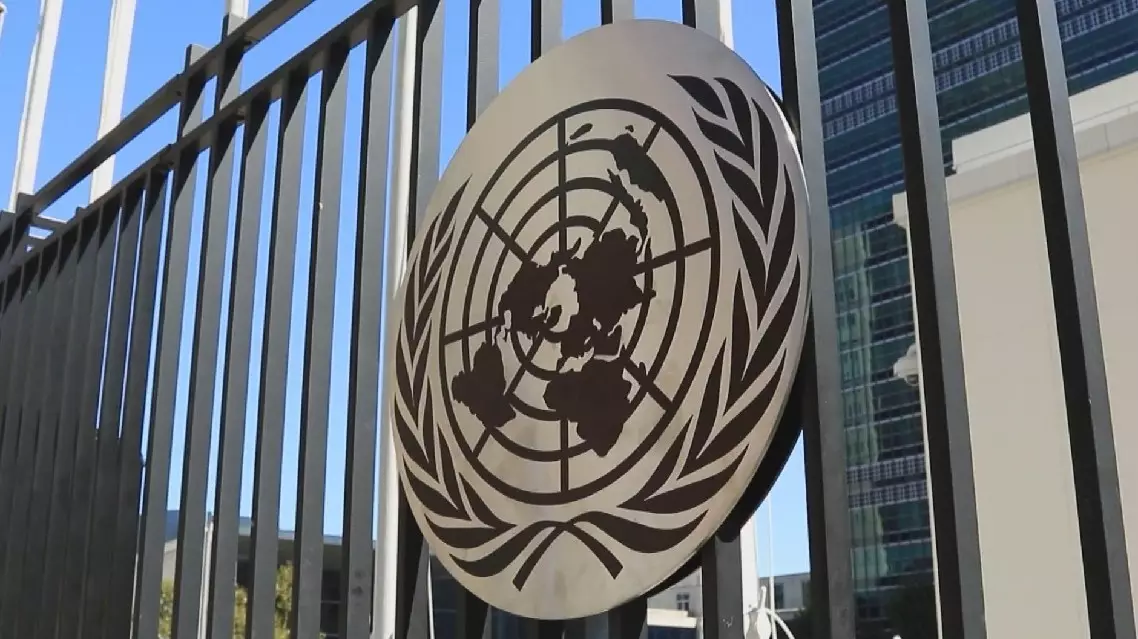
Chinese official urges certain countries to reduce role of nuclear weapons
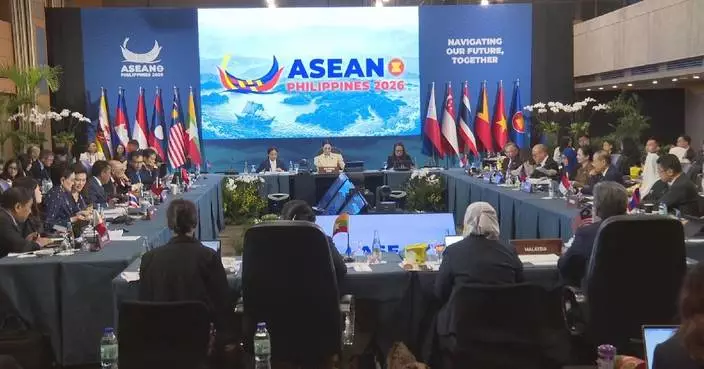
The ongoing China-ASEAN Expo serves as a bridge for China and the Association of Southeast Asian Nations (ASEAN) to boost trade flows, helping both sides reap shared development dividends.
Scheduled to run from Sept 17 to 21 in Nanning City of south China's Guangxi Zhuang Autonomous Region, the event draws more than 3,400 exhibitors from over 70 countries and regions.
This year, Timor-Leste is participating for the first time as a full ASEAN member and a co-host of the expo, with participants noting results have exceeded expectations, bolstered by China's vast market.
"I brought 60 packages of 250-gram coffee, which would be sold out in one day. Now I'm thinking that China market is open for everybody and it's very huge," said an exhibitor from Timor-Leste.
Participants also hailed the construction of China's Pinglu Canal, which officially opened to traffic on Wednesday.
The 134.2-km-long canal runs from Hengzhou, a county-level city in Guangxi, to the Beibu Gulf, the closest maritime outlet for much of southwest China.
The canal becomes a cost-competitive river-sea intermodal shortcut connecting ASEAN producers with the vast consumer market in southwest China, said the participants.
"In the past, shipments into the southwest China usually went by sea to Guangzhou and then overlands. Too many handover made it hard to keep products fresh. Losses were high and transit time was unreliable. Now that the canal is open, we can enter [the] Guangxi [Zhuang Autonomous Region] directly from the Beibu Gulf and move on to Yunnan, Guizhou and Sichuan restaurants, faster onto the supermarket shelves and tables in the southeast [part of China]," said an exhibitor from Vietnam.
With the formal signing of the China-ASEAN Free Trade Area (FTA) 3.0 Upgrade Protocol in Oct 2025, bilateral cooperation has expanded beyond economic and trade areas to emerging fields such as the digital economy and the green economy.
"I am looking for an investor to develop agriculture and integrated tourism with us in Malaysia," said an exhibitor from Malaysia.
Economic ties between China and ASEAN have continued to deepen. Bilateral trade topped 1 trillion U.S. dollars for the first time in 2025, totaling 1.05 trillion dollars, up 7.4 percent year on year. In the first seven months of 2026, trade between the two sides reached 744.41 billion dollars, an increase of 24.7 percent year on year and accounting for 21.8 percent of China's total foreign trade.
China has remained ASEAN's largest trading partner for 17 consecutive years, while ASEAN has been China's largest trading partner for six successive years.
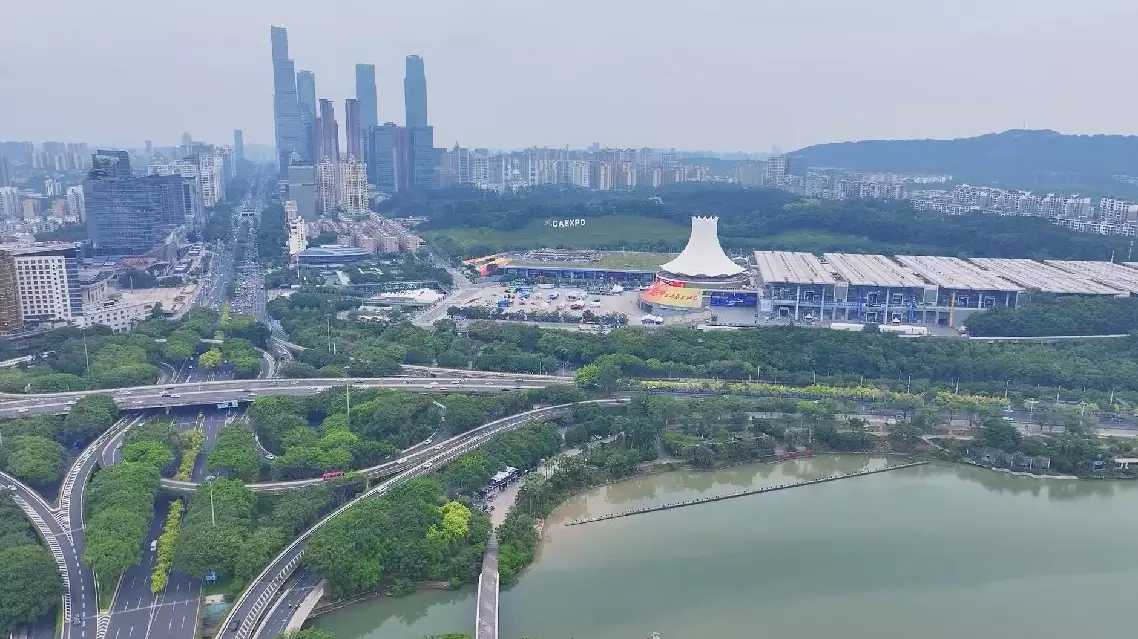
China-ASEAN Expo boosts bilateral cooperation, delivers shared dividends