The leader of the Taiwan region Lai Ching-te has been deliberately trumpeting his secessionist rhetoric in order to push forward his sinister intentions of increasing hostility and confrontation across the Taiwan Strait and advancing his own political interests, according to scholars in Taiwan.
Lai continued to peddle his so-called "two-state" rhetoric by claiming the two sides of the Taiwan Strait are "not subordinate" to each other in a provocative "Double Ten" (October 10) speech on Thursday, where he again put forth his "Taiwan independence" fallacies.
Lai's remarks demonstrated his unwavering "Taiwan independence" stance, along with his confrontational mindset and were another example of his continuous provocations, according to Cheng You-ping, a professor from Taipei University.
"He uses such arguments to, firstly, stealthily shift the responsibility for peace onto the mainland. Secondly, he seeks to deliberately create the impression of an 'equal' status between the mainland and Taiwan region, as part of his new 'two states' theory discourse. This is his rhetoric style, which may seem unproblematic when people listen to them at the first time. Especially if the general public in Taiwan region do not realize the sinister intentions of Lai Ching-te, they may easily fall into his trap. We can say that his true intention of his conspiracy is to create a nation-to-nation relationship," said Cheng in an interview with China Central Television (CCTV).
Kao Yuang-kuang, a part-time professor at Chengchi University in Taipei added that Lai's remarks are designed to shore up support ahead of local leadership and legislature elections, rather than to safeguard stability on the Taiwan Strait and ensure people's welfare.
"He makes selective statements to strengthen his power. It is clear that Lai's focus is on solidifying his support base, planning for the regional elections in 2026, and secure his re-election in 2028," said Kao.
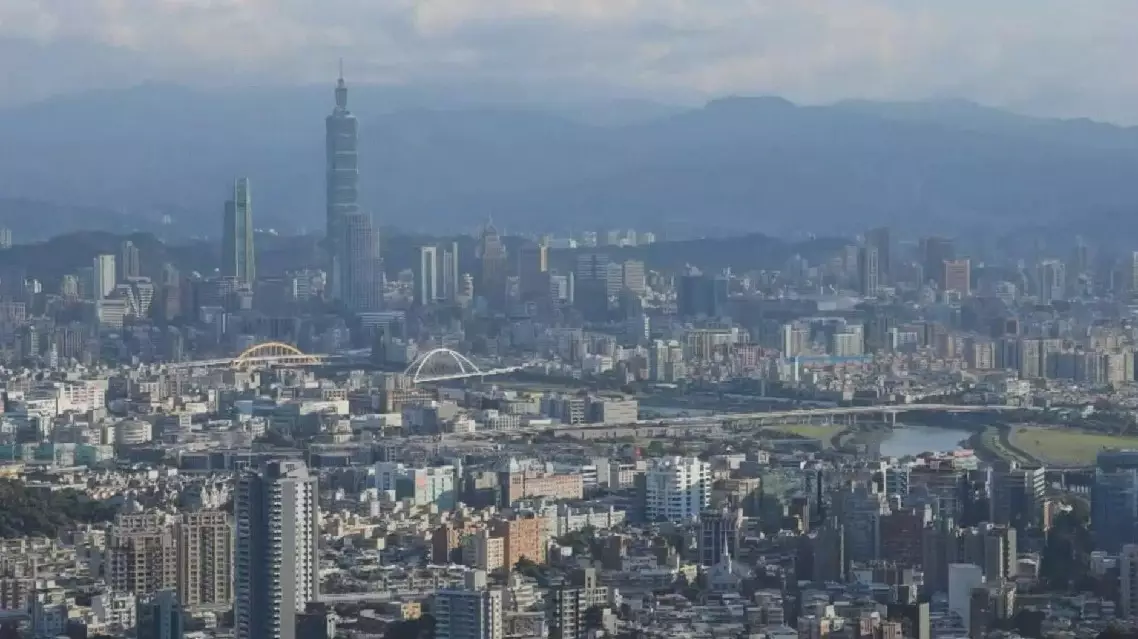
Lai Ching-te's confrontational cross-Strait remarks made to boost own political interests: scholars
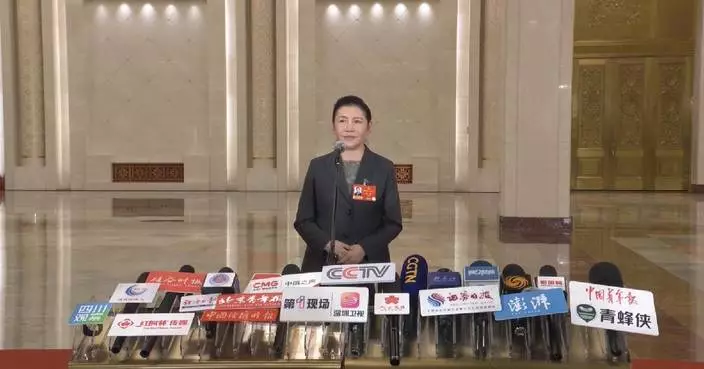
China has made new progress in the high-quality development of its marine economy, with the ocean increasingly serving as a new driver of growth, Minister of Natural Resources Guan Zhi'ou said in Beijing on Thursday.
Guan briefed the media on China's new achievements in marine development, utilization and protection in a ministerial interview after the closing meeting of the fourth session of the 14th National People's Congress (NPC), China's top legislature, in Beijing.
"In 2025, the gross ocean product exceeded 11 trillion yuan (about 1.60 trillion U.S. dollars), accounting for 7.9 percent of GDP. Industries such as shipbuilding and offshore engineering equipment, offshore wind power, and marine fisheries rank among the top in the world. Marine drugs independently developed by China accounted for 28 percent of the global market share, while output value from marine energy and seawater desalination continued to expand. In order to make our ocean more beautiful and better protect the marine environment, we have always been committed to strictly controlling new land reclamation from the sea, with the retention rate of natural coastline exceeding 35 percent. The mangrove area has reached 4.75 million mu (about 316,666.67 hectares), maintaining a continuous growth momentum. We established the Huangyan Dao national nature reserve to strengthen the protection and restoration of important ecosystems such as coral reefs," he said.
Guan said China's blue circle of friends continues to expand. The country has become one of the first signatories to the agreement on marine biodiversity conservation, and has signed blue economy cooperation agreements with more than 50 countries and international organizations, while also conducting joint polar and ocean scientific expeditions with multiple countries.
Those achievements demonstrate not only industrial expansion, but also a stronger emphasis on ecological stewardship and openness to international cooperation, and the next stage will focus on consolidating existing gains while aligning with the goals and tasks set out in the 15th Five-Year Plan (2026-2030), the minister said.
"On the basis of consolidating the above achievements, we will, in accordance with the goals and tasks set out in the 15th Five-Year Plan (2026-2030), accelerate the high-quality development of the marine economy. In practice, we will place greater emphasis on innovation-driven growth by launching and implementing major national science and technology programs to comprehensively enhance deep-sea sensing, exploration and development capabilities. We will pay more attention to efficient coordination by further optimizing the spatial layout of major bays through integrated land-sea planning and building new growth poles. Industrial upgrading will be stepped up by vigorously developing emerging sectors such as deep-sea equipment and the blue medicine bank and fostering new engines of growth," Guan said.
"We will also place more emphasis on harmony between people and the sea, carefully safeguard blue sea and silver beaches, and make cruise travel and sea fishing new trends in cultural tourism consumption. More attention will be paid to win-win cooperation by expanding marine cultural exchanges to build a community with a shared future for the ocean," he said.
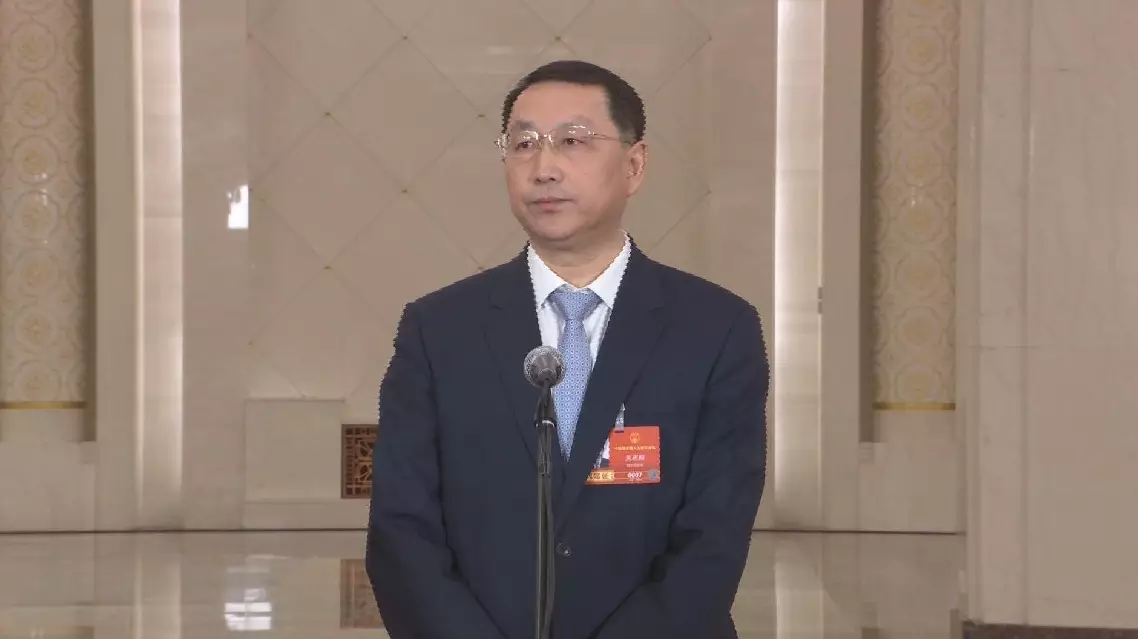
China continues to advance high-quality development of marine economy: minister