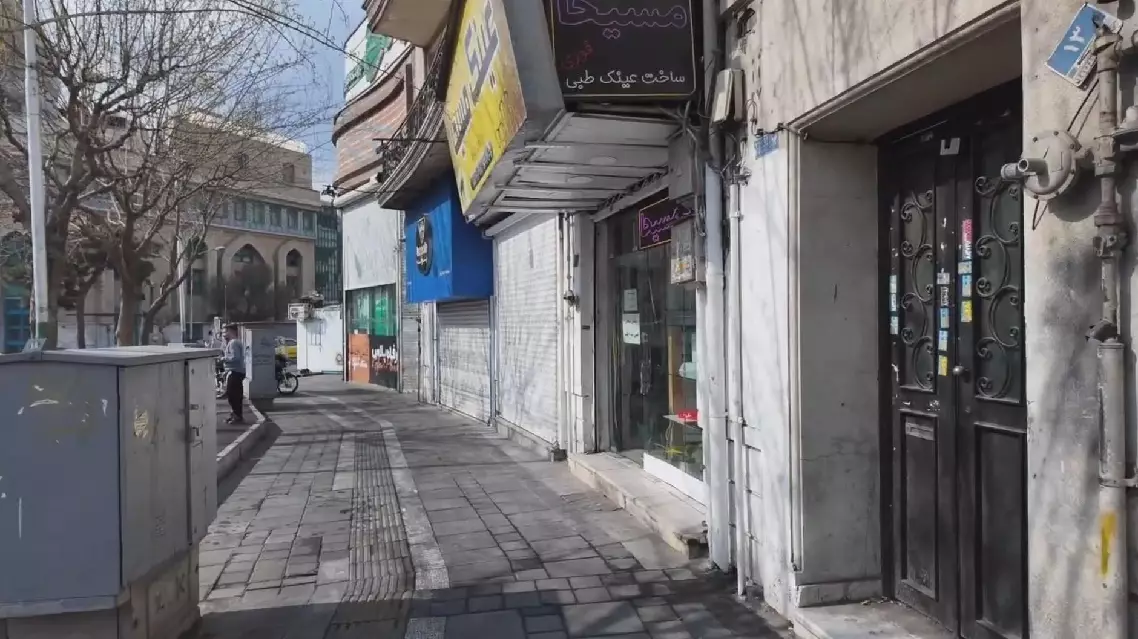
Tehran, capital of Iran, is struggling to keep up with daily routines, with pharmacies, food supplies and basic services still operating even as the air strikes cast a shadow over the city and makes daily routines increasingly difficult.
On Feb. 28, Israel and the United States launched joint military strikes on Tehran and several other Iranian cities, killing the country's Supreme Leader Ali Khamenei, along with senior military commanders and civilians. Iran responded by launching waves of missile and drone strikes targeting Israeli and U.S. bases in the Middle East.
As the U.S. and Israeli military strikes against Iran enters its 12th day on Thursday, daily life in the capital has grown increasingly strained, marked by inconvenience, disruption and the ever-present possibility that air raid sirens could sound at any moment.
As the Nowruz, the Iranian New Year, is approaching, the capital city has largely been stripped of its usual festive energy.
Although many shops have closed their doors, others remain open, and supplies of basic necessities have so far not been significantly disrupted, with authorities also trying to keep prices from rising too quickly.
A staff member at a pharmacy said that the store has remained open since the air strikes.
"Everything is available. No issues at all," he said.
Since the military attacks, many residents have already left Tehran to seek safety elsewhere, leaving metro stations noticeably less crowded than usual, while authorities have made metro rides free and kept many stations open around the clock so that they can serve as potential shelters.
Communication across the city has also been affected, with international internet access largely shut down and only domestic networks still functioning, while unreliable GPS signals have added another layer of complication to daily life.
Tehran residents struggle to keep up with daily routine under shadow of air strikes