Gasoline prices in Germany have soared past 2.30 euros a liter, with diesel climbing even higher, as Iran's threat to shut the Strait of Hormuz, one of the world's most vital oil arteries, sends shockwaves through European energy markets.
Nestled between the Gulf and the Gulf of Oman, the Strait of Hormuz is the only sea passage from the Gulf to the open ocean. It handles roughly a quarter of global seaborne oil shipments, along with large volumes of liquefied natural gas (LNG) and fertilizers, making it one of the world’s most strategically vital chokepoints.
Wholesale energy shocks are already filtering down to German consumers, with fuel costs biting into daily budgets.
"Last week, when I filled it up from scratch, it cost around eighty euros. Now it's sixty-seven euros, but it's only half a tank," said Kadir Öztürk, a German driver.
Wolfgang Erhard, a German commuter, voiced frustration over the rising costs.
"I think it's rather counterproductive, rising prices on such elementary things; you have to go to work, you have to take the children to school, you have to save here because at some time the money will run out and that will be the point when you know what is necessary and what is not," he said.
Others questioned the timing of the hikes, stressing that current inventories should buffer consumers. Rüdiger Boss, a German driver, suggested the increases may be premature since suppliers have already purchased the oil.
"I think it's maybe a little bit too early (to increases prices) because they have already bought that oil, and now, in the next round, okay, they have to go higher," he said.
Energy analysts caution that consumer price hikes may be premature. Professor Svetlana Ikonnikova of the Technical University of Munich highlighted ample inventories at multiple levels of the supply chain.
"The refineries have inventories, we also have the country-level inventories. There is individual firms and the plant-level inventories. And we have them at a decent level, so which means for at least a few months, we don't need to worry that we don't have enough oil," she said.
In Germany, taxes such as the energy tax and carbon dioxide levy significantly impact gas and diesel prices. Consumers also pay a 19 percent value-added tax on fuels. The rest reflects the costs and margins of the oil industry and the underlying price of crude oil.
Ikonnikova highlighted that current margins and costs in the oil industry are speculative.
Although Europe's oil supplies remain secure for now, disruptions to energy resources passing through the Strait of Hormuz could ripple through global markets, potentially driving prices even higher if the conflict escalates.
Furthermore, liquefied natural gas ships, vital for powering refineries, are stranded in the Strait, impacting supply chains.
"The mere occurrence of the big issue in that area may affect the overall cost of shipments by increasing the insurance, by the necessity to to budget for some extra days in the sea, and that might be a long-term effect even once the conflict resolved," said Ikonnikova.
Europe has adapted its energy structures in response to the Ukraine crisis, but the ongoing Middle East tensions indicate that further reforms are necessary to stabilize energy markets and protect consumers, the professor said.
Tensions sharply escalated across the Middle East on Feb 28 when the United States and Israel launched large-scale joint airstrikes on Iran. The Iranian side has responded with multiple waves of missile and drone attacks targeting Israel and U.S. assets across the region, hitting many countries in the Gulf.
The military confrontation has amplified fears of an energy crisis, with the Strait of Hormuz at risk of disruption and Europe bracing for further shocks to fuel and gas supplies.
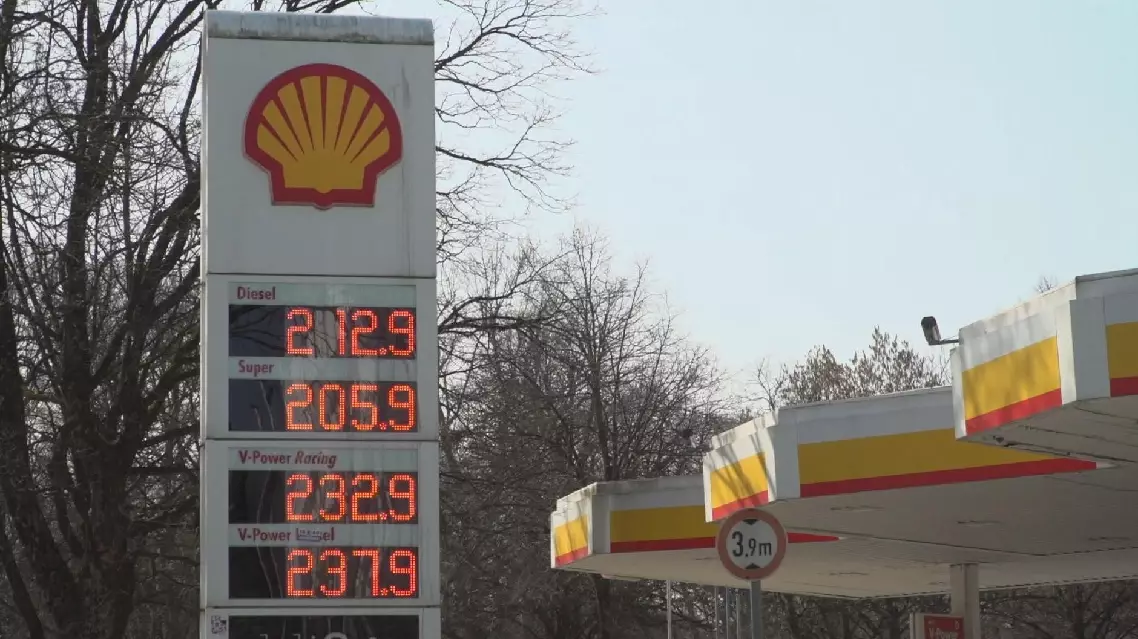
German fuel prices soar as Strait of Hormuz tensions threaten Europe's energy security