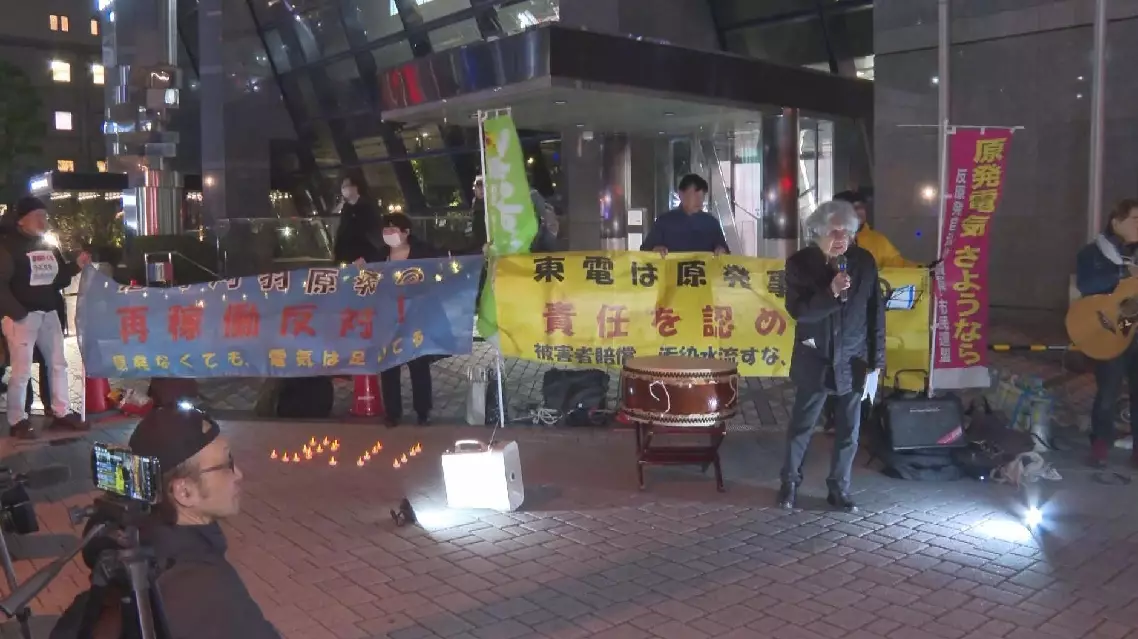
Japanese protesters on Wednesday rallied in Tokyo against the government's push to restart aging nuclear power plants, urging officials to heed the lessons of the Fukushima disaster and confront safety risks posed by deteriorating reactors.
Wednesday marked 15 years since the meltdown at the Fukushima Daiichi Nuclear Power Plant in a 9.0-magnitude earthquake. According to government data released this week, approximately 26,000 people remain displaced and unable to return home due to the long-lasting impact of the nuclear accident.
"First, treatment measures for the nuclear plant haven't been implemented. Many people say the accident has been dealt with, or that it's over. But in reality, there are still large numbers of victims - people who remain evacuated, and many young people suffering from thyroid cancer," said one protester.
In recent years, Japan's energy policy has called for maximizing the use of nuclear power, pushing for the restart of nuclear plants and even extending the operational lifespan of aging reactors, which has drawn strong concerns and dissatisfaction from the public.
The Tokyo Electric Power Company (TEPCO), which ran the Fukushima Daiichi Nuclear Power Plant, reactivated a reactor at the Kashiwazaki-Kariwa nuclear power plant in Niigata Prefecture in February, after a glitch with an alarm in late January forced the suspension of its first restart since the 2011 Fukushima disaster.
Demonstrators also expressed alarm at the revival of the Kashiwazaki-Kariwa plant.
"When TEPCO said they want to restart Kashiwazaki-Kariwa nuclear power plant, I wondered, aren't people afraid? I truly feel Japan has become so forgetful. This was never a country that takes responsibility well, and it always hides problems. I don't think a country like this is suited for nuclear power at all. I really hope they will stop," said one protester.
Outside TEPCO's headquarters, people demanded the government and the company to take responsibility for the ongoing aftermath of the Fukushima disaster while expressing concern over the current situation.
"So many people had their lives destroyed because of the nuclear accident, yet nobody takes responsibility. I find that truly outrageous," said one protester.
"Neither the Japanese government nor TEPCO has truly shouldered its due responsibility. The reality is that those who should be taking responsibility have completely failed to do so. If this continues, I am very worried that things will get out of control," said another in the rally.
"The nuclear fuel debris inside the reactor keeps accumulating and can't be removed. Spent nuclear fuel also remains inside the plant. Under such circumstances, there is no exit in sight for resolving the nuclear power plant problem. Yet despite this, the government keeps pushing to restart nuclear plants, demanding they restart quickly. This approach shows no reflection, no science, and no sense of responsibility," said a third protester.
Japanese protesters demand action on aging nuclear plants 15 years after Fukushima disaster
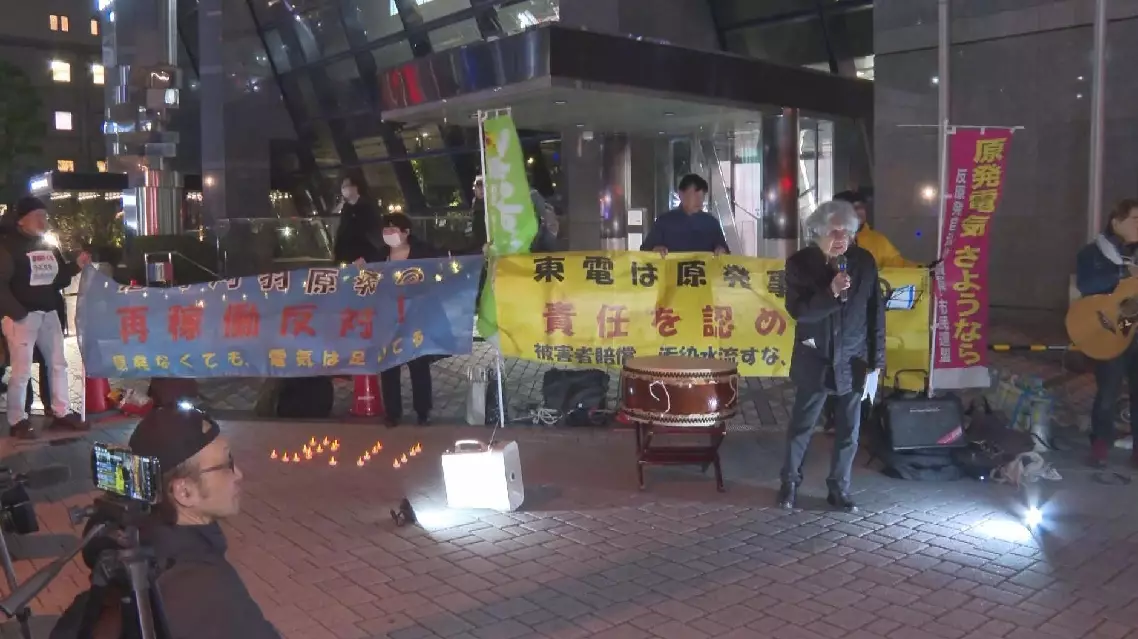
Japanese protesters demand action on aging nuclear plants 15 years after Fukushima disaster

Japanese protesters demand action on aging nuclear plants 15 years after Fukushima disaster
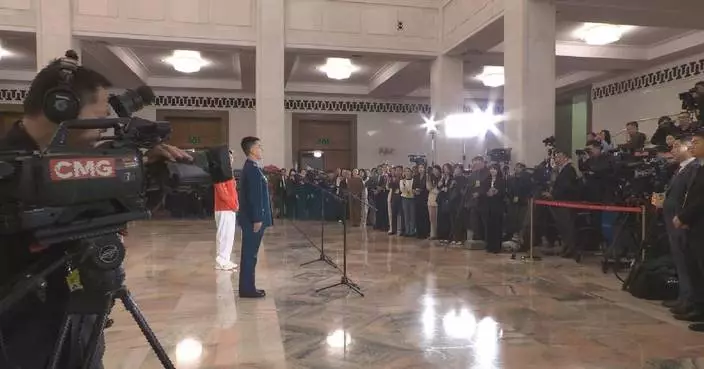
The Ecological and Environmental Code solidifies China's successful reform experiences in the form of law, transforming ecological conservation into a long-term national goal for the sustainable development of the Chinese nation, said a member of the Standing Committee of the 14th National People's Congress (NPC) on Thursday.
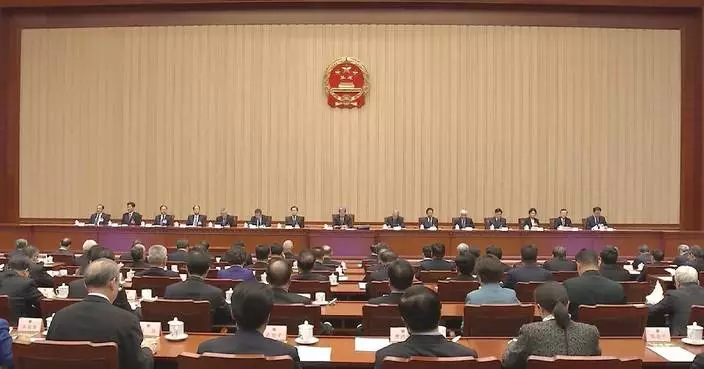
Chinese lawmakers voted to adopt the Ecological and Environmental Code at the closing meeting of the fourth session of the 14th National People's Congress in Beijing earlier in the day.
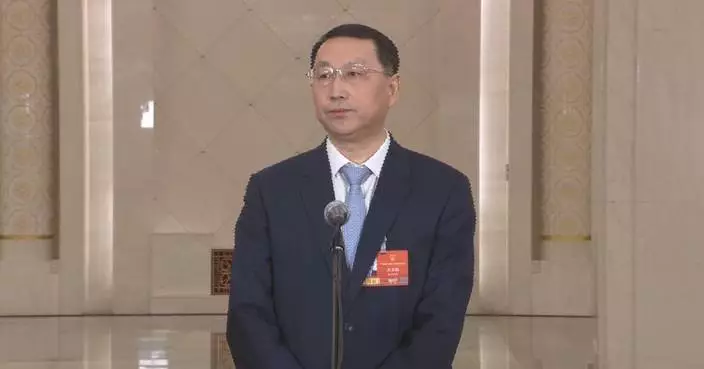
Lyu Zhongmei, also vice chair of the NPC Environmental Protection and Resources Conservation Committee, who first proposed the drafting of the code, said in an interview with China Global Television Network (CGTN) that the adoption of the code represents a milestone in transforming the country's successful reform policies into a stable legal framework, with profound implications on both national ecological governance and people's daily lives.
"I think this actually sends a very strong signal to the world. Many of our past achievements in ecological civilization system reform were reflected through policies, with numerous reform measures introduced. This time, we are institutionalizing the successful experience of those reforms in the form of law, the most authoritative and stable way to solidify them. This shows that our efforts are not just a one-off campaign. Rather, ecological and environmental protection and the building of an ecological civilization are national goals that reflect the people’s aspiration for a better life and serve the ultimate purpose of ensuring the sustainable development of the Chinese nation," said Lyu.
Lyu highlighted that the code directly enshrines China's greenhouse gas pledge and dual-carbon goals into law, demonstrating the country's concrete actions to fulfill its international responsibilities and uphold its image as a responsible major country.
"We have directly written the commitment to fully meet greenhouse gas targets into the code, and incorporated pledges to use the 'dual carbon' goals as a driving force to advance a comprehensive green transformation of economic and social development. I think this reflects our concrete actions to honor our commitments and take responsibility to the international community, demonstrating China’s image as a responsible major country," she said.
On the topic of global trade, she explained how the code will help safeguard China's interests.
"On the one hand, we are raising standards for the green and low-carbon transition and adopting market-based measures. Some of the standards we have established based on China's actual situation and the methodologies we have created can contribute China's experience and expertise to the world. On the other hand, the Ecological and Environmental Code also includes provisions on extraterritorial application and establishes China’s own system of environmental protection standards," Lyu said.
Looking to the future, she discussed the code's role in the 15th Five-Year Plan period (2026-2030).
"During the 15th Five-Year Plan period, I believe our ecological and environmental protection will undergo fundamental changes. In the past, it relied more on strict administrative enforcement and control. But now, while not lowering strict control standards or reducing strict control measures, we must also introduce more incentive-based measures. Strict regulation will push enterprises to transform and encourage them to pursue environmental protection. The code will provide a clear, long-term and stable norm. In my view, the Ecological and Environmental Code is not only a 'tightening band' that constrains corporate behavior, but also an 'engine' that opens up new tracks for enterprises’ future development," she said.

China's ecological environmental code represents milestone in environmental rule of law