China and the Democratic People's Republic of Korea (DPRK) on Thursday officially resumed two-way international passenger train services after a six-year hiatus.
The return of services between the two neighboring countries comes after operations were suspended in 2020 due to the COVID-19 pandemic.
The cross-border trains will run between Beijing and Pyongyang, the capital of the DPRK, and between Dandong, a northeastern Chinese border city in Liaoning Province, and Pyongyang.
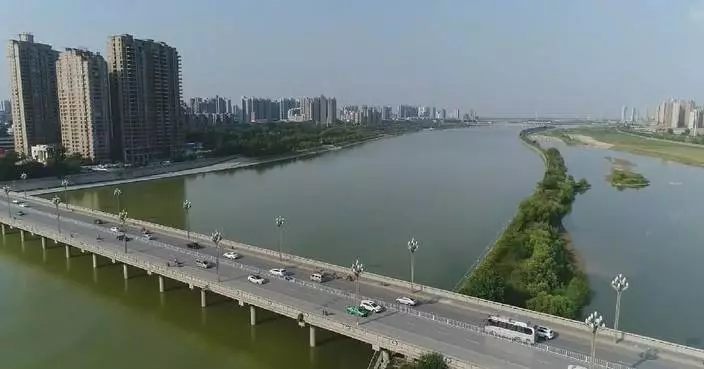
The first passenger train departed from Dandong at 10:00 Beijing Time Thursday morning and pulled into the railway station in central Pyongyang shortly after 18:00 local time, after crossing the Yalu River via a border bridge. [xinhua]
A number of locals and tourists gathered along the riverside in Dandong on Thursday to watch the symbolic moment as the first train made the crossing.
Dandong residents have welcomed the resumption of passenger rail services, which they saves them having to make a 250-kilometer journey to the provincial capital Shenyang in order to catch a flight.
"This is a lot more convenient, since it saves us locals the trouble of having to travel all the way to Shenyang Taoxian International Airport and taking a flight to the DPRK," said a local man.
Another resident hopes that the re-opening of the route will help boost the development of Dandong, which is seen as a vital hub for bilateral trade between China and the DPRK.
"I also hope that the resumption of the train services will help Dandong prosper and develop better," he said.
Meanwhile, another passenger train departed Beijing at around 17:30 local time Thursday, and is scheduled to arrive in Pyongyang on Friday afternoon, after making a stopover in Dandong.
The Dandong-Pyongyang passenger line will operate daily in both directions, while trains between Beijing and Pyongyang will run four days a week, with two-way services scheduled for Mondays, Wednesdays, Thursdays and Saturdays, according to the China State Railway Group.
China expects the resumed train services to help facilitate cross-border travel and boost economic, trade and cultural exchanges between the two countries.

China, DPRK resume two-way int'l passenger train services after 6-year hiatus
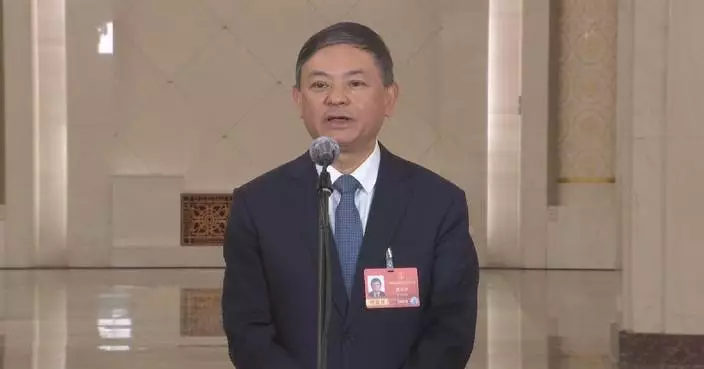
China will strive to further reduce the number of heavy pollution days and improve water quality in rural areas during the 15th Five-Year Plan period (2026-2030), Minister of Ecology and Environment Huang Runqiu said on Thursday.
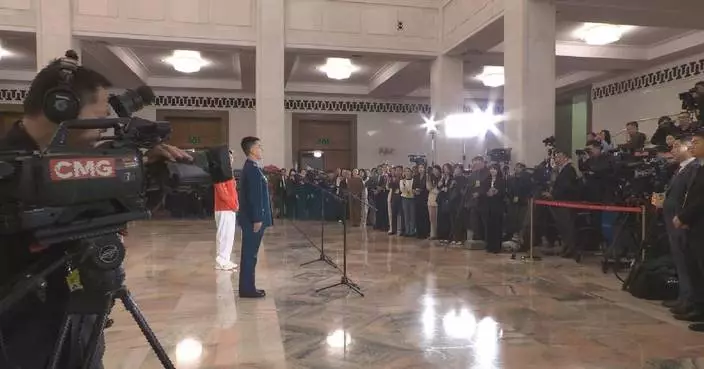
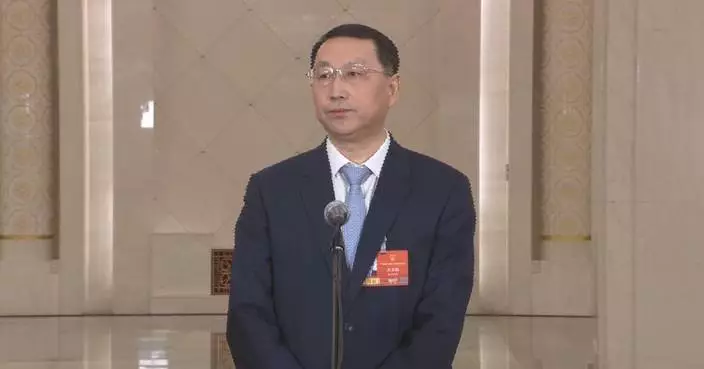
While meeting the press following the closing meeting of the fourth session of the 14th National People's Congress (NPC), Huang outlined the main tasks of pollution control during the 2026-2030 period.
Although the national average proportion of heavy pollution days has dropped to less than one percent last year, said Huang, during autumn and winter seasons, such weather events still occasionally occur in certain regions, including the Beijing-Tianjin-Hebei region and surround areas, as well as urban clusters in the middle reaches of the Yangtze River.
Therefore, reducing the number of heavy pollution days will continue to be a major task for relevant authorities, he said.
"An important goal of pollution prevention and control during the 15th Five-Year Plan period is to continue reducing the number of heavy pollution days. We are quite confident in achieving this. We will adhere to the approaches of systematic and source-based management, addressing both symptoms and root causes, with a focus on the latter. In particular, we will seize the favorable opportunities brought by advancing the goal of peaking carbon emissions during the 15th Five-Year Plan period and the promulgation of the Ecological and Environmental Code today to promote green and low-carbon development of our industrial, energy, and transportation structures, as well as the development of new quality productive forces. Our fundamental solution is to reduce pollutant emissions at the source," he said.
Water quality improvement is another major task, according to Huang.
Over the years, China has seen significant progress in managing the water quality in major rivers and lakes, but in rural areas and urban-rural fringe areas, pollution problems, like black and odorous waters, remain quite prominent in small and micro water bodies, he said, adding that these pollution sources near people's homes may seem minor, they are actually directly related to the well-being of the people.
"This year, we will introduce relevant documents to deepen water pollution control, shifting our focus and efforts further towards rural areas, urban-rural fringe areas, and counties. At the same time, we'll set up over 200 national-level monitoring sites and a number of monitoring sites at the provincial level, in order to help local authorities to better manage small and micro water bodies," said Huang.
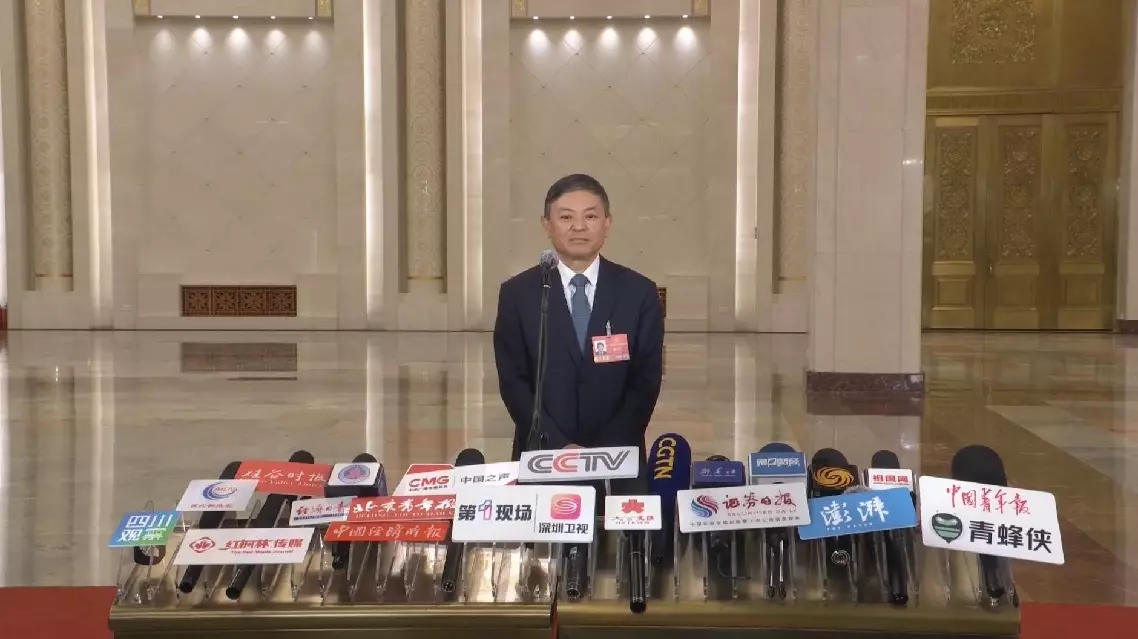
China will strive to further improve air, water quality in following five years: minister