The Chinese government is making progress in integrating medical and elderly care services in an effort to better meet the needs of senior citizens for health and aged care.
According to the National Health Commission, during the 14th Five-year Plan period (2021-2025), the population of people aged 60 and above in China will reach 300 million. And China will transition from a mildly aging society to a moderately aging one.
In the future, elderly care will not only focus on supervision and care but will also emphasize the spiritual and cultural well-being of the elderly, ensuring they enjoy their senior years happily.
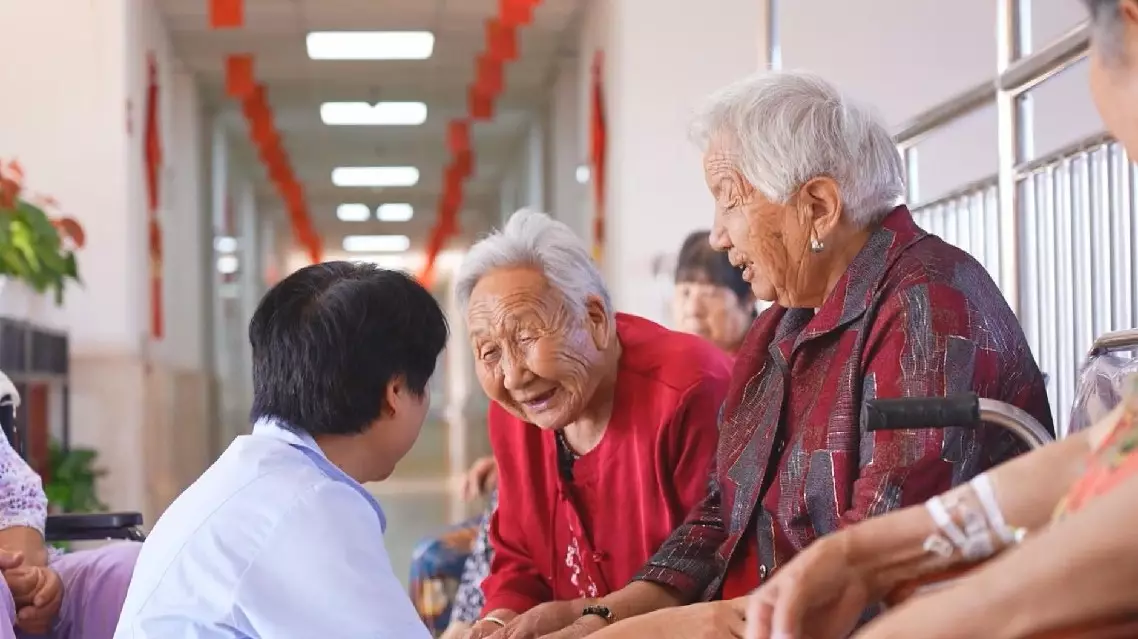
In north China's Hebei Province, the elderly are enjoying themselves at a senior care center.
"Since coming here, you see that I've gained weight, I'm very happy. I also enjoy playing musical instruments, and it provides us with space for engaging activities," said Li Zhe, a senior resident.
"Practice calligraphy, painting, dancing, doing exercises, and physical training, so I've become more fit and healthy than before," said Li Huixin, another senior resident in the center.
The senior care center currently houses over 7,000 elderly people and is equipped with a hospital to safeguard their health. Elderly residents who are physically healthy and capable of self-care can retire in peace, while those who are ill or partially disabled can also receive excellent care.
"Here, we have a Grade A tertiary hospital, (which rank at the top of China's three-tier grading system,) and we have nurses and doctors on every floor, guarding us 24 hours a day. We feel very secure and settled living here," said Yu Jinming, another elderly resident at the health care center.
In addition to urban areas, rural areas in China are actively seeking innovative approaches to integrate medical and elderly care facilities, such as uniting township health centers with nursing homes.
As of now, in east China's Shandong Province, a total of 553 township health centers and community health service centers have cooperated with elderly care institutions.
In a medical and senior care center in Chengwu County, over 150 elderly residents are spending their twilight years here, with two over 100 yeas old and more than 90 have disabilities or partial disabilities.
"We have shifts for elderly care round the clock. There is always someone available 24 hours a day. In case of any issues or emergencies involving the elderly residents, we can respond and provide assistance immediately," said He Li, a doctor at the center.
Since the start of the 14th Five-year Plan period (2021-2025), China has been actively pursuing a national strategy to address the challenges of an aging population by vigorously advancing the coordinated medical and elderly care services.
According to statistics from the National Health Commission, as of now, there are over 7,800 qualified institutions nationwide practicing integrated medical and elderly care, providing more than 2 million beds.
Meanwhile, China has embarked on a three-year initiative aimed at enhancing the quality of services within integrated medical and elderly care institutions.
Moreover, China has introduced the major of "Medical and Care Services and Management" in undergraduate programs for higher vocational education.
A national training program has also been launched to enhance the capabilities of professionals in integrated medical and elderly care across the country. To date, this program has trained over 100,000 practitioners in integrated medical and elderly care.
China advances integration of medical and elderly care services