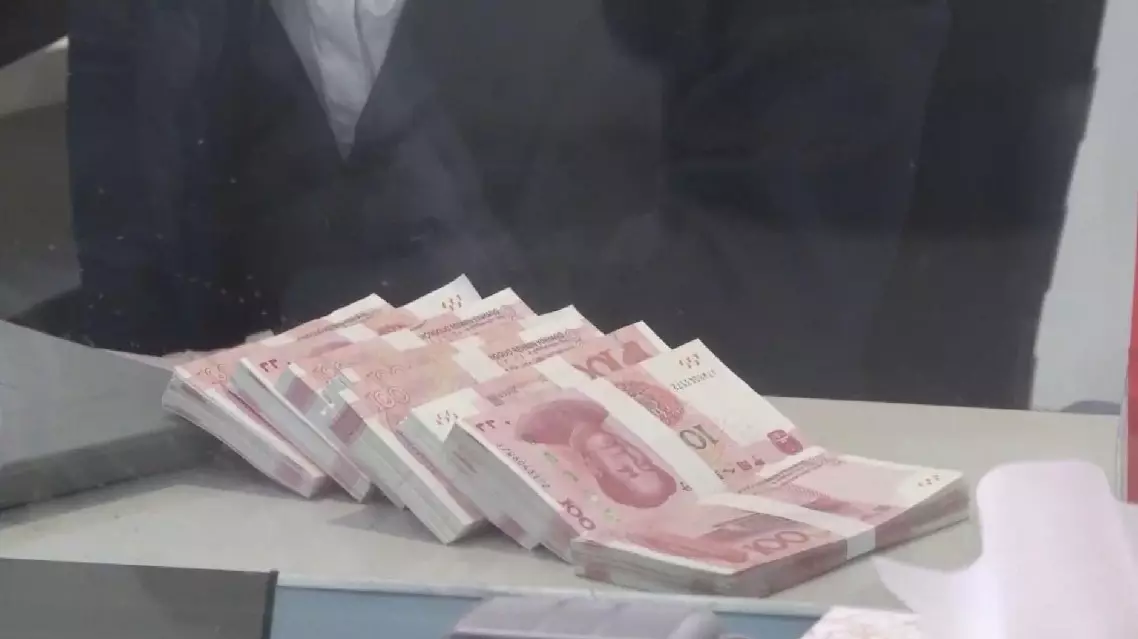
China's plan to inject capital into state-owned banks aims to enhance their risk resilience and lending capacity to better serve the development of the real economy, experts said.
Minister of Finance Lan Fo'an told a press conference on Saturday that China will issue special treasury bonds to support large state-owned commercial banks in replenishing the core tier-1 capital.
Tier-1 capital refers to the core capital held in a bank's reserves, including common stock and disclosed reserves.
"Replenishing capital can further enhance the lending capacity of these commercial banks, as the banks need to provide loans and supply more funds to the market. At the same time, the banks also need to consider the adequacy of capital due to the requirements for creditworthiness. Therefore, this capital injection can further improve the lending capabilities of state-owned commercial banks, allowing them to better serve the real economy," said Yang Zhiyong, director of the Center for Public Finance and Taxation Research at the Chinese Academy of Social Sciences (CASS).
Currently, the operations of China's major state-owned commercial banks are generally stable, with key indicators remaining within a healthy range consistent with international best practices.
The average core tier-1 capital adequacy ratio of those major banks stood at 12.3 percent as of the end of June 2024.
Zhu Qing, a professor of the School of Finance at Renmin University of China, believes that the replenishment of core tier-1 capital is also in response to the heightened international requirements.
"In terms of capital management in commercial banks, the capital adequacy ratio has increased due to the higher global requirements for tier-1 capital. To meet these international standards, the government must utilize methods such as issuing debt to raise funds and strengthen the capital base of state-owned commercial banks," said Zhu.
This work has already begun with the Ministry of Finance, in collaboration with relevant financial regulatory authorities, establishing an interdepartmental working mechanism. A cross-department work group is awaiting specific proposals from the banks for capital replenishment, and all related work is progressing in an orderly manner.
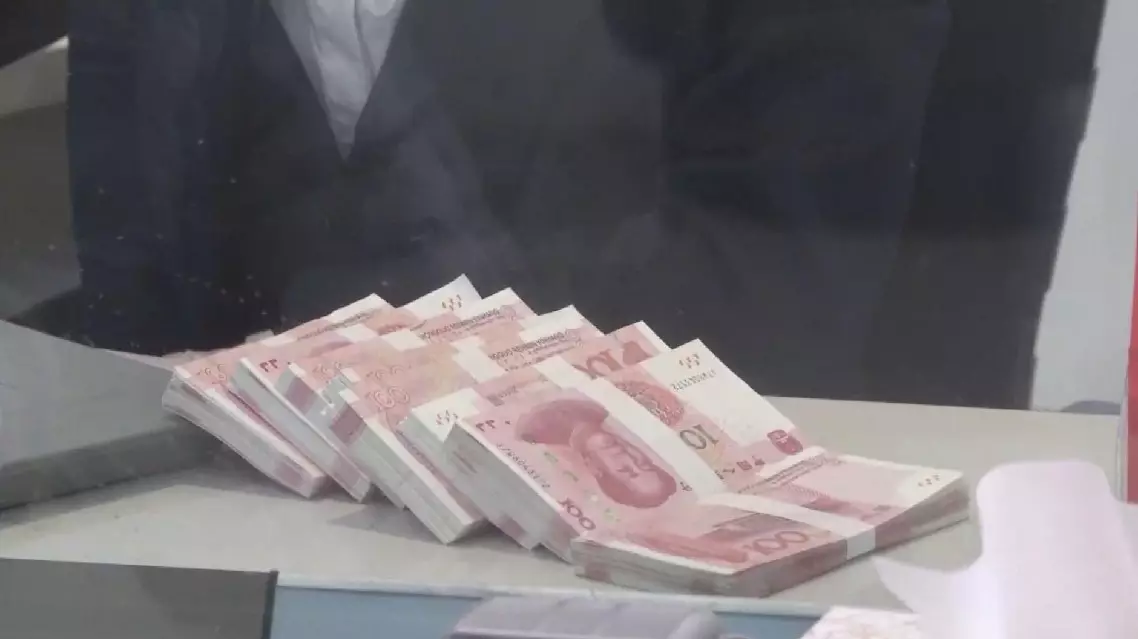
China's capital injection plan to enhance top banks' risk resilience, lending capacity: experts
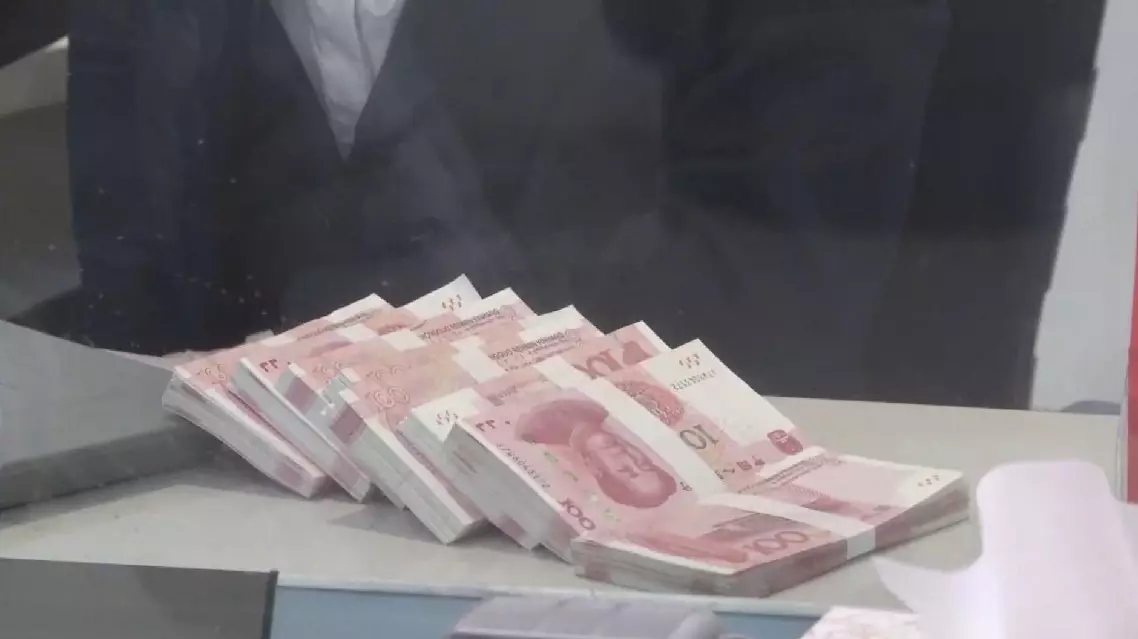
China's capital injection plan to enhance top banks' risk resilience, lending capacity: experts
China's capital injection plan to enhance top banks' risk resilience, lending capacity: experts
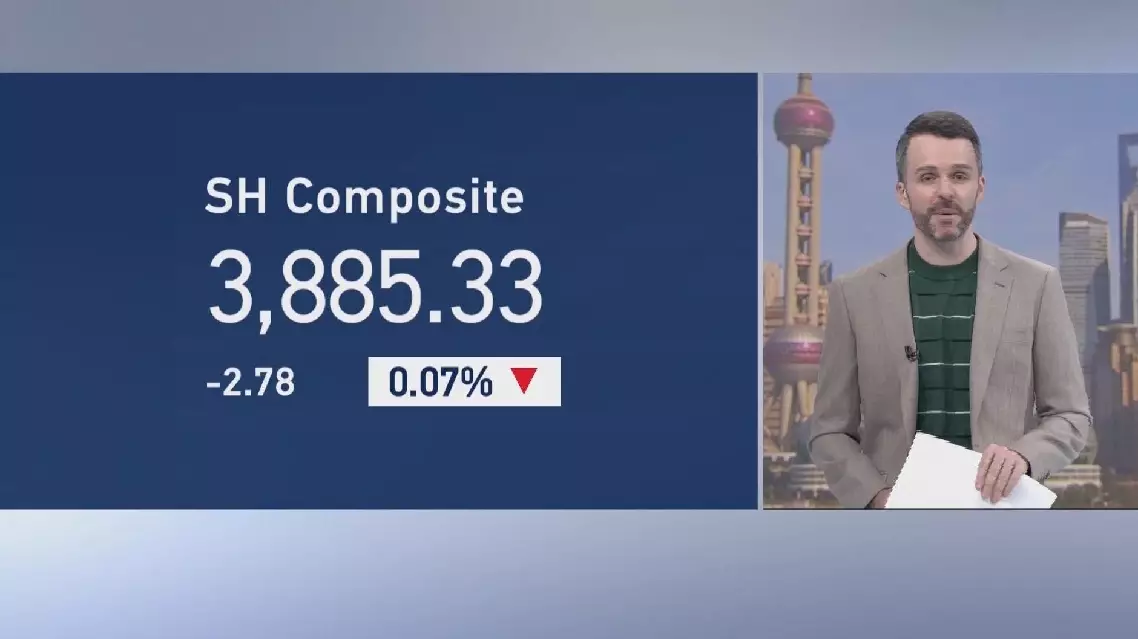
China's benchmark Shanghai Composite Index closed almost flat on Monday amid a wide sell-off of artificial intelligence-related stocks triggered by calls from top executives of major U.S. AI developers to slow the pace of AI development, according to Timothy Pope, an analyst for China Global Television Network (CGTN).
The Shanghai Composite Index dropped 0.07 percent to 3,885.33 points on Monday, while the Shenzhen Component Index closed 0.64 percent lower at 13,384.57 points.
The ChiNext Index, tracking China's Nasdaq-style board of growth enterprises, lost 1.10 percent to close at 3,285.58 points Monday. The STAR Composite Index, which reflects the performance of stocks on China's sci-tech innovation board, closed 0.35 percent lower at 1,811.23 points.
Pope noted that despite the overall resilience of major indexes, AI hardware stocks were among the biggest losers on the day.
"The Chinese mainland markets proved pretty resilient today actually as global AI stocks wobbled. We saw oil prices jump and interest-rate hike bets rising as well. The Shanghai Composite Index ended the session pretty much flat, while the Shenzhen Component [Index] lost a little more than half of 1 percent. AI stocks around the world sank today after the Anthropic CEO Dario Amodei published an essay calling for a slowdown in the development of frontier AI models. That was also backed up by OpenAI boss Sam Altman and some other industry leaders as well. But critically for Chinese companies, Amodei also called for tighter restrictions on exports of advanced AI chips and semiconductor equipment to China. We saw AI shares on the A-share have been caught in a bit of a rotation cycle already lately, with investors switching in and out pretty aggressively from these AI hardware stocks. So that added some extra momentum to today's move out of that sector. They were falling and were one of the weaker sectors today," said Pope.
The analyst said stocks of listed big state-own banks saw an injection of capitals from investors amid AI sell-off.
"Investors took some shelter in financial stocks. The big state-owned banks were once again helping to support the Shanghai index and investors were also waiting for the latest bank-lending data, although that wasn't released before the close of the markets today. There was also a small rebalance in the STAR 50 today. A handful of new companies joined the high-tech index, but that didn't fundamentally change things for the pressured tech sector," he said.
Pope highlighted that Chinese investors will witness a slew of data release in the rest of the week, helping them to have a more comprehensive grasp of the status of the country's domestic demand.
"For the week ahead in China, it's going to be very data-heavy. Tomorrow we have a big data dump including fixed-asset investment, property data, retail sales and industrial production and that's really going to give the market some clues about the state of domestic demand after those very strong trade figures that we saw last week," he said.
Chinese stocks resilient as calls for AI slowdown trigger sell-off: analyst