The China Coast Guard's largest vessel 2901 joined law enforcement patrols in the waters surrounding Taiwan island for the first time on Monday.
The China Coast Guard (CCG) announced that its formations of vessels 2901, 1305, 1303 and 2102 conducted law enforcement patrols in the waters surrounding Taiwan island on Monday. It is a practical action to lawfully enforce control over Taiwan island in accordance with the one-China principle, said Liu Dejun, spokesman of the CCG.
The CCG's 2901 vessel is equipped with a 76mm rapid-fire naval gun. The ship has a full displacement of 12,000 tons. Its speed is 25 knots.
It has a great advantage over its counterparts in terms of endurance, collision resistance, seaworthiness, and speed.
The CCG sent six formations to implement the law enforcement and control patrols around Taiwan island on Monday, that's two times the number of its formations carrying out law enforcement drills in the waters east of the island on May 23.
Compared with the May 23 drills which were carried out in the east of Taiwan island, the Monday patrols were implemented around the Taiwan island.
The coast guard vessels entered the waters near the Matsu island for the first time on Monday, completely shearing Taiwan authorities' notion of the so-called "restricted waters" around the Matsu island.
In this way, the China Coast Guard vessels have carried out law enforcement patrols over all islands attached to the Taiwan region close to the Chinese mainland.
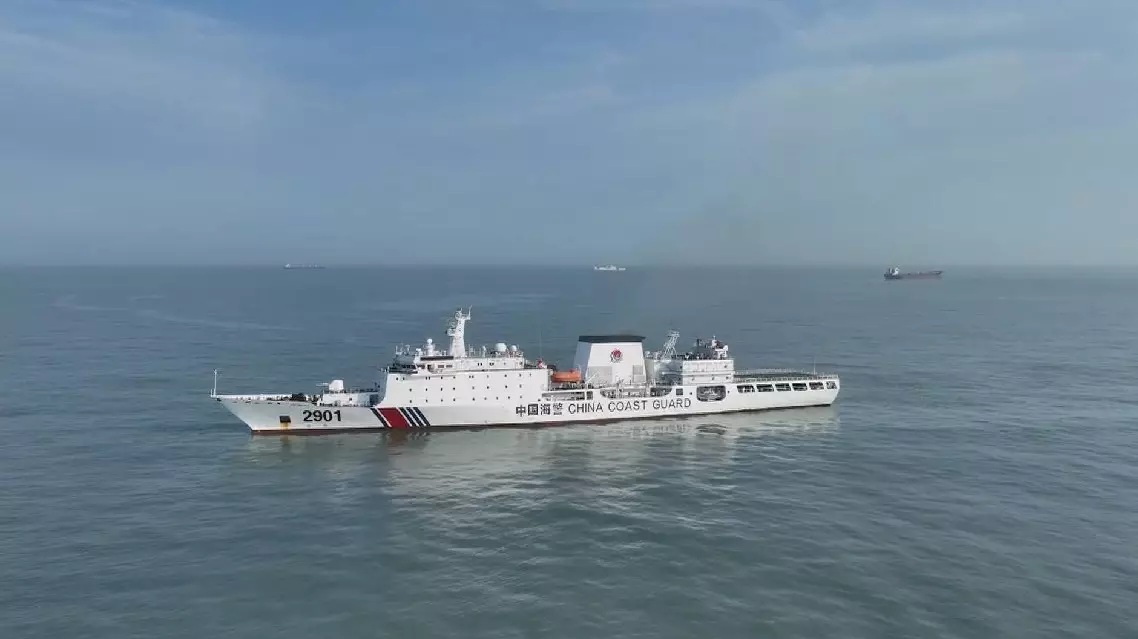
China Coast Guard's largest vessel patrols around Taiwan island
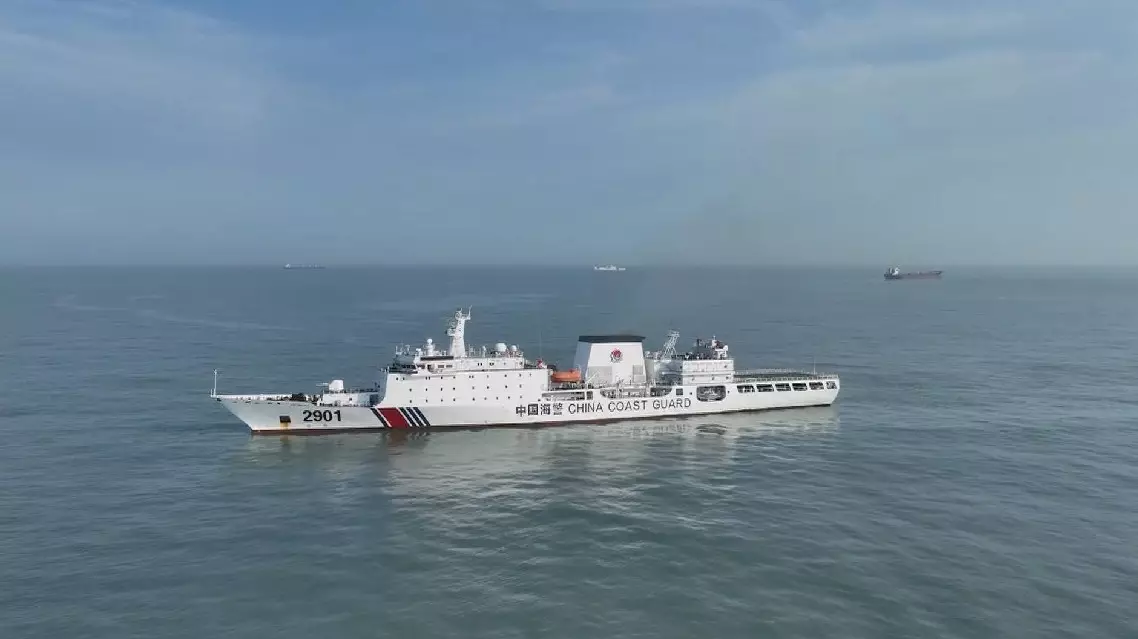
China Coast Guard's largest vessel patrols around Taiwan island
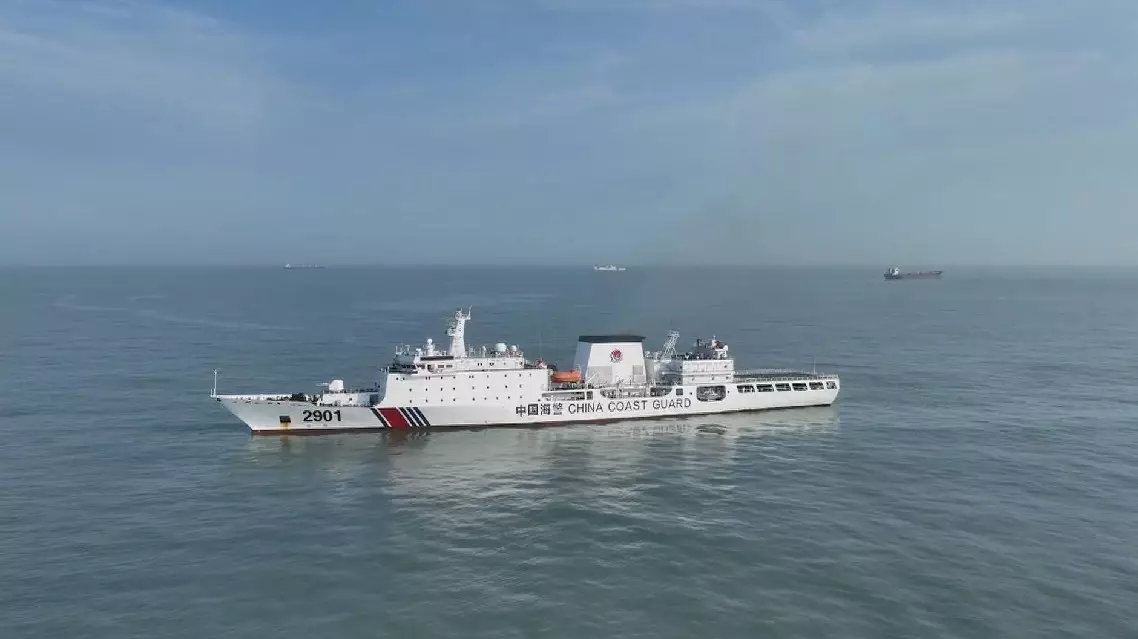
China Coast Guard's largest vessel patrols around Taiwan island
The unveiling ceremony for the Sino-Russian Consortium for Innovation in Forestry Education, Science and Industry took place in Harbin, capital of northeast China's Heilongjiang Province on Monday, prior to Russian President Vladimir Putin's state visit to China on May 19-20.
Jointly initiated by Northeast Forestry University and Saint Petersburg State Forest Technical University, the consortium includes 48 universities, research institutes and enterprises from both countries.
It focuses on talent cultivation, joint research and cultural and industrial exchanges, promoting faculty and student exchanges, course sharing and joint labs to advance sustainable forestry development.
Representatives from the founding universities and an enterprise partner elaborated on the significance of the consortium and its expected impact.
Song Wenlong, president of Northeast Forestry University, highlighted the transformative nature of the partnership.
"The consortium marks a shift from loose exchanges to institutionalized, normalized and substantive cooperation. It has greatly enhanced the international cultivation of forestry talents and the original innovation capacity in scientific research, contributing Chinese and Russian wisdom and strength to deepening China-Russia good-neighborly friendship, empowering regional green development, and building a global ecological security barrier," said Song.
Irina Melnychuk, president of Saint Petersburg State Forest Technical University, spoke about the long-standing friendship and the new synergy the consortium aims to create.
"Our two universities have a long history of friendship. However, to enhance the effectiveness of our cooperation, we decided to establish this consortium. We hope it will generate this kind of synergy. For all those involved in this consortium, there is an opportunity to achieve such significant new results," said Melnychuk.
Alexander Resin, a representative of a Russian enterprise, emphasized the talent exchange and practical immersion opportunities the consortium will provide.
"Today, both China and Russia need highly professional and well-educated talents. Of course, this also provides opportunities for Chinese students to intern at Russian enterprises and for Russian students to intern at Chinese enterprises. This is a very beneficial exchange of ideas, plans, goals and tasks, as well as an opportunity to immerse oneself in real production processes," said Resin.
By 2025, China and Russia had established over 150 cooperative education institutions and programs.
Fifteen university alliances of similar types have brought together more than 800 universities from the two countries to carry out joint scientific research and collaborative innovation.
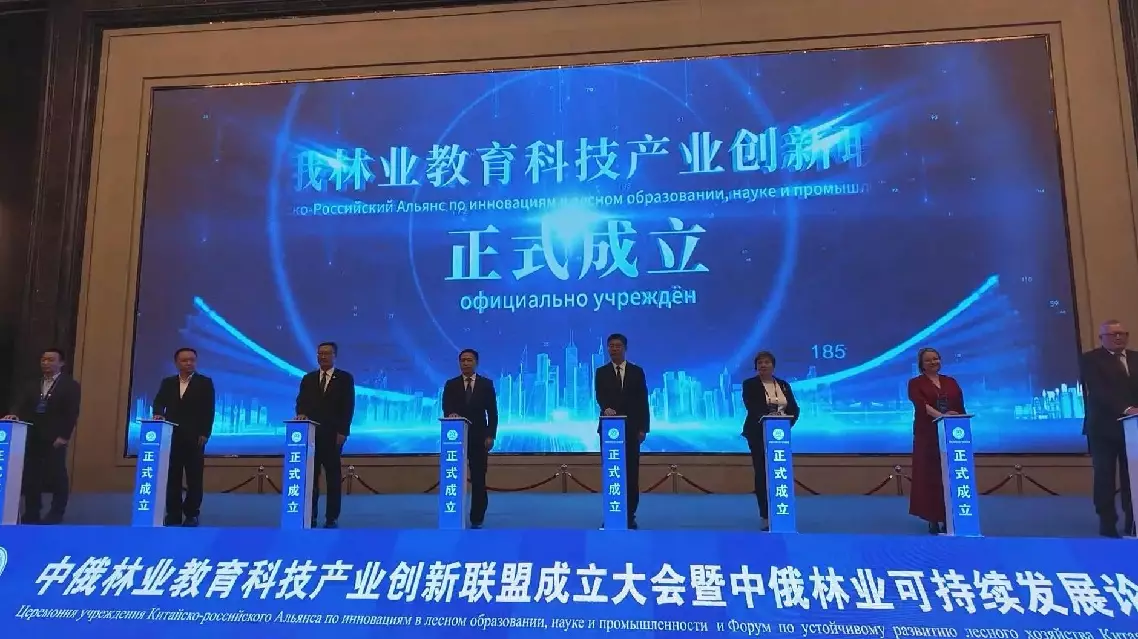
Sino-Russian forestry education consortium launched in northeast China for green growth