The China-aided Gwadar International Airport in Pakistan was jointly inaugurated by Pakistan's Prime Minister Shehbaz Sharif and visiting Chinese Premier Li Qiang in a virtual ceremony on Monday.
The newly-completed airport represents a significant advancement in the construction of the China-Pakistan Economic Corridor (CPEC), highlighting the collaborative efforts of China and Pakistan in promoting infrastructure development and boosting economic growth in the region.
Describing the airport as a major gift from China, Sharif noted that it will drive economic growth and improve regional connectivity.
Sharif extended his gratitude to Chinese President Xi Jinping, Premier Li, and the people of China, for their support in advancing Pakistan's development.
He also described the airport as "another feather in CPEC's cap" and reaffirmed Pakistan's commitment to working closely with China on the second phase of the China-Pakistan Economic Corridor, focusing on continued growth, security, and prosperity for both nations.
Sharif highlighted the signing of several memorandums of understanding (MoU) between the two countries across key sectors like industry, commerce, and agriculture.
Li hailed the project as a crucial step towards realizing regional connectivity and commended the workers from both countries for their commitment.
He stressed that the inauguration would further boost port activities, enhance regional integration, and stimulate economic development.
He reiterated that CPEC has played a pivotal role in Pakistan's progress and promised that China would continue to support Pakistan in pursuing sustainable, high-quality projects under the Belt and Road Initiative.
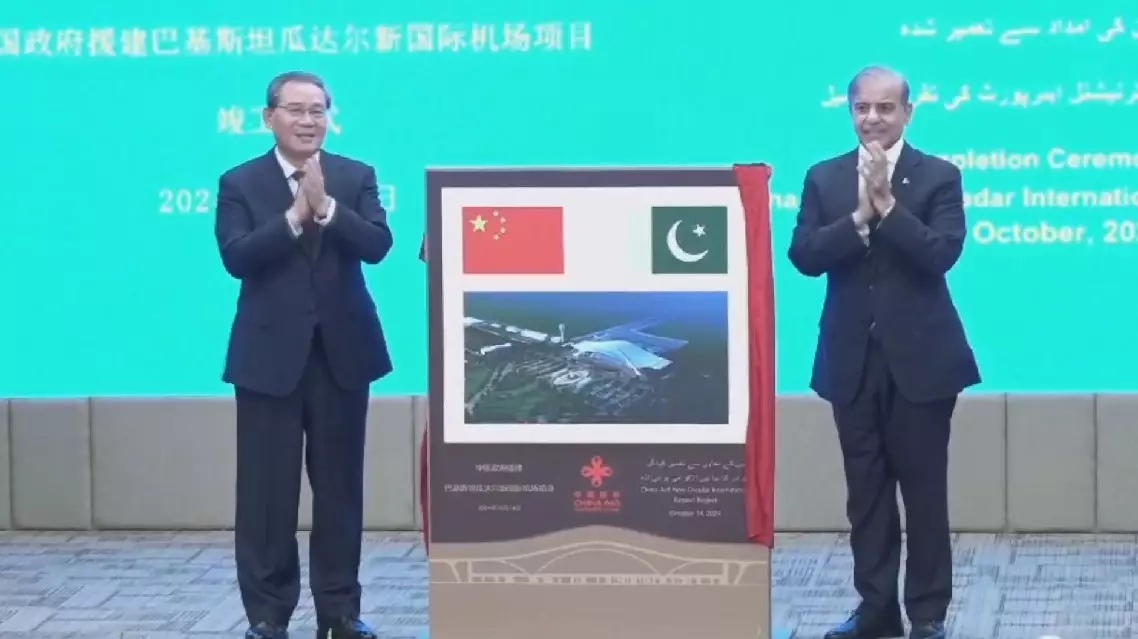
Gwadar airport virtually inaugurated by Pakistani PM, Chinese premier
Facing record fuel price hikes triggered by the ongoing U.S.-Israeli war with Iran, more and more Thais are turning to new energy vehicles (NEVs) to cut transportation costs.
Since the outbreak of the war on Feb 28, the shipping crisis in the Strait of Hormuz has now become the largest supply disruption in the history of the global oil market, accelerating high energy costs. As a result, Thais have experienced a sharp increase in fuel prices in their country and are spending much more on public transportation.
Diesel prices in Thailand have risen from 29.94 baht (nearly 0.92 U.S. dollars) per liter to 47.74 baht (about 1.46 U.S. dollars), a surge of about 59 percent.
Gasoline prices have also shot up by about 34.24 percent.
Recently, at gas stations across Thailand, people are lining up to fill up their tanks before further price rises.
"We have to pay more for the same amount of fuel now. So, we motorcycle drivers are making less money than before. This is affecting our families' livelihoods," said a motorcycle driver.
The worsening fuel crisis has prompted Thai people to take a pragmatic look at vehicle costs, and NEVs are gaining favor due to their lower operating costs.
At the Bangkok International Motor Show which concluded on Sunday, the visitors' focus had shifted from traditional gasoline-powered vehicle to NEVs.
"High fuel costs are causing increasing pressure. NEVs perfectly meet people's current mobility needs. Using electricity significantly reduces transportation costs," said a visitor at the auto show.
The event featured 37 major exhibitors, with Chinese brands accounting for 14 booths, nearly 40 percent of the total.
As many Chinese NEV manufacturers actively participated in the exhibition, Chinese brands became the top choice for many Thai consumers when purchasing vehicles.
Data released by the organizing committee of the auto show showed that in the first seven days of the event, vehicle pre-orders exceeded 40,000 units, a year-on-year increase of 68.8 percent.
Among them, NEV models including pure electric vehicles and plug-in hybrids accounted for as much as 80 percent of the total.
And among the top five brands by pre-order volume, Chinese brands occupied three spots.
"The selection of NEVs we are offering right now comes at a perfect time and also provides a great opportunity for Thai consumers," said Ke Yubin, a person with a Chinese NEV company.
"Rising oil prices are an unavoidable topic. The introduction of NEVs has offered Thai consumers more choices," said Cui Junyuan, local head of another Chinese NEV company.
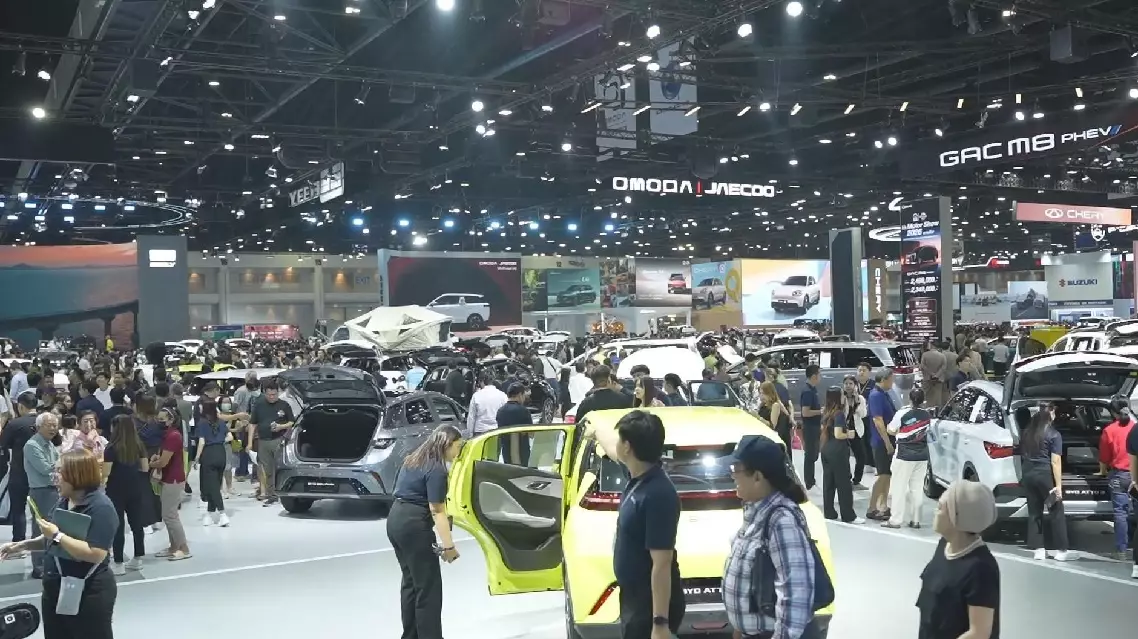
Soaring fuel prices triggered by ongoing Middle East conflict drive Thais to NEV purchases