China's electric vehicles (EVs) and a wide range of EV-related auto parts including batteries are highlighted at the 2024 Paris Motor show that started on Monday in France, capturing attentions of many European auto professionials.
The week-long exhibition, which runs through to Oct. 20, is showcasing the latest innovations in the automotive industry, and marks the first major automotive exhibition held following the European Union's approval of hiking tariffs on Chinese electric vehicles earlier this month.
Many representatives of European exhibitors at the show have expressed their enthusiasm for China's electric vehicle industry chain products, saying the competition between European and Chinese carmakers should be market-oriented.
"Europe is a little bit late in EV industry, and we have to admit this. Our equipment products are also falling behind. I'm standing at an exhibition section of a Chinese battery maker with sophisticated battery-making technologies that I discovered only yesterday. European people need to understand how to manufacture batteries better. I have seen high-end EVs and electric supercars at an auto show in Beijing, so our Chinese friends know exactly how to make such cars," said Serge Bierry, co-founder of Prestige Auto Beaune.
European carmakers belive China and Europe should cooperate in EV industry as China plays an important role in providing raw materials and batteries.
"I think this collaboration actually is absolutely necessary because I can see the European cost, the price of it is so high in comparison with the Chinese car. So I think the future is about collaboration between China and Europe," said José Diez Climent, a strategic project director general from Generalitat Valenciana.
José Diez Climent, Director Generak de Proyectis Estratégicos Presidencia de la Generalitat Valenciana
The auto show has boosted the confidence of Chinese companies as they find they are taking the lead in global EV industry.
Many clients from Europe have acknowledged that they are lagging behind Chinese brands in the EV and EV-related auto parts manufacturing industries, so some senior employees from overseas original equipment manufacturers flocked to China during last year's auto show to see what progress Chinese brands have made, said Cao Kai, an exhibitor of a Chinese brand.
"Against this backdrop, many European companies are trying to catch up with Chinese brands in terms of EV technologies and auto parts," said Cao.
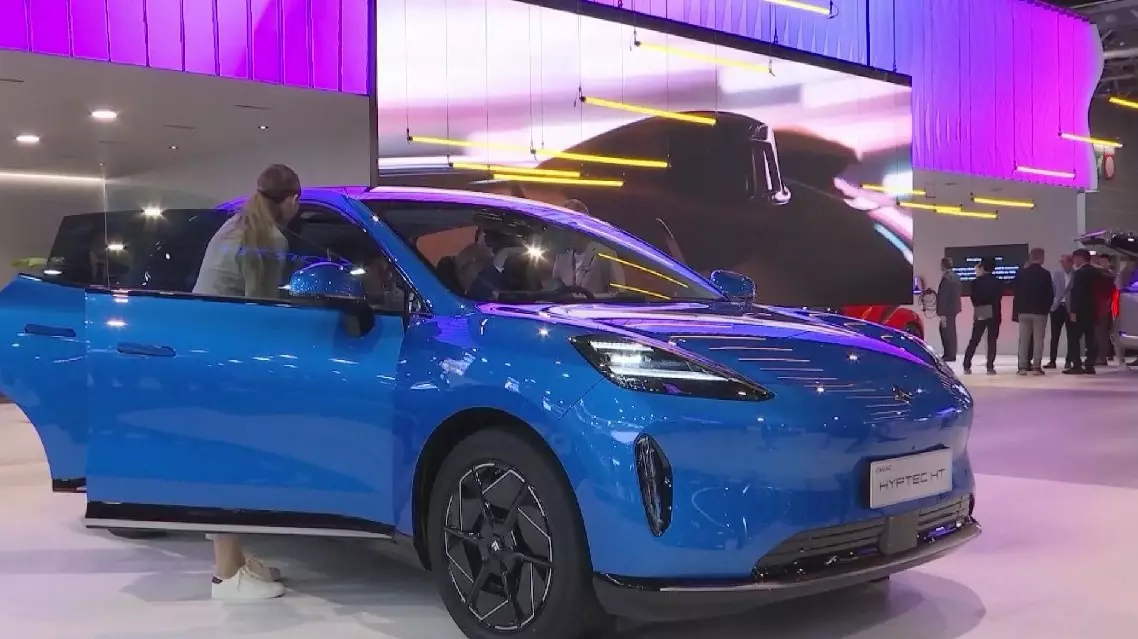
China's EVs, components grab attention from Europe at Paris auto show
A cold front has brought snowfall and freezing temperatures across many parts of China, disrupting transportation and prompting emergency responses. On Sunday morning, many places in Handan City of north China's Hebei Province have experienced snowfall.
The province on Sunday activated a Level-IV emergency response for major meteorological disasters in preparation for incoming heavy snowfall.
According to the provincial meteorological observatory, heavy snow is forecast to hit areas including Shijiazhuang, Cangzhou and Hengshui from day to night on Sunday. Some regions may experience blizzard conditions.
Forecasters warn that the severe weather will disrupt transportation, urban services, and greenhouse agriculture.
Local authorities have been urged to closely monitor weather conditions, enhance risk assessment, and eliminate potential safety hazards.
China has a four-tier emergency response system, with Level I being the most severe response.
Starting early Sunday morning, a new round of snowfall began in areas such as Qingyang City and Dingxi City in northwest China's Gansu Province.
In order to ensure smooth traffic and people's normal life and production, local departments have made coordinated efforts to clear snow from roads.
Local traffic police have also increased presence at key areas to direct traffic and ensure timely response to emergencies.
In addition, widespread snowfall affected the northern parts of northwest China's Xinjiang Uygur Autonomous Region, posing challenges to urban transportation and railway operations.
Traffic police and city departments are mobilizing to clear roads and ensure safe travel for residents.
Railway authorities also implemented pre-arranged snow-response plans, using equipment such as wind-powered snow blowers and de-icing equipment to clear key sections of track and prevent switches from freezing.
The current round of snowfall in the northern parts of Xinjiang is expected to end on March 2. Some areas in east China's Shandong Province also experienced heavy snow on Sunday. At 11:00, the provincial weather service issued yellow warnings for icy roads.
At the Mount Tai scenic area in Tai'an City, the weather transitioned from a mix of rain and snow to snowfall during the day. As of 15:00 on Sunday, the average precipitation had reached 18.9 millimeters, with the snowfall still ongoing. To ensure the safety of visitors, the scenic area has decided to suspend all access routes starting from 16:00. On Sunday morning, cold air prompted snowfall in many places of north China's Shanxi Province. The Shanxi Provincial Meteorological Observatory issued a yellow alert for blizzard, covering areas such as Jinzhong City, Linfen City, and Yuncheng City.
Icy road conditions led to temporary traffic restrictions on several highway sections.
Local authorities promptly activated emergency response plans, deploying crews for snow removal and traffic control.
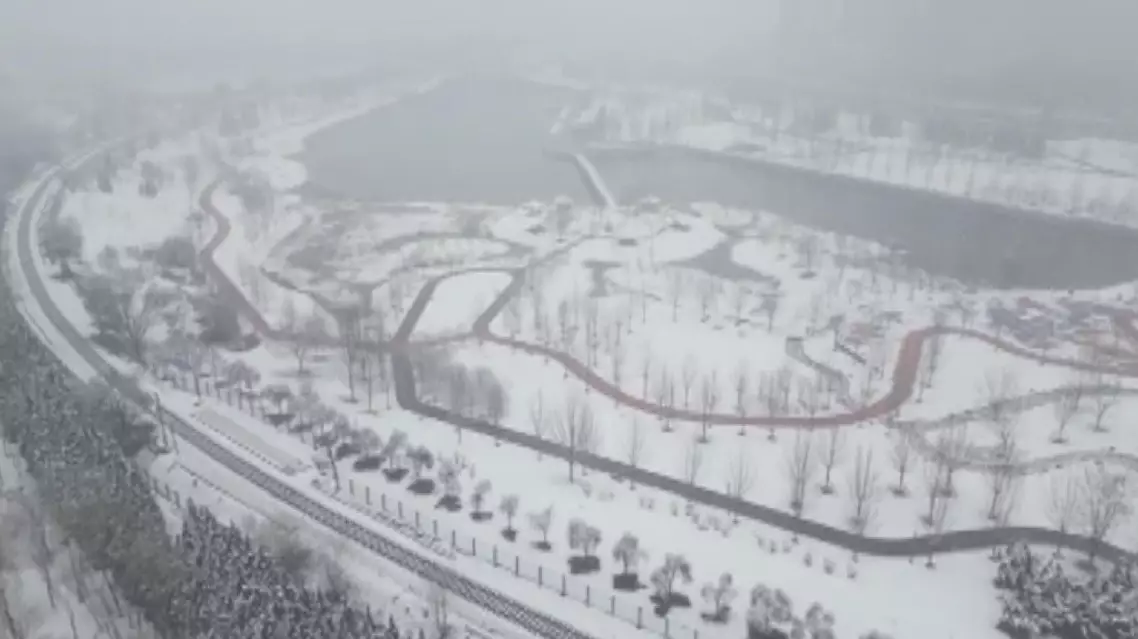
Snowfall hits many parts of China, affecting transportation