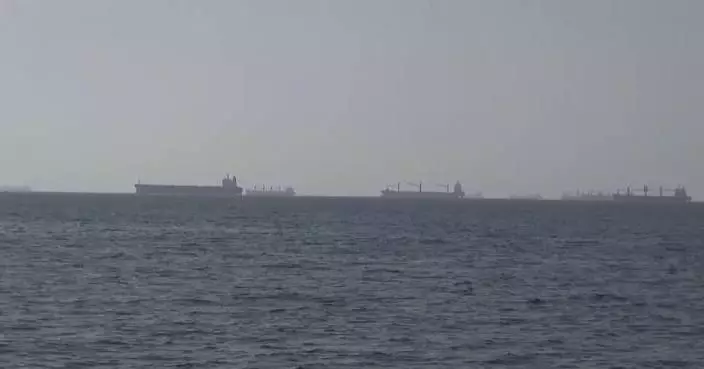
The United Arab Emirates, the Middle East's premier hub for tourism and commerce, came under unprecedented assault Saturday as both Dubai International Airport -- one of the world's busiest aviation centers -- and Abu Dhabi's Zayed International Airport were struck in coordinated attacks, leaving one person dead and 11 injured. The UAE Ministry of Defense reported that the country endured 137 missile strikes and 209 drone attacks beginning early Saturday morning, marking an intensity and frequency of bombardment never before seen in the Gulf nation's history.
Frequent explosions were heard in both Abu Dhabi, the capital, and Dubai since Saturday afternoon, with most blasts attributed to air defense systems intercepting incoming projectiles. Fighter jets were repeatedly spotted streaking across the skies.
Following U.S. and Israeli strikes on Iran earlier in the day, the UAE's General Civil Aviation Authority announced a complete closure of national airspace at 13:00. All major airports immediately suspended operations indefinitely, with authorities advising travelers to avoid airports and contact airlines directly for updates.
Abu Dhabi's Zayed International Airport sustained direct drone strikes from Iran, killing one Asian national and wounding seven others.
Meanwhile, Dubai International Airport, which holds the title of the world's busiest airport for international passenger traffic, was rocked by massive explosions Saturday night when a terminal building took a direct hit, injuring four people. Video footage from the scene shows the terminal interior devastated by the blast, with panicked travelers and airport staff fleeing the building for safety.
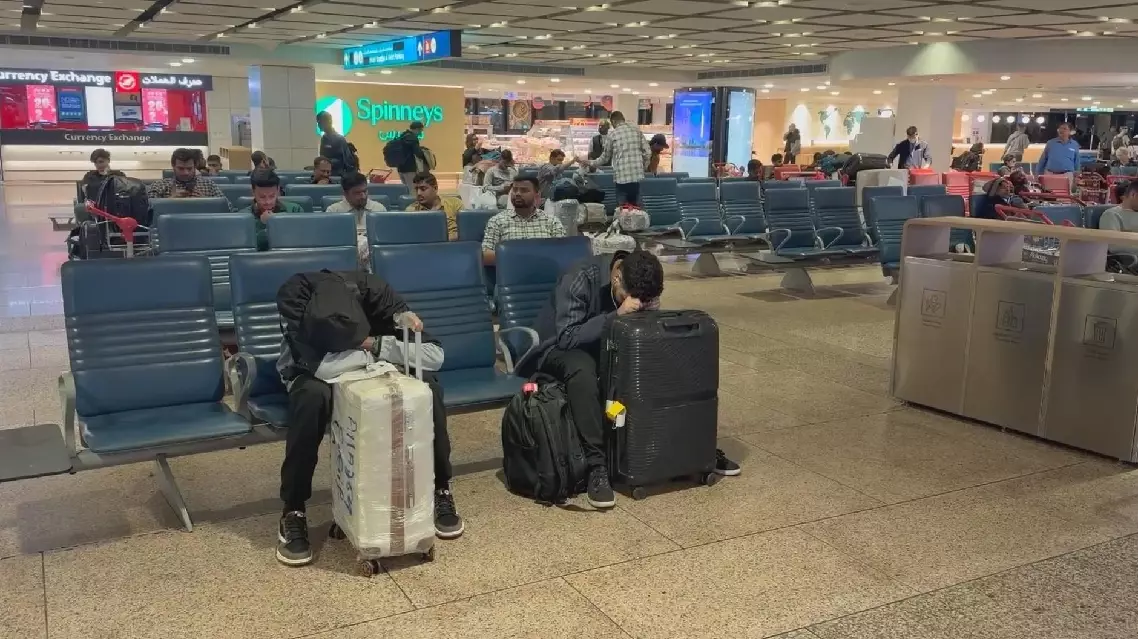
Twenty-four hours after the initial attacks, UAE airspace remains closed, and all three major airports in Abu Dhabi and Dubai are still shuttered. Some stranded travelers have already rescheduled flights for March 3 or 4, waiting to assess the security situation before finalizing plans.
"I don't know what to do. I'm afraid of going to malls or to the beach. I want to stay in hotel. I don't want to think about this, I want to go home very quickly," said a traveler.
In an emergency measure announced Saturday, the UAE's civil aviation authority declared that the government will cover all accommodation and living expenses for affected and stranded passengers. Airports and airlines are coordinating closely to monitor conditions and reschedule flights for the earliest safe resumption of operations.
Iranian strikes also targeted some of Dubai's most iconic hospitality venues. On Saturday evening, the Fairmont Hotel on Palm Jumeirah saw its courtyard engulfed in flames, with thick black smoke visible for kilometers after being hit. Four people were injured in the attack. Later at night, Dubai's landmark luxury hotel Burj Al Arab also caught fire following a drone strike, though no casualties were reported.
Amid heightened security concerns, Dubai's hotels advised guests to remain in their rooms and avoid open or crowded areas, and traffic across the city was noticeably lighter on Sunday.
Two major UAE airports hit in unprecedented attack, 1 dead, 11 injured