The 26th China Mining Conference and Exhibition opened in north China's Tianjin Municipality on Tuesday, with the goal of promoting international cooperation in the mining sector for win-win outcomes. The four-day event, themed "Promoting Mining Cooperation for a Better Future," is expected to attract nearly 400 exhibitors from over 30 countries and regions. Over 23 forums and 12 product and brand promotion sessions are set to be held during the event. After years' development, the event has become a platform for global mining industry to hold dialogs and seek investment and business opportunities.
"China is a major mining producer, importer, processor and consumer. This is determined by the country's economic structure, which features domestic trade foreign trade," said Che Changbo, Secretary of China Mining Association. The global mining industry is increasingly shifting its focus toward the new energy sector, with demand for key materials like bronze, lithium, nickel and cobalt expected to quadruple over the next 20 years.
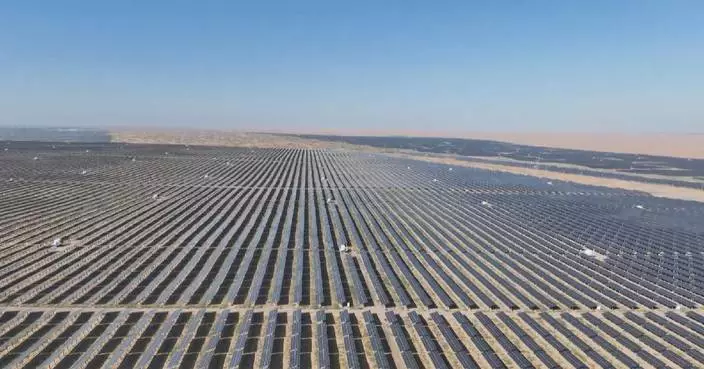
"China has taken a leading role in solar energy development, which raises the bar for new energy storage batteries. We are now accelerating the development of new energy storage batteries and new energy vehicles, which will not only affect the vehicle industry, but more importantly, the future energy," said Che.
On Monday, reports on China's mineral resources and global mining development were released, which suggest that artificial intelligence, big data, satellite and remote sensing and the Internet of Things technologies could be applied into the mining industry to help conserve resources and achieve sustainability.
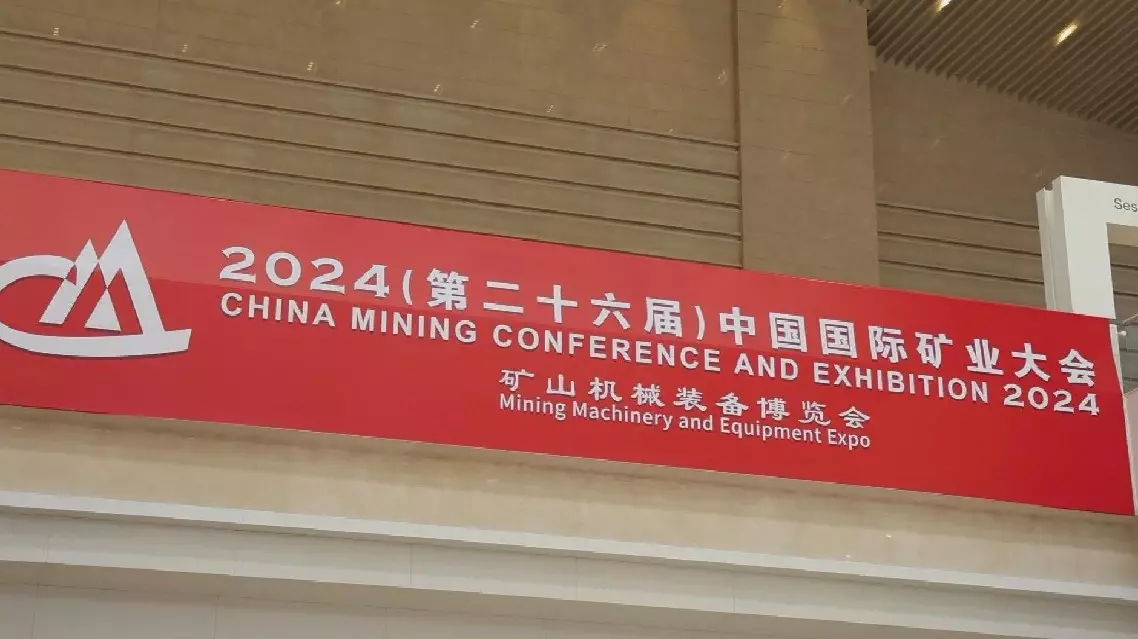
China's mining conference, exhibition opens in Tianjin
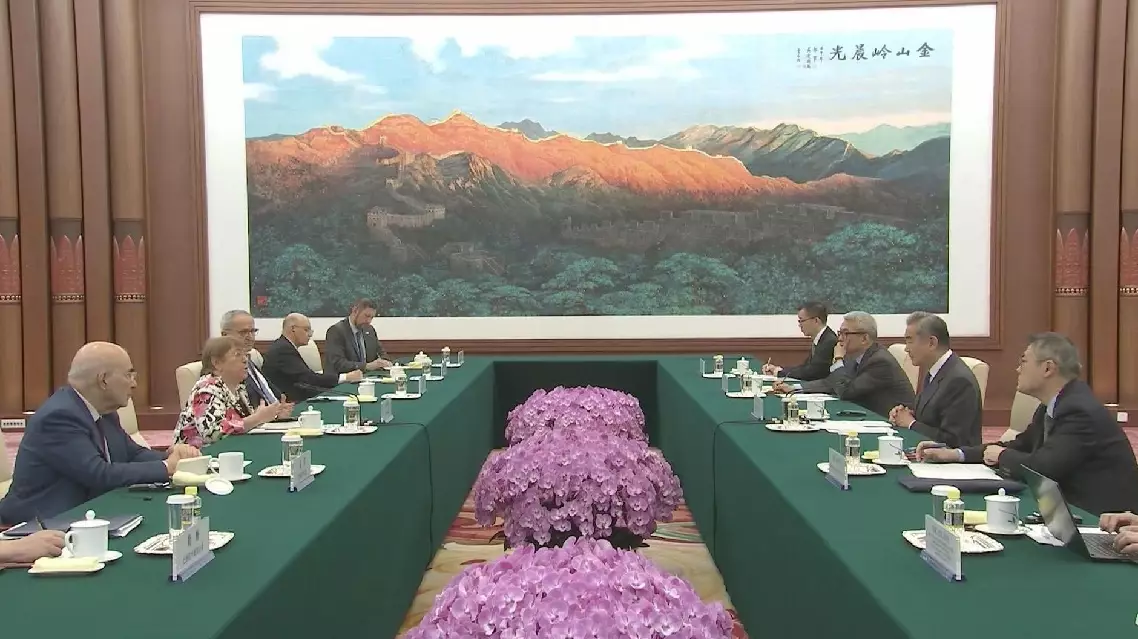
China is accelerating development of 6G mobile technology, with experts projecting commercial rollout by 2030 and highlighting its AI-native design as a break from 5G.
The projection was made at the Zhongguancun Forum (ZGC Forum) Annual Conference, which closed Sunday in Beijing under the theme "Full Integration Between Technological and Industrial Innovation." It featured 60 sessions on topics from global sci-tech governance to basic research, drawing experts, scholars and policymakers worldwide.
ID: 8472083 More than 560 scientific and technological achievements were also showcased at the forum's exhibition center, from robots capable of fine motor tasks to frontier brain-computer interface solutions, alongside advances in intelligent manufacturing, commercial aerospace and regional cooperation.
Amid the forum's showcase of breakthroughs, experts turned to the future of mobile communications, describing how 6G will be fundamentally different from 5G.
"If I had to describe 6G with some keywords, the first would be AI-native. The 6G network is no longer just a communication network. It deeply integrates AI capabilities. Every network unit - base stations, terminals, core networks - will have built-in AI computing power. That means AI agents won’t just live in distant data centers. They’ll be right beside you - in your phone, on the base station you’re connected to, even on routing nodes," said Zhou Xu, director of Advanced Network Tech and Application Development Department at the Computer Network Information Center, Chinese Academy of Sciences.
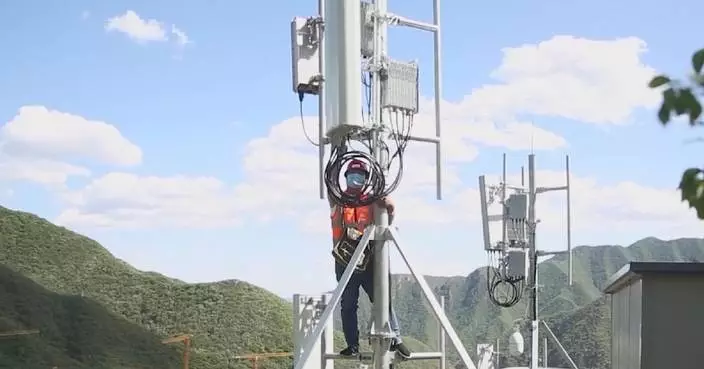
6G is being designed as a fully integrated space-air-ground-sea network, a shift from 5G's terrestrial focus. Satellites are expected to carry base stations, extending coverage to users in cities or at sea.
"China has already completed its first phase of 6G technology trials. Over 300 technologies validated in labs and test networks. The next step, from 2026 to 2028, is to integrate these individual technologies into real devices. The first set of 6G standards is expected around 2029, with trial commercial deployment around 2030. By 2035, we could see 6G smartphones in everyday use - along with applications that aren’t possible on 5G," said Zhou.
However, challenges still remain due to fierce competition over global standards, immature supply chains for core components, and the far higher costs of building a 6G network compared with 5G. Despite these hurdles, China is pursuing innovation and collaboration with what officials describe as a more open and inclusive approach.
"The (6G) network needs to be AI native because AI shouldn’t be dominated by only the big powers. By building an open ecosystem, you actually let different players - from application layer, device layer, and robot layer - have a platform that people can build up capability," said Prof. Tony Quek, a fellow of Academy of Engineering Singapore.
If realized, 6G’s AI-native design and space-based infrastructure could redefine global connectivity and reshape how people live and work.
Since its founding in 2007, the ZGC Forum has become a major international event for advancing science and technology innovation.
China eyes early commercialization of 6G by 2030: experts