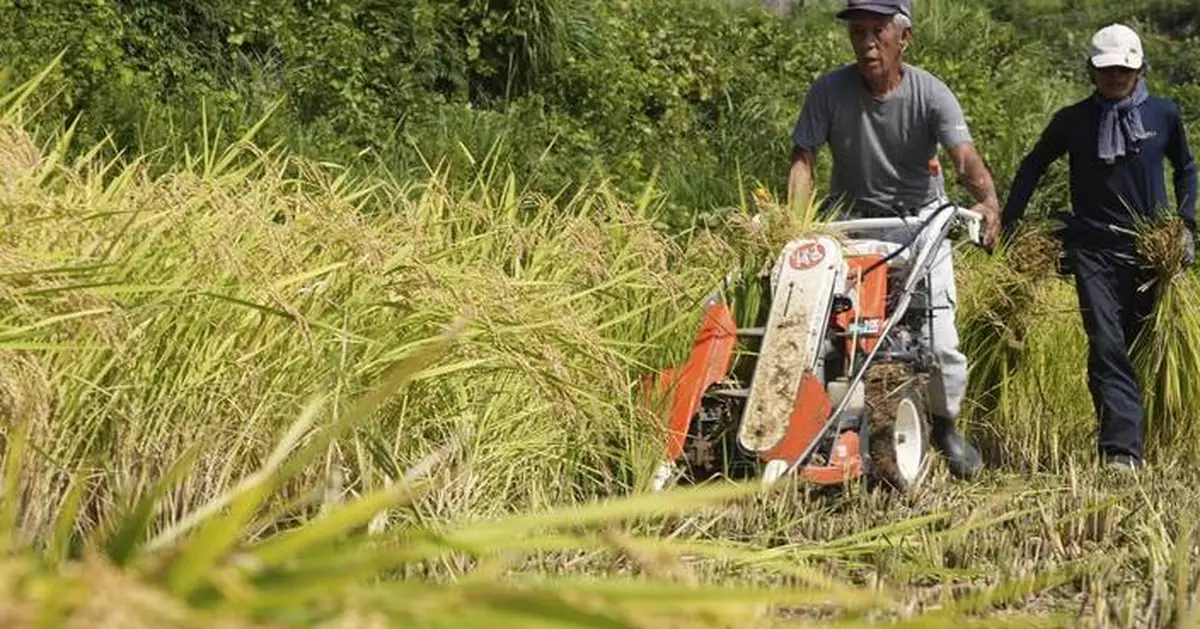
KAMIMOMI, Japan (AP) — In the remote village of Kamimomi in Japan’s western Okayama prefecture, a small group of rice farmers began their most recent harvest in sweltering heat, two weeks sooner than usual.
The prefecture is called “the Land of Sunshine” because of its pleasant climate, but farmers working among the paddy fields and ancient rice terraces say that climate change is hurting the harvest of rice, long a cornerstone of Japan’s diet.
Click to Gallery
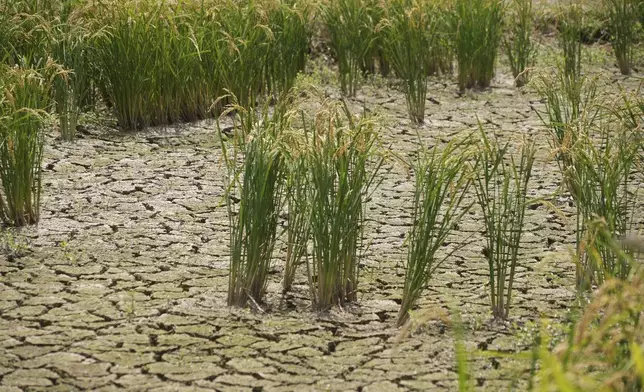
This photo shows an abandoned paddy field with dried up soil in Kamimomi village, Okayama prefecture, Japan on Sept. 7, 2024. (AP Photo/Ayaka McGill)
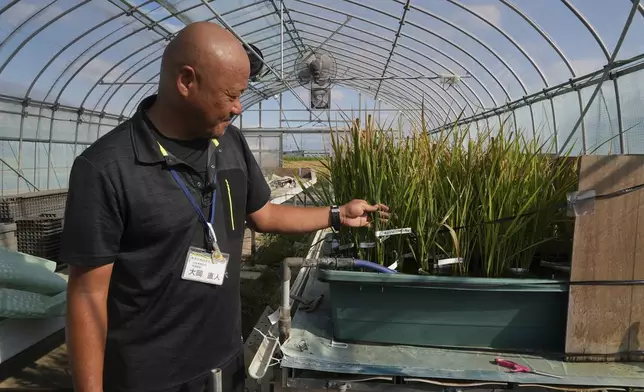
Naoto Ohoka, who manages rice breeding at Saitama's Agricultural Technology Research Centre, shows seedlings used to breed new varieties in Kumagaya, Japan on Sept. 26, 2024. (AP Photo/Ayaka McGill)
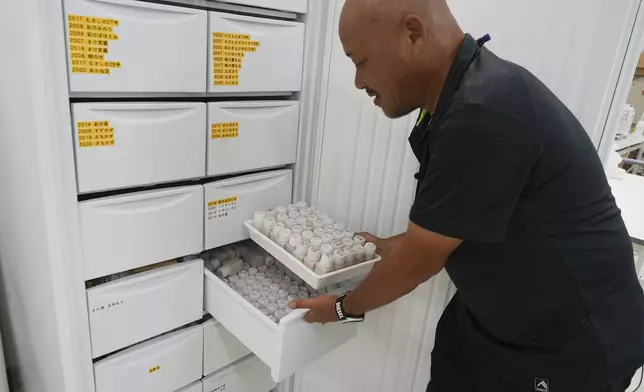
Naoto Ohoka, who manages rice breeding at Saitama's Agricultural Technology Research Center, opens a fridge that stores seeds of new rice varieties in Kumagaya, Japan on Thursday Sept. 26, 2024. (AP Photo/Ayaka McGill)
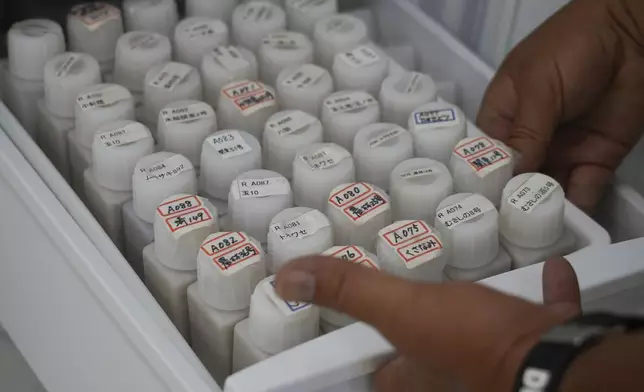
A manager at Saitama's Agricultural Technology Research Center pulls out a draw full of bottles of seeds of new rice varieties developed at various centers in Kumagaya, Japan on Sept. 26, 2024. (AP Photo/Ayaka McGill)
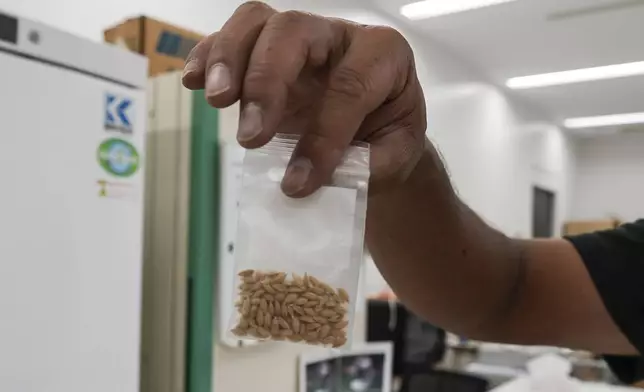
A manager at Saitama's Agricultural Technology Research Centre holds seeds of "Sai no Kizuna," heat-resistant rice variety developed at the center in Kumagaya, Japan on Sept. 26, 2024. (AP Photo/Ayaka McGill)
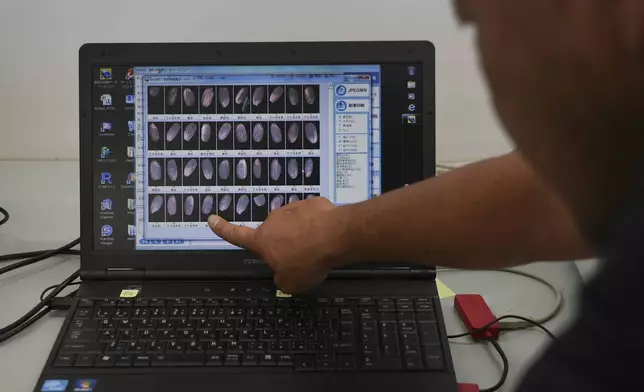
A laptop screen displays comparison photos of rice kernels from different rice varieties at Saitama's Agricultural Technology Research Centre in Kumagaya, Japan on Sept. 26, 2024. (AP Photo/Ayaka McGill)
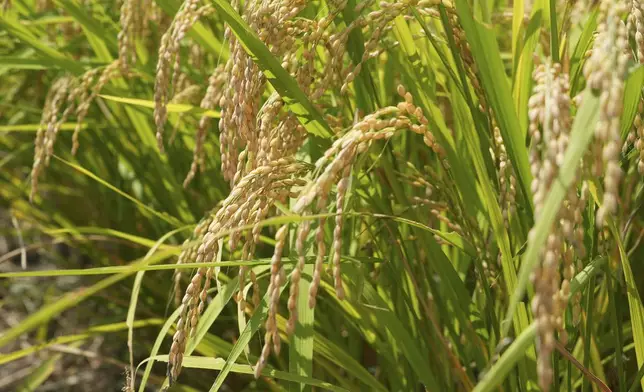
Rice are ready for harvest in Kamimomi village, Okayama prefecture, Japan on Sept. 7, 2024. (AP Photo/Ayaka McGill)
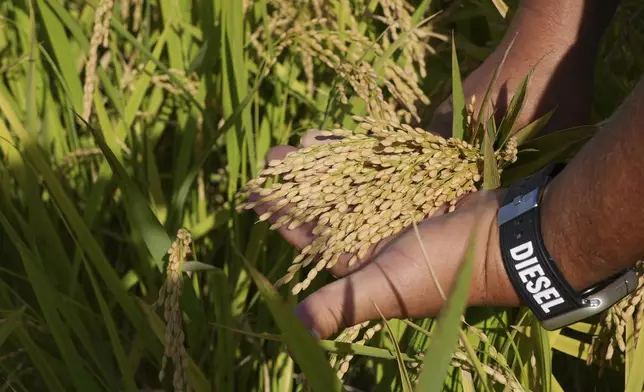
A manager at Saitama's Agricultural Technology Research Centre shows grains of new variety of rice "Emihokoro" in Kumagaya, Japan on Sept. 26, 2024. (AP Photo/Ayaka McGill)
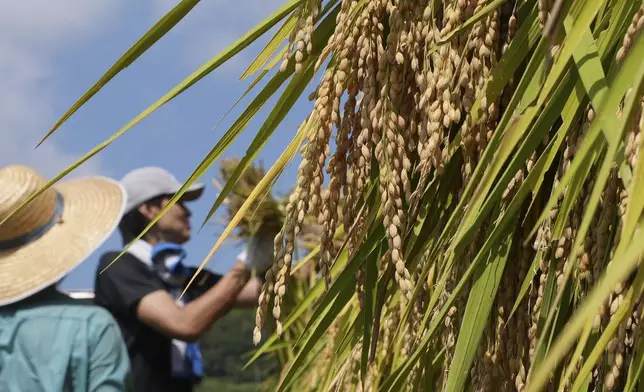
Rice are hanged to dry in Kamimomi village, Okayama prefecture, Japan on Sept. 7, 2024. (AP Photo/Ayaka McGill)
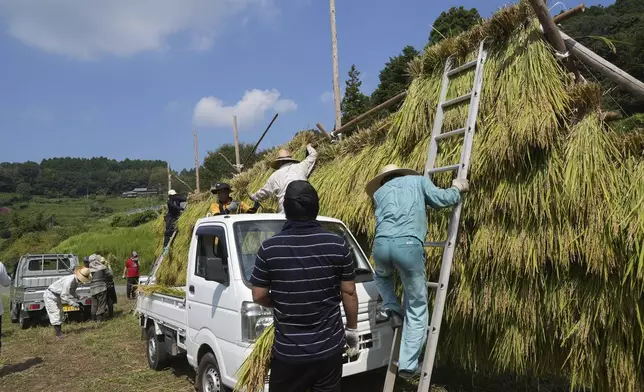
Farmers and volunteers hang rice on a rack in a traditional drying method harvest in Kamimomi village, Okayama prefecture, Japan on Sept. 7, 2024. (AP Photo/Ayaka McGill)
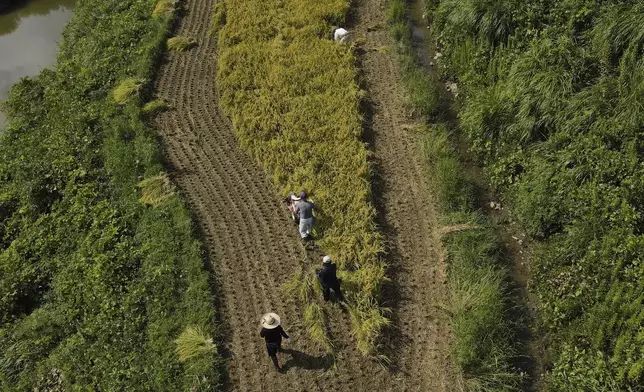
An aerial view of farmers working on rice terraces during harvest in Kamimomi village, Okayama prefecture, Japan on Sept. 7, 2024. (AP Photo/Ayaka McGill)
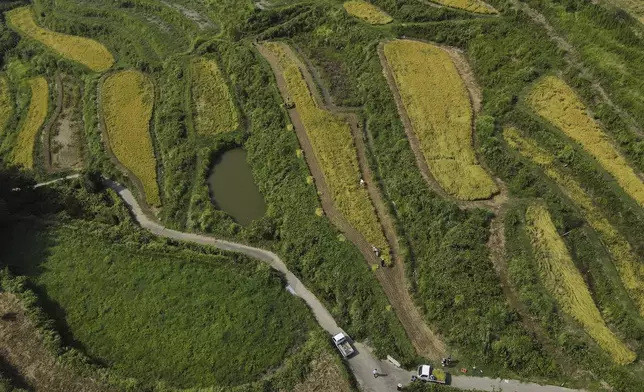
An aerial view of rice terraces in Kamimomi village in Okayama prefecture, Japan on Sept. 7, 2024. (AP Photo/Ayaka McGill)
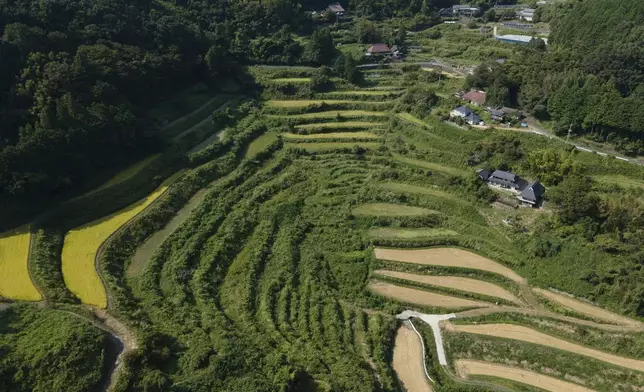
An aerial view of rice terraces in Kitasho village, Okayama prefecture, Japan on Saturday Sept. 7, 2024. (AP Photo/Ayaka McGill)
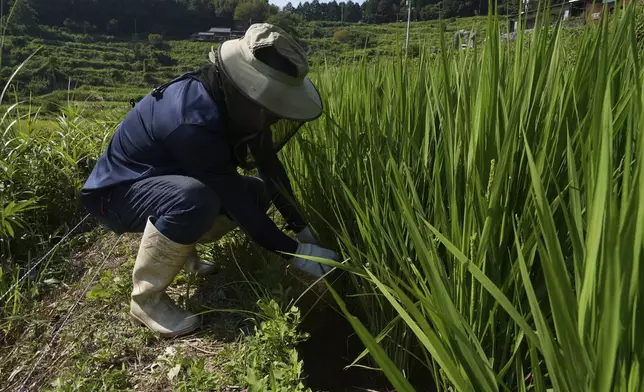
Farmer Joji Terasaka inspects rice in Kamimomi village, Okayama prefecture, Japan on Sept. 6, 2024. (AP Photo/Ayaka McGill)
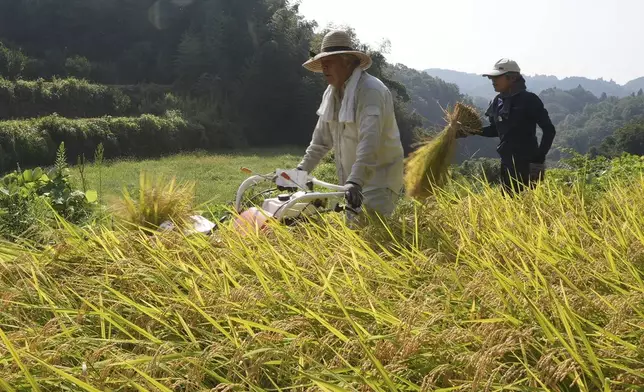
A farmer operates harvester machine on a rice terrace during harvest in Kamimomi village, Okayama prefecture, Japan on Sept. 7, 2024. (AP Photo/Ayaka McGill)
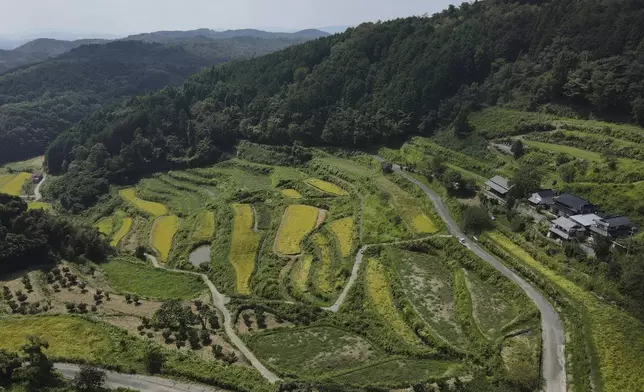
An aerial view of rice terraces in Kamimomi village, Okayama prefecture, Japan on Sept. 6, 2024. (AP Photo/Ayaka McGill)
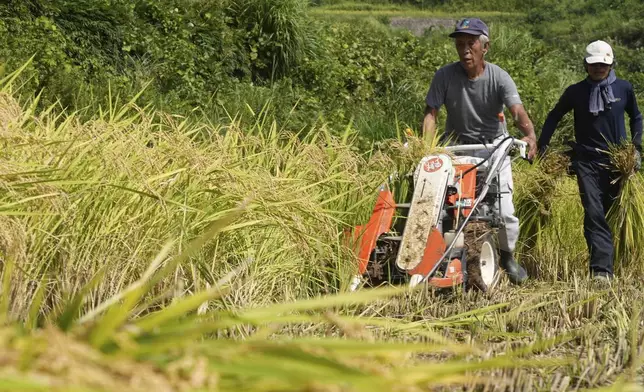
A farmer operates harvester machine on a rice terrace during harvest in Kamimomi village, Okayama prefecture, Japan on Sept. 7, 2024. (AP Photo/Ayaka McGill)
“Last year, an exceptional heat wave took the water out of the rice, which became small and thin,” rice farmer Joji Terasaka said. “So I am worried about that this year because it will be just as hot."
This year Japan experienced its hottest July on record, with temperatures reaching 2.16 C (3.9 F) higher than average, according to the Japan Meteorological Agency. The globe has seen a 1.2 C (2.2 F) rise in average temperature since preindustrial times, and scientists agree that warming needs to be capped at 1.5 C (2.7 F) to stave off the worst effects of climate change. That includes even more powerful heat, storms and irreversible ice melt.
Last year, Japan recorded a poor rice harvest nationwide because of exceptionally hot weather. Ministry data showed the country’s private-sector rice inventory fell to 1.56 million tons in June, the lowest level since records began in 1999. Last year was the hottest on record globally, though it’s feared that this year may top it.
The drop in harvest in Japan was partly to blame for this year’s widespread summer rice shortage, according to officials. There were empty shelves in supermarkets, and some retailers are still enforcing purchase limits of one rice bag per customer.
“Perhaps people think that an increase of one degree Celsius in average temperature isn’t much. But it’s quite a big change for plants and crops,” says Yuji Masutomi, a researcher at the National Institute for Environmental Studies in Tsukuba, north of Tokyo.
Masutomi said the rising temperatures not only influence the growth cycle and yield of rice, but also hurt the quality of the grain.
When temperatures rise above 27 C, the buildup of starch inside rice grains is reduced. That causes the crop to take on a chalky appearance, and its value is reduced.
At least a fifth of rice farms have reported a drop in quality from rising temperatures, according to a farming ministry report last year.
“Not only is the appearance not good; people say the taste drops too,” Masutomi said.
For farmers in Kamimomi, there's another problem with working under exceptional heat. The average age of agricultural workers in Japan is nearly 69, among the oldest in the world, and older people are especially vulnerable to heatstroke.
Toshimi Kaiami led a community project in Kamimomi that involved reviving some of the paddy fields abandoned because of the aging population.
“There are no longer any successors,” says Kaiami. “We are heading toward extinction.”
The community project divides labor among Kamimomi's farmers. But preparations for the harvest coincided with the hottest months of the year — April to September.
“It takes a half year to produce rice. The heat and the work that we have to endure during that time is really tough,” said rice farmer Mitsumasa Sugimoto, 77.
To deal with climate change, the government is promoting the adoption of heat-resistant rice variants, including Sai no Kizuna, which was developed by a research center in Saitama prefecture, near Tokyo.
Research organizations around the world have worked to produce more resilient strains of essential food like rice while introducing more heat and drought resistant grains like sorghum or millet.
“Last year and this year have been extremely hot, but even in those conditions, Sai no Kizuna maintained a certain level of quality,” said Naoto Ohoka, who manages rice breeding at Saitama’s Agricultural Technology Research Center.
“Its other characteristic is that it is very delicious.”
The center cultivates more than a thousand types of rice strains, and through cross-pollination officials assess and select the best performers to develop new varieties.
Sai no Kizuna was developed in 2012 to better withstand heat, a trait that has become more widely recognized recently as Japan sees hotter summers. The strain also stands up well against typhoon wind and certain pests and diseases.
Researchers want to develop more resilient strains against heat as temperatures are projected to continue rising. Masutomi recommends that variants tolerant of temperatures up to 3 degrees Celsius higher should be introduced across Japan by the 2040s.
But it’s a long process. It can take up to 10 years to develop a new variant. Once it’s approved for the market, farmers must then be convinced to switch to the new strain.
The most widely grown variety is Koshihikari, which is less heat resistant. Even so, older farmers have shown a reluctance to switch to other varieties. Farming ministry data show that only around 15% of Japanese paddy fields have adopted heat resistance variants.
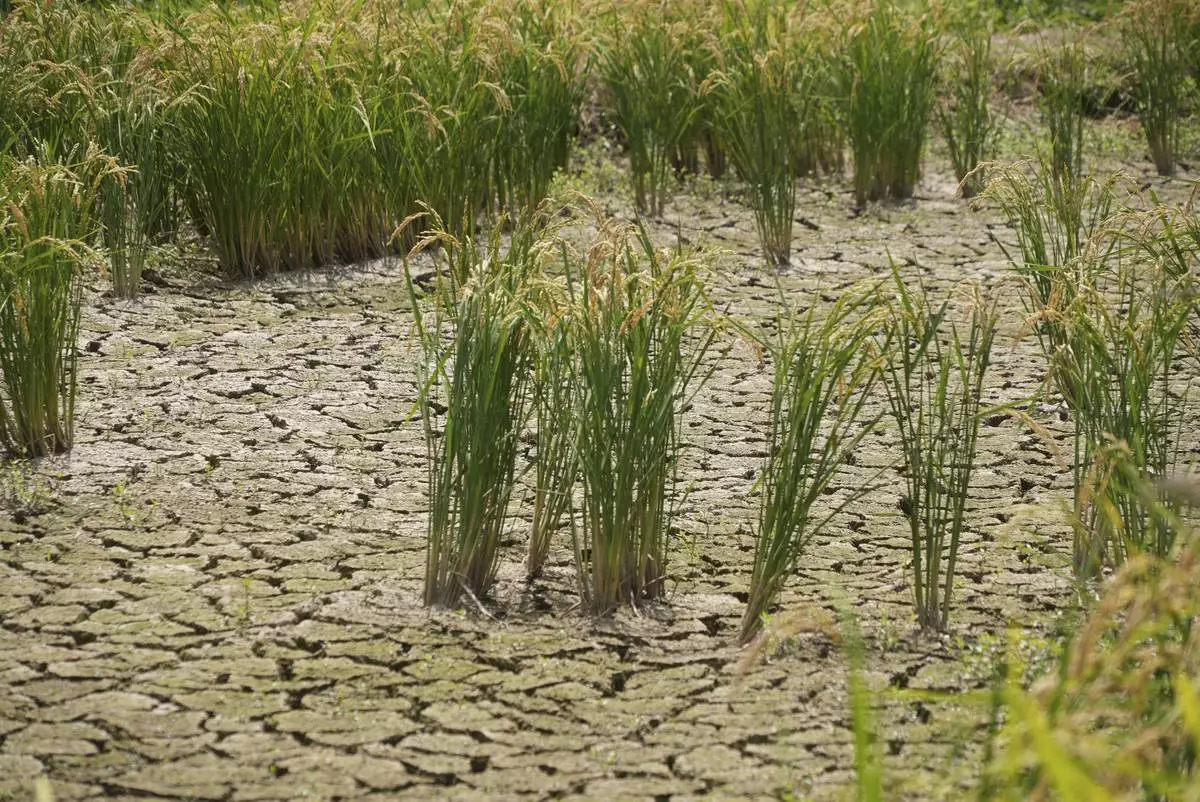
This photo shows an abandoned paddy field with dried up soil in Kamimomi village, Okayama prefecture, Japan on Sept. 7, 2024. (AP Photo/Ayaka McGill)
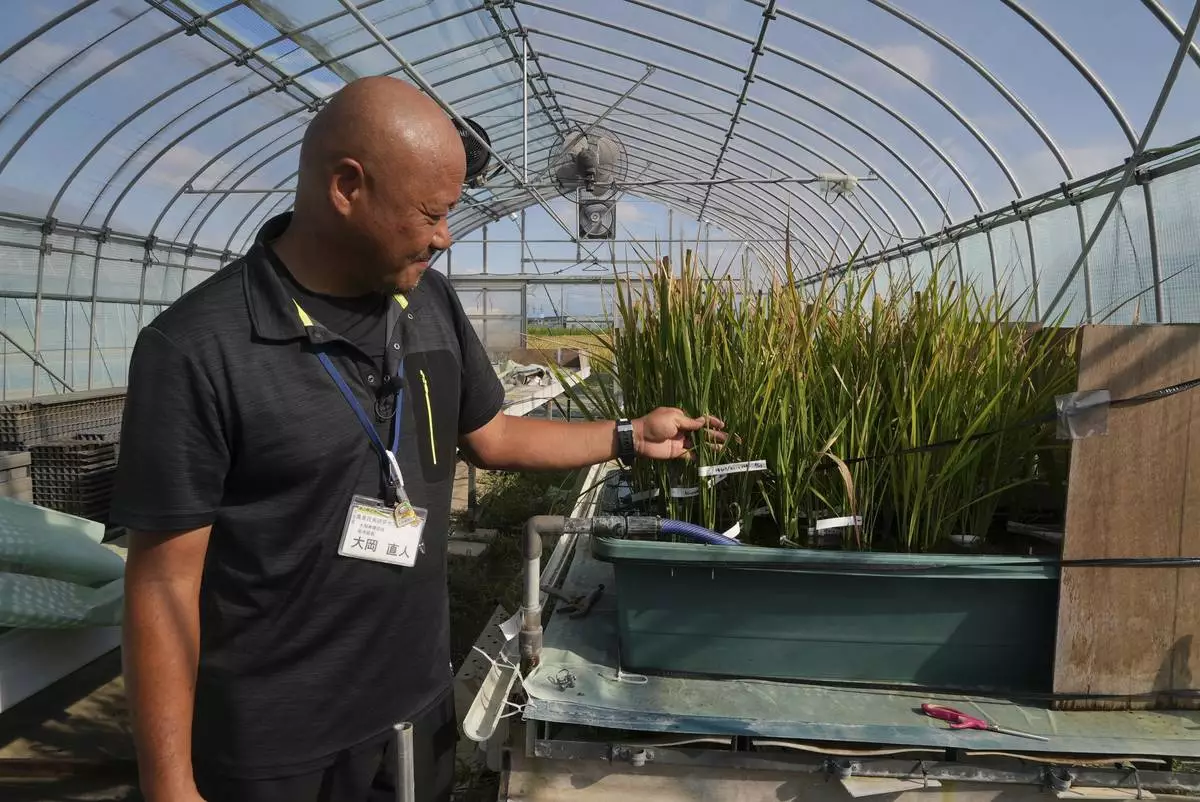
Naoto Ohoka, who manages rice breeding at Saitama's Agricultural Technology Research Centre, shows seedlings used to breed new varieties in Kumagaya, Japan on Sept. 26, 2024. (AP Photo/Ayaka McGill)
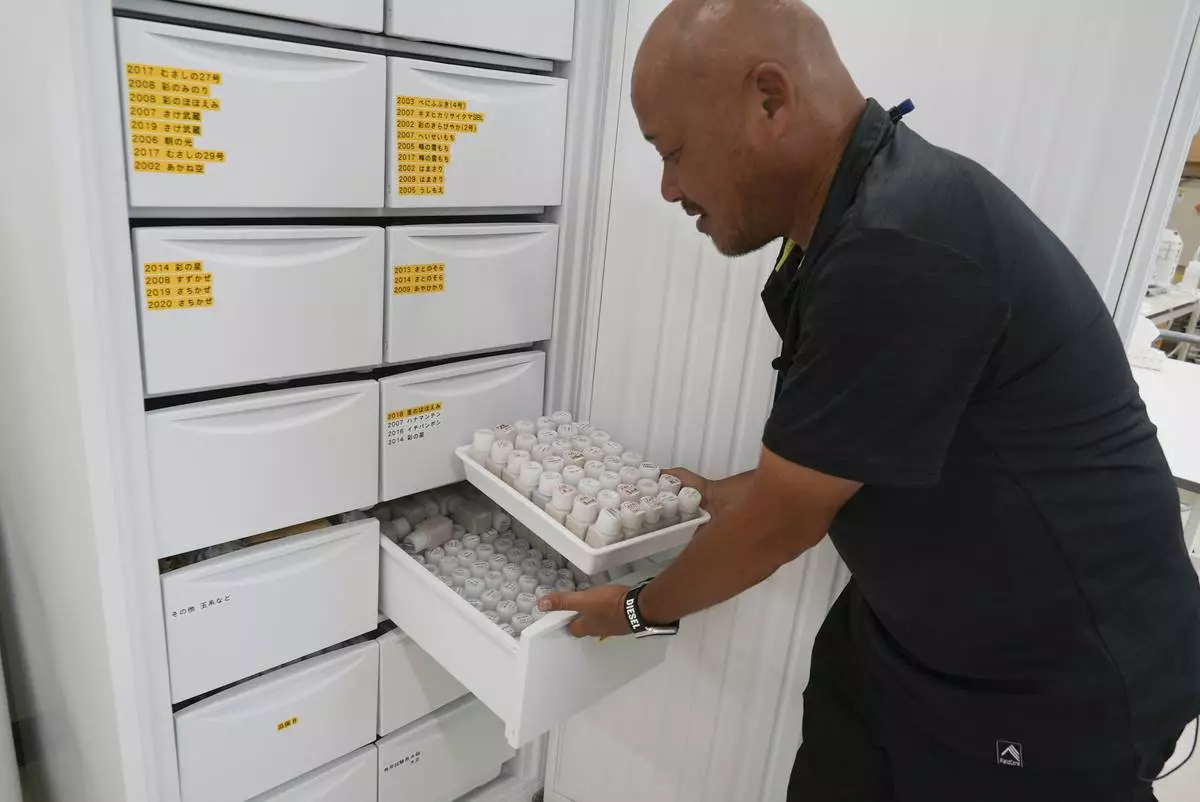
Naoto Ohoka, who manages rice breeding at Saitama's Agricultural Technology Research Center, opens a fridge that stores seeds of new rice varieties in Kumagaya, Japan on Thursday Sept. 26, 2024. (AP Photo/Ayaka McGill)
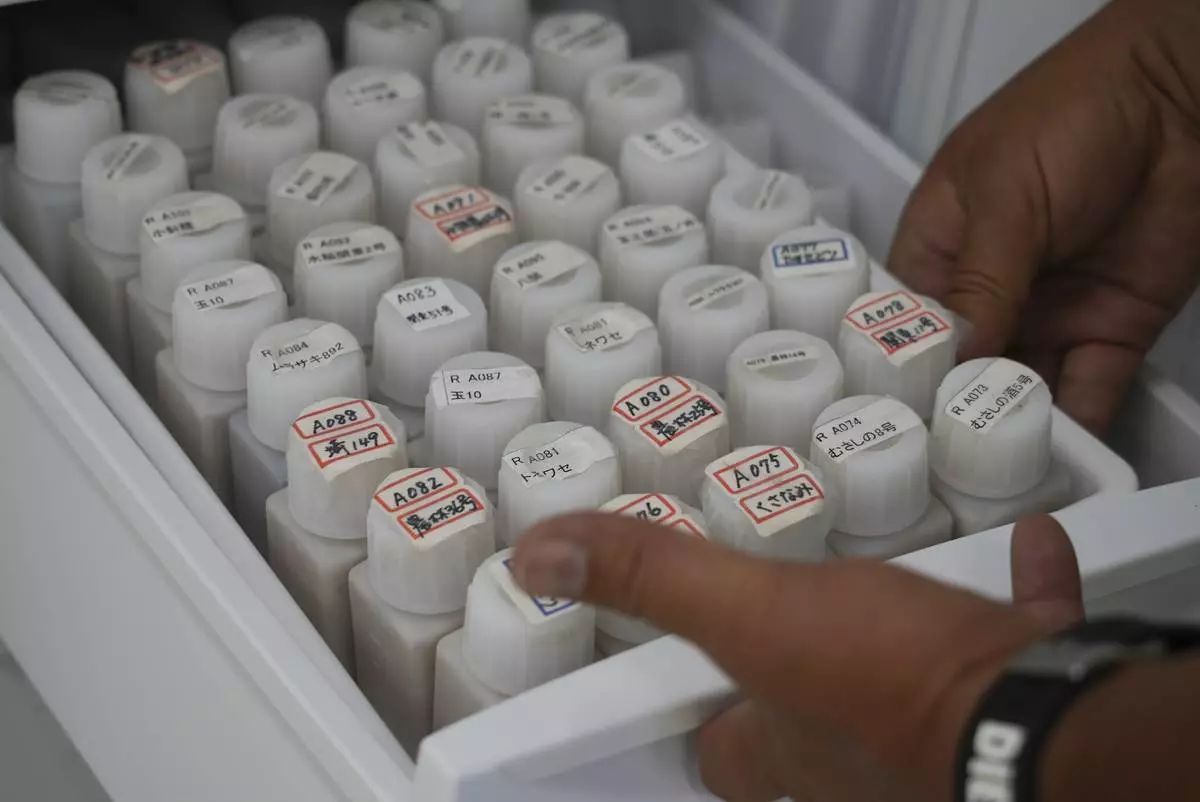
A manager at Saitama's Agricultural Technology Research Center pulls out a draw full of bottles of seeds of new rice varieties developed at various centers in Kumagaya, Japan on Sept. 26, 2024. (AP Photo/Ayaka McGill)
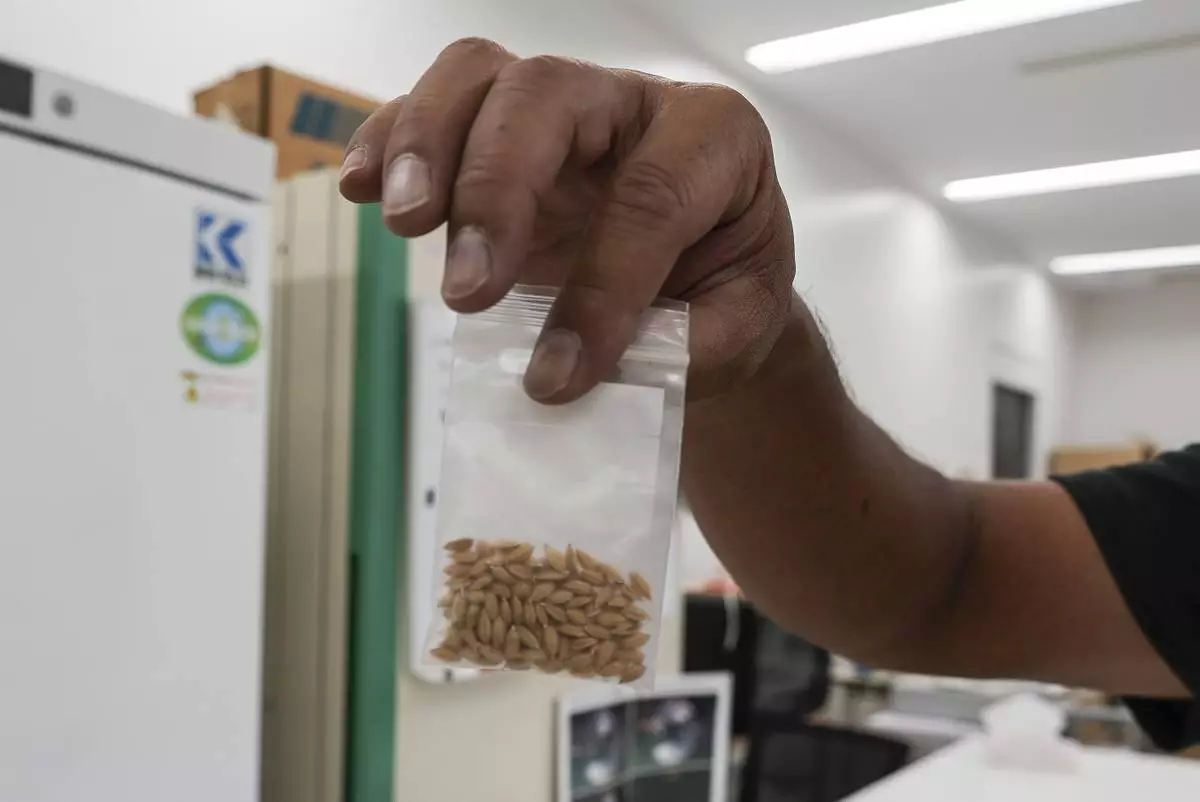
A manager at Saitama's Agricultural Technology Research Centre holds seeds of "Sai no Kizuna," heat-resistant rice variety developed at the center in Kumagaya, Japan on Sept. 26, 2024. (AP Photo/Ayaka McGill)
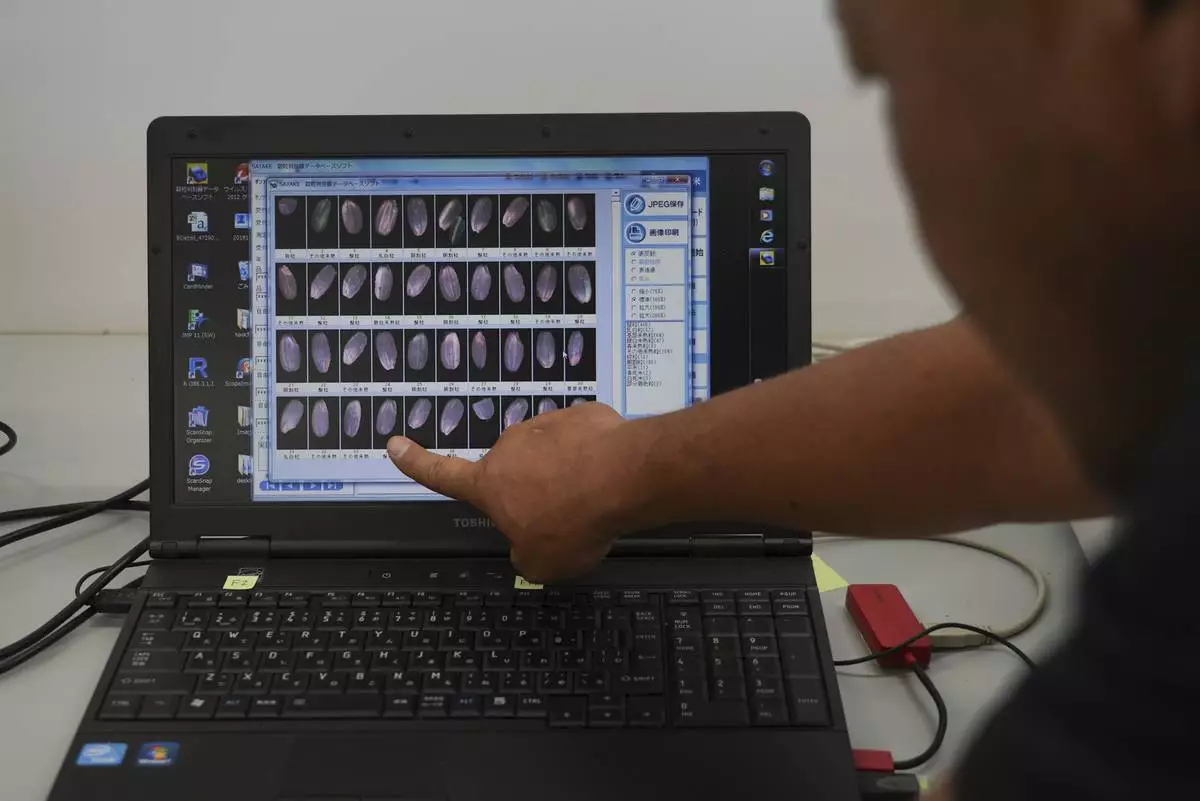
A laptop screen displays comparison photos of rice kernels from different rice varieties at Saitama's Agricultural Technology Research Centre in Kumagaya, Japan on Sept. 26, 2024. (AP Photo/Ayaka McGill)
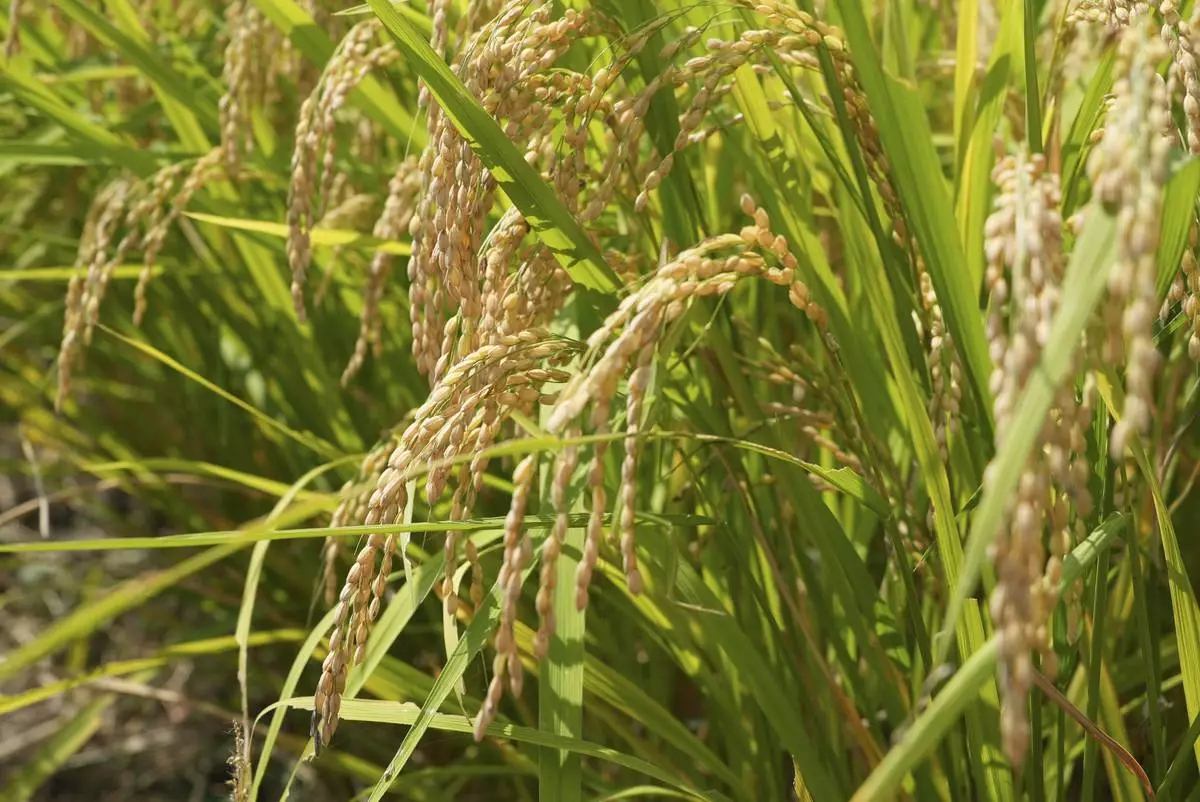
Rice are ready for harvest in Kamimomi village, Okayama prefecture, Japan on Sept. 7, 2024. (AP Photo/Ayaka McGill)
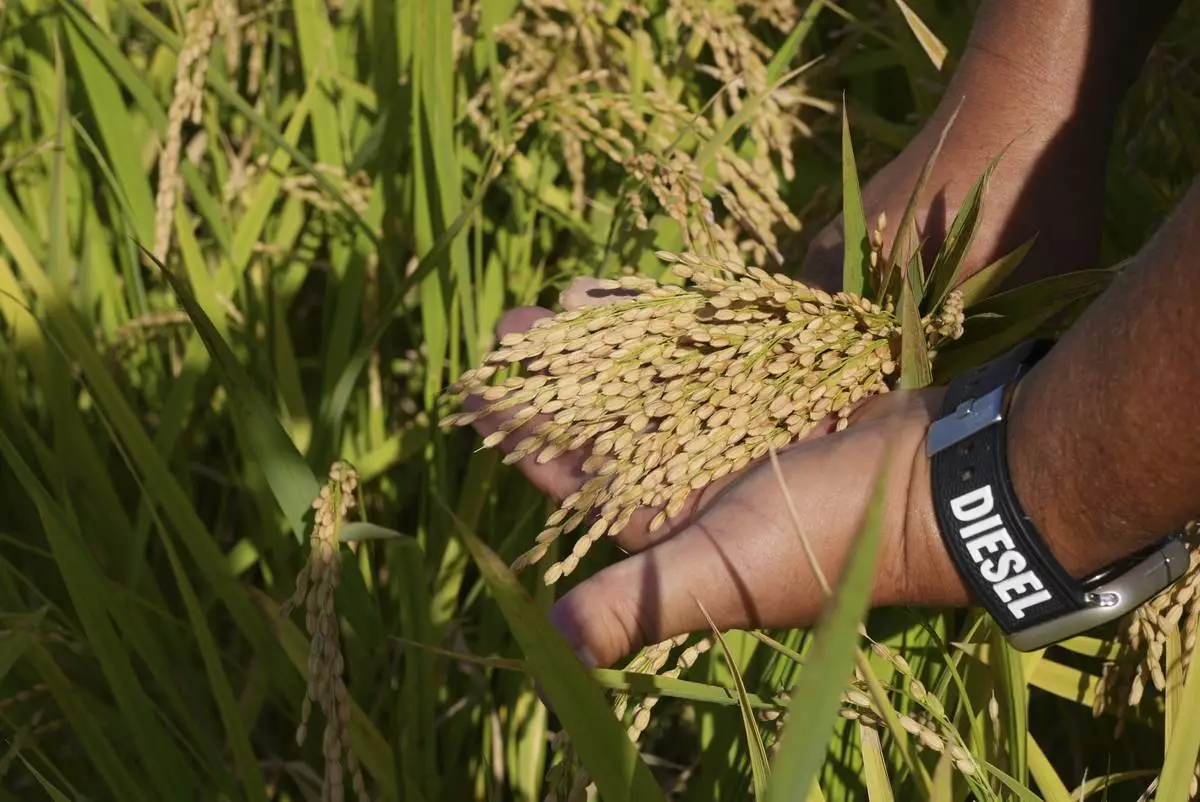
A manager at Saitama's Agricultural Technology Research Centre shows grains of new variety of rice "Emihokoro" in Kumagaya, Japan on Sept. 26, 2024. (AP Photo/Ayaka McGill)
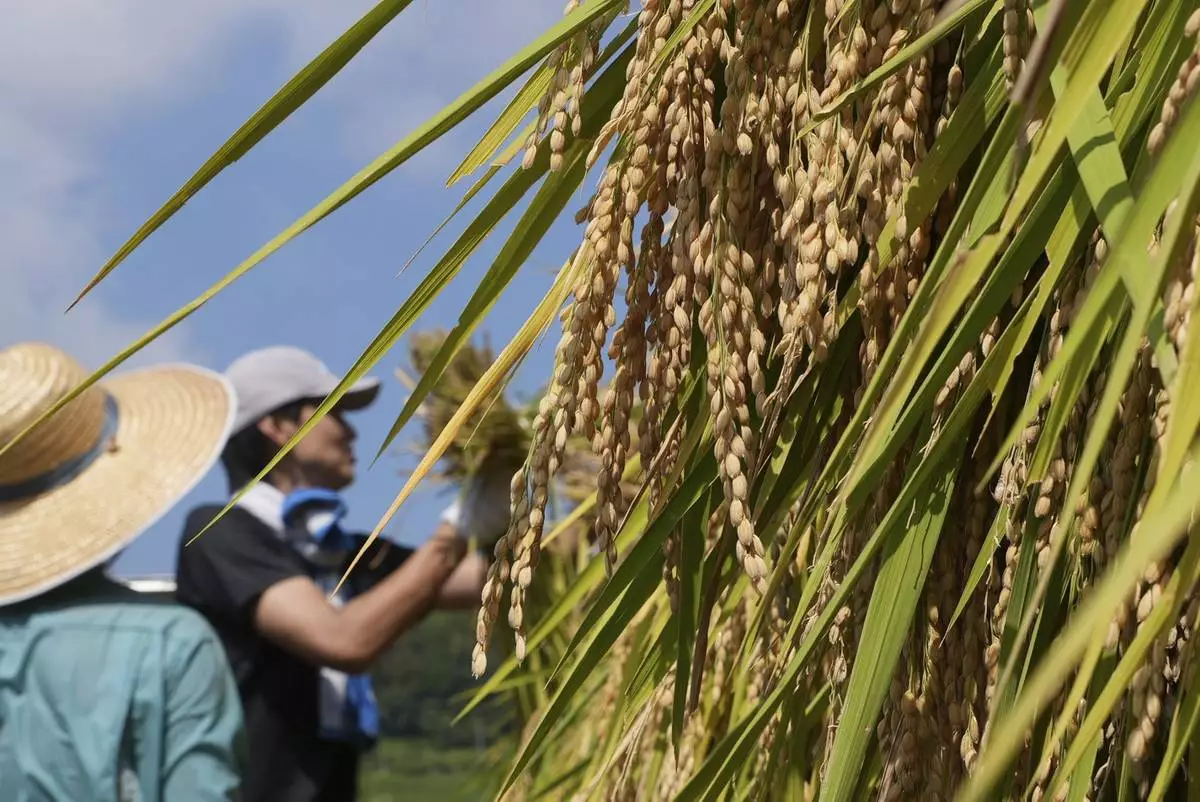
Rice are hanged to dry in Kamimomi village, Okayama prefecture, Japan on Sept. 7, 2024. (AP Photo/Ayaka McGill)
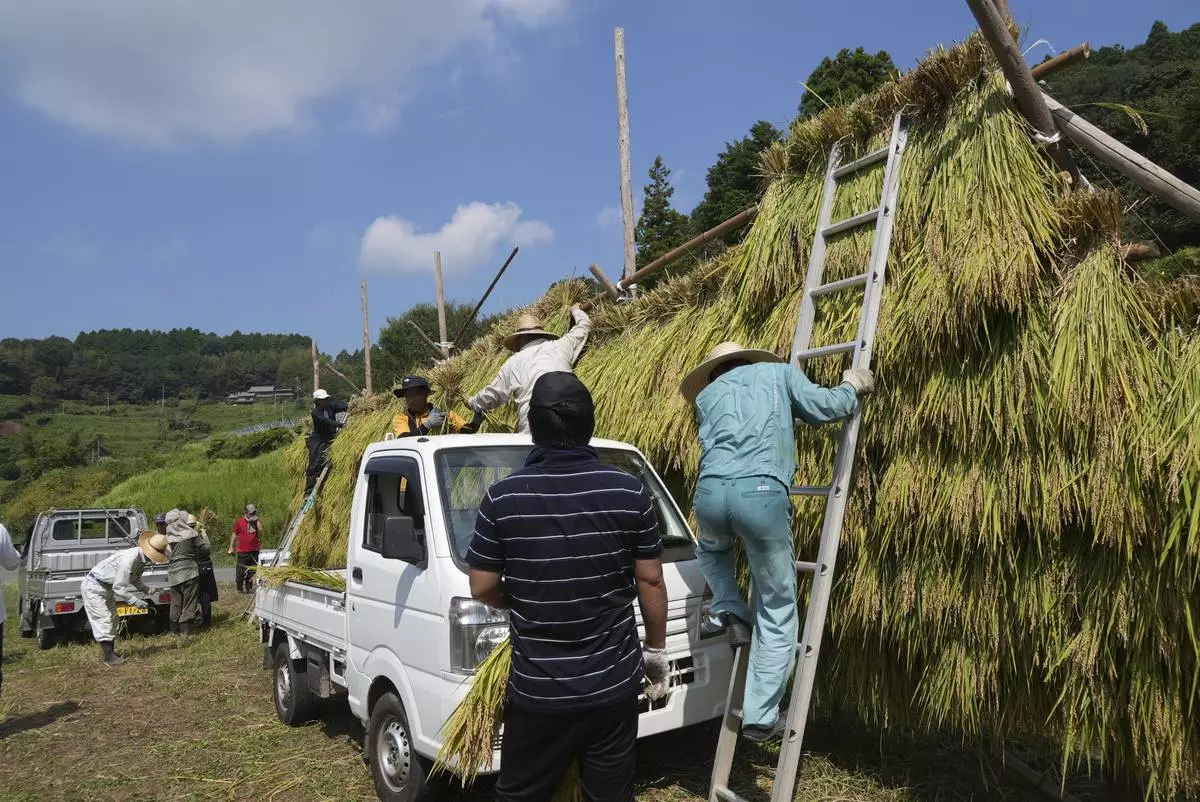
Farmers and volunteers hang rice on a rack in a traditional drying method harvest in Kamimomi village, Okayama prefecture, Japan on Sept. 7, 2024. (AP Photo/Ayaka McGill)
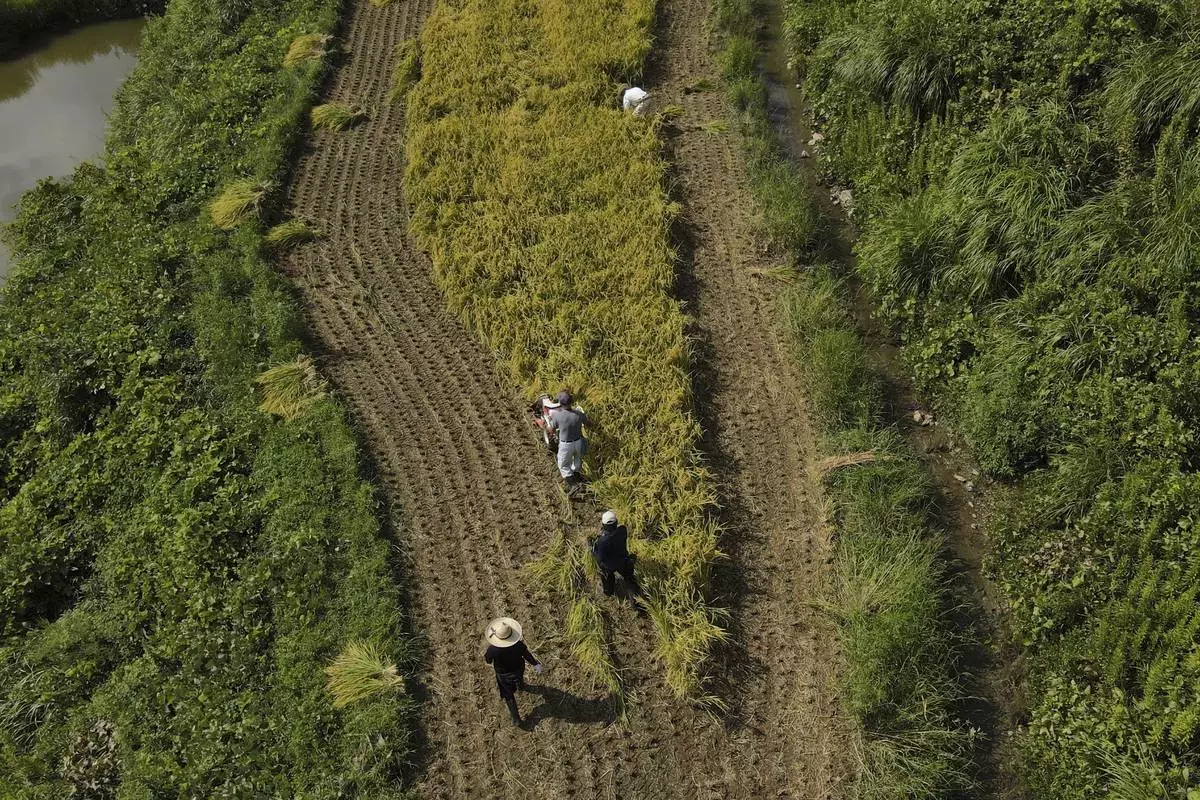
An aerial view of farmers working on rice terraces during harvest in Kamimomi village, Okayama prefecture, Japan on Sept. 7, 2024. (AP Photo/Ayaka McGill)
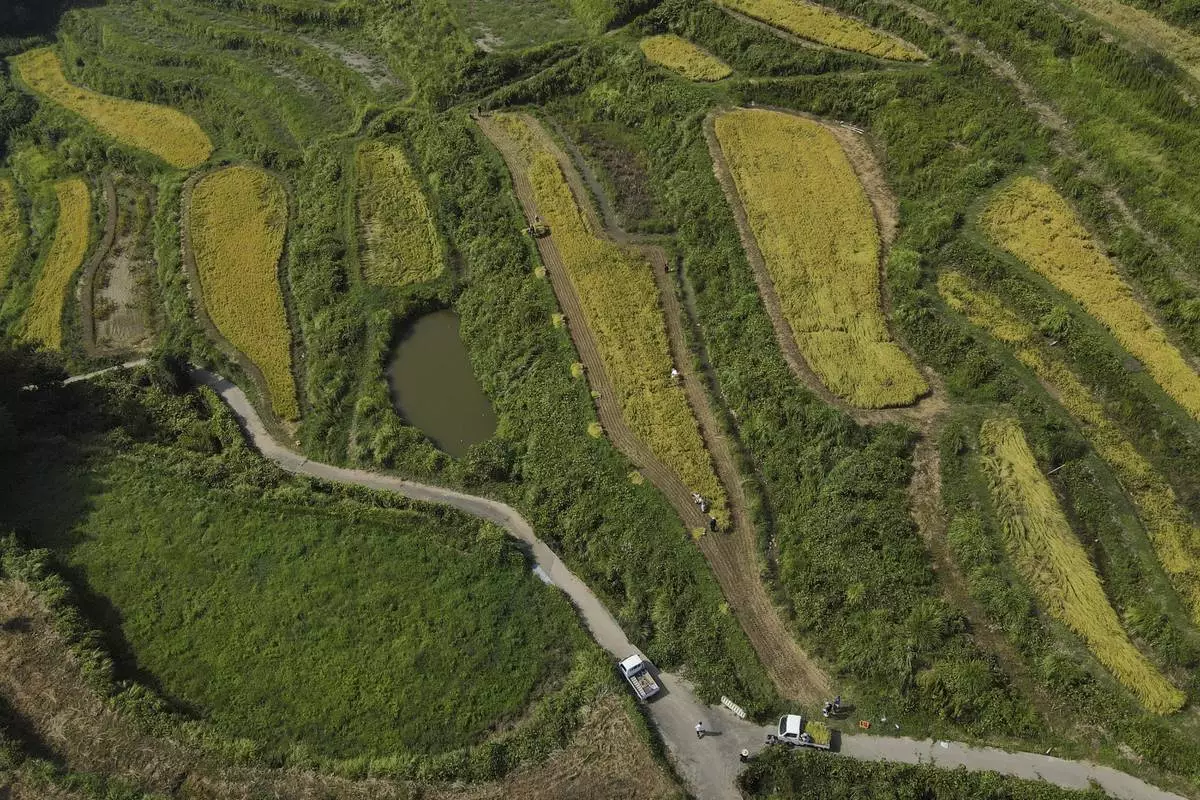
An aerial view of rice terraces in Kamimomi village in Okayama prefecture, Japan on Sept. 7, 2024. (AP Photo/Ayaka McGill)
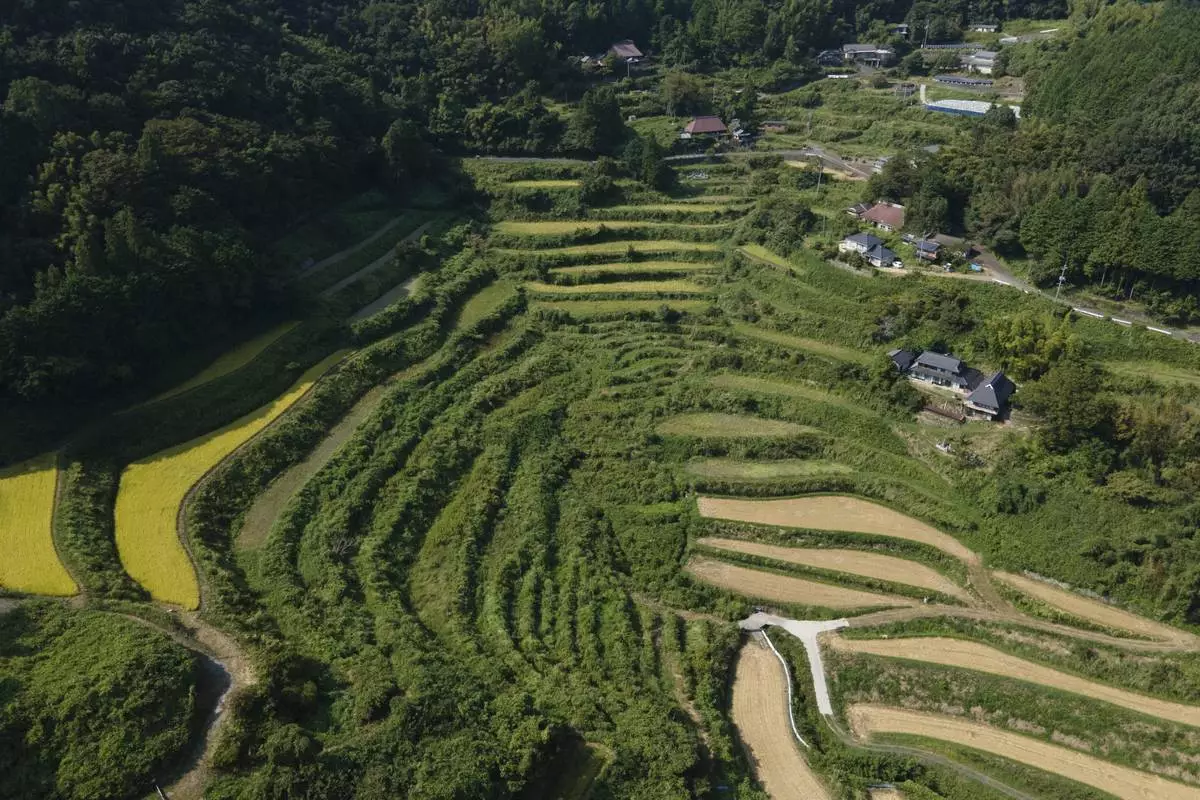
An aerial view of rice terraces in Kitasho village, Okayama prefecture, Japan on Saturday Sept. 7, 2024. (AP Photo/Ayaka McGill)
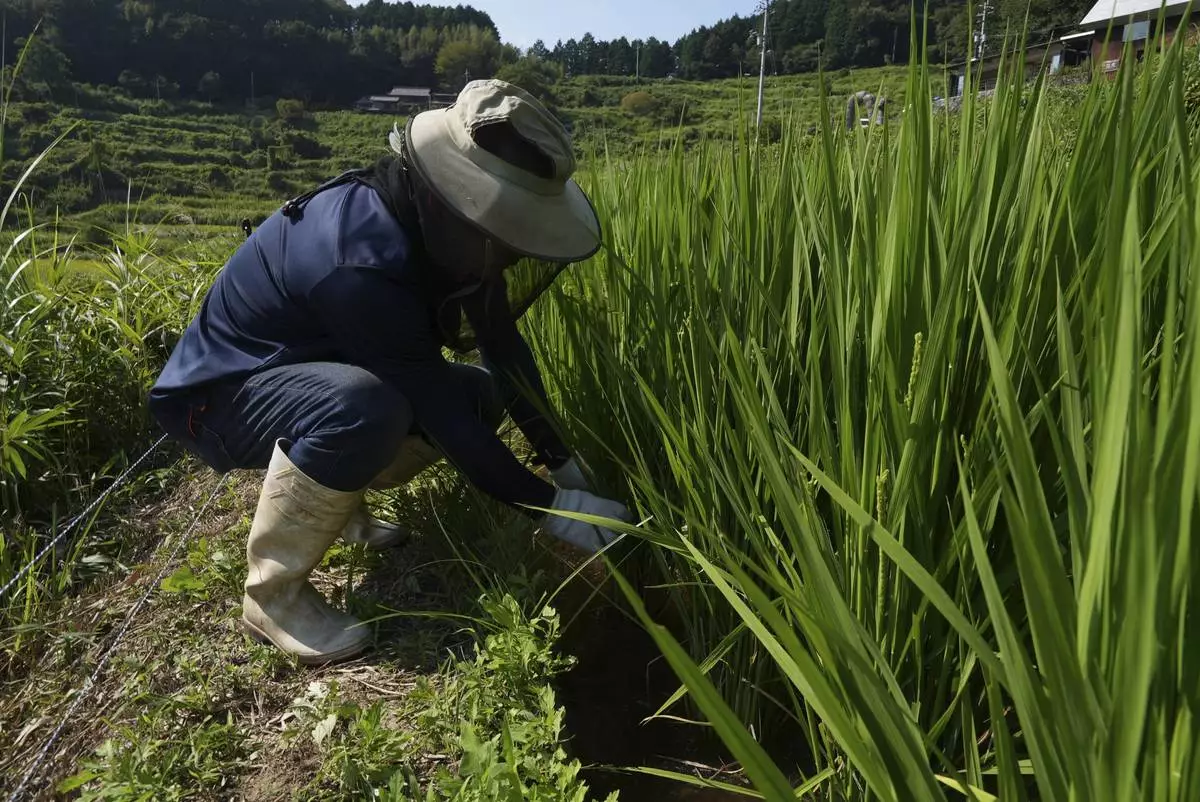
Farmer Joji Terasaka inspects rice in Kamimomi village, Okayama prefecture, Japan on Sept. 6, 2024. (AP Photo/Ayaka McGill)
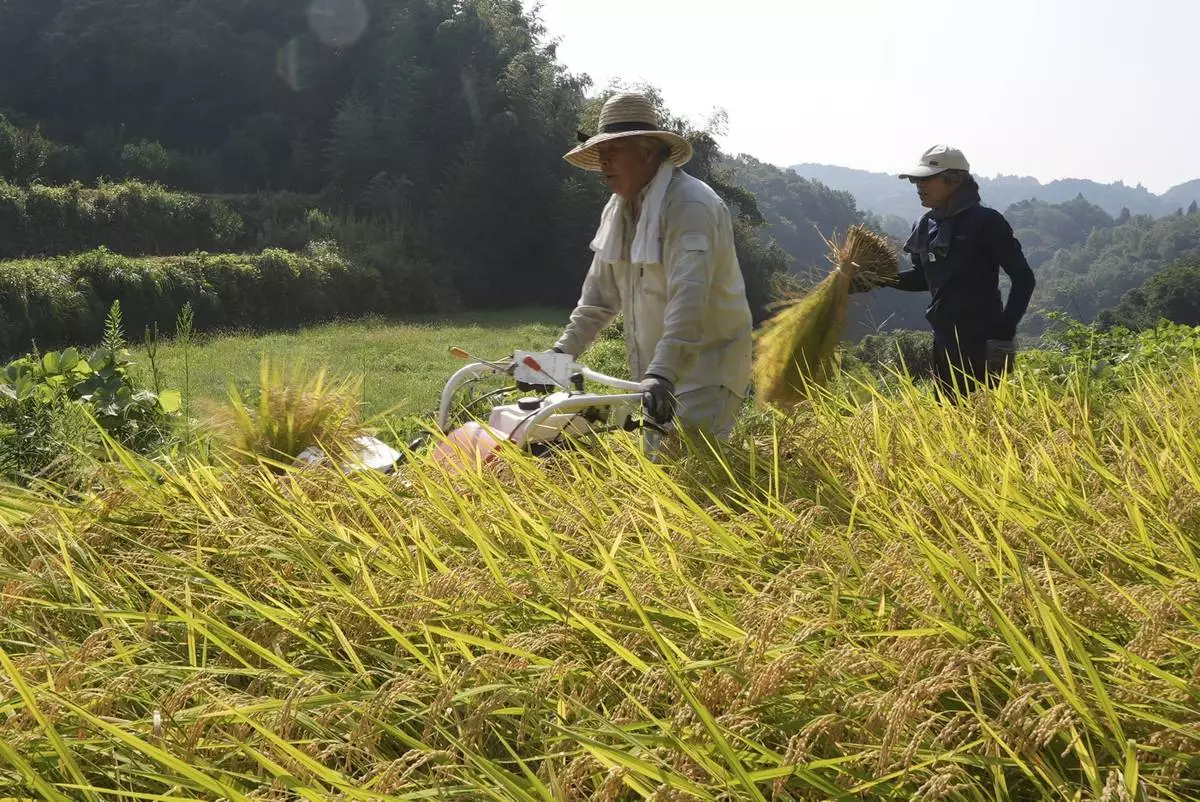
A farmer operates harvester machine on a rice terrace during harvest in Kamimomi village, Okayama prefecture, Japan on Sept. 7, 2024. (AP Photo/Ayaka McGill)
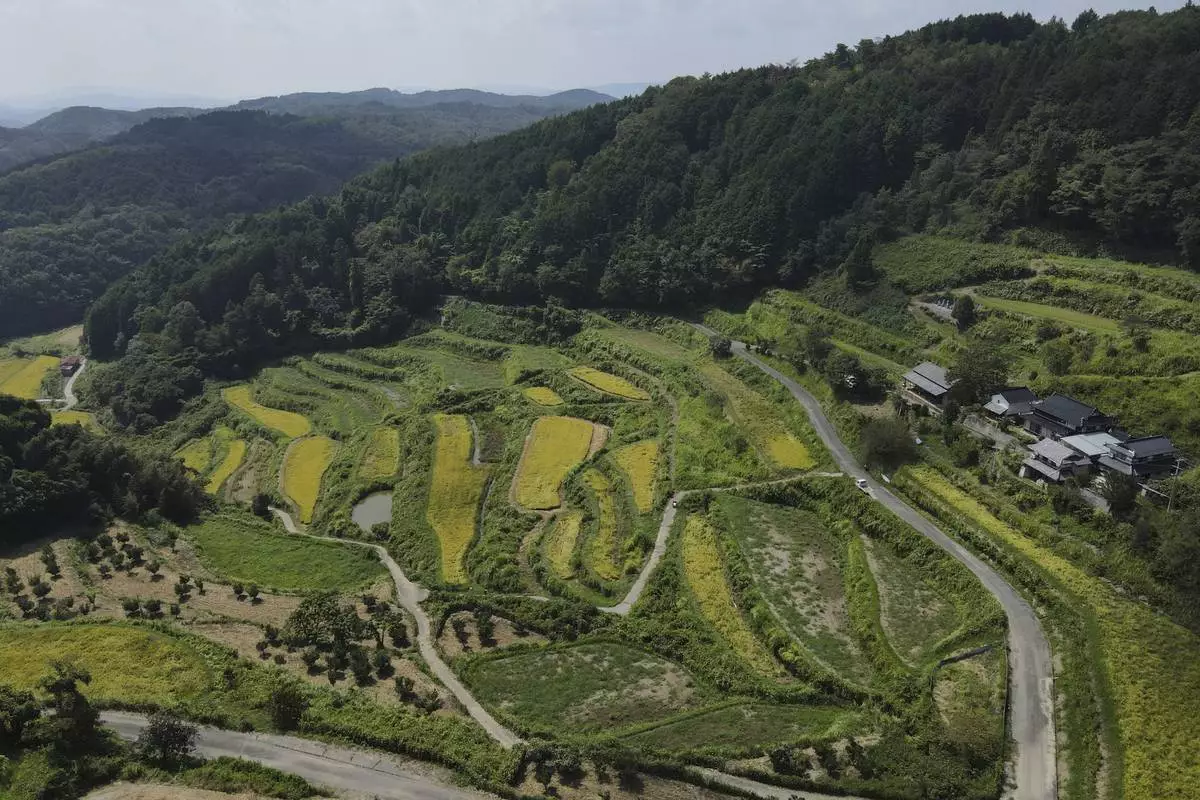
An aerial view of rice terraces in Kamimomi village, Okayama prefecture, Japan on Sept. 6, 2024. (AP Photo/Ayaka McGill)
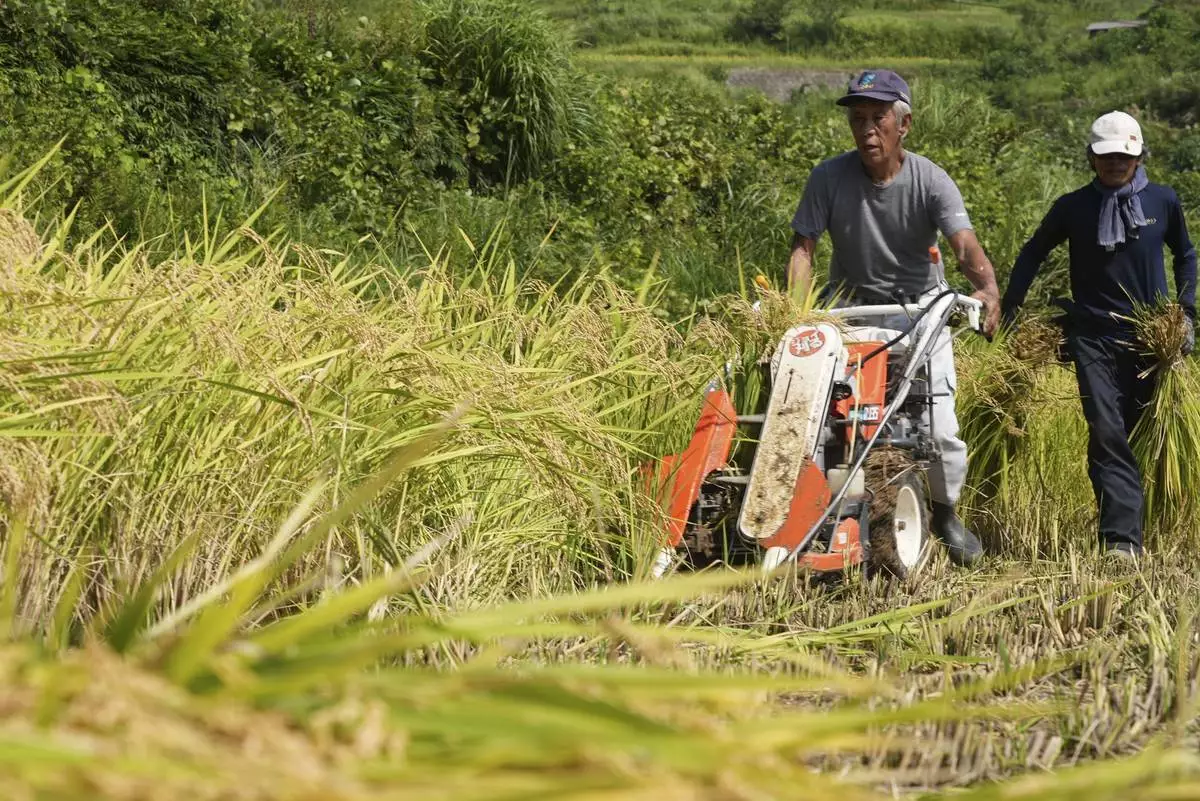
A farmer operates harvester machine on a rice terrace during harvest in Kamimomi village, Okayama prefecture, Japan on Sept. 7, 2024. (AP Photo/Ayaka McGill)