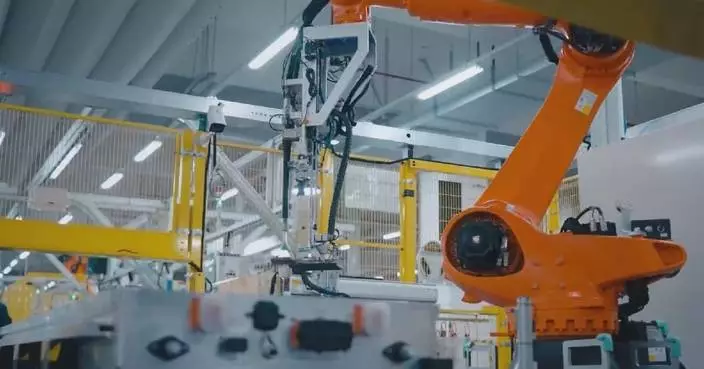
China has made significant advancements in the development of intelligent connected vehicles, according to expert at the 2024 World Intelligent Connected Vehicles (ICV) Conference.
At the opening ceremony of the conference on Thursday, Minister of Industry and Information Technology Jin Zhuanglong said that China has established a complete ICV industrial system covering foundational chips, sensors, computing platforms, chassis control and internet-based cloud control.
He said that China's technologies like human-machine interaction are in a leading position globally, while breakthroughs in steer-by-wire and active suspension systems are gathering pace.
"Infrastructure development is speeding up. Over 50 cities nationwide are conducting road testing demonstrations for ICVs, with 32,000 kilometers of testing roads opened and approximately 10,000 kilometers of roads undergoing intelligent upgrades, along with the installation of over 8,700 roadside units," said Jin.
He also emphasized that China has nurtured nearly 400 "little giant" enterprises that apply special and sophisticated technologies to produce unique and novel products in the ICV sector, with five lidar companies ranking in the global top 10.
Furthermore, international cooperation continues to deepen, as China has cooperated with Europe, Japan, and the United States to develop multiple regulations for autonomous driving, he said.
Jin said that advancements in computing power, big data and large models are expected to lead to significant breakthroughs in advanced autonomous driving technology, ushering in a new development stage for ICVs.
Jin outlined four areas to promote the industry's new development. First, in integrated innovation, the country will focus on next-generation electronic and electrical architecture, high-performance chips, domain controllers and super-intelligent systems to foster integration among vehicles, smart grids, intelligent transportation and smart cities.
Second, China will expand application scenarios with pilot projects for integrated vehicle-road-cloud computing applications in logistics, public transport, taxis and environmental sanitation, he said.
"Third, we will improve standards and regulations, revising traffic safety and insurance laws, establishing and improving a regulatory framework for high-level autonomous driving and accelerating the formulation of standards for functional safety, cybersecurity, and data security," he said.
Jin said that within the framework of the International Organization for Standardization, China will also strengthen cooperation on standards and regulations with various countries, and explore policies to facilitate cross-border data flow.
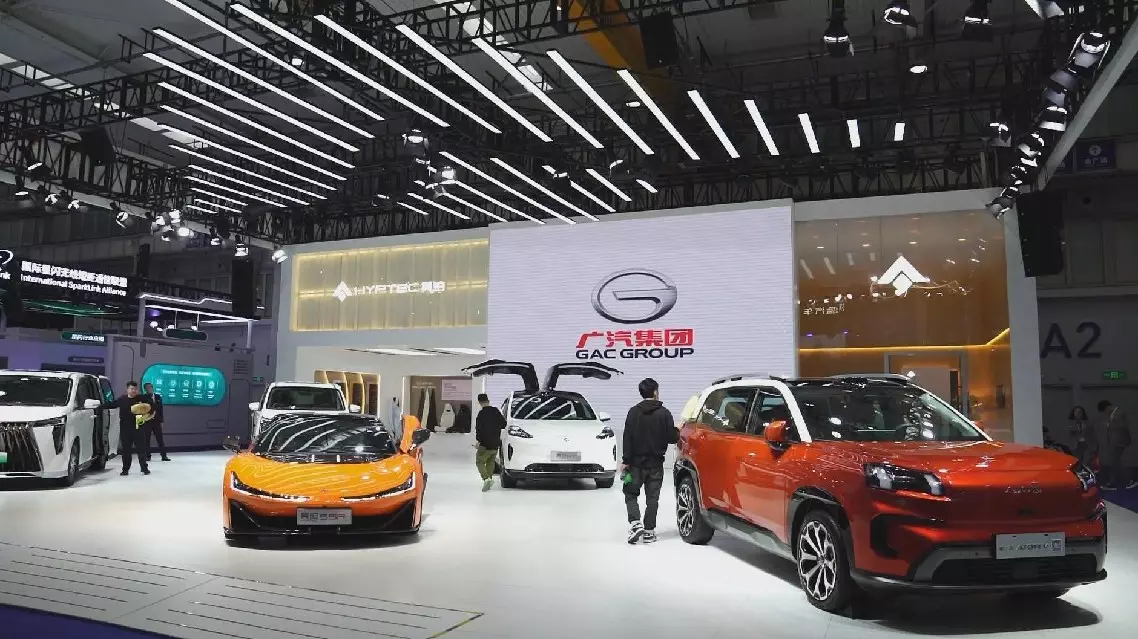
China making headway in intelligent connected vehicle development
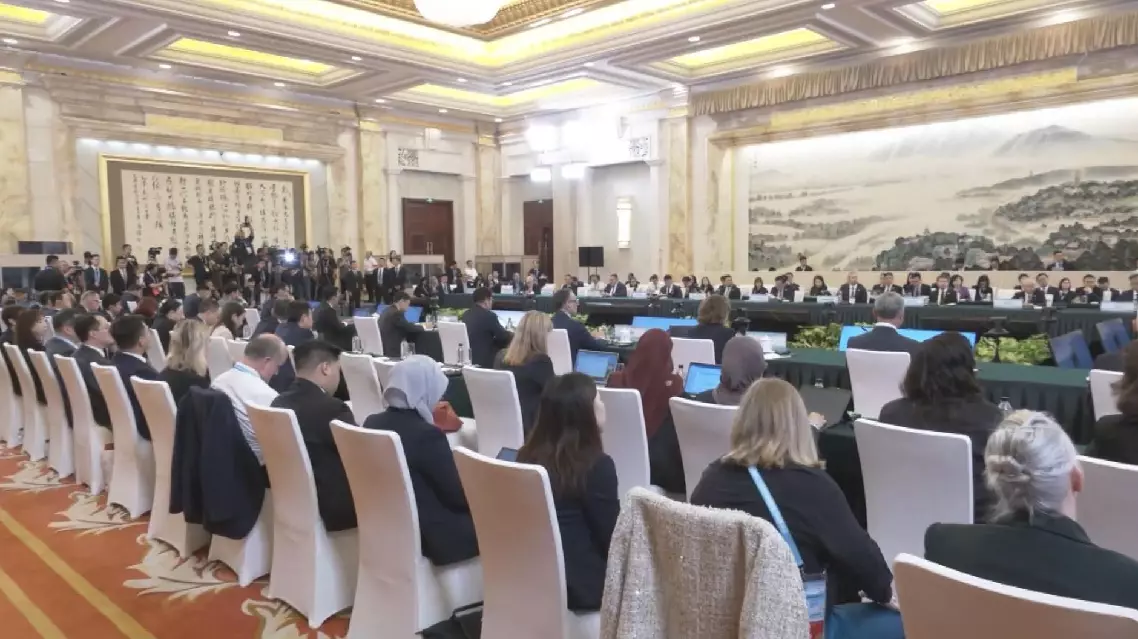
International officials called for closer APEC cooperation to address employment challenges brought by industrial upgrading and AI, at the 8th APEC Human Resources Development Ministerial Meeting, which concluded on Monday in Nanjing City, east China's Jiangsu Province.
The meeting concluded with the adoption of a joint statement and the first outcome document focused on artificial intelligence in the history of APEC human resources development cooperation, providing action guidelines for future cooperation in APEC human resources development.
More than 150 representatives from 19 APEC economies, the APEC Secretariat, the Pacific Economic Cooperation Council and the International Labor Organization (ILO) attended the meeting.
The meeting focused on three core topics including promoting high-quality and full employment and building an employment-friendly development model, investing in people and improving the quality and effectiveness of vocational skills training and strengthening social security systems to make them more optimized and sustainable.
Representatives of international organizations said Asia-Pacific economies face challenges in balancing industrial innovation and upgrading with employment stability for ordinary workers. To this end, economies are strengthening cooperation on three major issues: job opportunities, skills upgrading and social security. China has made useful explorations in institution building.
"China has recently carried out pilot programs for occupational protection for platform economy workers, or workers in new forms of employment, which is a good exploration. The International Labour Organization is also willing to strengthen cooperation with China, absorb good practices from China and our members, and form good systems to protect the rights and interests of our workers," said Hao Bin, assistant director-general of the ILO.
Addressing the impact of rapid AI development on the job market, Peruvian Ambassador to China Carlos Raul Vasquez said Peru is prioritizing social development and technical skills training, and that different economies can deepen cooperation through the APEC platform.
"I have been discussing with some other economies right now today in the meeting the possibility of presenting common projects to promote higher levels of digital skills, particularly in artificial intelligence among our economies and particularly for the benefit of small and medium enterprises and even micro enterprises," said the ambassador.
The meeting was one of the ministerial gatherings of the 2026 APEC "China Year."
As the host of APEC in 2026, China will hold the 33rd APEC Economic Leaders' Meeting in Shenzhen of south China's Guangdong Province, from Nov 18 to 19. The APEC CEO Summit will be held on the sidelines of the meeting.
Int'l officials urge cooperation to address employment challenges at APEC ministers meeting