BOSTON (AP) — Prosecutors have called on the state's highest court to allow them to retry Karen Read for murder in the death of her Boston police officer boyfriend, arguing against defense claims that jurors had reached a verdict against some of her charges before the judge declared a mistrial.
Read is accused of ramming into John O’Keefe with her SUV and leaving him to die in a snowstorm in January 2022. Read’s attorneys argue she is being framed and that other law enforcement officers are responsible for O’Keefe’s death. A judge declared a mistrial in June after finding that jurors couldn’t reach agreement. A retrial on the same charges is set to begin in January.
In a brief filed late Wednesday to the Massachusetts Supreme Judicial Court, prosecutors wrote that there's no basis for dismissing the charges of second degree murder and leaving the scene of the accident.
There was “no viable alternative to a mistrial,” they argued in the brief, noting that the jury said three times that it was deadlocked before a mistrial was declared. Prosecutors said the “defendant was afforded a meaningful opportunity to be heard on any purported alternative.”
"The defendant was not acquitted of any charge because the jury did not return, announce, and affirm any open and public verdicts of acquittal," they wrote. “That requirement is not a mere formalism, ministerial act, or empty technicality. It is a fundamental safeguard that ensures no juror’s position is mistaken, misrepresented, or coerced by other jurors.”
In the defense brief filed in September, Read's lawyers said five of the 12 jurors came forward after her mistrial saying they were deadlocked only on a manslaughter count, and they had agreed unanimously — without telling the judge — that she wasn’t guilty on the other counts. They argued that it would be unconstitutional double jeopardy to try her again on the counts of murder and leaving the scene of an accident resulting in death.
Oral arguments will be heard from both sides on Nov. 6.
In August, the trial judge ruled that Read can be retried on all three counts. “Where there was no verdict announced in open court here, retrial of the defendant does not violate the principle of double jeopardy,” Judge Beverly Cannone wrote.
Read’s attorney, Martin Weinberg, argued that under Cannone's reasoning, even if all 12 jurors were to swear in affidavits that they reached a final and unanimous decision to acquit, this wouldn't be sufficient for a double jeopardy challenge. “Surely, that cannot be the law. Indeed, it must not be the law,” Weinberg wrote.
The American Civil Liberties Union supported the defense in an amicus brief. If the justices don't dismiss the charges, the ACLU said the court should at least “prevent the potential for injustice by ordering the trial court to conduct an evidentiary hearing and determine whether the jury in her first trial agreed to acquit her on any count."
"The trial court had a clear path to avoid an erroneous mistrial: simply ask the jurors to confirm whether a verdict had been reached on any count," the ACLU wrote in its brief. “Asking those questions before declaring a mistrial is permitted — even encouraged — by Massachusetts rules. Such polling serves to ensure a jury’s views are accurately conveyed to the court, the parties, and the community — and that defendants’ related trial rights are secure.”
Prosecutors said Read, a former adjunct professor at Bentley College, and O’Keefe, a 16-year member of the Boston police, had been drinking heavily before she dropped him off at a party at the home of Brian Albert, a fellow Boston officer. They said she hit him with her SUV before driving away. An autopsy found O’Keefe had died of hypothermia and blunt force trauma.
The defense portrayed Read as the victim, saying O’Keefe was actually killed inside Albert’s home and then dragged outside. They argued that investigators focused on Read because she was a “convenient outsider” who saved them from having to consider law enforcement officers as suspects.
The lead investigator, State Trooper Michael Proctor, was relieved of duty after the trial revealed he’d sent vulgar texts to colleagues and family, calling Read a “whack job” and telling his sister he wished Read would “kill herself.” He said his emotions had gotten the better of him.
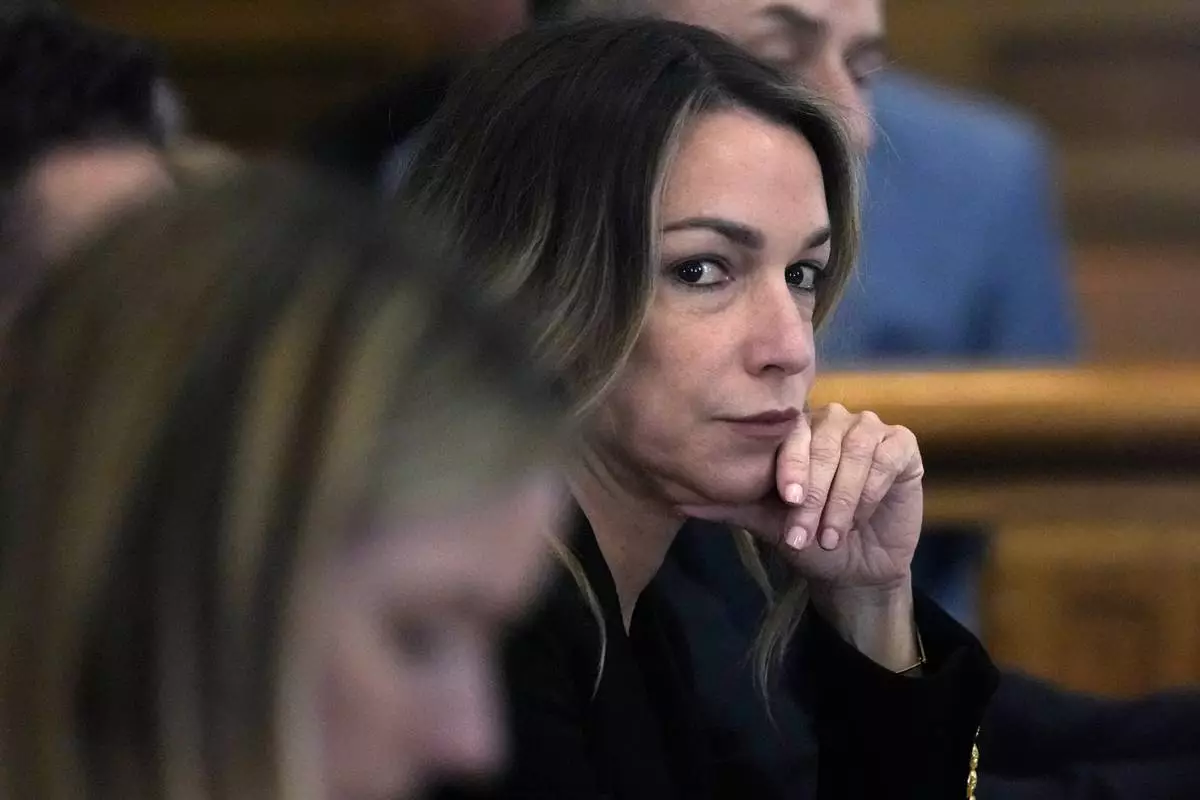
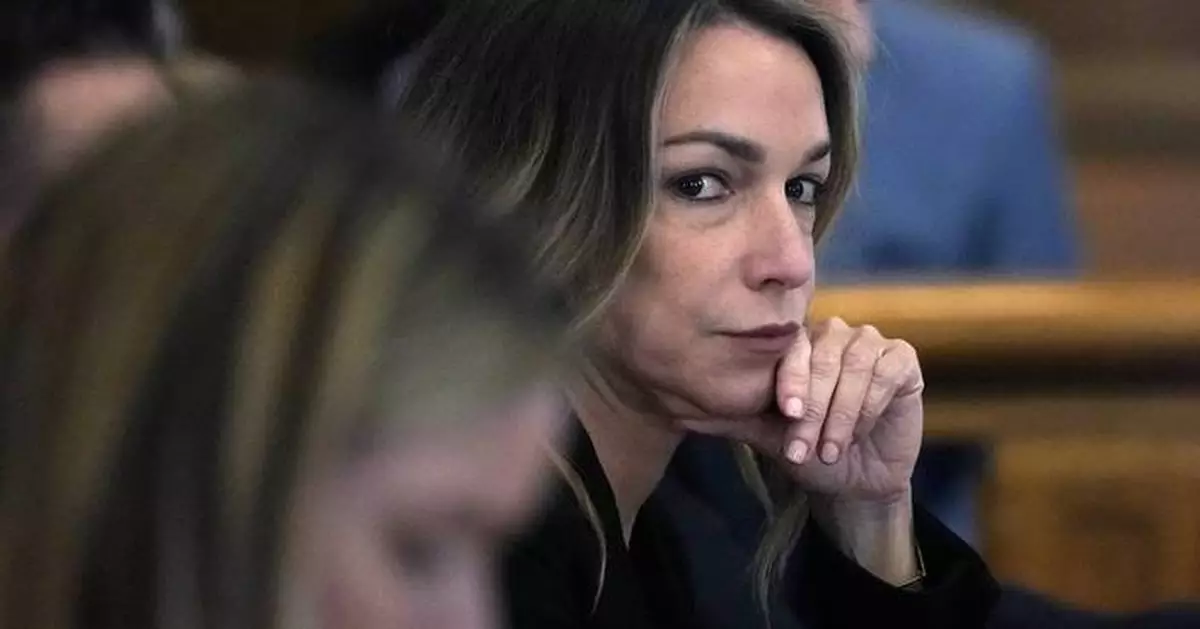
FILE — Karen Read listens to testimony during her trial at Norfolk County Superior Court, May 17, 2024, in Dedham, Mass. (AP Photo/Charles Krupa, Pool, File)
ISLAMABAD (AP) — The United States and Iran began negotiations Saturday in Pakistan, days after a fragile, two-week ceasefire was announced, as the war that has killed thousands of people and shaken global markets entered its seventh week.
Iran's state-run news agency said three-party talks had begun after Iranian preconditions, including a reduction in Israeli strikes on southern Lebanon, were met, and after U.S. and Iranian officials met separately with Pakistani Prime Minister Shehbaz Sharif. There were no immediate further details, nor U.S. comment.
The U.S. delegation led by Vice President JD Vance and the Iranian delegation led by Parliament Speaker Mohammad Bagher Qalibaf were discussing how to advance the ceasefire already threatened by deep disagreements and Israel's continued attacks against the Iranian-backed Hezbollah in Lebanon.
“I cannot say whether they are sitting in the same room or in separate rooms, but talks have started and are progressing well,” said one Pakistani official with knowledge of the peace efforts, speaking on condition of anonymity because they were not authorized to talk to the media.
Iran doubled down on parts of its earlier proposal, with its delegation telling Iranian state television it had presented some of the plan’s ideas as “red lines” in meetings with Sharif. Those included compensation for damage caused by the U.S.-Israeli strikes that launched the war on Feb. 28 and releasing Iran’s frozen assets.
The war has killed at least 3,000 people in Iran, 1,953 in Lebanon, 23 in Israel and more than a dozen in Gulf Arab states. Iran's chokehold on the vital Strait of Hormuz has largely cut off the Persian Gulf and its oil and gas exports from the global economy, sending energy prices soaring. Attacks have caused lasting damage on infrastructure in half a dozen countries in the Middle East.
In Tehran, residents told The Associated Press they were skeptical yet hopeful about the talks after weeks of airstrikes left destruction across their country of some 93 million people. Some said the path to recovery would be long.
“Peace alone is not enough for our country, because we’ve been hit very hard, there have been huge costs,” 62-year-old Amir Razzai Far said.
Meanwhile, Israel pressed ahead with strikes in Lebanon after saying there is no ceasefire there. Iran and Pakistan have disagreed. The Lebanese state-run news agency reported at least three people killed. There were no reported strikes in the afternoon.
U.S. and Iranian officials claimed leverage and issued new demands and preconditions as talks approached. President Donald Trump posted repeatedly on social media leading up to Saturday, saying Iranian officials “have no cards” to negotiate with.
“The only reason they are alive today is to negotiate!” he wrote.
He accused Iran of using the Strait of Hormuz, a key artery for global energy supplies, for extortion, and told reporters Friday it would be opened “with or without them.”
On Saturday, Trump said on social media that the U.S. had begun “clearing out” the strait, but it was unclear whether he was referring to the reported use of mines there or Iran’s broader ability to control the area.
Islamabad was deserted as security forces sealed roads and authorities urged residents to stay inside.
Vance said Friday that the U.S. was optimistic about the talks, but warned: “If they’re going to try and play us, then they’re going to find that the negotiating team is not that receptive.”
Iranian Foreign Minister Abbas Araghchi had said Tehran was entering negotiations with “deep distrust” after strikes on Iran during previous rounds of talks. Araghchi, who is part of Iran’s delegation in Pakistan, said Saturday that his country was prepared to retaliate if attacked again.
Iran and the United States outlined competing proposals ahead of the talks reflecting the wide gulf on key issues.
Iran’s 10-point proposal called for a guaranteed end to the war and sought control over the Strait of Hormuz. It included ending fighting against Iran’s “regional allies," explicitly calling for a halt to Israeli strikes on Hezbollah.
The United States’ 15-point proposal includes restricting Iran’s nuclear program and reopening the strait.
Negotiations between Israel and Lebanon are expected to begin Tuesday in Washington, Lebanese President Joseph Aoun’s office said Friday, after Israel's surprise announcement authorizing talks despite the countries lack of official relations.
Israel wants the Lebanese government to assume responsibility for disarming Hezbollah, much like was envisaged in a November 2024 ceasefire. But it is unclear whether Lebanon's army can confiscate weapons from the militant group, which has survived efforts to curb its strength for decades.
Israel’s insistence that the ceasefire in Iran does not include a pause in its fighting with Hezbollah has threatened to sink the deal. The militant group joined the war in support of Iran in the opening days. Israel followed up with airstrikes and a ground invasion.
The day the Iran ceasefire deal was announced, Israel pounded Beirut with airstrikes, killing more than 300 people in the deadliest day in Lebanon since the war began, according to the country's Health Ministry.
Iran’s closure of the Strait of Hormuz has proved its biggest strategic advantage in the war. Commercial vessels have avoided the strait, effectively blocking the passage of oil, natural gas and fertilizer.
The spot price of Brent crude, the international standard for oil prices, was above $94 on Saturday, up more than 30% since the war started.
Before the conflict, around a fifth of the world’s traded oil typically passed through the strait on more than 100 ships a day. With the ceasefire in place, only 12 have been recorded transiting.
Iran has floated the idea of charging ships passing through as part of a peace deal, though the idea has been widely rejected by countries including the United States and Iran's neighbor Oman.
Metz reported from Jerusalem, Castillo from Beijing and Magdy from Cairo.
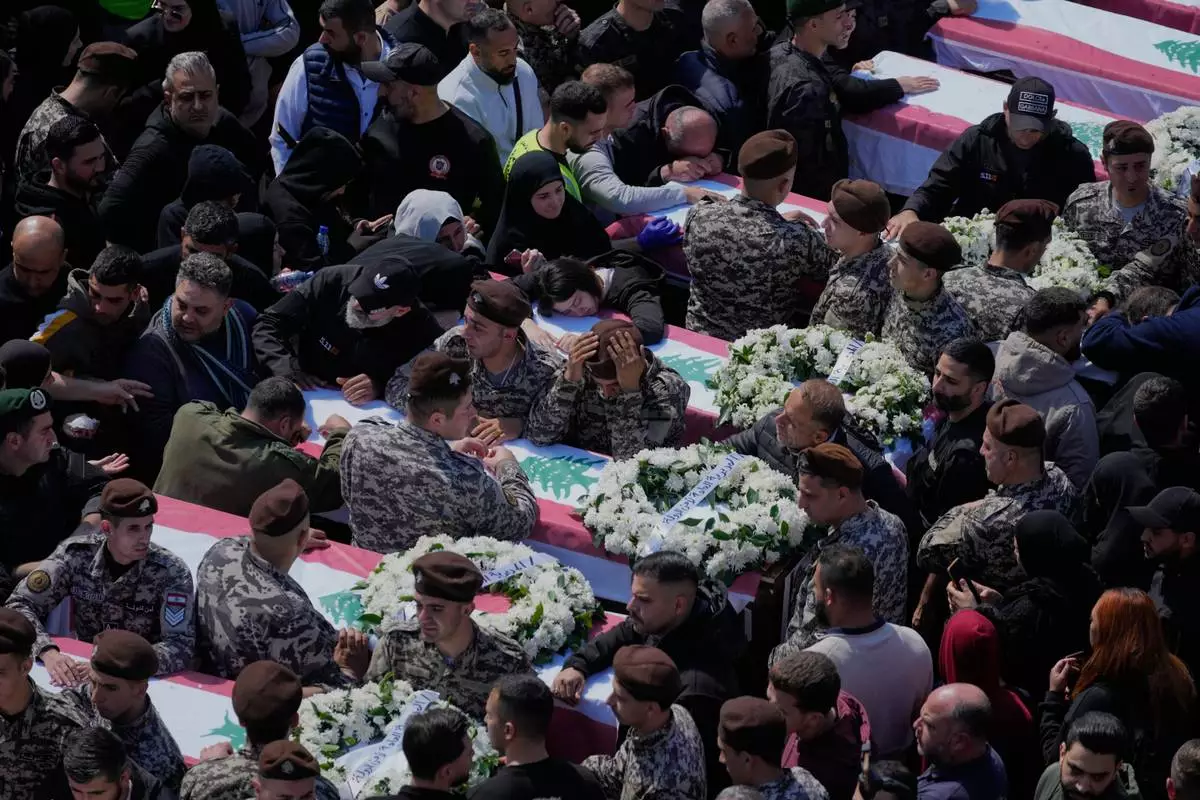
Colleagues mourn over the coffins during the funeral of 13 state security officers killed the previous day in an Israeli strike in the Lebanese coastal city of Sidon, Saturday, April 11, 2026. (AP Photo/Mohammed Zaatari)
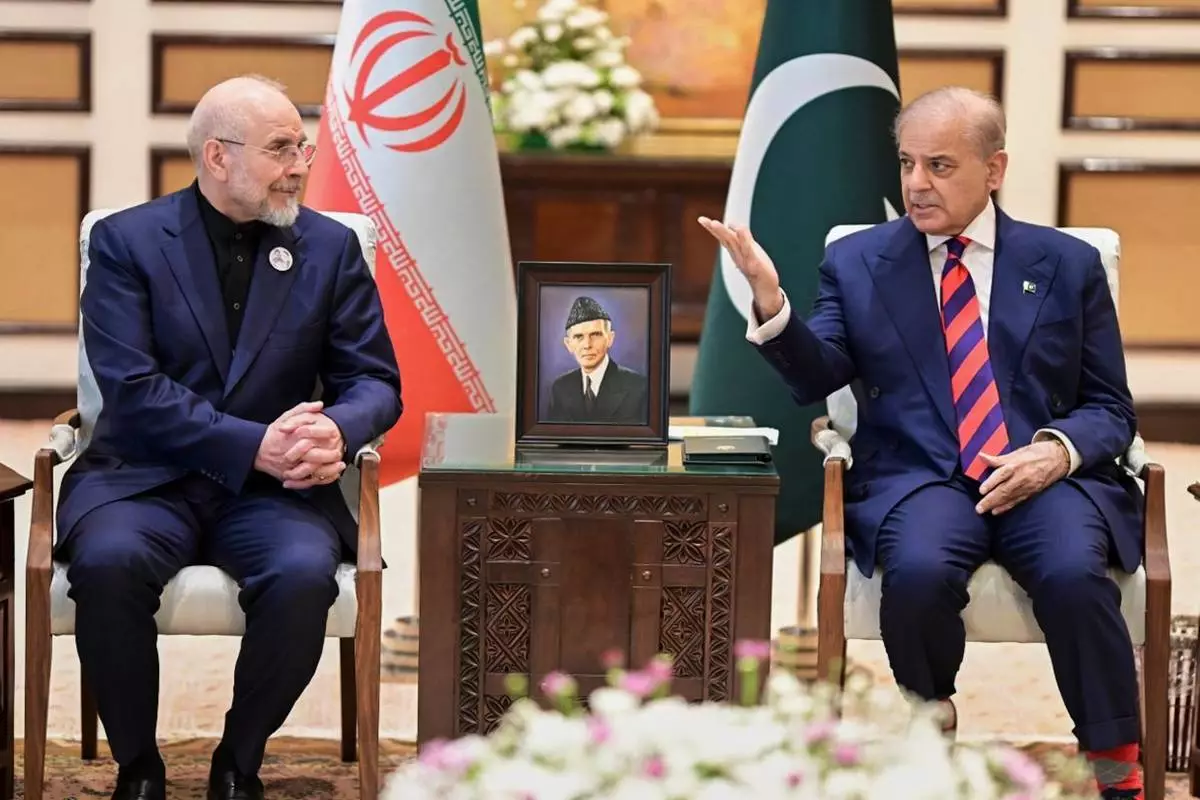
In this photo released by the Pakistan Prime Minister Office, Iran's Parliament Speaker Mohammad Bagher Ghalibaf, left, meets with hand with Pakistani Prime Minister Shehbaz Sharif, in Islamabad, Pakistan, Saturday, April 11, 2026 (Pakistan Prime Minister Office via AP)
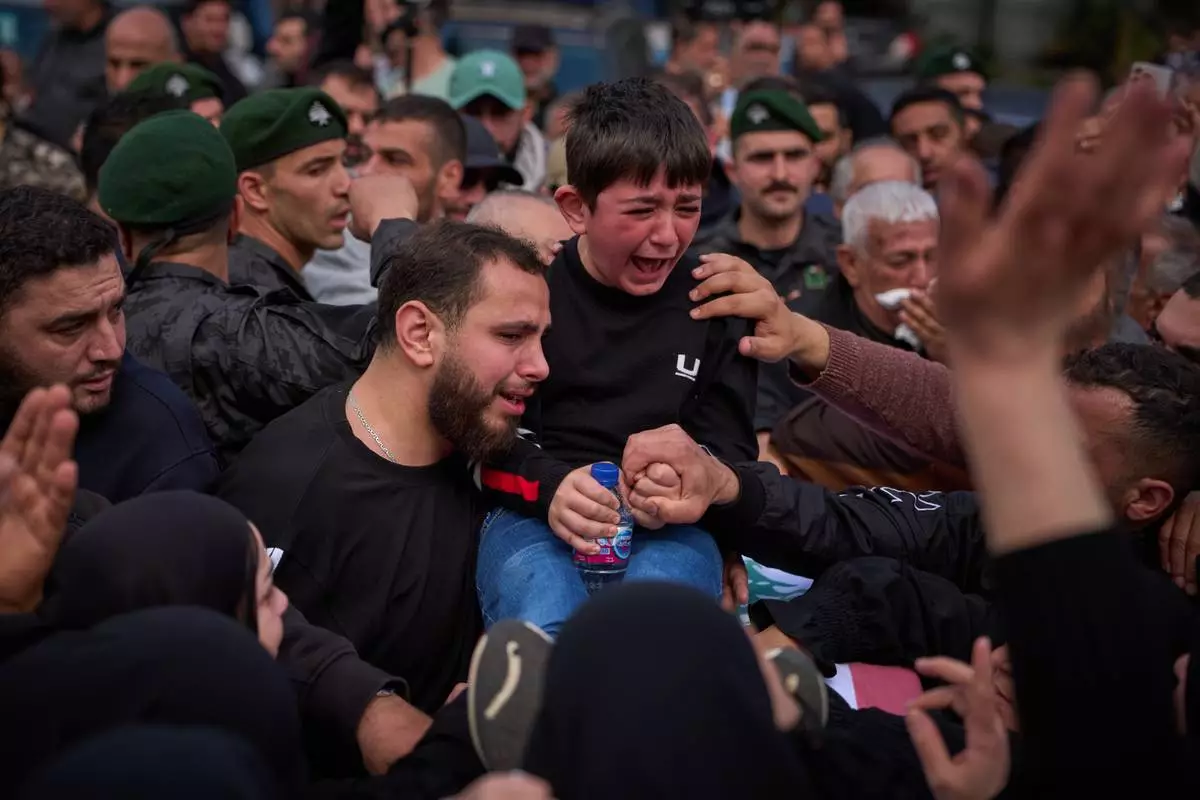
Mohammed, 8, weeps next to the coffin of his father, Hussein Makkah, during the funeral of 13 state security officers killed the previous day in an Israeli strike in Lebanon’s coastal city of Sidon, Lebanon, Saturday, April 11, 2026. (AP Photo/Emilio Morenatti)
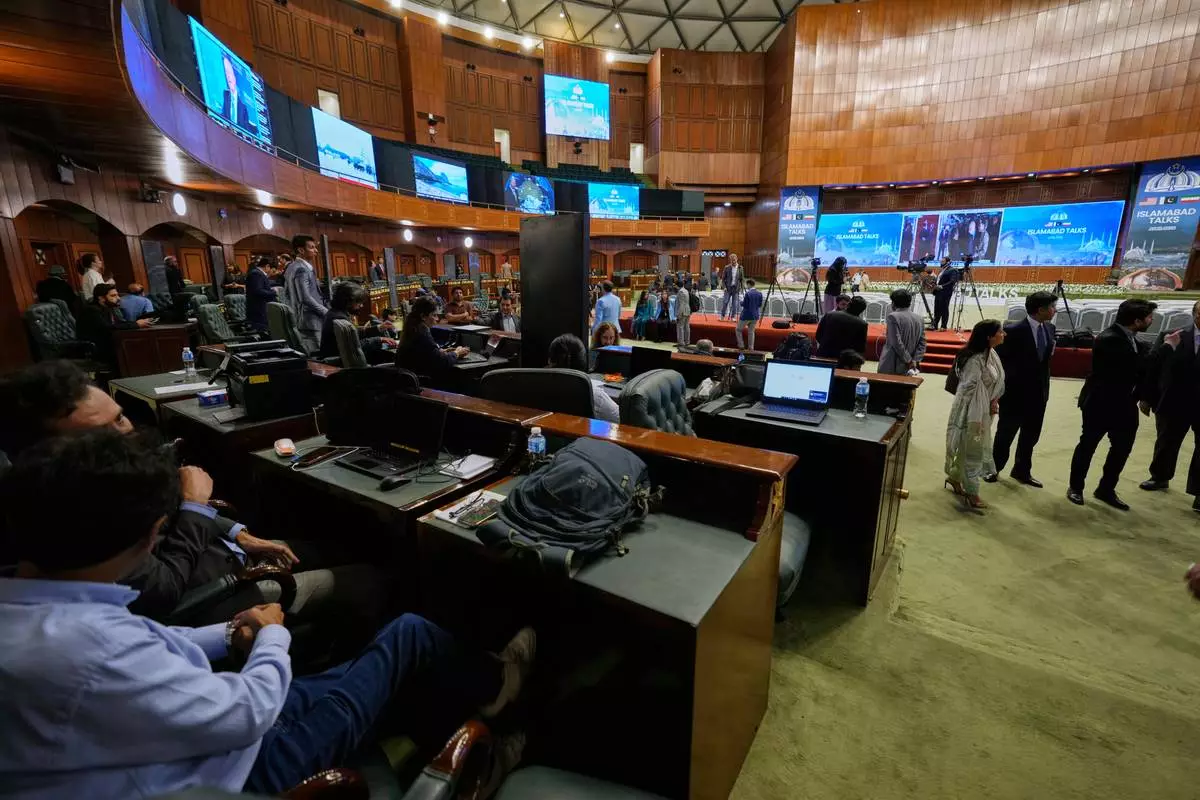
Members of the media work at a media center setup for the coverage of the US-Iran talks, in Islamabad, Pakistan, Saturday, April 11, 2026. (AP Photo/Anjum Naveed)
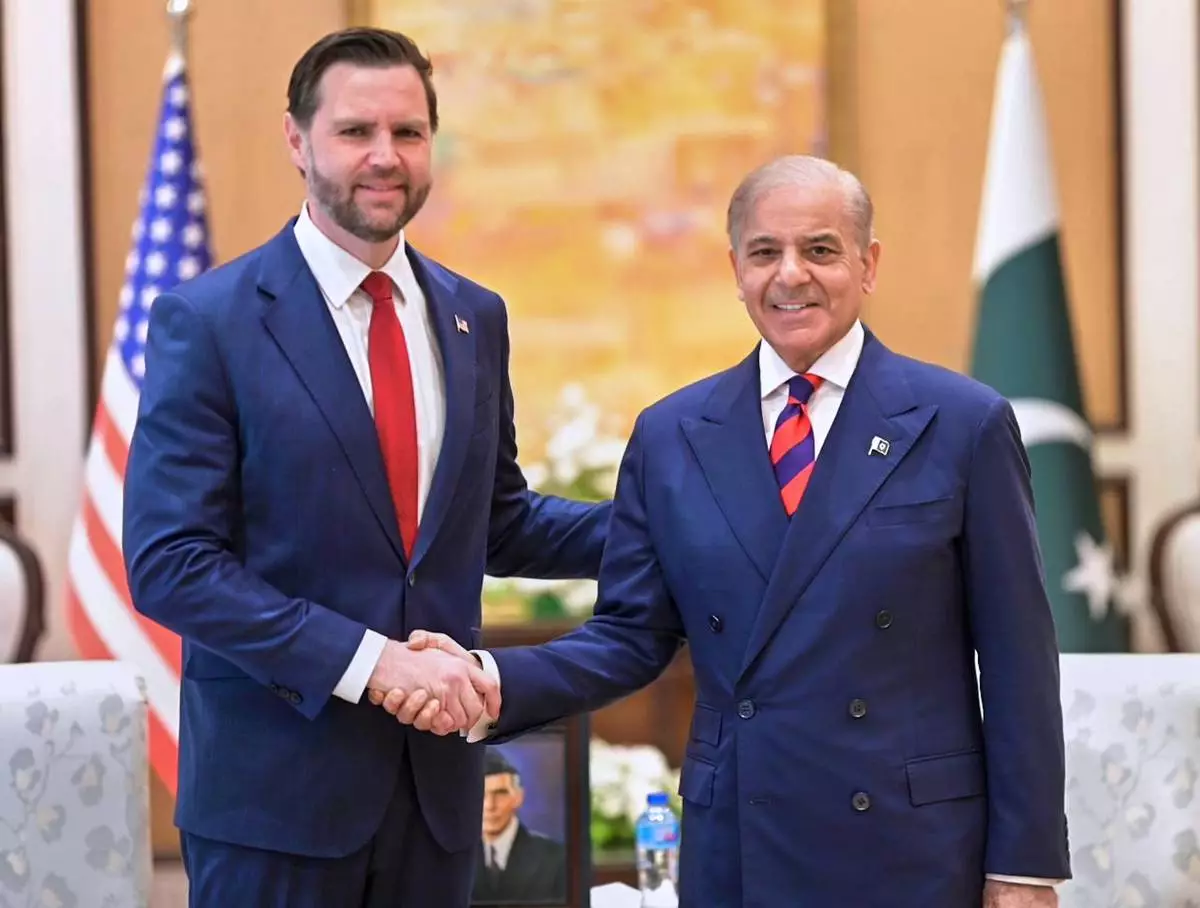
In this photo released by the Pakistan Prime Minister Office, U.S. Vice President JD Vance, left, shakes hand with Pakistani Prime Minister Shehbaz Sharif prior to their meeting, in Islamabad, Pakistan, Saturday, April 11, 2026 (Pakistan Prime Minister Office via AP)
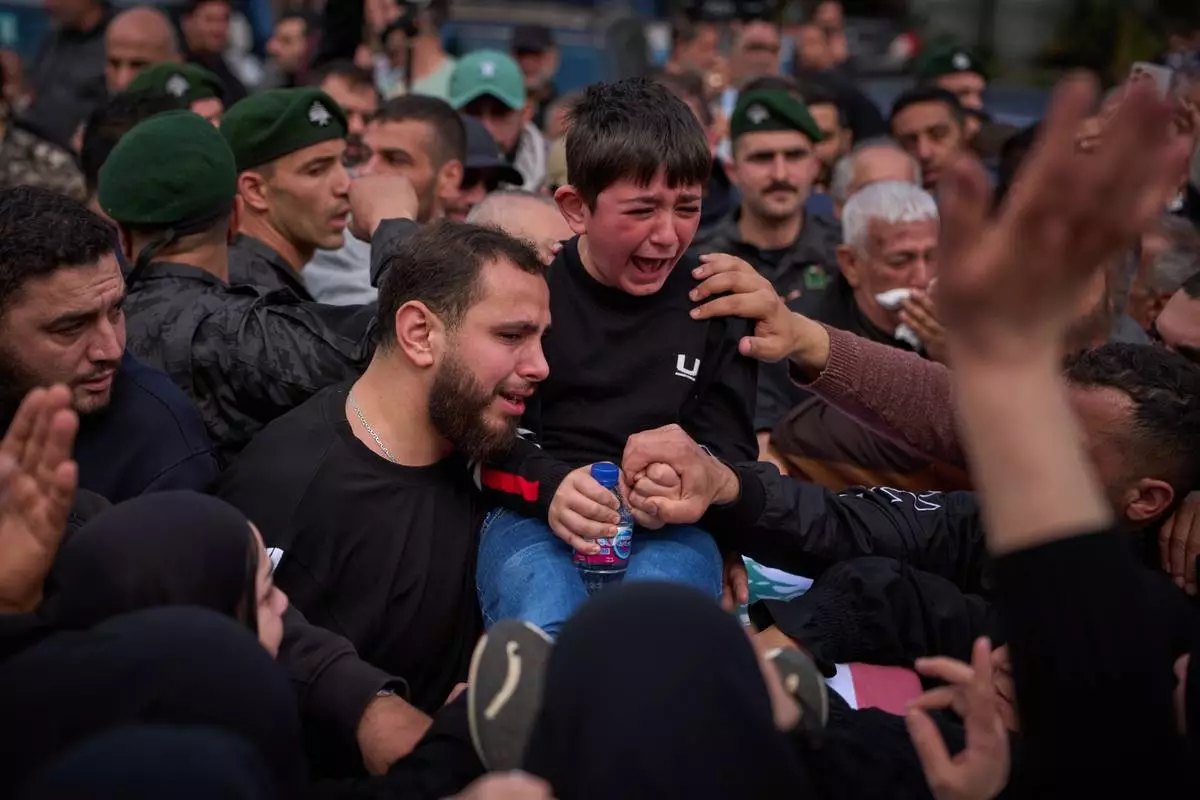
Mohammed, 8, weeps next to the coffin of his father, Hussein Makkah, during the funeral of 13 state security officers killed the previous day in an Israeli strike in Lebanon’s coastal city of Sidon, Lebanon, Saturday, April 11, 2026. (AP Photo/Emilio Morenatti)

A Pakistani official is seen during the arrival of the U.S. Vice President JD Vance for talks with Iranian officials in Islamabad, Pakistan, Saturday, April 11, 2026. (AP Photo/Jacquelyn Martin, Pool)
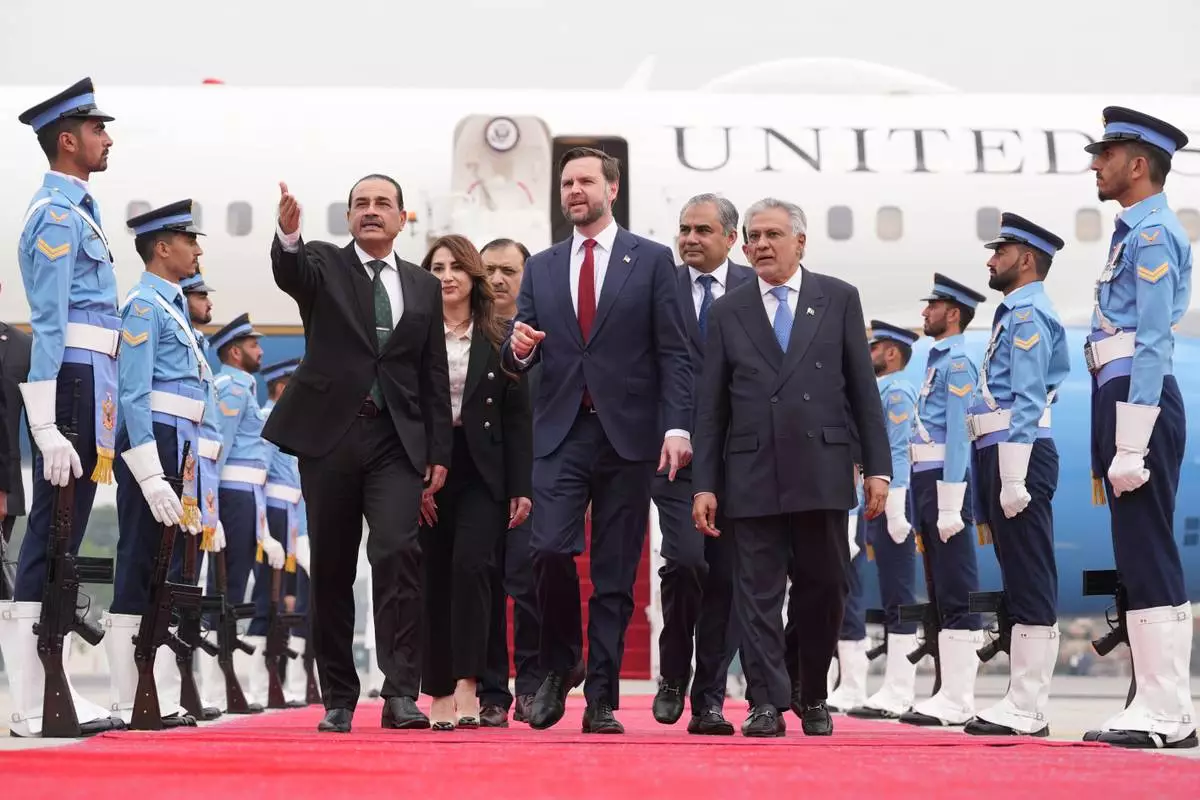
U.S. Vice President JD Vance, center, walks with Pakistan's Chief of Defence Forces and Chief of Army Staff Field Marshall Asim Munir, left, and Pakistani Deputy Prime Minister and Foreign Minister Mohammad Ishaq Dar after arriving for talks with Iranian officials in Islamabad, Pakistan, Saturday, April 11, 2026. (AP Photo/Jacquelyn Martin, Pool)
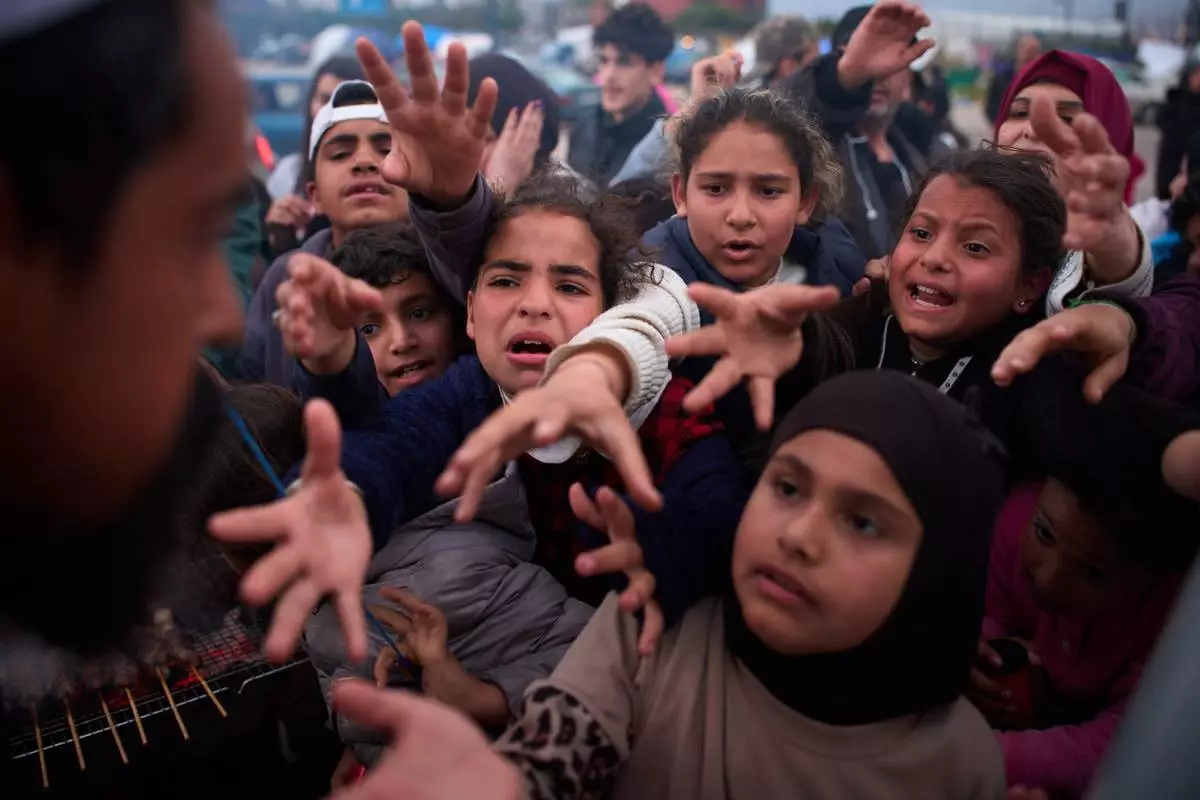
Displaced families extend their hands while waiting for donated food beside the tents they use as shelters after fleeing Israeli bombardment in southern Lebanon, in Beirut, Lebanon, Thursday, April 9, 2026. (AP Photo/Emilio Morenatti)
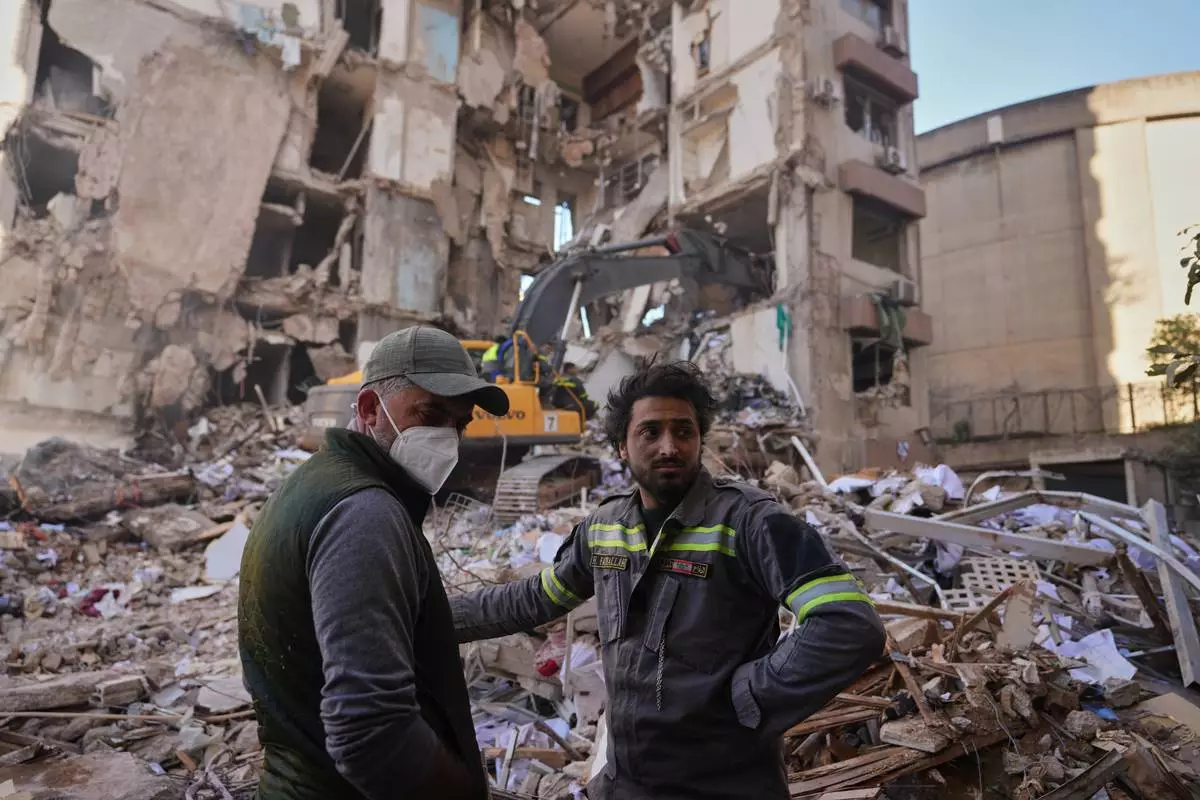
A Lebanese civil defense worker, right, stands with a resident at the site of a building destroyed in an Israeli airstrike a day earlier in central Beirut, Lebanon, Thursday, April 9, 2026. (AP Photo/Hassan Ammar)
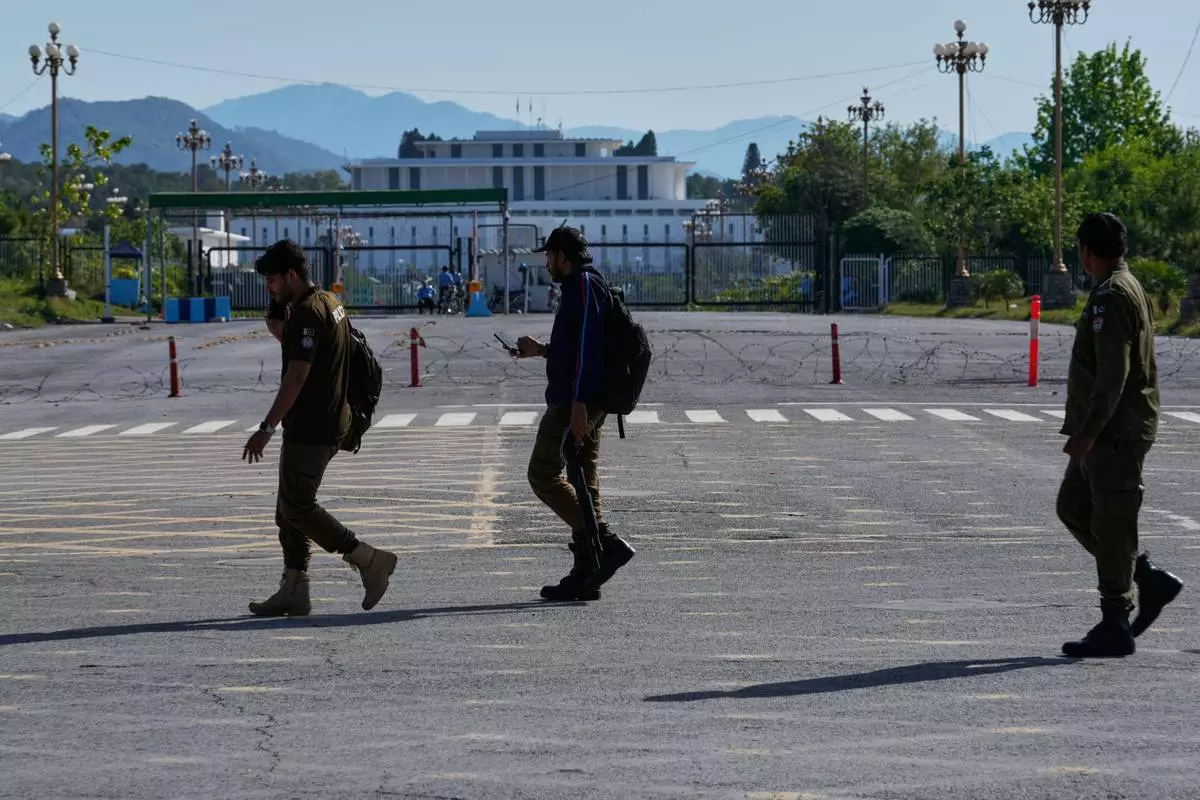
Police officers take position in Islamabad, Pakistan, to ensure security ahead of possible negotiations between Iran and the United States, Friday, April 10, 2026. (AP Photo/Anjum Naveed)
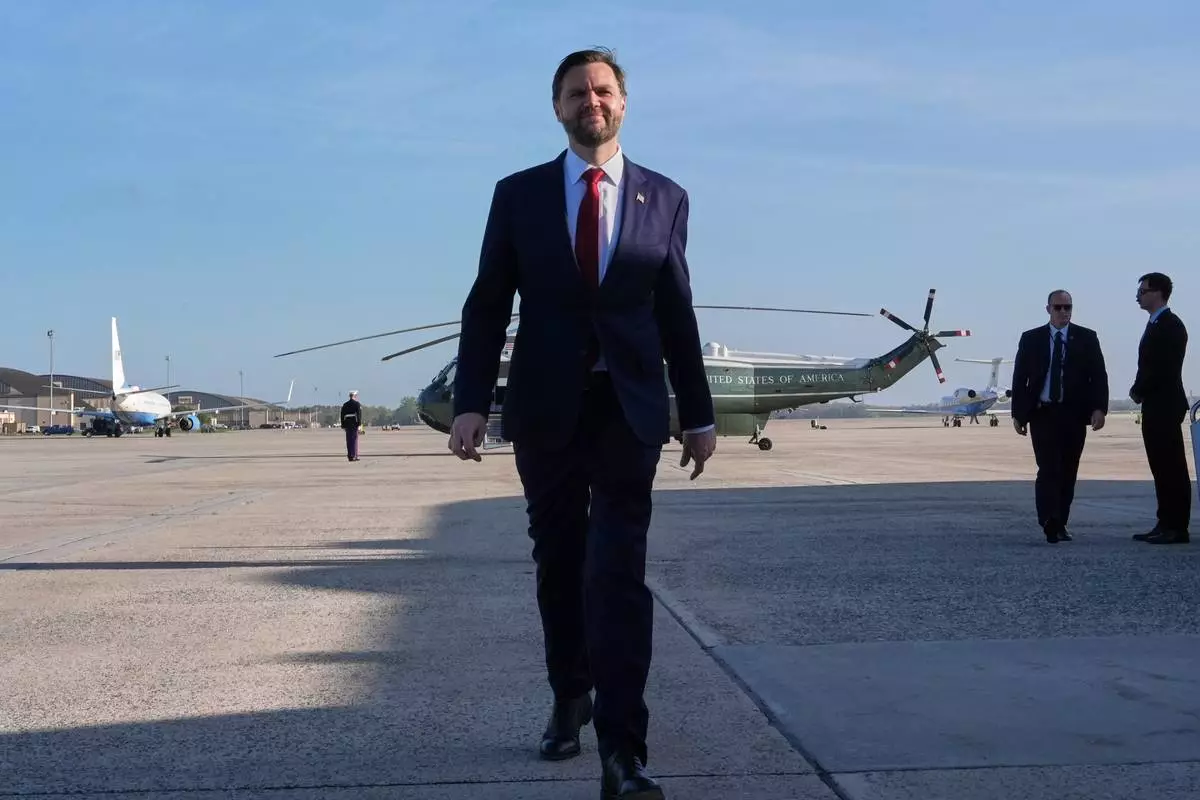
Vice President JD Vance walks to speak with the Press before boarding Air Force Two, Friday, April 10, 2026, at Joint Base Andrews, Md., for expected departure to Pakistan, for talks on Iran. (AP Photo/Jacquelyn Martin, pool)
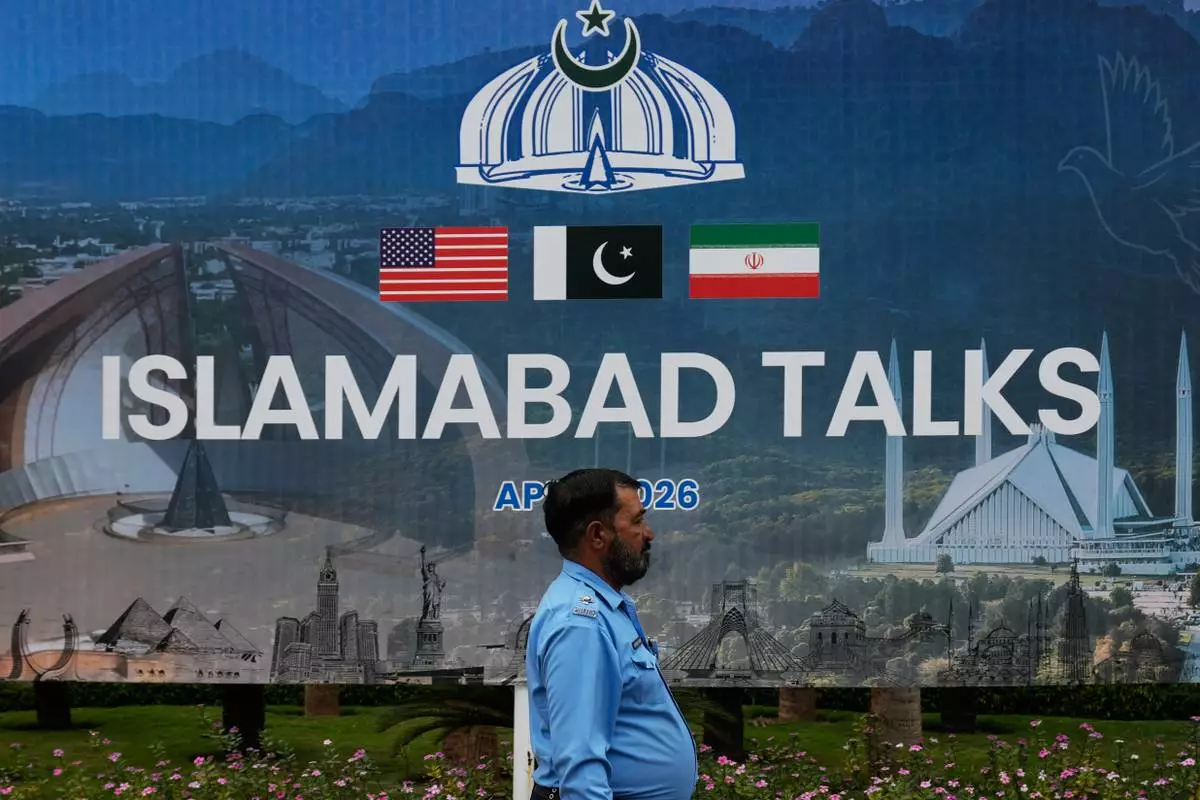
A police officer walks past a billboard regarding the United States and Iran negotiations, outside a media facilitation center in Islamabad, Pakistan, Saturday, April 11, 2026. (AP Photo/Anjum Naveed)