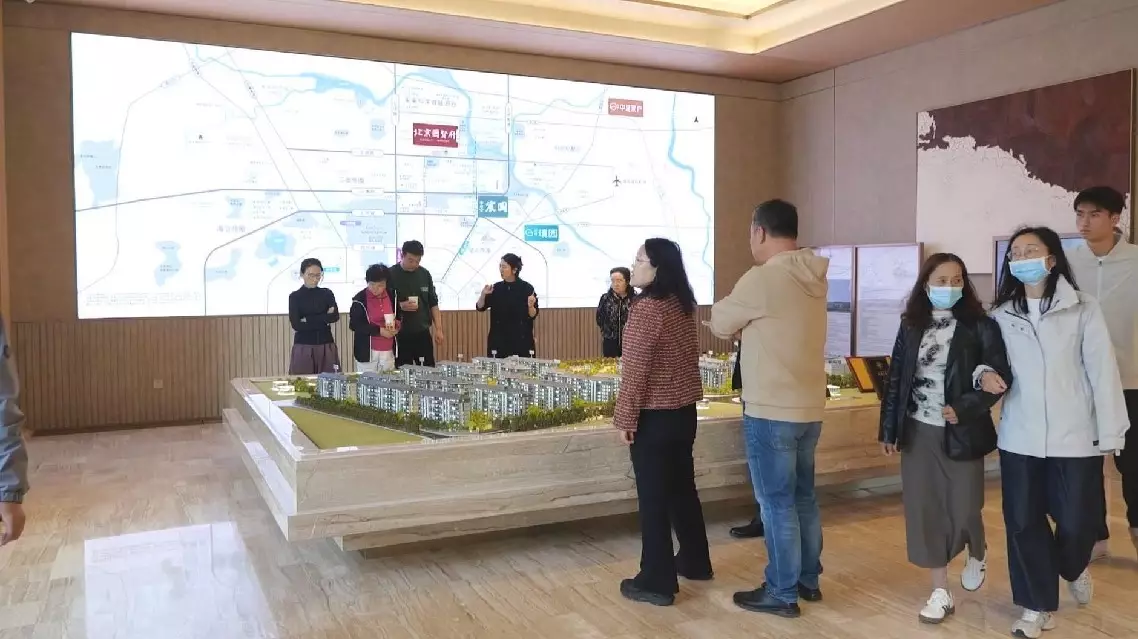
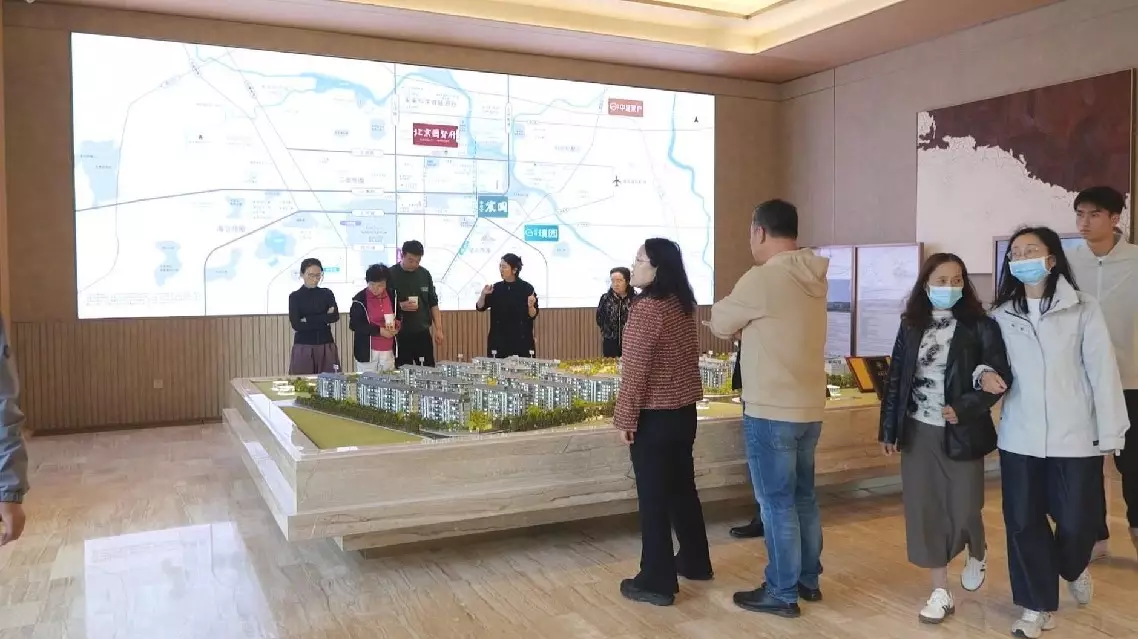
The decline in the prices of commercial residential homes in China's 70 large and medium-sized cities stabilized on a month-on-month basis in September, according to official data released on Friday.
In the country's first-tier cities, namely Beijing, Shanghai, Guangzhou and Shenzhen, new home prices edged down by 0.5 percent, compared with a 0.3-percent drop in the previous month, according to the National Bureau of Statistics (NBS).
Second- and third-tier cities both registered declines of 0.7 percent month on month, with the former matching the decline from the previous month, while the latter improved from a 0.8-percent drop in August.
In September, prices of resale homes in first-tier cities fell by 1.2 percent month on month, with the decline widening by 0.3 percentage point compared to the previous month, the NBS said.
In the second- and the third-tier cities, resale home prices both fell by 0.9 percent month on month. In second-tier cities, the decline narrowed by 0.1 percentage point compared to the previous month, while in third-tier cities, the decline remained unchanged from the prior month.
China's home price decline stabilizes month on month in September: official data
China's home price decline stabilizes month on month in September: official data
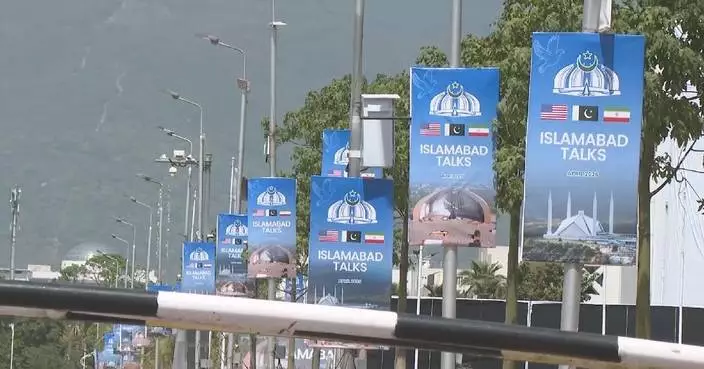
An Iranian delegation led by Foreign Minister Seyed Abbas Araghchi arrived in Pakistan on Friday night to discuss regional developments and ongoing peace efforts, a spokesman for Pakistan's Ministry of Foreign Affairs said.
Tahir Andrabi, the spokesman, said in a social media post that Araghchi is scheduled to meet Pakistan's leadership to exchange views on the evolving regional situation and efforts aimed at promoting peace and stability.
Upon arrival, the Iranian foreign minister was received by Pakistani Deputy Prime Minister and Foreign Minister Mohammad Ishaq Dar, Chief of Defense Forces and Chief of Army Staff Field Marshal Syed Asim Munir, along with other senior officials.
Araghchi currently has no negotiation plans with U.S. representatives, but will convey messages to the U.S. side through Pakistani mediators, according to Iranian sources on Friday.
However, the White House said Friday that U.S. President Donald Trump's envoy Steve Witkoff and son-in-law Jared Kushner are heading to Pakistan for talks with Araghchi this weekend.
U.S. Vice President JD Vance, who led the U.S. negotiating team during the first round of talks in Pakistan earlier this month, is not currently planning to attend the upcoming talks, White House Press Secretary Karoline Leavitt said, adding he will be standing by and consulting Trump alongside Secretary of State Marco Rubio.
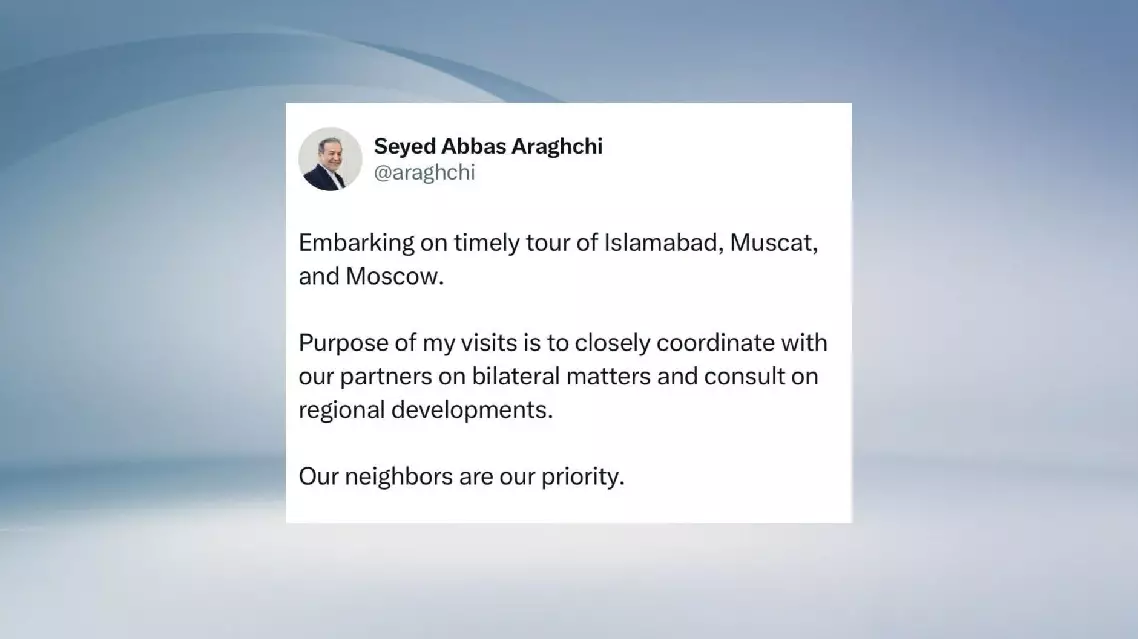
Earlier in the day, Araghchi said in a social media post that he was embarking on a regional tour that includes stops in Islamabad, Muscat and Moscow. Araghchi emphasized that the purpose of the visit is to closely coordinate with partners on bilateral affairs and to consult on the regional situation. He also noted that Iran's neighbors are a priority for Iran.
Iranian delegation led by FM arrives in Pakistan