Egypt is expected to discuss promotion of bilateral trade in local currencies with BRICS countries in the upcoming meeting in Kazan, Russia.
The 2024 BRICS summit will be held from Oct 22 to 24, which is the first gathering since the group's expansion in January this year when Iran, Egypt, Ethiopia, Saudi Arabia and the United Arab Emirates joined the initial five members of Brazil, Russia, India, China and South Africa.
After Egypt officially joined BRICS, one of its main targets has been to support members' drive for de-dollarization.
Some in the Egyptian business community have welcomed the move to reduce dependence on the U.S. dollar.
"One of the main obstacles we face in trade is the lack of access to U.S. dollars. Using local currencies will ease the process for us when we trade with other countries," said Ahmed al Zayat, member of Egyptian Businessmen Association.
The central banks of China and Egypt had signed a currency swap agreement totaling 18 billion yuan (about 2.57 billion U.S. dollars). Egypt also inked similar deals with other countries.
"Besides Egypt, many countries are beginning to use local currencies. You can't completely eradicate dollars but they should not be the main currency of trade. In 2022, to reduce dependence on dollars, the Egyptian central bank became the top gold buyer worldwide to replace dollars with gold," said Assem Mansour, head of Market Research Department, EW Markets.
Trade with BRICS members accounts for about a third of Egypt's total trade at over 31 billion U.S. dollars. Currency swap deals are set to foster trade and investment ties even further.
Agreements with China and other BRICS nations are considered by Egypt as the first step of a long term strategy to gradually remove the U.S. dollar from most of its trade transactions worldwide.
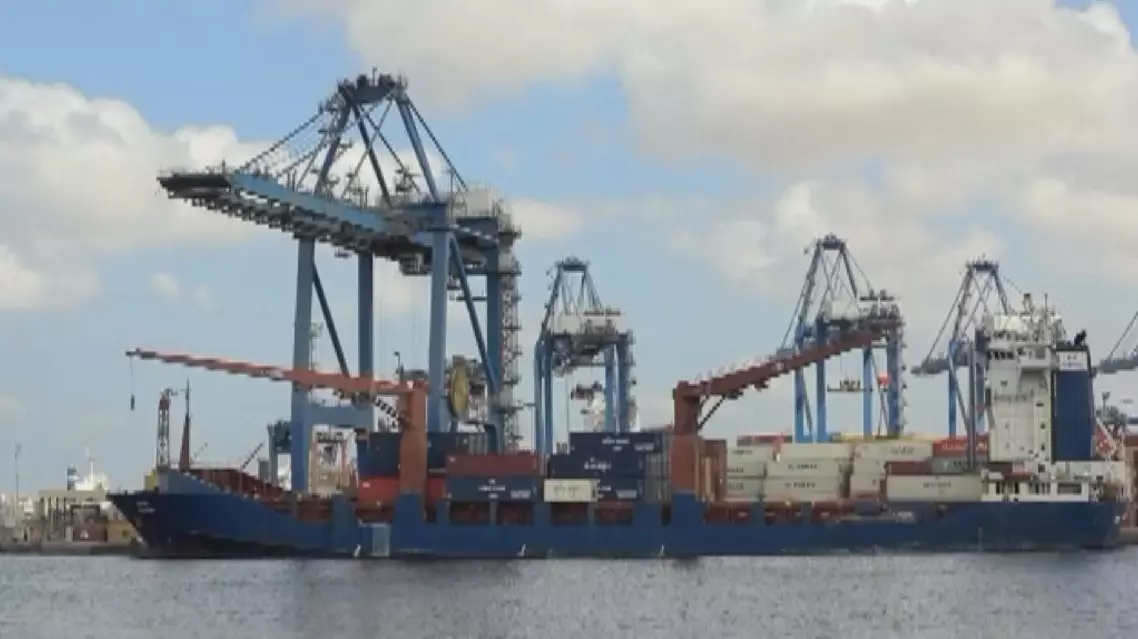
Egypt to discuss promotion of bilateral trade in local currencies with BRICS countries
Egypt to discuss promotion of bilateral trade in local currencies with BRICS countries
Computing power services are gaining momentum as artificial intelligence (AI) technology evolves, opening new avenues for the development of trade in services and becoming a highlight of the ongoing 2026 China International Fair for Trade in Services (CIFTIS) in Beijing.
The five-day CIFTIS opened on Wednesday, drawing participants from 90 countries, regions and international organizations, with over 1,800 companies showcasing their service products on-site.
Exhibitors at the 2026 Thematic Exhibition: Telecommunications, Computers and Information Services are shifting their focus from traditional communication offerings to integrated services combining computing power and AI.
"Currently, we operate over 2 million base stations, and each base station has a supporting communication machine room. We have integrated computing facilities into these machine rooms, upgrading them into data centers that can provide localized, distributed computing services. This enables real-time computing support for applications such as AI-powered forest fire prevention, disaster mitigation, and water quality monitoring in local areas," said Qiao Zhi, a staff member of China Tower Beijing Branch.
Beyond these application services, China's industry chain leaders are showcasing a broad array of innovative solutions at the upstream segment, including chip design, testing, verification, and technical licensing. Chinese service providers are offering tailored solutions for a diverse range of regions and markets.
"For example, European and American clients tend to prefer large-model, high-performance chips, while clients from the Middle East and Southeast Asia focus more on edge-side AI chips, mainly to assist their smart city projects and robotics initiatives. Chinese enterprises can meet the customized demands of different regions, different customers and different scenarios," said Wang Wenqian, head of research and development of the Joinsilicon, which provides customized products and solutions for the semiconductor industry.
Services that can be digitally delivered, including those related to computing power, are becoming an important engine driving the growth of services trade. According to China's Trade in Services Development Index Report 2026 released at the CIFTIS, the share of digitally deliverable services in global services exports rose to 57.9 percent in 2025.
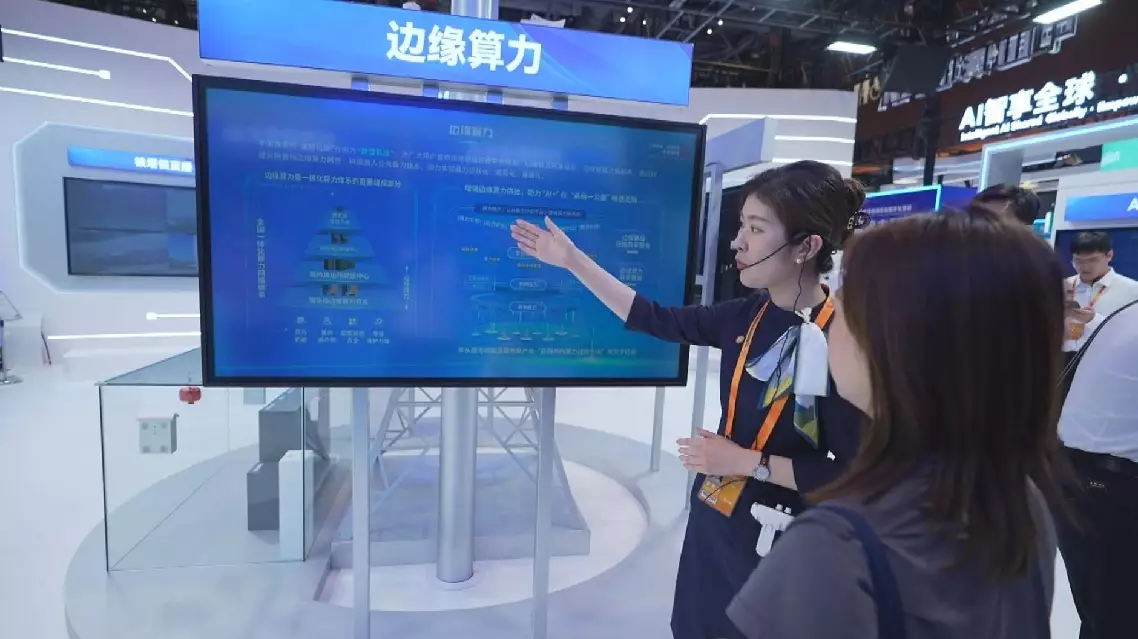
Computing power services emerge as new growth driver for trade in services