Skip to Content Facebook Feature Image

China's "most beautiful factory" committed to sustainable growth in medicine production

China

China

China

China's "most beautiful factory" committed to sustainable growth in medicine production

2024-10-22 00:47 Last Updated At:01:17

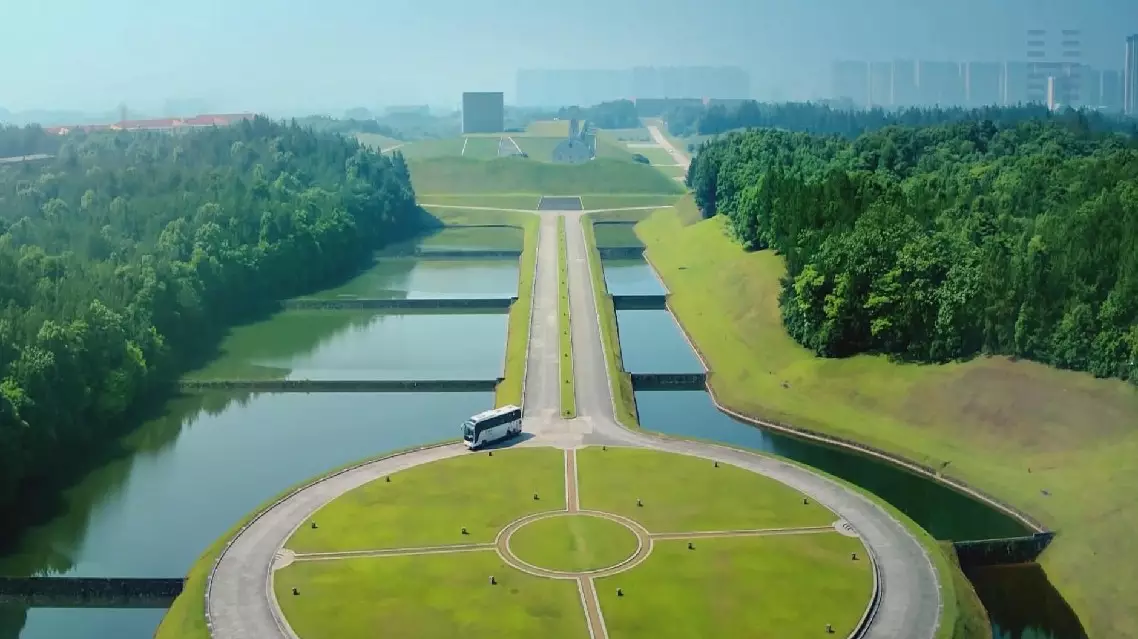
A green and low-carbon medical base in east China's Jiangxi Province has been committed to sustainable growth in recent years by retaining original vegetation, reducing energy consumption, recycling liquid and solid wastes, and tapping on renewable energy. The Jiangzhong Pharmaceutical Valley in Nanchang, capital of Jiangxi Province, is the core production base of Chinese pharmaceutical firm CR Jiangzhong. The low-carbon factory is renowned as "the most beautiful factory in China."

Unlike typical medicine factories, forests, lakes and so many species of wildlife animals can be seen in the nearly 187-hectare green valley, but not a single pipeline throughout the whole industrial area.

At the front door of Jiangzhong Pharmaceutical Valley are three magnificent giant reliefs, engraved with 68 famous Chinese medicine doctors from Ancient Era to the end of the Qing Dynasty (1644-1911), showcasing the company's inheritance of thousands of years of the traditional Chinese medicine culture.

The liquid preparation workshop at the production base has been rated as the Intelligent Manufacturing Pilot Demonstration Base by the state.

"Although there are no workers, more than 100 robotic arms and intelligent driverless transport cars play important roles here. So, from the pretreatment of Chinese herbal medicine to the warehouse delivery of cargo from storage, the entire production is fully automated and continuous, thus not only improving the producing efficiency but also ensuring the stability of product quality," said Ding Yuanyuan, a guide of the valley.

The base's manager highlighted the core principles of natural authenticity and green ecology in building, operating and maintaining the factory over the past 20 years.

"We have implemented three major measures - carbon reduction at the source, carbon cut in processes, and carbon sequestration at the end. First, in terms of carbon reduction at the source, we have increased the proportion of clean and renewable energy by constructing three phases of photovoltaic power stations. Currently, clean energy accounts for 30 percent of the total energy use. Regarding carbon cut in processes, we focus on upgrading the production methods. For example, we have transformed our production lines from traditional intermittent production to continuous manufacturing. This change has significantly shortened the production cycle and improved production efficiency. As for the carbon sequestration at the end, we have achieved water reuse standards for treated wastewater. By reusing recycled water, we save over 140,000 tons of water annually," said Zhong Zhijian, general manager of CR Jiangzhong Wanli Manufacturing Base.

He also noted that the factory has made the most of medicine residue to mitigate environmental pollution. For instance, medicine residues from digestive tablets are fermented to become animal feed.

Zhong said the production base can now save 2,200 tons of carbon a year by increasing the use of renewable energy sources, while reducing energy consumption has helped create at least 5 million yuan (about 703,600 U.S. dollars) in economic benefits over the past five years.
China's "most beautiful factory" committed to sustainable growth in medicine production
China's "most beautiful factory" committed to sustainable growth in medicine production
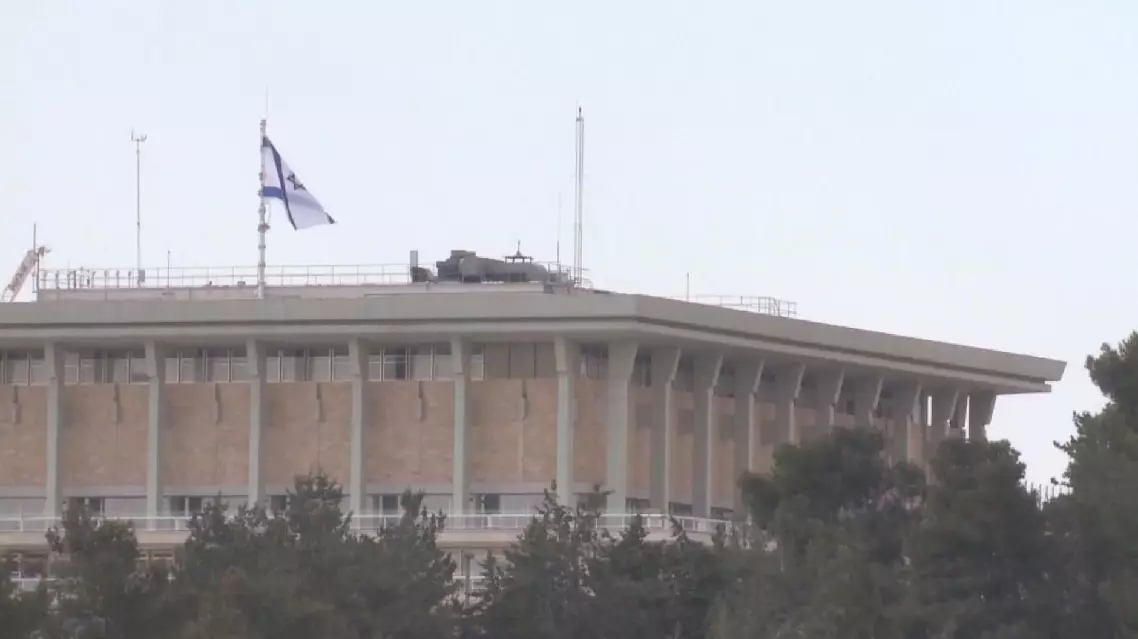
The recently signed memorandum of understanding (MoU) between the United States and Iran has sparked major concern among Israeli officials, who fear that Israel's interests are being abandoned by its most crucial ally, according to analysts.

The development comes as Israel braces for a pivotal election later this year, with Prime Minister Benjamin Netanyahu potentially facing severe political fallout from the agreement.

"Israel views the MoU signed with Iran as a complete capitulation where the Americans were desperate to reach a deal because they clearly failed abysmally to plan for the blocking of the Strait of Hormuz. So they feel that all of Israel's interests have been abandoned," said Dan Perry, an American world affairs and political analyst.

Following the signing of the MoU, Iran and the United States held the first round of high-stakes indirect talks, mediated by Pakistan and Qatar, at the Swiss mountain resort of Buergenstock on Sunday.

On Monday, mediators announced encouraging outcomes from the talks, including a 60-day roadmap toward a final deal, and mechanisms to ensure the security of commercial shipping through the Strait of Hormuz and to end the fighting between Israel and Hezbollah, a close ally of Iran in Lebanon.

However, there have been concerns that Israel may jeopardize the negotiations.

"No doubt that the Americans, some of the Americans, definitely some of the Americans that are negotiating, like the Vice President JD Vance, think that Israel can put some obstacles and jeopardize the negotiations," said Yaki Dayan, former Israeli consul in Los Angeles.

With Israeli elections looming later this year, Netanyahu's core strategy to get re-elected was to portray the very good relations he holds with U.S. President Donald Trump. However, the MoU and the ensuing negotiations between the U.S. and Iran may dramatically affect the election results.

"Unless something dramatically changes, this is devastating for Netanyahu, not only because he pursued a strategy that has failed - the Iranian regime still stands, the nuclear program still exists, Hamas and Hezbollah are still fighting against Israel, but also because he was long perceived as Mr. America, with his incredible eloquence in American English. He could run circles around any American president to get America to do Israel's bidding," said Perry.

Perry added that instead of maintaining that influence, Netanyahu has brought Israel to an unbelievably low point in its relationship with the United States.

Although Netanyahu did practically everything to persuade the U.S. to withdraw from the previous Iran nuclear deal signed more than a decade ago under President Barack Obama, analysts doubt that he can repeat it again this time because Israel and its prime minister rely entirely on just one side of the American political spectrum.

"When you look at alternatives now, you don't have because Israel has lost the Democratic side as well. So you don't have an alternative in the American politics," said Dayan.

Israel feels its interests "abandoned" in US-Iran deal: analysts

Israel feels its interests "abandoned" in US-Iran deal: analysts

Recommended Articles