Skip to Content Facebook Feature Image

Weifang-Yantai High-Speed Railway starts operation, deepening regional integration

China

China

China

Weifang-Yantai High-Speed Railway starts operation, deepening regional integration

2024-10-22 10:41 Last Updated At:12:57

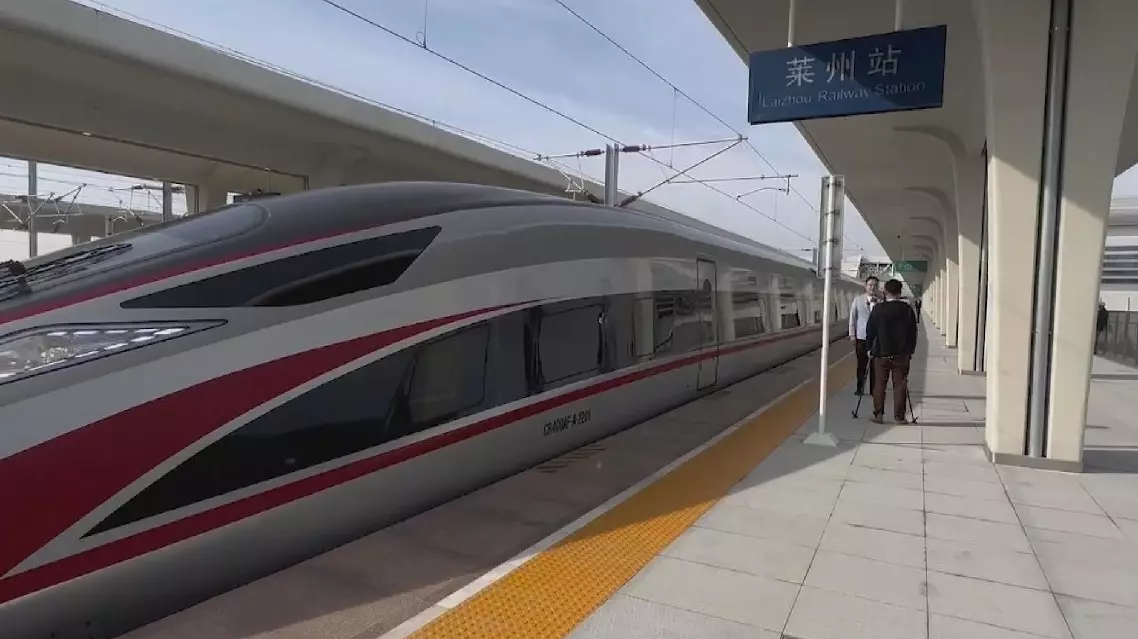
The Weifang-Yantai High-Speed Railway in east China's Shandong Province began operation on Monday, which is set to enhance regional integration, cut travel time and boost the local tourism sector.

Linking Weifang to Yantai, the high-speed railway, with a total length of 237 km and a designed speed of 350 km/h, is the main transportation corridor for passenger exchanges in the northern coastal region of Shandong Province.

It passes through Qingdao and connects several coastal cities in the north of Shandong Province that were once without high-speed rail, including Laizhou and Zhaoyuan.

In addition to deepening regional integration, the operation of the high-speed railway will also boost tourism by making it easier for inland visitors to enjoy beautiful coastal views in a shorter time.

"I bought the ticket as soon as I heard the high-speed train would begin service. Now it takes only three hours to travel from Beijing to Penglai by the high-speed train. I’ll bring my family here this weekend. It's so convenient to travel back and forth!" said a visitor from Beijing.

"I used to drive more than three hours to travel from Jinan to Laizhou, but now it only takes one hour by high-speed train," said a visitor from Jinan.

Eying the influx of visitors brought by the opening of the high-speed railway, local authorities are welcoming them with open arms.

Over 40 scenic spots in Yantai are attracting visitors by offering discounts to holders of high-speed train tickets.

Shuttle bus services are also provided in the city to facilitate travel between tourist destinations and the high-speed railway station.

Starting in 2020, the construction of the Weifang-Yantai High-Speed Railway has once faced complex geological conditions when it passed through a gold mining area in Zhaoyuan City, but these challenges were resolved thanks to new technologies, new materials and intelligent construction equipment.

During the construction, the railway also went through an archaeological site in Pingdu City and the railway construction work gave way to archaeological excavations to protect cultural relics.

"Two steps were taken. Protective archaeological excavation was first conducted in areas on the high-speed railway route. Once the field archaeological work is completed, the site will be handed over to the construction team for further work," said Qu Tao, curator of a museum in Pingdu City.
Weifang-Yantai High-Speed Railway starts operation, deepening regional integration

Weifang-Yantai High-Speed Railway starts operation, deepening regional integration

China's Minister of Commerce Wang Wentao outlined the key priorities of the 32nd Asia-Pacific Economic Cooperation (APEC) Ministers Responsible for Trade Meeting, which opened on Friday in Suzhou, East China's Jiangsu province.

In an interview with CGTN ahead of the two-day meeting, Wang said free trade, digital cooperation and green economy are high on the agenda of the meeting.

"The key areas include advancing regional economic integration and the Free Trade Area of the Asia-Pacific, supporting the World Trade Organization (WTO) in strengthening digital cooperation and developing green economy. At present, the international situation is marked by intertwined turbulence and chaos, with intensified geopolitical instability. The rise of unilateralism and protectionism poses serious challenges to the international economic and trade order, disrupting global and Asia-Pacific development. Against this backdrop, all parties have higher expectations for this trade ministers' meeting, hoping that it can build consensus and deliver outcomes," Wang said.

This year marks China's third time hosting the APEC meetings and the 35th anniversary of its membership.

By 2025, China had become the largest trading partner of 13 APEC economies. Trade between China and APEC economies reached 3.7 trillion U.S. dollars, accounting for 57.8 percent of China's total foreign trade.

China has signed 24 free trade agreements or economic and trade arrangements with 31 countries and regions, including 15 APEC economies. In recent years, China has also completed upgrades of free trade agreements with APEC economies such as Singapore and Peru.

The minister said that China has always been a firm supporter and an important contributor to APEC.

"We have actively shared our vast market and development opportunities with all parties. China's door to the world will only open wider and wider. Facing the common challenges, China will continue to fulfill its responsibilities as a major country, further deepen reform, expand high-standard opening-up, and continue to provide new opportunities for the Asia-Pacific region and the world with its new achievements in Chinese modernization," the minister said.

China's Commerce Minister outlines priorities for 32nd APEC trade ministers' meeting

China's Commerce Minister outlines priorities for 32nd APEC trade ministers' meeting

Recommended Articles