China's pioneering dark energy radio detection project, the Tianlai experimental array, has officially joined the Square Kilometre Array (SKA) international mega radio astronomy project as a certified SKA Pathfinder, as announced by the National Astronomical Observatories of the Chinese Academy of Sciences on Monday.
The SKA Pathfinder program, alongside precursor initiatives, integrates cutting-edge scientific installations from around the globe into SKA's realm of scientific and technological innovation.
While the SKA construction is underway, the latest research from these pathfinder projects continues to offer new scientific exploration opportunities and test novel detection technologies for SKA. Furthermore, these technologies can be applied to even larger future telescope projects.
Located at an observation station in Hami, Northwest China's Xinjiang Uygur Autonomous Region, the Tianlai project is led by the National Astronomical Observatories of the Chinese Academy of Sciences, aiming to test key technologies for detecting dark energy through radio observations.
Current astronomical observations suggest that approximately 70 percent of the universe consists of dark energy, a mysterious force driving the accelerated expansion of the cosmos.
The Tianlai project has completed two types of array telescopes. One is a cylindrical radio array with three cylindrical reflector antennas equipped with 96 feeds. The other is a dish array comprising 16 parabolic antennas, each with a 6-meter diameter. These arrays can be used to test detection technologies related to neutral hydrogen survey experiments, which can then be applied to the international SKA project.

China's pioneer in dark energy detection certified as SKA Pathfinder
China has stepped up efforts to optimize the layout of its future industries since the beginning of the year, with breakthroughs accelerating in frontier technologies from advanced robotics to orbiting data centers.
In 2026, a series of landmark projects have taken shape across the country. In Beijing, preparations are underway for the country's first space computing innovation center. The areas of research at the center will aim to gradually relocate ground-based data centers to outer space to enable data collection, processing and output in orbit. China has also issued plans to accelerate the development and improvement of the space computing industrial ecosystem this year.
In Shanghai, the world's first pilot platform for humanoid robot components is taking shape. By establishing small-scale trial production lines for five categories of components, including reducers, the platform offers 72 testing and verification services, significantly lowering the development threshold for humanoid robots.
Since the beginning of 2026, China has launched over 100 innovation and research tasks for future industries through its open competition mechanism, focusing on general artificial intelligence, quantum technology, atomic-level manufacturing and clean low-carbon hydrogen energy. Key areas of application have been identified, while manufacturing innovation centers and pilot platforms in priority fields have been established to speed up the translation of cutting-edge technologies from laboratories to production lines.
The momentum is also evident in the clean energy sector. In north China's Shanxi Province, hydrogen-powered shared bicycles have hit urban streets, while more than 15,000 hydrogen heavy-duty trucks operate on logistics routes. Local authorities are also planning several cross-provincial hydrogen logistics corridors.
To sustain this growth, China will implement tiered nurturing for unicorn enterprises and specialized, sophisticated small and medium-sized enterprises in key sectors this year. The country will also advance the development of future industry pilot zones based on local industrial strengths. To date, some 54,000 innovative businesses nationwide have settled into the country's 193 innovative industrial clusters.
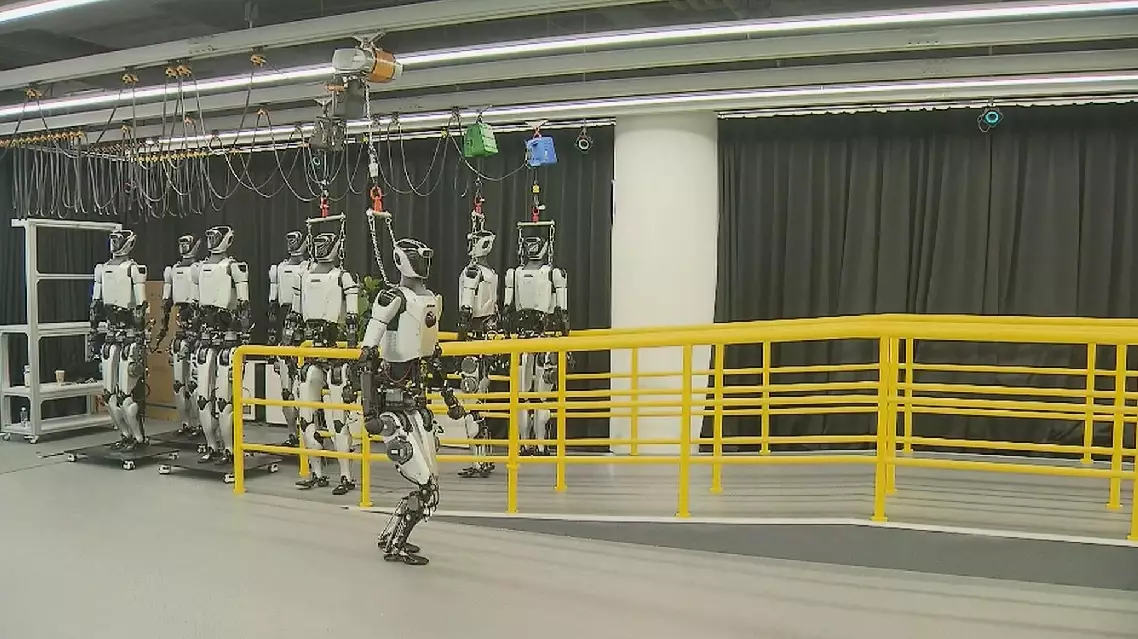
China accelerates layout of future industries in 2026