Chinese tech giant Huawei on Tuesday released HarmonyOS NEXT, its self-developed operating system built independent of Android architecture.
The launch event, which attracted nearly 5,000 attendees in Shenzhen, where the company is based, marks another milestone for Huawei since Washington put it on the "Entity List" in 2019, barring it from doing business with U.S. firms including Google, which provides Android.
The event marked the beginning of the official public testing phase of China's first homegrown mobile operating system, representing a significant breakthrough in the country's information technology industry.
Previous versions of HarmonyOS still used some Android Open Source Project (AOSP) code in their system base, necessitating compatibility with certain Android applications.
HarmonyOS NEXT, the self-developed fifth iteration of HarmonyOS, has achieved significant improvements in system fluency, performance, and security features, while also ensuring the independence of the homegrown operating system.
The system has been installed on over one billion devices, said Yu Chengdong, Huawei's executive director.
"In fact, our development team has gone through the path that others have gone through for 20 or 30 years in just 10 years. The battery life, security and privacy protection functions of the phone are very strong. The applications' version is being developed iteratively everyday, and the update schedule is very, very fast. I estimate another two or three months may be enough time for our whole ecosystem to mature,” Yu said.
Over 15,000 native HarmonyOS applications and meta-services have been launched, covering 18 industries, with general office applications serving more than 38 million enterprises nationwide.
HarmonyOS NEXT has reduced the difficulty and cost of adopting the new system, improved fluency by 30 percent, and many applications are being updated with new versions every day.
HarmonyOS is an open-source operating system designed for various devices and scenarios, including intelligent screens, tablets, wearables and cars. It was first launched in August 2019 and has replaced Apple's iOS to become the second-largest mobile operating system on the Chinese market after Google’s Android.
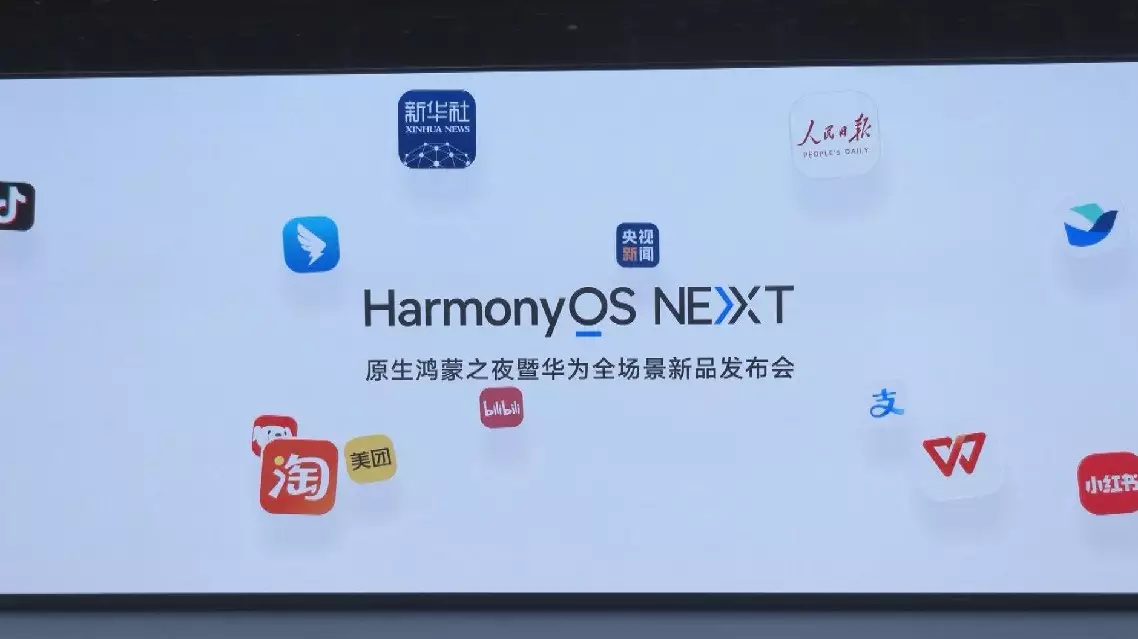
Huawei releases homegrown HarmonyOS NEXT operating system
Shanghai's Pudong New Area issued on Friday a three-year action plan for promoting high-quality development of trade in services, setting ambitious goals for growth in the volume of trade in services and the amount of digital trade.
The plan, covering the period from 2026 to 2028, sets clear targets that by 2028 the total volume of trade in services in Pudong will exceed 140 billion U.S. dollars, with digital trade surpassing 70 billion U.S. dollars.
Last year, the Pudong New Area's total import and export volume of trade in services reached 121.02 billion U.S. dollars, up 4.4 percent year on year, accounting for more than half of Shanghai's total.
In recent years, leveraging its strengths in technological innovation and artificial intelligence (AI), the Pudong New Area has kept promoting integrated development of AI and trade in services, including healthcare services, to expand new frontiers for the sector.
"We aim to explore overseas markets for high-end medical devices featuring embodied AI rehabilitation robots. We are also trying to extend our core capabilities in rehabilitation into new areas such as elderly care services," said Shi Hui, vice president of an intelligent technology company.
In 2025, Pudong was home to more than 1,000 AI enterprises, with the industry's total output reaching 198.2 billion yuan (29 billion U.S. dollars), a year-on-year increase of 11 percent. The area also had over 100 key enterprises specializing in embodied AI, forming a full-industry-chain layout.
In addition, intelligent technologies have also been applied in maritime services to streamline logistics and improve efficiency.
"In the area of trade in services, we have adopted intelligent technologies to accelerate the flow of goods and facilitate smoother logistics. We are also promoting 'maritime data plus' initiatives, using our maritime supervision data to empower financial institutions and insurance companies. By building a large evaluation model, we aim to support faster financing and insurance services for the shipping industry, ultimately contributing to healthy development of the entire sector," said Xie Xin, director of the hazardous materials management and pollution prevention center of the Maritime Affairs Bureau of the Pudong New Area.
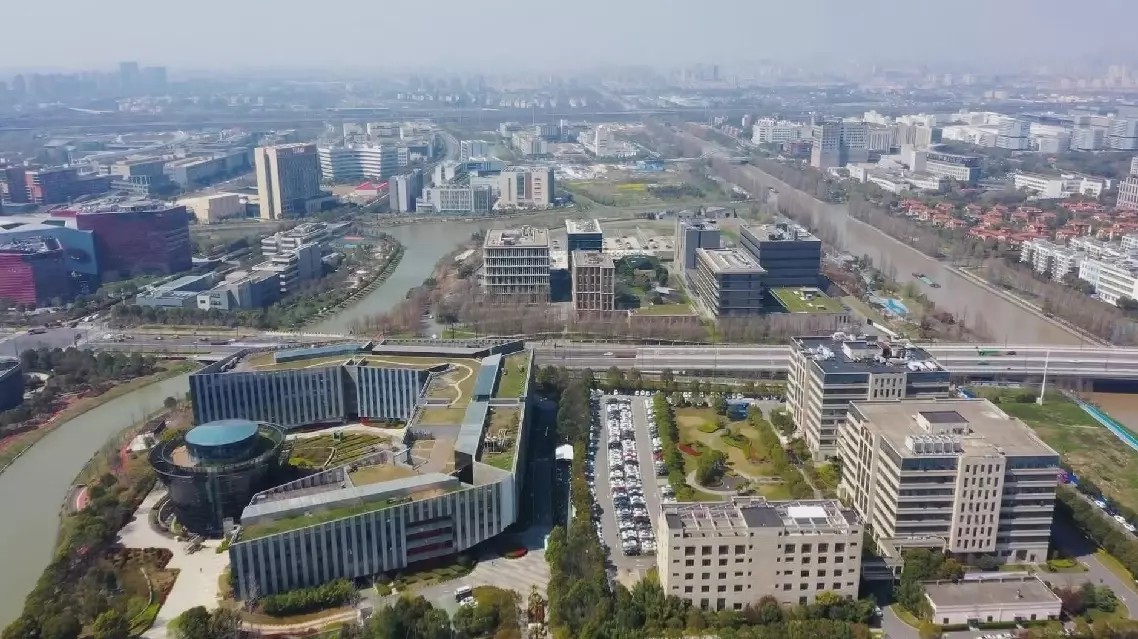
Shanghai Pudong New Area unveils three-year action plan to boost trade in services