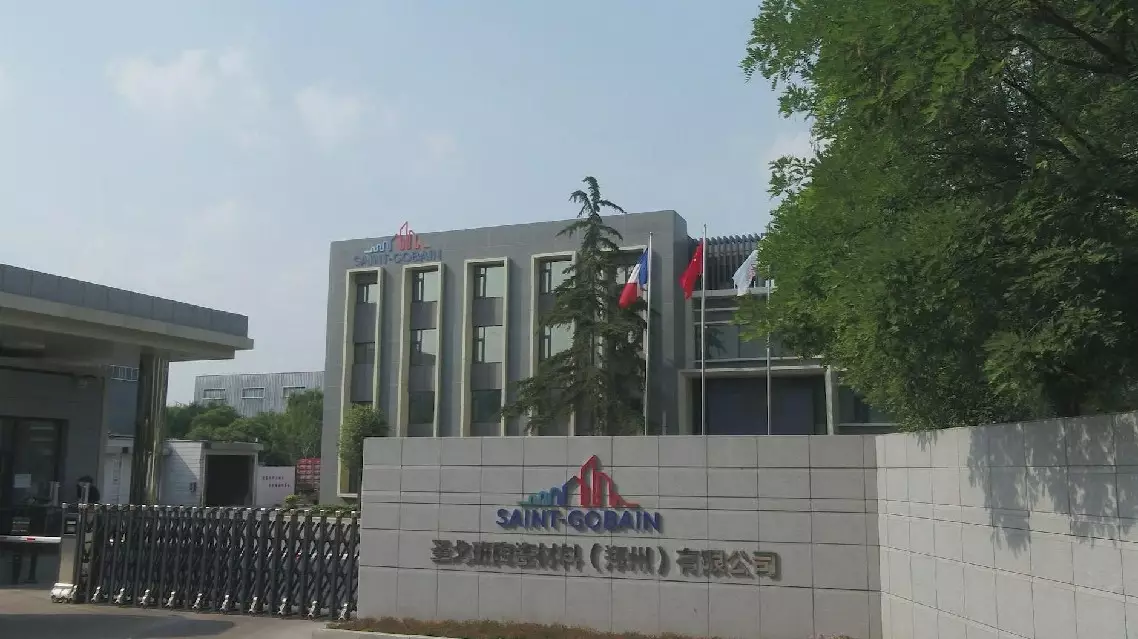
A France-headquartered Global Fortune 500 company is leveraging its technical advantages to enhance the new materials industry chain in Dengfeng City, central China's Henan Province, and has expressed optimism about future development due to the city's favorable business environment.
19 years ago, Saint-Gobain, a manufacturer of a wide variety of building materials, established its first factory in Dengfeng, capitalizing on the region's transportation advantages, abundant mineral resources, and numerous upstream industrial enterprises. Today, the factory in Dengfeng is expanding by laying out new facilities and building additional production lines, achieving a total output value of 470 million yuan (approximately 66 million U.S. dollars) last year.
"We have three (factories) in Henan Province, and as always, when we come and when we invest in provinces in China, we feel a strong support from the local authorities and from the government," said Anthony Lopez, Asia-Pacific Communication Director of Saint-Gobain.
Lopez explained that the decision to establish a factory in Dengfeng was influenced by the presence of numerous car manufacturers and electric vehicle manufacturers, which are their primary clients.
"You (Henan) have a lot of car manufacturers and EV car manufacturers, so Saint-Gobain has different companies supplying those EV car-makers. So it's very important for us that we are also close to them when we established a manufacturing site," said Lopez.
Saint-Gobain produces highly wear-resistant abrasive grains from a material called corundum, which is primarily composed of alumina sourced from the local aluminum processing industry in Dengfeng.
The company's continued presence has helped to drive the local new materials industry chain in the city. In 2023, the output value of the new materials industry in Dengfeng exceeded 3 billion yuan (about 421.9 million U.S. dollars).
"Saint-Gobain is very strong on renovation and this is a very important part to become carbon neutral. If China wants to become carbon neutral, they need to renovate the houses and the building to make them more sustainable and for this we offer high performance solutions. So the future of Saint-Gobain in China, I believe, is very bright," Lopez said.
French company drives new materials industry as factories integrate with China's supply chains
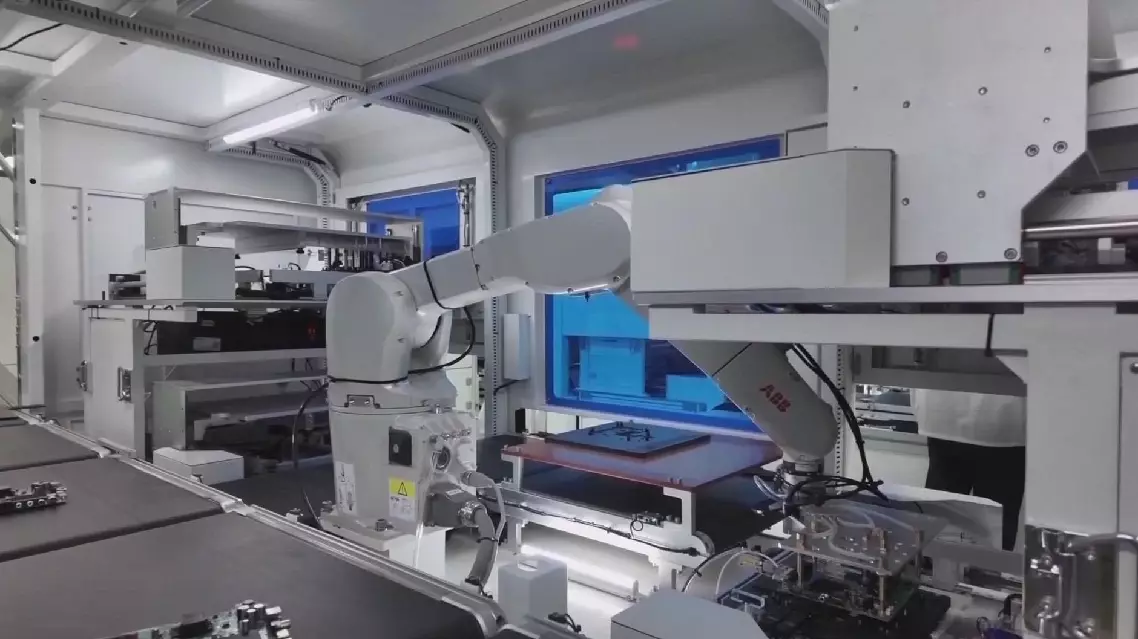
Mergers, acquisitions, and reorganizations in China's A-share market have picked up markedly since the start of the year, with deals disclosed in the first quarter up over 80 percent year on year, led by strong momentum in hard-tech sectors.
Data from Wind Information, a China financial data provider, showed that by Tuesday, listed companies had announced 829 merger, acquisition, and reorganization deals, with 224 on the ChiNext board and 94 on the STAR Market. By sector, "hard technology" sectors, represented by semi-conductor and smart manufacturing, have emerged as the most active areas.
"Hard-tech sectors typically feature rapid technological iteration, heavy research and development investment and long industrial chains, with significant economies of scale. Given these features, industrial mergers, acquisitions, and reorganizations have been a key tool for hard-tech companies to strengthen supply chain resilience and competitiveness. In addition, China's related policies, dubbed 'Six Measures for Mergers and Acquisitions,' explicitly support listed companies in carrying out mergers, acquisitions, and reorganizations around strategic emerging industries and future industries, while moderately increasing regulatory tolerance for unprofitable assets. This has created more favorable institutional conditions and a better market environment for listed companies in the hard-tech sectors to accelerate industrial upgrading and strengthen independent innovation," said Chen Jie, head of Mergers and Acquisitions Group at the investment banking division of China International Capital Corporation.
Chen also noted that the surge in mergers, acquisitions, and reorganizations has been reshaping valuation dynamics in the A-share market. As integration and synergies take time to materialize, investors are increasingly shifting their focus from short-term sentiment to long-term value based on business logic. At the same time, sustained mergers and acquisitions activity is expected to support the revaluation of leading companies.
"Through consolidation and expansion, leading A-share firms are likely to see their core competitiveness and long-term growth prospects become more evident. This will help the market better recognize their intrinsic value, offering higher valuation, and contribute to a more rational and mature valuation system overall," said Chen.
China's A-share sees mergers, acquisitions, reorganizations pick up,led by hard-tech sectors