As a financial transformation continues to play out in Thailand, Chinese mobile payment systems are leading the way in facilitating cashless payments across the country.
Thailand, like other countries in the region, is experiencing the rise of digital payments. ASEAN now stands out as the world's fastest-growing mobile wallet market.
QR codes have revolutionized how money moves in Thailand, the second-largest economy in Southeast Asia. What was once a cash-heavy society has now embraced a future where coins and notes are nearly obsolete.
At the heart of the country's digital payments boom are Chinese mobile payment platforms that have empowered small businesses, given tourists more freedom to explore, and transformed Thailand into a seamless digital economy.
"Thailand and China have a close economic relationship. And we have huge international trade between these two nations. Thailand adopted mass digital transformation the same as happened in China. It will increase rapidly," said Anusorn Tamajai, dean of the School of Economics at the University of the Thai Chamber of Commerce.
Behind the scenes, banks in the region have been connecting their systems, allowing their residents to use QR payments for cross-border transactions without any fees, generally at favorable conversion rates.
Thailand's Kasikornbank has been making great strides in partnering with China's UnionPay International, a leading payment services provider, to offer its users greater convenience.
"We have been partnering with UnionPay for some time and since going into WeChat Pay as well, we have reached quite a tremendous number of merchants and payment points for all the consumers. They don't have to bring in the physical cash anymore," said Pipatpong Poshyanonda, President and Executive Director at Kasikornbank Public Co. Ltd.
But this cashless revolution is not just about convenience, it's about transforming the way people live, work, and connect.
A regional QR code payment system will no doubt boost financial ties and economic integration across countries, making trade and investment easier and faster. It would also encourage the use of local currencies in cross-border transactions.
"The regional financial system will less depend on the U.S. payment system and U.S. dollar," said Tamajai.
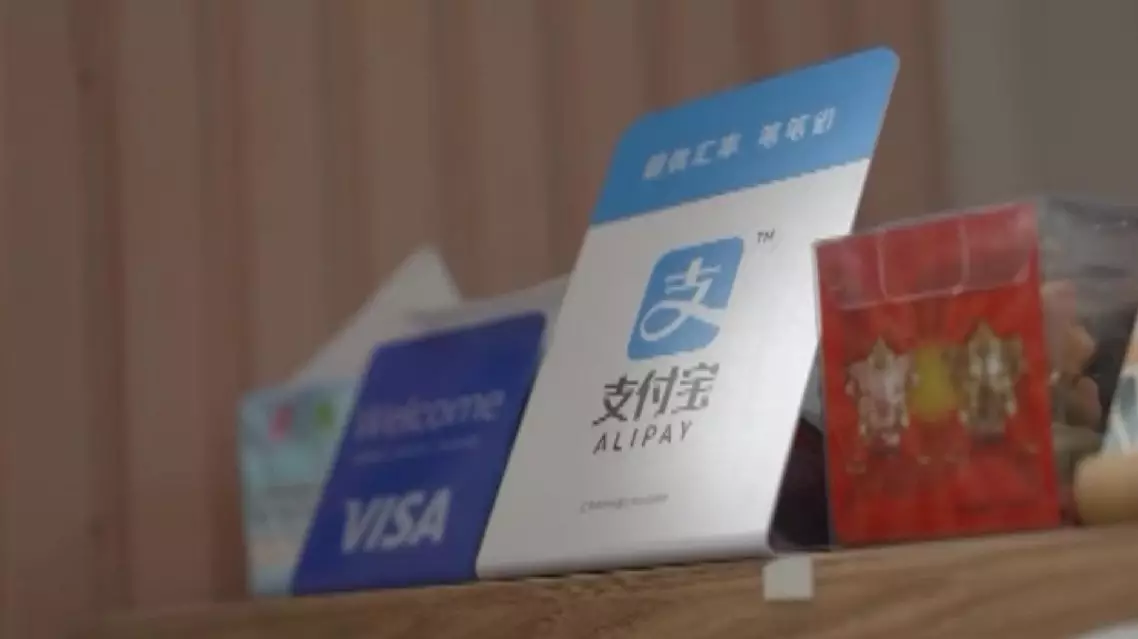
China's mobile payment systems lead rapid development of Thailand's digital economy

Hong Kong's representatives at this year's "two sessions" set out to submit a number of motions and put forward proposals aimed at benefiting the special administrative region and enhancing its synergy with the country’s development.
The "two sessions" are the annual meetings of China's top legislature, the National People's Congress (NPC), and the top political advisory body, the National Committee of the Chinese People's Political Consultative Conference (CPPCC). Both bodies serve a five-year term and hold a plenary session each year, generally in March.
The fourth session of the 14th NPC kicked off on Thursday, while the fourth session of the 14th National Committee of the CPPCC convened on Wednesday.
Iris Wong Ping-fan, an NPC deputy from the Hong Kong Special Administrative Region, plans to submit a motion on the coordinated development of the Guangdong-Hong Kong-Macao Greater Bay Area and the new positioning of Hong Kong in the 15th Five-Year Plan (2026-2030).
"Hong Kong will also develop its own five-year plan, which will align with the broader development goals of our country and will actively achieve synergy with issues concerning Hong Kong in the development goals of our country. Therefore, in the future, it will become increasingly clear that Hong Kong's development is deeply intertwined with that of our country, forming a community of common destiny," said Wong.
Charles Ng Wang-Wai, a CPPCC National Committee member, will highlight the crucial role of artificial intelligence in talent development in his proposal.
"We all know that artificial intelligence is an unstoppable trend. To effectively develop AI, we must focus on education, especially the training of primary and secondary school teachers. That is to say, we need to consider how to improve the skills of these teachers so they can better educate the next generation," said Ng.
Other representatives are suggesting that Hong Kong capitalize on its unique advantages to achieve win-win outcomes with the mainland.
"Hong Kong boasts a high-level international management and service system for medical technology, which provides a solid foundation for developing medical tourism. Both Hong Kong and major mainland cities are well-equipped to offer medical services to patients from Belt and Road countries," said Dennis Lam Shun-chiu, an NPC deputy.
"During the 15th Five-Year Plan period, Hong Kong will leverage its inherent advantages. Many mainland enterprises are looking to Hong Kong as a platform to better expand overseas, and with Hong Kong's excellent professional services and a strong financial platform, we hope to assist these enterprises," said Judith Yu, a CPPCC National Committee member.
Hong Kong representatives on further cooperation with mainland at two sessions