The breeding of superior cotton varieties, along with digitalization and mechanization in cotton cultivation, has significantly boosted cotton output and quality in northwest China's Xinjiang Uygur Autonomous Region, a major cotton production area in the country, supplying exceptional raw materials for the textile and apparel industry.
On October 9, Li Xueyuan, a chief expert of Xinjiang's technological system for the cotton industry, announced that the per unit output at a high-yield cotton demonstration field in Jinghe County of Bortala Mongolian Autonomous Prefecture, has set a national record for calculated yield of a large harvest area.
As superior varieties are crucial for achieving high cotton yields, Li and his team have independently cultivated over 20 high-quality cotton varieties in recent years to raise cotton yields in Xinjiang.
"Initially, our goal of breeding new varieties was centered solely on increasing cotton yields. Later, we gradually extended our goal to achieve early maturity, premium quality, disease resistance, and mechanical harvesting. Now most of the objectives have been achieved," Li said.
In addition to the efforts in cotton breeding, the department of agricultural and rural affairs in Xinjiang has established a technology system for cotton production with the ultimate responsibility resting with the chief expert, and set up demonstration fields in major cotton-growing counties, in order to achieve balanced growth in cotton production across the region.
Now, digital farming supports cotton farmers in the meticulous care of their fields. For instance, field management practices such as watering and fertilization can be controlled via a mobile phone.
"You see, the cotton crops we grow have robust and sturdy stalks and abundant balls. It is easy for one person to manage nearly 500 mu (about 33.3 hectares) of land," said Dong Chenglong, a cotton farmer in Jinghe County.
Another aspect that makes Dong's work easier is mechanized harvesting. A cotton picker can harvest an average of 500 mu of cotton per day, equivalent to the work of 2,000 laborers in a day.
"In the past, cotton was scattered on the ground, leading to contamination once it touched the soil. With the cotton being baled by the cotton picker, contamination is eliminated. We use loaders and forklifts, making transportation simple with just one lift. This method ensures good cotton quality as well," Dong said.
The mechanization rate for cotton plowing, planting, and harvesting in Xinjiang has reached 97 percent this year.
In China, 90 percent of cotton is used in the textile and apparel industry. Xinjiang's long-staple cotton features long fibers, and highly softness and absorbency, making it an excellent raw material for manufacturing high-end textile products.
"When we simulate sweating in the lining, you couldn't see a sweat stain from the outside. So this solves the problem of sweat stain for people who wear shirts in summer. It is similar to coating the cotton with a membrane, and as we use long-staple cotton from Xinjiang, the fabric's air permeability is excellent," said Cai Wei, general manager of a clothing brand in Xinjiang.
Xinjiang's total cotton output has remained steady at over 5 million tons for five consecutive years, with its planting area and total production ranking first in China for 30 consecutive years.
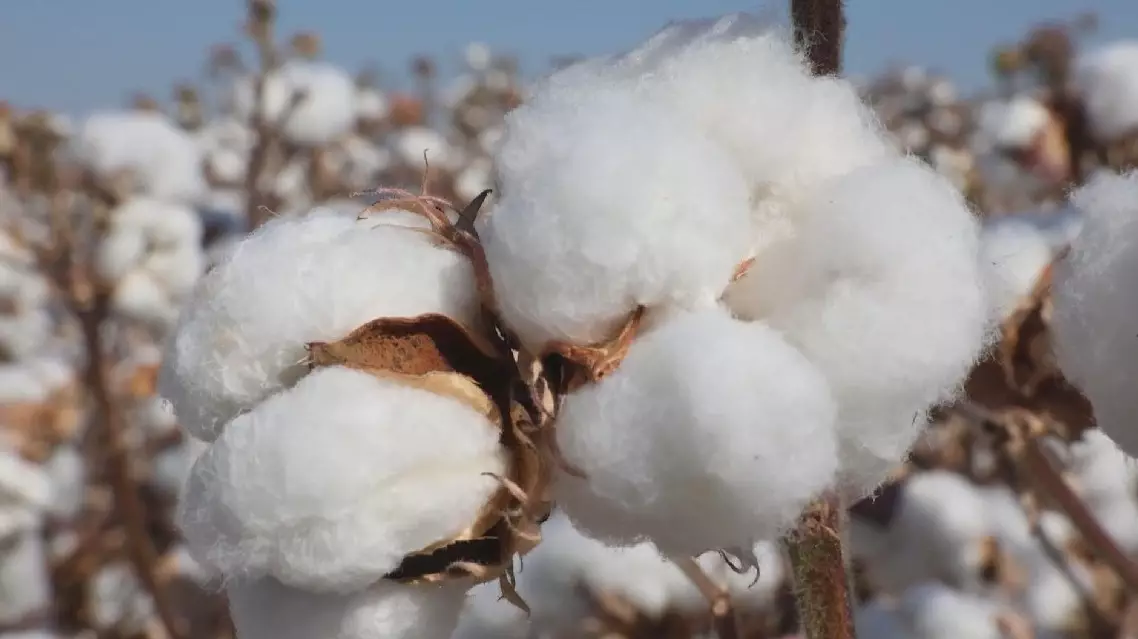
Breeding, digitalization, mechanization boost Xinjiang's cotton output, quality