China is willing to build closer ties with Southeast Asian countries to strengthen biosafety and biosecurity cooperation, effectively cope with biosecurity risks and make concerted efforts to propel biosecurity management, said attendees of a seminar on the field.
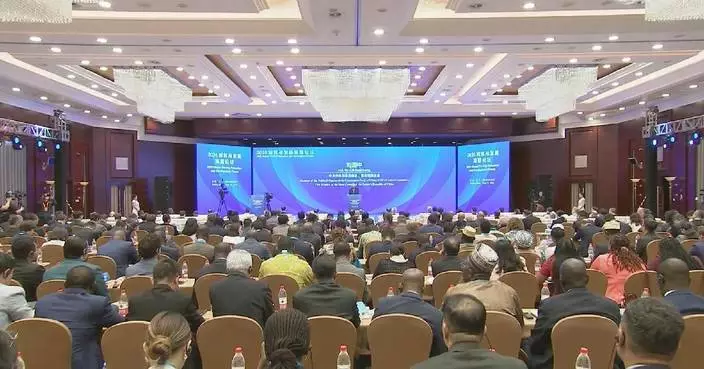
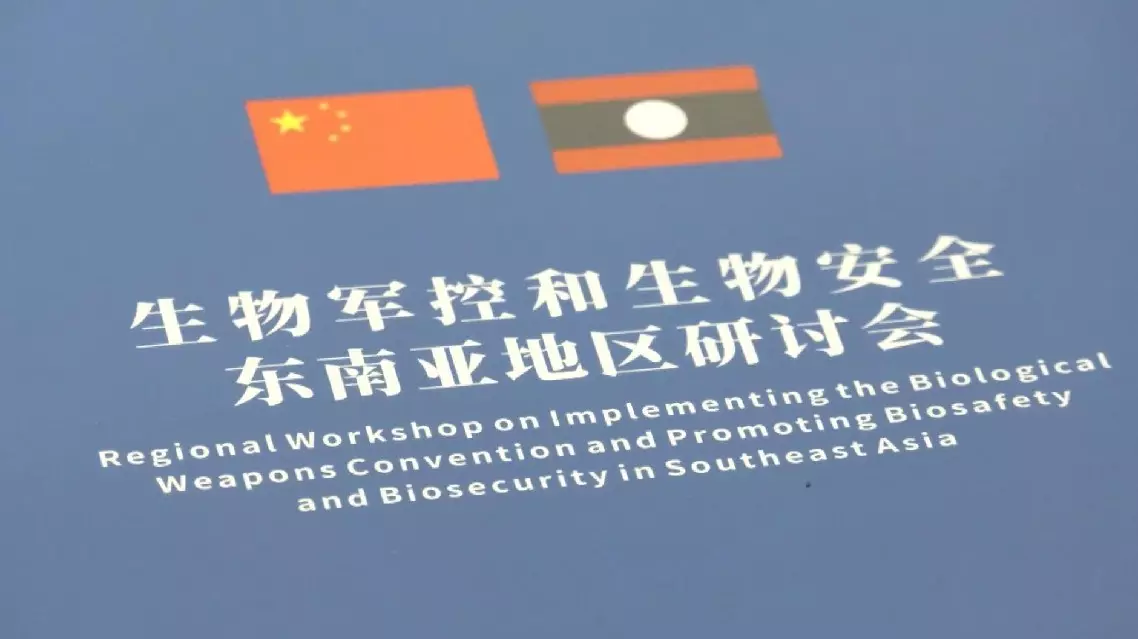
The Regional Workshop on Implementing the Biological Weapons Convention and Promoting Biosafety and Biosecurity in Southeast Asia was held from Wednesday to Friday in Shenzhen City of China's southern Guangdong Province, aiming to strengthen regional coordination and collaboration on biosecurity.
Co-hosted by China and Laos, with support from the United Nations Office of Disarmament Affairs, the workshop brought together government officials and experts from China and 11 Southeast Asian countries as well as participants from international organizations to explore ways to promote a higher level of biosafety and biosecurity. (ID: 8400870)
Strengthening biosecurity is the common aspiration of China and the Association of Southeast Asian Nations (ASEAN) countries.
The ASEAN Leaders' Declaration on Strengthening Regional Biosafety and Biosecurity was issued on October 9 this year, putting forward to establishing the ASEAN Biosafety and Biosecurity Network to enhance functions, roles, and responsibilities in facilitating knowledge sharing, coordination, and cooperation among ASEAN member states, partners and relevant stakeholders.
"Biosecurity issues cover infectious diseases, animal and plant epidemics, and so on. China and its neighboring countries has formed a community with a shared future, and it is fair to say that we share a common destiny and future. In this case, we need to strengthen cooperation with our neighboring countries. This year, ASEAN passed the ASEAN Leaders' Declaration on Strengthening Regional Biosafety and Biosecurity, which is a pioneering move as the governance of this issue has the political commitment of the highest-level leaders at the regional level. China and ASEAN are natural partners, and China will continue to support ASEAN in strengthening its work in this regard," said Li Fujian, deputy director of the Global Biosafety Governance Research Center at China Foreign Affairs University.
Experts at the workshop agreed that one of the most effective ways to advance biosecurity cooperation is to strengthen capacity building.
Alex Lampalzer, deputy head of the Secreariat of the Biological Weapons Convention (BWC), noted that a string of measures need to be taken to establish effective biosecurity mechanisms and foster a biosecurity culture at the national level.
"It is crucial to establish and sustain an effective approach towards biosecurity. It means to put in place legislation, to establish effective practices, to train experts and also ready to start with young scientists, with students at university to make them aware of the benefits but also to address the risks. The Tianjin Guidelines, which have been worked together by China and also by John Hopkins University, represents an excellent opportunity to share all these means, all these options to provide useful guidance for scientists," said Lampalzer.
The event also put the practical application of the BWC under the spotlight.
Having entered into force in 1975, the BWC is the first multilateral disarmament treaty to ban the production of an entire category of weapons of mass destruction. So far, a total of 187 states have become party to the treaty.
However, the BWC lacks a system to verify states' compliance with the treaty.
In December 2022, States Parties decided to establish a Working Group on strengthening the BWC, which an aim to address among other issues, measures on verification and compliance.
"The Biological Weapons Convention needs to be fully operationalized, properly institutionalized, and remained fit for purpose. The ninth Review Conference in 2022 set out a new approach to strengthening the BWC, with a working group on the strengthening of the Convention at its centerpiece. The working group should take effective, concrete and practical action on the topics mandated to it and make recommendations to strengthen and institutionalize the Convention in all its aspects. I am encouraged by States Parties' continuous engagements, and I urge you to draw on the Convention's past successes to move forward. Next year marks the 15th anniversary of the Convention. We have a unique opportunity to strengthen the BWC at this special occasion. Let us demonstrate that even in times of geopolitical challenges, States Parties can cooperate and that meaningful progress can be achieved," said UN Under-Secretary-General and High Representative for Disarmament, Izumi Nakamitsu.
During the event, China and Southeast Asian countries reached a broad consensus to promote the governance of biosafety and biosecurity, effectively respond to biosecurity risks, vigorously drive the peaceful use of biotechnology, and also improve the global governance system.
In addition, the two sides also issued a joint document.
"I think the core message of the joint document is that China and ASEAN countries have a lot of broad consensus on biosecurity issues, and we are willing to strengthen bilateral exchanges and cooperation with Southeast Asian countries. The Chinese government attaches great importance to biosecurity issues. The capacity building for biosecurity governance has been included in the 'The Global Security Initiative Concept Paper', making it a priority for international cooperation. We hope that through these practical cooperation, we can make positive contributions to global biosecurity governance, prevent biosecurity risks, and promote the peaceful use of biotechnology," said Sun Xiaobo, director general of the Department of Arms Control of the Chinese Ministry of Foreign Affairs.
China ready to cooperate with ASEAN countries to work on biosecurity: experts