Business representatives from G20 nations and guest countries convened Thursday for the B20 Summit in Sao Paulo, Brazil, exploring practical solutions for sustainable development and economic stability ahead of the upcoming G20 Leaders' Summit in November.
The B20 is the body that brings together the business community from the G20 nations and gives them a forum to discuss common objectives and views.
As the G20 Leaders' Summit draws closer, different stakeholders have been promoting discussions and issuing documents to bring their positions to the negotiating table. The B20 is one of these forums, bringing together representatives from the business communities of the member nations, along with other international guests.
Themed "Inclusive Growth for a Sustainable Future", the two-day B20 Summit attracted more than 1,000 participants.
One of Brazil's key diplomatic officials in organizing the summit stated during the business event that public authorities were working to strengthen collaboration with the private sector.
"Six or seven of the ministerial declarations in different areas of the G20 specifically reference these recommendations received from civil society, particularly from the B20. This shows that efforts to improve the communication channels have been successful," said Felipe Hees, Sous Sherpa of G20 Brazil.
The recommendations laid out by the B20 focus on fostering a fair energy transition, leveraging global trade to enhance sustainability, and boosting education and training systems to meet the demands of a changing job market.
"I would say that the fundamental topics of the B20 align with the priorities of the G20. These are the major issues of today; decarbonization, digitalization, and food security," said Dan Ioschpe, chairman of B20 Brazil.
Business leaders worked to push for their recommendations to be seriously considered by G20 leaders, hoping to influence global economic policies and promote their vision of sustainable growth.
The president of Brazil's National Confederation of Industries (CNI) said their recommendations aim to foster sustainable and inclusive growth.
"We sought to focus on a few recommendations -- those with common ground -- because we need to get used to, in every activity, whether in Brazil or in the public or private sector, valuing what converges. We have a tendency to value what diverges," said Ricardo Alban, president of the CNI.
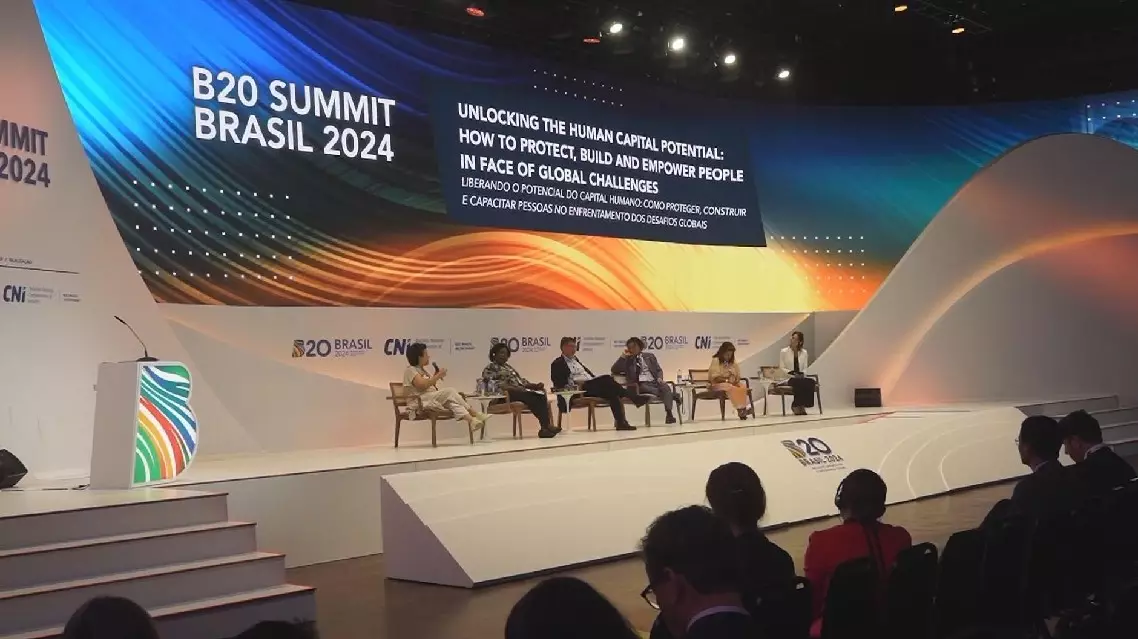
Business leaders convene for B20 Summit, exploring solutions for sustainable development
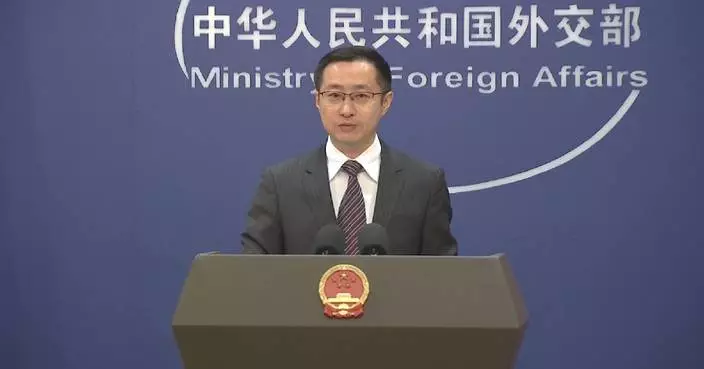
China's development has never been a "threat" to anyone but the source of growth advancing common development of all countries, Foreign Ministry spokesman Lin Jian said at a regular press conference in Beijing on Friday.
Some Western media and think tanks are peddling so-called "China Shock 2.0," saying that "China is achieving fast development in high-tech sectors such as renewable energy and AI and relies on foreign markets to absorb its overcapacity, thus reducing the market share of developed countries and sending more serious shock waves to the global economy compared with the era of traditional manufacture industry," while there are foreign commentators saying that the "China Shock 2.0" argument ignores the genuine innovation occurring within the Chinese industrial ecosystem and that Chinese export is the exact booster of the global economy that is needed in the turbulent period and more indispensable than ever.
Commenting on that, Lin said: "From the world's factory to the world's market and innovation powerhouse, China's development is achieved through strong performance driven by innovation and brings tangible cooperation opportunities and space to the world. High-quality Chinese products represented by the 'old three' of textiles, furniture and home appliances have stabilized the global industrial and supply chain, lowered the living cost of global consumers and eased the inflationary pressure worldwide. China's green production capacity represented by the 'new three' of electric vehicles, batteries and solar panels has bridged the gap between supply and demand in global green development and bolstered the global energy transition and low-carbon development. Moreover, China's high-tech products represented by the 'new new three' of robots, AI and innovative drugs have broken high-tech barriers and monopoly and enabled people in more countries to access affordable new technologies," said the spokesman.
"Openness and cooperation bring about progress and win-win result. China's development has never been a 'threat' to anyone but the source of growth advancing common development of all countries. What really creates 'shocks' to the world has never been the innovation of Chinese companies and efficiency of Chinese industrial capacity, but protectionist moves of setting up barriers, decoupling and severing industrial and supply chains. China will stay committed to high-standard opening up, defend the multilateral trading system and provide more certainty and new impetus to the world economy with its own steady development," said Lin.
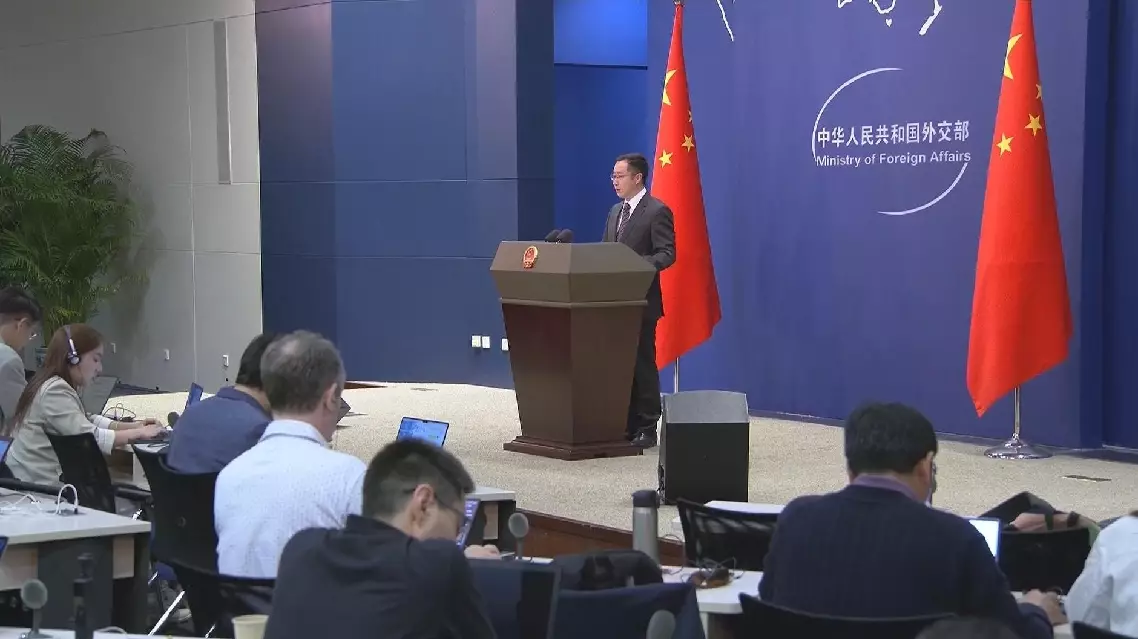
China's development never a threat: FM spokesman