President Xi Jinping, also general secretary of the Communist Party of China (CPC) Central Committee, on Monday emphasized focusing efforts to build the country into a powerhouse in culture by the year 2035.
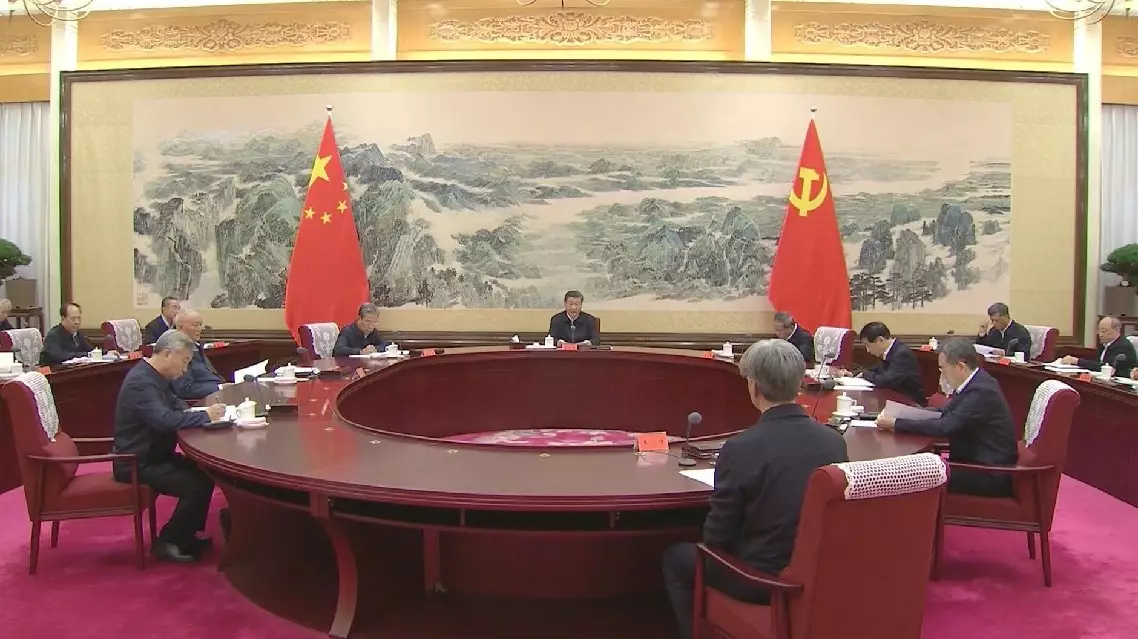
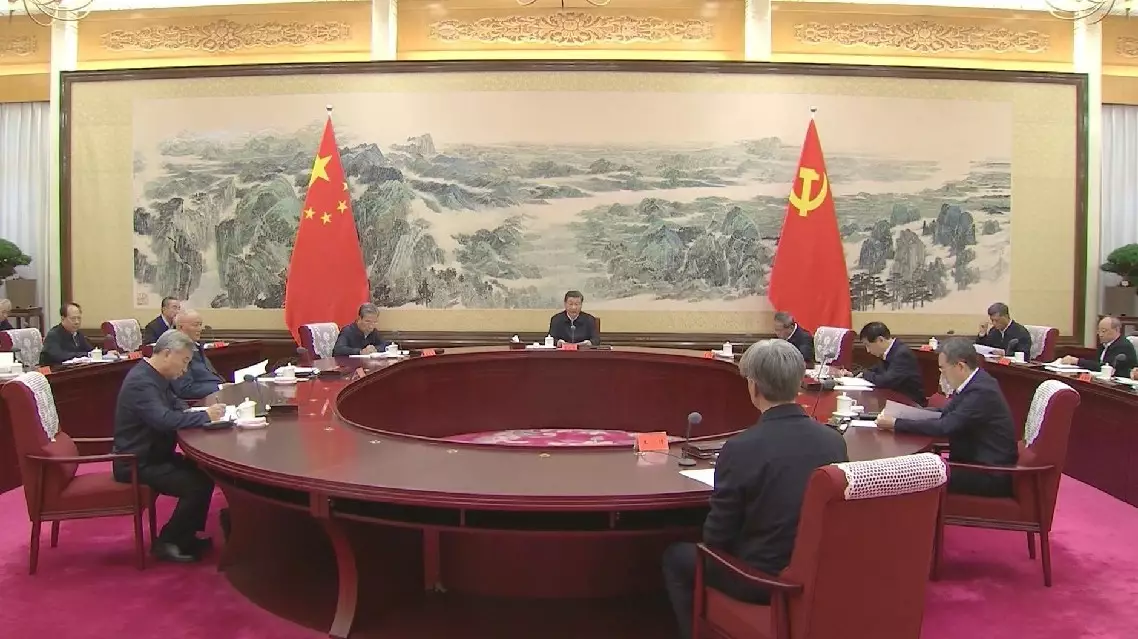
Xi made the statement while presiding over a group study session of the Political Bureau of the CPC Central Committee.
Click to Gallery
Xi stresses efforts to build China into cultural powerhouse by 2035
Xi stresses efforts to build China into cultural powerhouse by 2035
Xi stresses efforts to build China into cultural powerhouse by 2035
Xi stresses efforts to build China into cultural powerhouse by 2035
Xi stresses efforts to build China into cultural powerhouse by 2035
He stressed efforts to continuously develop a socialist culture with Chinese characteristics for the new era, while keeping adopting a people-centered approach to cement the cultural foundation underpinning China's national rejuvenation.
Also attending the group study session were other Chinese leaders -- Li Qiang, Zhao Leji, Wang Huning, Cai Qi, Ding Xuexiang, and Li Xi, all members of the Standing Committee of the Political Bureau of the CPC Central Committee.
Professor Wang Bo, vice president of Peking University, elaborated on the theme of the group study and came up with corresponding work proposals.
At the session, Xi emphasized unswerving adherence to taking the path of socialist culture with Chinese characteristics under CPC leadership, and developing a scientific and people-oriented socialist culture for the nation that embraces modernization, the world and the future.
Xi urged redoubled efforts to ignite the cultural creativity of the entire nation, and remain committed to people-centered cultural creation.
He said efforts should be made to ensure that the cultural sector prioritizes social benefit while also producing economic returns.
Xi also stressed renewing the evolution of the Chinese civilization through innovative development, urging protection of cultural treasures and promotion of China's traditional culture infused with contemporary relevance.
He called for improving the systems and mechanisms for protecting and inheriting cultural heritage and accelerating the refinement of relevant laws and regulations.
Xi underscored efforts to keep promoting China's cultural soft power and the influence of Chinese culture, and to promote restructuring of China's international publicity sector.
He called for more active efforts to publicize China's views and Chinese culture, and present China's image, and also efforts to extensively launch international cultural exchange and cooperation in various forms.
He urged efforts to integrate diverse global cultural achievements into China's cultural development.
Xi concluded his remarks by calling cultural development a shared mission of the entire Party and society, emphasizing the central leadership's role in guiding cultural work, and urging the governments at all levels to strengthen leadership over, and develop human resources and mobilize other resources for cultural advancement, in rallying collective efforts to achieve the goal of building China into cultural powerhouse.
Xi stresses efforts to build China into cultural powerhouse by 2035
Xi stresses efforts to build China into cultural powerhouse by 2035
Xi stresses efforts to build China into cultural powerhouse by 2035
Xi stresses efforts to build China into cultural powerhouse by 2035
Xi stresses efforts to build China into cultural powerhouse by 2035