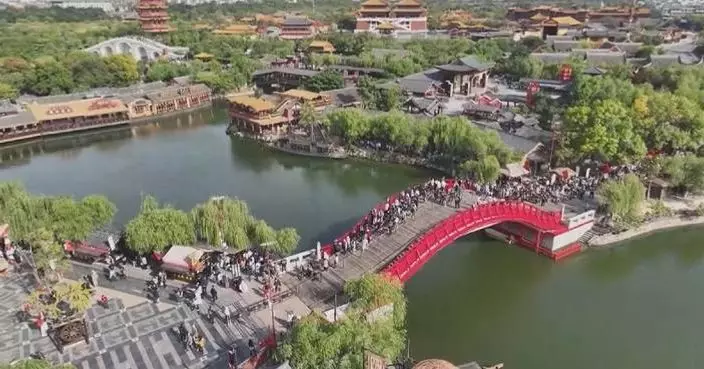
A robotic Spring Festival carnival in Shenzhen City, south China's Guangdong Province, on Saturday amazed spectators with AI-powered robot dogs and humanoid robots performing an exquisite lion dance, Kung Fu displays and keyboard playing.
Dressed in lion costumes, four robots performed daring leaps and movements of the traditional Chinese lion dance, revitalizing the ancient charm of intangible cultural heritage.
Several humanoid robots demonstrated martial arts with impressive synchronicity and precision at the carnival greeting the Spring Festival that falls on February 17 this year.
Two robots also wowed the audience with their skillful keyboard playing techniques and their extensive repertoire, ranging from classical masterpieces to popular music.
Other stars at the carnival included an AI-powered cooking robot capable of preparing, stirring, and cooking meals with minimal human intervention, a robot barista and an ice cream-serving robot.
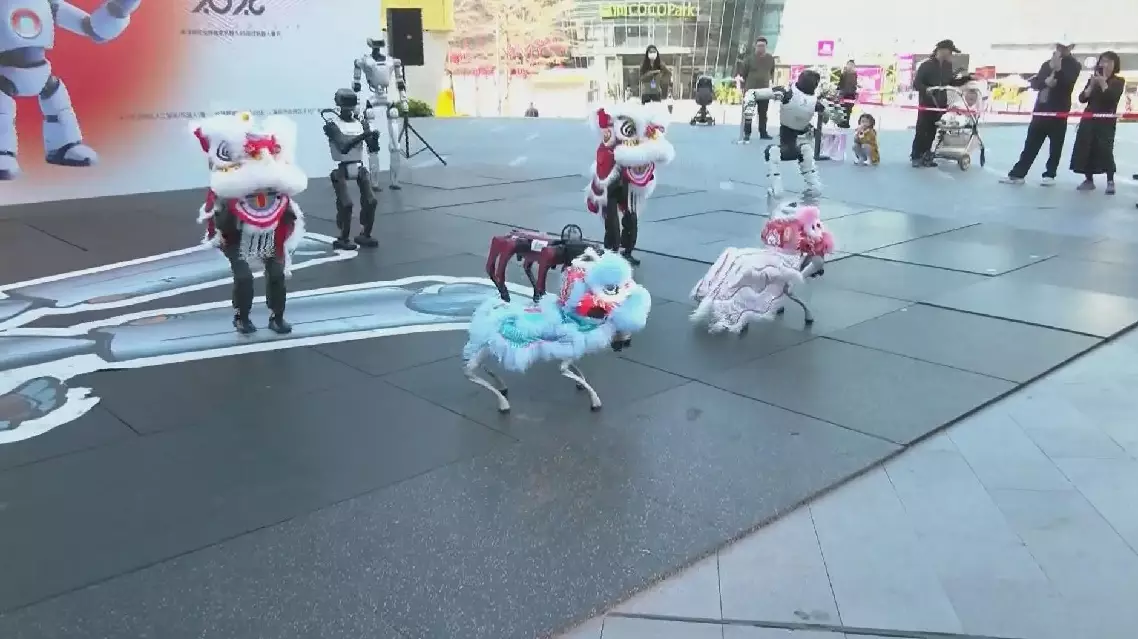
Robots Spring Festival carnival held in Shenzen
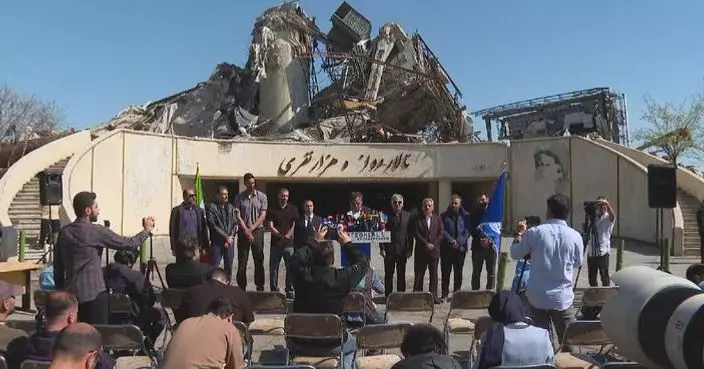
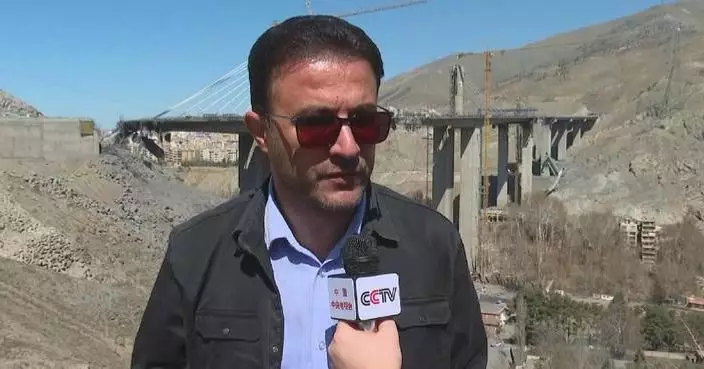
Iran's capital Tehran was subjected to large-scale airstrikes by the United States and Israel on Friday night while two U.S. warplanes were downed over Iran and the Gulf, Iranian forces said.
At around 21:00, an aircraft was seen flying over northeastern Tehran, and subsequently, Iran's air defense system was activated.
More than two hours later, Iran was hit by another air attack, leading to major explosions. It came after the Iranian military announced that its air defense system had successfully shot down a U.S. A-10 fighter jet, marking the second U.S. warplane hit by Iranian fire that day. U.S. President Donald Trump on Wednesday night threatened to hit Iran "extremely hard over the next two to three weeks," a timeline he has recently set for ending the monthlong war.
Iran has rejected a U.S. proposal for a 48-hour ceasefire delivered to Iran through a "friendly" country, the semi-official Fars news agency reported on Friday.
The report added that Iran's response to the offer was not given in writing, but through the continuation of attacks in the battlefield.
On Feb. 28, Israel and the United States launched joint attacks on Tehran and several other Iranian cities, killing Iran's then Supreme Leader Ali Khamenei, along with senior military commanders and civilians. Iran responded by launching waves of missile and drone strikes targeting Israel and U.S. assets in the Middle East.
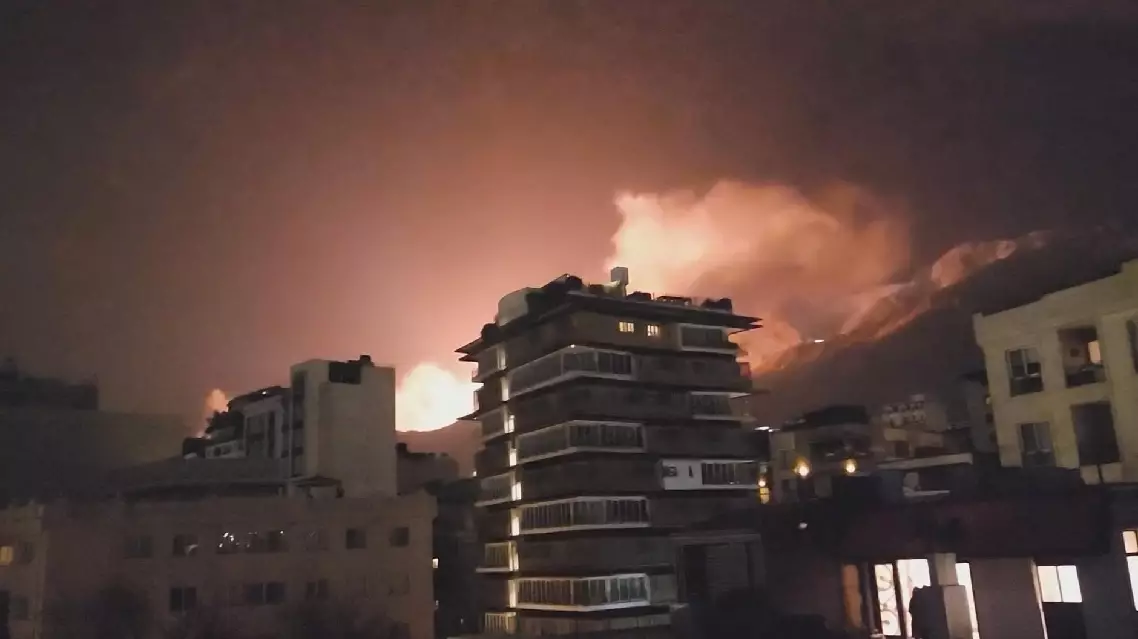
Tehran hit by large-scale US-Israeli air attacks