Iran's capital Tehran was subjected to large-scale airstrikes by the United States and Israel on Friday night while two U.S. warplanes were downed over Iran and the Gulf, Iranian forces said.
At around 21:00, an aircraft was seen flying over northeastern Tehran, and subsequently, Iran's air defense system was activated.
More than two hours later, Iran was hit by another air attack, leading to major explosions. It came after the Iranian military announced that its air defense system had successfully shot down a U.S. A-10 fighter jet, marking the second U.S. warplane hit by Iranian fire that day. U.S. President Donald Trump on Wednesday night threatened to hit Iran "extremely hard over the next two to three weeks," a timeline he has recently set for ending the monthlong war.
Iran has rejected a U.S. proposal for a 48-hour ceasefire delivered to Iran through a "friendly" country, the semi-official Fars news agency reported on Friday.
The report added that Iran's response to the offer was not given in writing, but through the continuation of attacks in the battlefield.
On Feb. 28, Israel and the United States launched joint attacks on Tehran and several other Iranian cities, killing Iran's then Supreme Leader Ali Khamenei, along with senior military commanders and civilians. Iran responded by launching waves of missile and drone strikes targeting Israel and U.S. assets in the Middle East.

Tehran hit by large-scale US-Israeli air attacks
An increasing number of German consumers are considering buying electric vehicles (EVs) in the face of high fuel prices, according to a recent survey by the largest German online car trading platform, mobile.de.
As the Middle East tensions continue to drive up international oil and gas prices, the cost of automotive fuel has been rising steadily in many European countries.
According to fuel price data compiled by the German Association of the Automotive Industry, since the United States and Israel launched military strikes against Iran on February 28, gasoline prices in Germany have risen by nearly 20 percent, while diesel prices have shot up by more than 30 percent.
Results from a recent survey by mobile.de show that if gasoline prices remain at current high levels, 43 percent of respondents said they would switch to EVs, and 36 percent cited long-term cost savings as the most important reason for considering an EV purchase.
Additionally, the platform's data show that inquiries about used EVs surged by 66 percent in the first half of March.
"We are absolutely seeing much more interest on mobile.de for electric cars. What the German energy transition couldn't do, this current geopolitical situation has done in terms of transition to electric cars," said Ajay Bhatia, CEO of mobile.de.
In addition to high oil prices, government subsidies are also a key factor driving German consumers to consider purchasing EVs.
The German government announced the resumption of subsidies in January of this year, planning to invest 3 billion euros over the next few years to provide purchase subsidies for some 800,000 EVs.
Driven by the combined effects of high oil prices and subsidy policies, German consumers' interest in EVs has grown clearly. However, it remains to be seen whether this shift will evolve into a more sustained market trend.
"How long it will stay is anyone's guess, but at the moment we're absolutely seeing an increase, and sometimes these transitions need a catalyst. And this is definitely a catalyst that is seeing the transition to electric cars speed up," said Bhatia.
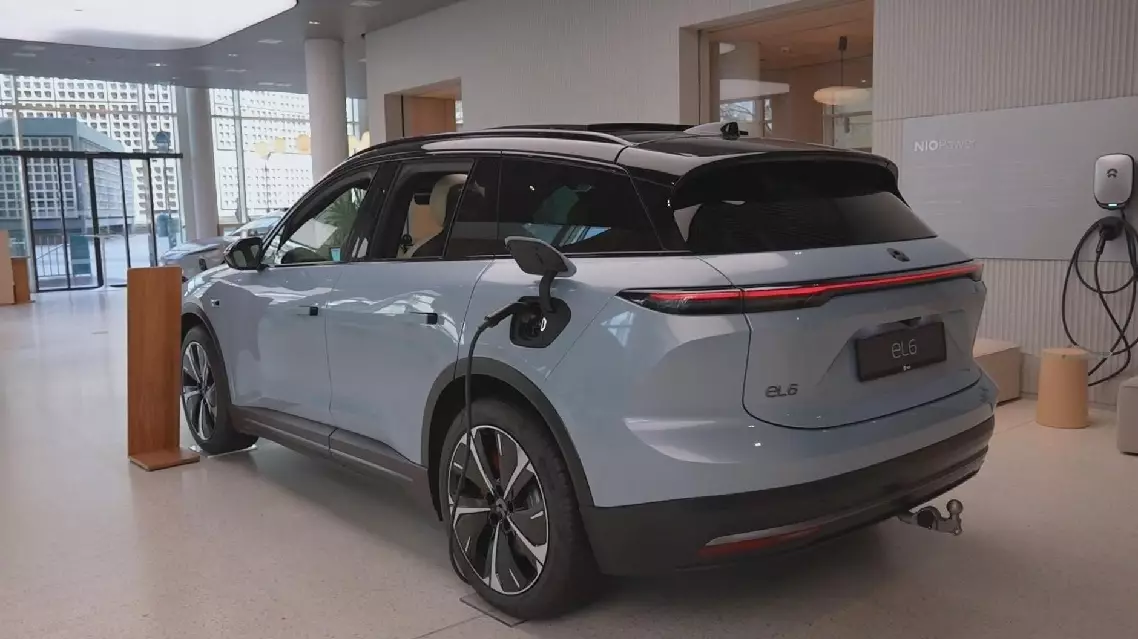
More Germans interested in buying EVs due to high oil prices: survey