Iranian President Masoud Pezeshkian on Friday responded to U.S. President Donald Trump's threat to send Iran back to the "Stone Age," describing it as a "massive war crime" and warning that history has shown the heavy price of silence in the face of such criminality.
Trump has repeatedly threatened to reduce Iran to the Stone Age in recent days, reiterating the warning during a national address on April 1. Several Iranian officials have fired back, calling the rhetoric "Stone Age thinking" and arguing that it is American soldiers who would be sent to their graves, not Iran. Meanwhile, the latest round of ceasefire mediation led by regional countries including Pakistan has hit a stalemate, the Wall Street Journal reported on Friday. Iran has formally informed the mediators that it is unwilling to meet with U.S. officials in Islamabad, capital of Pakistan, in the coming days, deeming demands of the U.S. side unacceptable.
Turkiye and Egypt are still pushing to keep the negotiation process alive, considering Doha or Istanbul as alternative venues and working on new proposals to break the deadlock.

Iran president calls Trump's 'Stone Age' threat 'massive war crime'
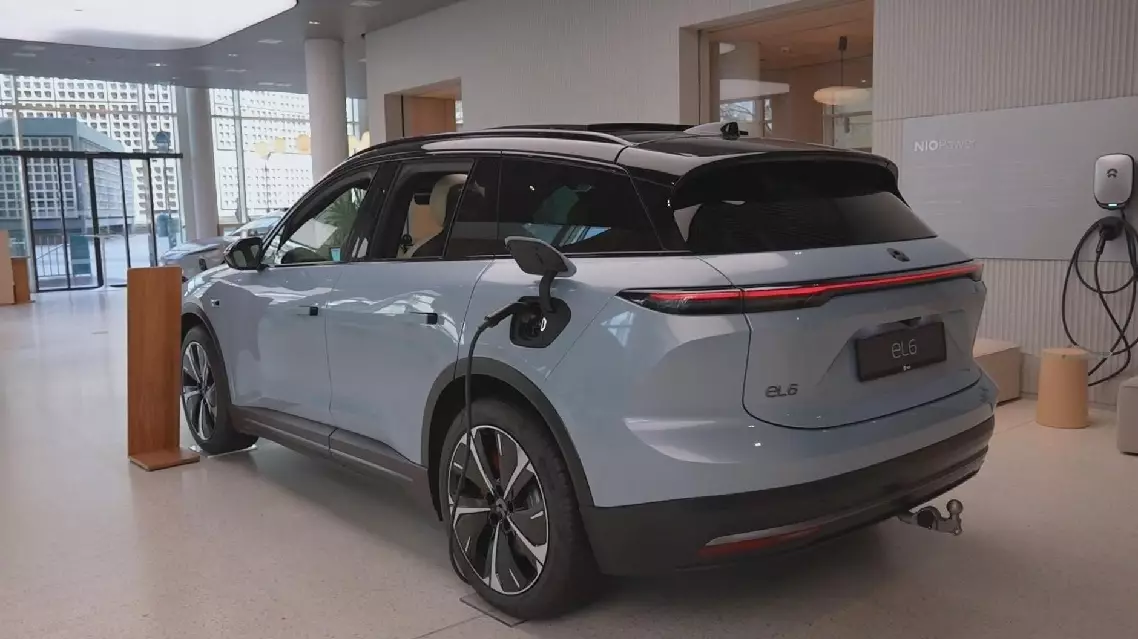
An increasing number of German consumers are considering buying electric vehicles (EVs) in the face of high fuel prices, according to a recent survey by the largest German online car trading platform, mobile.de.
As the Middle East tensions continue to drive up international oil and gas prices, the cost of automotive fuel has been rising steadily in many European countries.
According to fuel price data compiled by the German Association of the Automotive Industry, since the United States and Israel launched military strikes against Iran on February 28, gasoline prices in Germany have risen by nearly 20 percent, while diesel prices have shot up by more than 30 percent.
Results from a recent survey by mobile.de show that if gasoline prices remain at current high levels, 43 percent of respondents said they would switch to EVs, and 36 percent cited long-term cost savings as the most important reason for considering an EV purchase.
Additionally, the platform's data show that inquiries about used EVs surged by 66 percent in the first half of March.
"We are absolutely seeing much more interest on mobile.de for electric cars. What the German energy transition couldn't do, this current geopolitical situation has done in terms of transition to electric cars," said Ajay Bhatia, CEO of mobile.de.
In addition to high oil prices, government subsidies are also a key factor driving German consumers to consider purchasing EVs.
The German government announced the resumption of subsidies in January of this year, planning to invest 3 billion euros over the next few years to provide purchase subsidies for some 800,000 EVs.
Driven by the combined effects of high oil prices and subsidy policies, German consumers' interest in EVs has grown clearly. However, it remains to be seen whether this shift will evolve into a more sustained market trend.
"How long it will stay is anyone's guess, but at the moment we're absolutely seeing an increase, and sometimes these transitions need a catalyst. And this is definitely a catalyst that is seeing the transition to electric cars speed up," said Bhatia.
More Germans interested in buying EVs due to high oil prices: survey