The three astronauts of China's Shenzhou-19 spaceflight mission have entered the Tiangong space station and met with another astronaut trio on Wednesday, starting a new round of in-orbit crew handover.
Commander Cai Xuzhe and crew members Song Lingdong and Wang Haoze successfully reached their destination after the spaceship made a fast automated rendezvous and docking with the space station's core module Tianhe at 11:00 Wednesday (Beijing Time).
At 12:51 (Beijing Time), the Shenzhou-18 crew who had been aboard the space station, opened the hatch and greeted the new arrivals. The two crew teams took group photos and sent messages to the ground staff.
The six astronauts will live and work together for about five days to complete planned tasks and handover work, according to the China Manned Space Agency (CMSA).
The Shenzhou-19 spaceship, atop a Long March-2F carrier rocket, blasted off from the Jiuquan Satellite Launch Center in northwest China at 04:27 on Wednesday (Beijing Time).
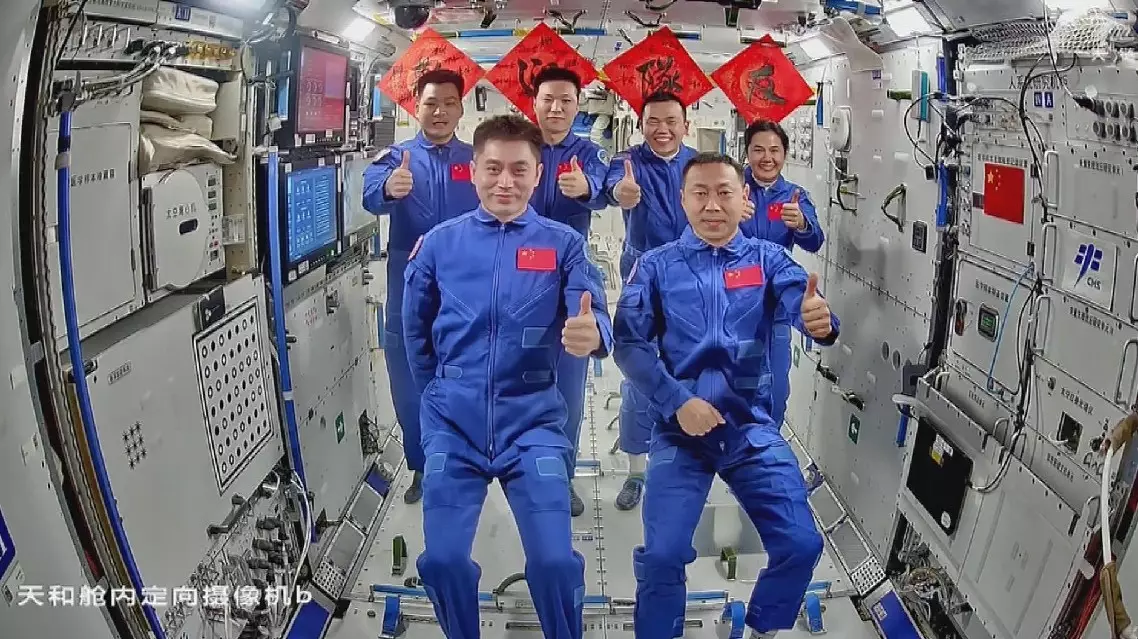
Shenzhou-19 astronauts enter China's space station, meet Shenzhou-18 crew
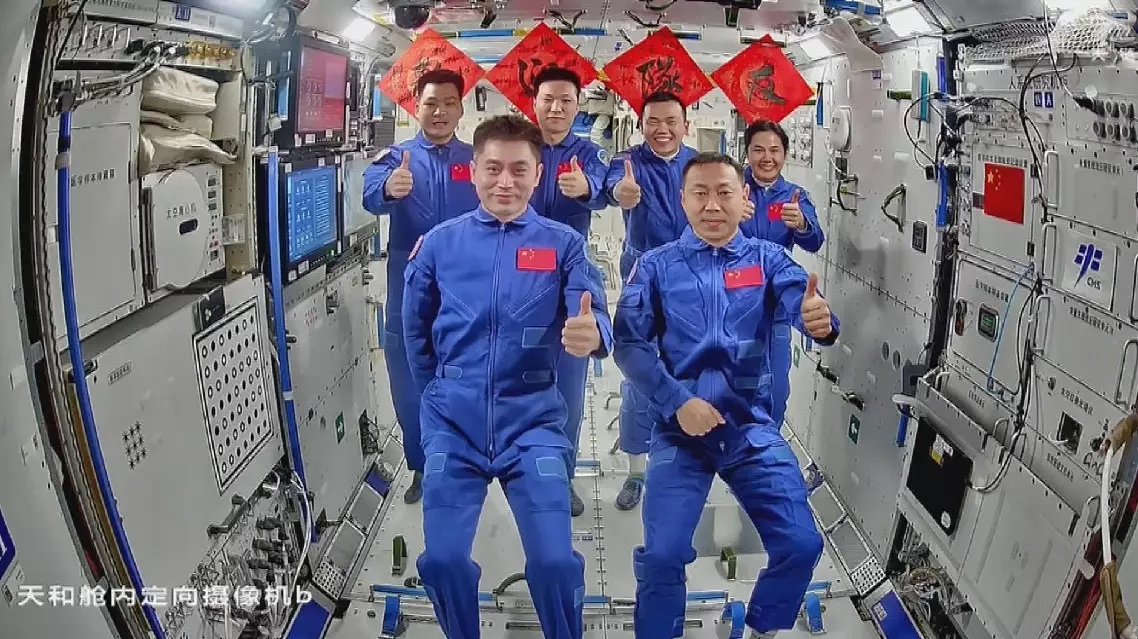
Shenzhou-19 astronauts enter China's space station, meet Shenzhou-18 crew
Japanese people held a rally in Shibuya, Tokyo, on Saturday to oppose Prime Minister Sanae Takaichi's erroneous remarks about China's Taiwan region and attempts to revive militarism.
At a Diet meeting in early November 2025, Takaichi claimed that the Chinese central authorities' "use of force on Taiwan" could constitute a "survival-threatening situation" for Japan and implied the possibility of armed intervention in the Taiwan Strait, which drew strong criticism worldwide.
At the rally, protesters chanted slogans of "Oppose remarks on advocating 'Taiwan emergency' and "Oppose remarks on possessing nuclear weapons."
"To lead Japan towards nuclear armament, [the Takaichi administration] came up with the so-called rhetoric on 'Taiwan emergency.' It is advancing the war under such context. They aim to move toward war step by step by destroying Japan's Constitution and abolishing the Three Non-Nuclear Principles. Therefore, we must strive to prevent war before it happens," said a protester.
At the year end of 2025, Takaichi approved a record 782 billion U.S. dollars budget for the next fiscal year, including the largest defense budget on record.
Earlier in December 2025, the Japanese parliament passed a 118 billion U.S. dollar supplementary budget to fund a new stimulus package, including over 10 billion U.S. dollars for security and diplomacy.
"I think every Japanese is clearly aware that Takaichi's government is a right-wing regime in nature. The Takaichi administration has walked on the path -- bringing defense-related spending to 2 percent of gross domestic product within fiscal 2025 by a supplementary budget. From the perspective of this thoroughly militarized system and approach, I feel a strong sense of crisis," said another protester.
For decades, Japan capped its annual defense budget at around 1 percent of GDP, roughly 5 trillion yen, reflecting its postwar pacifist stance under the war-renouncing Constitution. Since fiscal 2023, Japan's annual defense budget has successively exceeded 6 trillion yen, 7 trillion yen, 8 trillion yen, and 9 trillion yen.
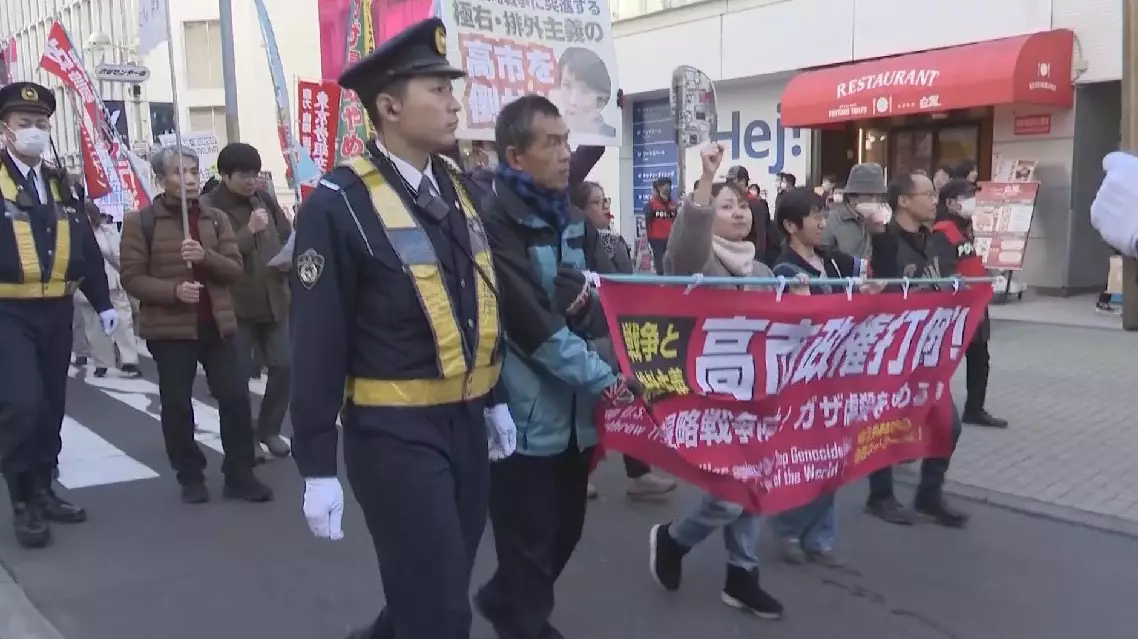
Japanese protest against Takaichi's erroneous remarks on China's Taiwan
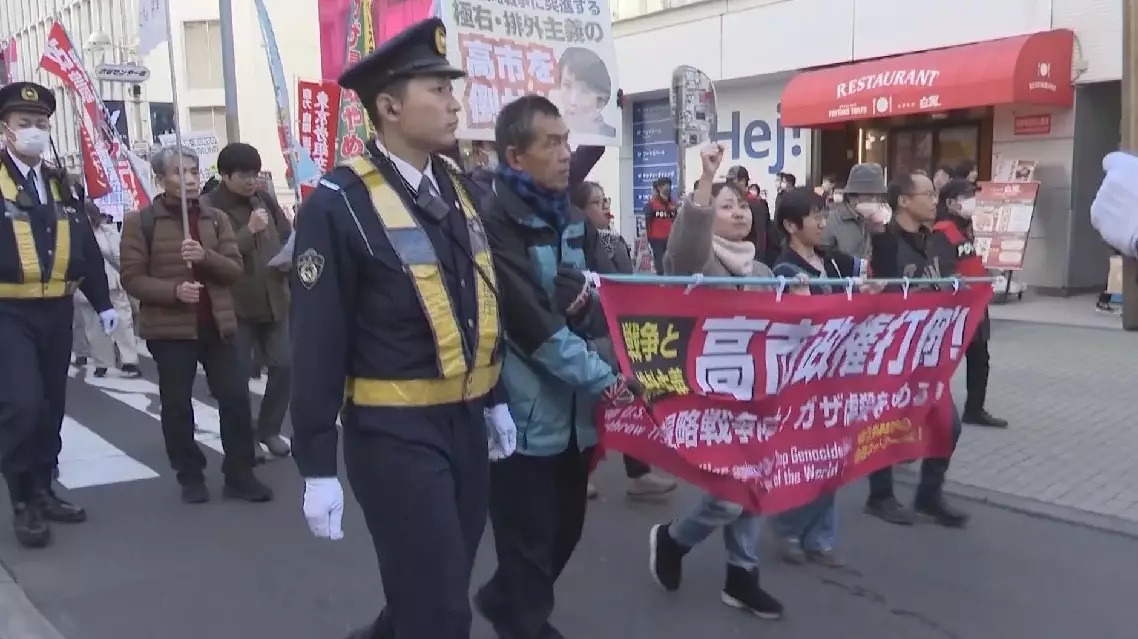
Japanese protest against Takaichi's erroneous remarks on China's Taiwan