The formations of Chinese aircraft carriers Liaoning and Shandong carried out a dual aircraft carrier formation exercise for the first time in the South China Sea, according to the Chinese People's Liberation Army Navy.
Aiming to enhance the integrated combat capability of the aircraft carrier formations, the exercise was part of the Liaoning aircraft carrier formation's regular real-combat training in the high seas, which concluded recently.
The training was conducted in waters including the Yellow Sea, the East China Sea and the South China Sea, featuring multiple subjects under real-combat circumstances, the navy said.
During the training, after reaching the designated sea area, several J-15 fighters took off from the flight deck of the Liaoning aircraft carrier and flew to the designated airspace to carry out realistic exercises.
Liaoning, China's first aircraft carrier, was delivered and commissioned to the PLA Navy in September 2012.

Chinese navy conducts dual aircraft carrier formation exercise for first time
Amid fluctuating global energy prices and Indonesia's recent push to advance its biodiesel production policy, residents in the country are facing mounting pressure from higher prices for cooking oil, driven by tightening supplies.
To reduce fossil fuel reliance and strengthen fiscal resilience amid global uncertainty from the Middle East conflict, the Indonesian government will implement its B50 biodiesel policy on July 1, 2026. This initiative is expected to cut fossil fuel consumption by roughly 4 million kiloliters, representing an estimated economic value of 48 trillion rupiah (around 2.6 billion U.S. dollars).
B50 is an Indonesian biodiesel mandate requiring a 50 percent blend of palm oil-based biofuel with fossil diesel to reduce fuel imports and enhance energy security.
As a result, more of the country's palm oil is to be channeled into biodiesel production, putting further strain on the supply of palm oil used for cooking.
For many Indonesian households, palm oil is a daily cooking staple. Supply-driven price surges have made it increasingly unaffordable, pushing families to change their eating habits.
"I hope prices can return to what they were. Please don't raise them any further -- life is already getting harder, and it's tough to earn a living. Right now, I just have to cut back wherever I can and use less oil for frying," said a consumer.
The food service industry relies heavily on palm oil and has also been severely impacted. As markets anticipate ongoing supply shortages, volatile palm oil prices are already increasing costs for businesses in the sector, many of which are small, independent operations.
"Everything is going up. Our costs keep rising -- we're barely breaking even," said a food stall vendor.
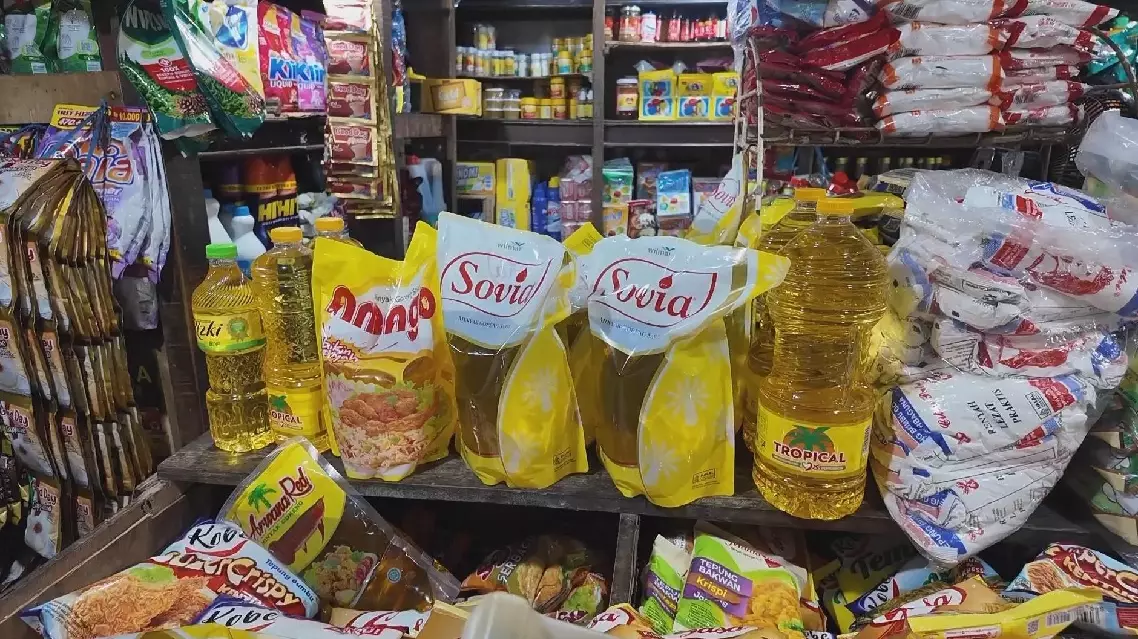
Indonesian residents hit by soaring cooking oil prices