It’s part comedy, part tragedy. It’s part road-trip saga, part odd couple-buddy flick, and part Holocaust film. What could possibly have gone wrong?
Yup – everything could have gone wrong. So the first miracle about “A Real Pain,” writer-director Jesse Eisenberg’s remarkably accomplished film about mismatched cousins on a somber trip through Poland, is how it pulls off the most delicate of balancing acts.
Click to Gallery
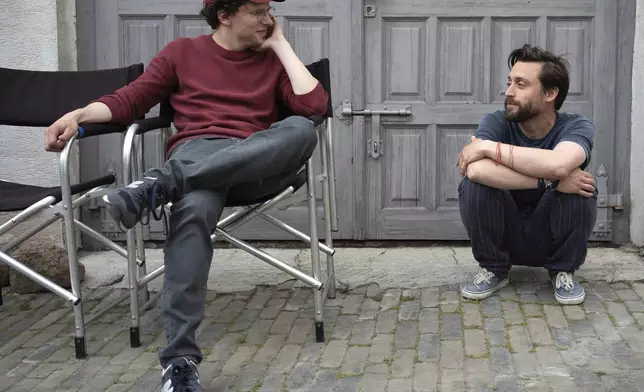
This image released by Searchlight Pictures shows Kieran Culkin, right, and Jesse Eisenberg on the set of "A Real Pain." (Searchlight Pictures via AP)
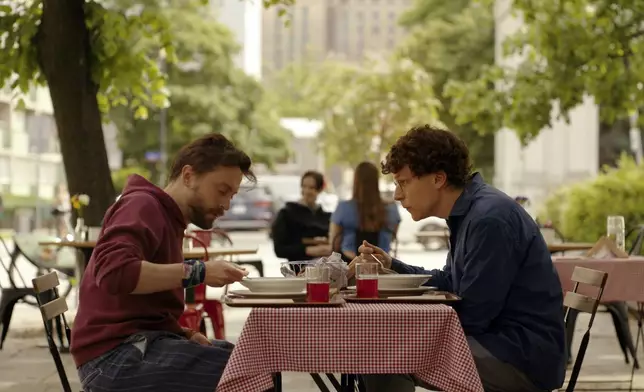
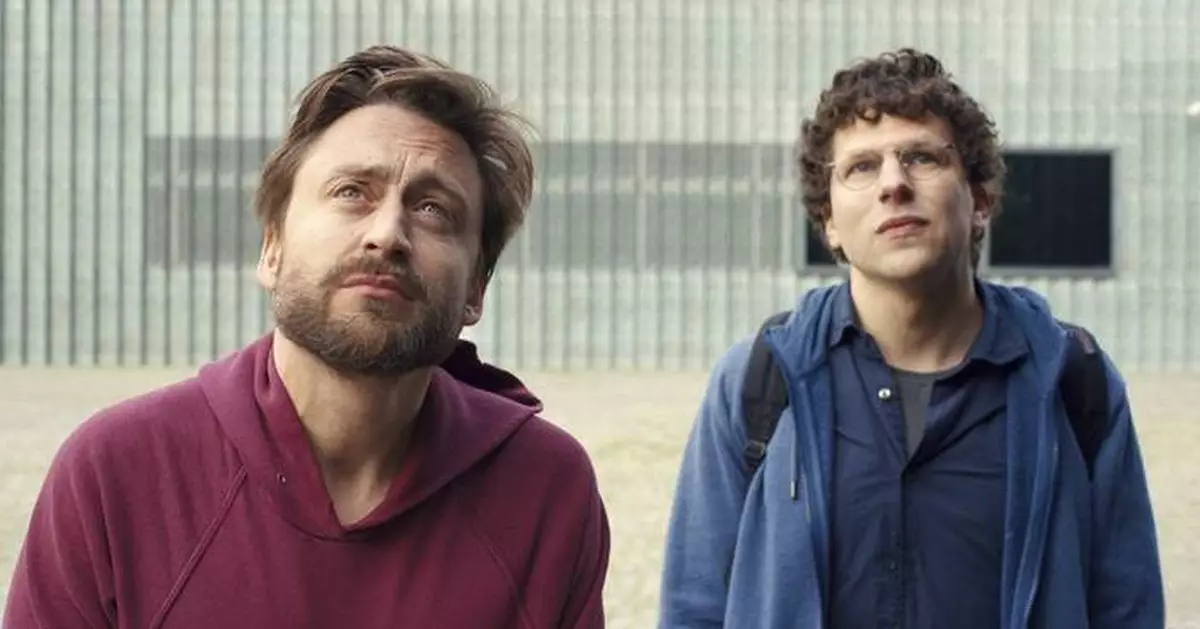
This image released by Searchlight Pictures shows Kieran Culkin, left, and Jesse Eisenberg in a scene from "A Real Pain." (Searchlight Pictures via AP)
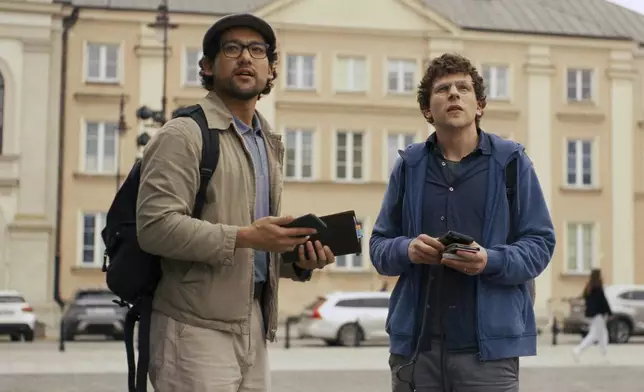
This image released by Searchlight Pictures shows Will Sharpe, left, and Jesse Eisenberg in a scene from "A Real Pain." (Searchlight Pictures via AP)

This image released by Searchlight Pictures shows Kieran Culkin, right, and Jesse Eisenberg in a scene from "A Real Pain." (Searchlight Pictures via AP)
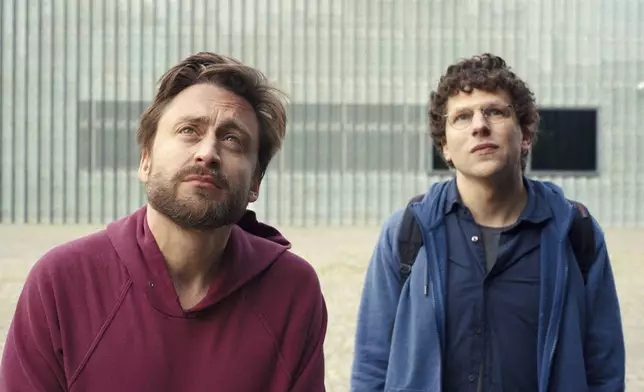
This image released by Searchlight Pictures shows Kieran Culkin, left, and Jesse Eisenberg in a scene from "A Real Pain." (Searchlight Pictures via AP)
That it does so while also asking intriguing questions about the nature of pain – personal vs. universal, historic vs. contemporary – is all the more impressive. So is the fact that it showcases an Oscar-worthy performance.
That stunning performance comes from Kieran Culkin, and what’s striking is that it doesn’t overpower the rest of the ensemble. That’s a testament mostly to the careful way Eisenberg, who co-stars in the less flashy role, has constructed and paced his film. And as for Culkin, well, if you needed proof that his searing, Emmy-winning work as tortured live-wire Roman Roy in “Succession” wasn’t a fluke, here you have it.
The movie, which is only Eisenberg’s second directorial effort, stems from a trip the “Social Network” star took some 20 years ago to Poland. There, he found the tiny house his aunt had lived in before the Holocaust uprooted the family. He wondered what his own life would have been like had World War II never happened.
And that’s one of the many conversations that David (Eisenberg) and Benji (Culkin) have as they travel through Poland on a mission to visit the house where their grandmother, who has recently died, once lived. (Eisenberg used the exact same house, which tells you just how personal this film was for him.)
It’s a poignant but also awkward reunion for the cousins, who were close as youngsters but are on very different paths as 40-something adults. David is the anxiety-ridden but highly functional type that Eisenberg the actor excels at; he works in tech and lives with his wife and young son in Brooklyn. As for Benji, he lives upstate and is largely unmoored, or undeveloped. He’s also a study in contrasts — the type, David notes, who can light up a room when he enters, and then crap on everyone. The death of their grandmother, with whom Benji was close, has taken a toll on his mental health.
The cousins first meet up at the airport in New York. Before they even get through security, Benji has terrified David by informing him he’s secured some really good weed for the journey. (Don’t worry, he’s mailed it to the hotel.)
In Warsaw, they meet their small tour group and British guide James (Will Sharpe, of “The White Lotus”), a scholar of wartime Poland. Fellow travelers include Marsha (Jennifer Grey), a divorcee who’s moved from LA back east and is trying to reconnect with her past; a Midwestern couple (Daniel Oreskes and Liza Sadovy); and Eloge (Kurt Egyiawan), a Rwandan-Canadian convert to Judasim who knows something about genocide.
In short order, Benji both charms and exasperates the group — and this turbulent brand of charisma is Culkin’s specialty.
At a war memorial statue, he runs up to strike a playful action pose, embarrassing David. But somehow, the whole group ends up joining Benji in the childlike stunt, and David is left taking photos.
Then when the tour boards a train for Lublin, Benji suddenly explodes in anger at the group — how can they be sitting in first-class comfort when 80 years ago, their ancestors were corralled into cattle cars? He disappears to a lower-class car.
And at a visit to a wartime tombstone, Benji admonishes the mild-mannered guide, furiously, for focusing on statistics and not letting the group feel the pure emotion of the moment. (He’s not wrong, as the guide will later acknowledge.)
Eisenberg has said that when conceiving of his film, he was struck by a Polish ad that promised “Holocaust tours (with lunch.)” All these moments feel quite real; such tours are indeed filled with awkward (and rather inevitable) juxtapositions of modern tourist comforts and historical horrors.
Speaking of horrors, by far the most difficult scenes come when the group visits Majdanek, the Nazi camp. There, they walk past unspeakable sights of gas chambers and ovens and piles of abandoned shoes. One might at first gasp that Eisenberg is leading us here at all; wisely, he keeps these moments silent. When Benji breaks down, it’s on the way home — an acknowledgment that such reactions often come later.
At the end, with the cousins hugging goodbye uneasily in the same airport where we began, having completed a journey both physical and personal, it's hard not to think back to the title of the movie. Yes, Benji is “a real pain.” But there are layers of pain at play here.
There is David’s very real pain, an anxiety that forces him to take pills each day. There’s Benji’s pain, which not long ago has sent him into a very dangerous tailspin.
But, Eisenberg seems to be asking, how “valid” are these types of pain set against the historic pain that the film explores in Poland? A place where, as he shows in a striking shot of empty streets where life once teemed, an entire community was erased by the Nazis.
It’s quite a journey for one film. All credit to Eisenberg, and his superb co-star, for making the road trip so thought-provoking.
“A Real Pain,” a Searchlight Pictures release, has been rated R by the Motion Picture Association “for language throughout and some drug use. “ Running time: 90 minutes. Three stars out of four.
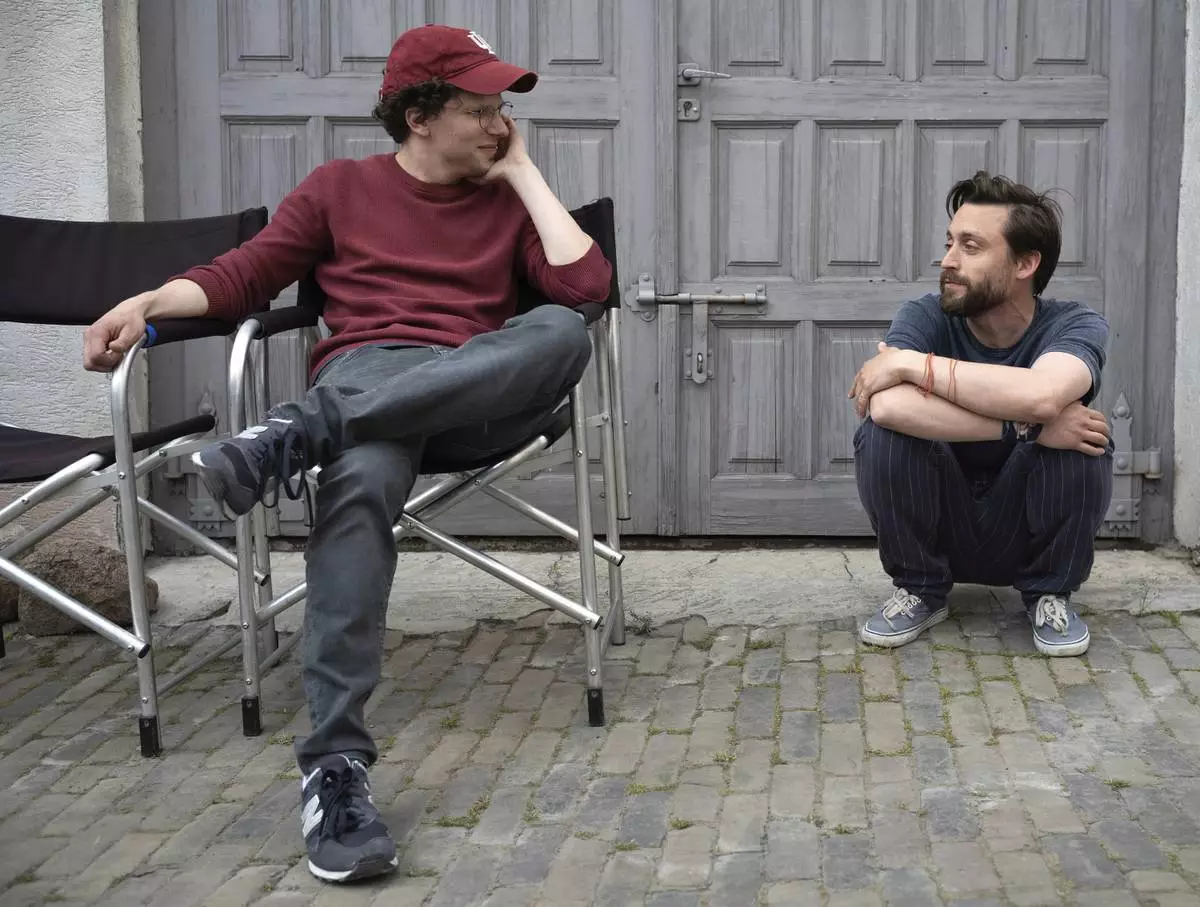
This image released by Searchlight Pictures shows Kieran Culkin, right, and Jesse Eisenberg on the set of "A Real Pain." (Searchlight Pictures via AP)
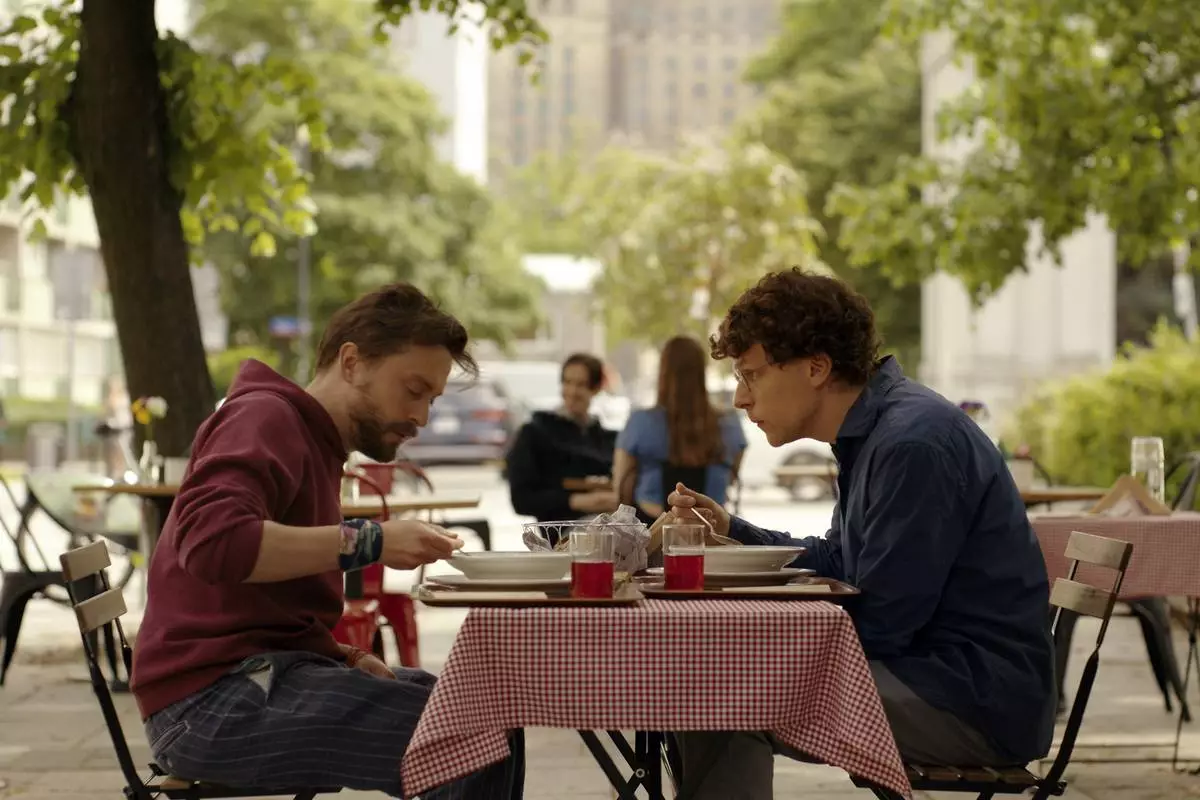
This image released by Searchlight Pictures shows Kieran Culkin, left, and Jesse Eisenberg in a scene from "A Real Pain." (Searchlight Pictures via AP)
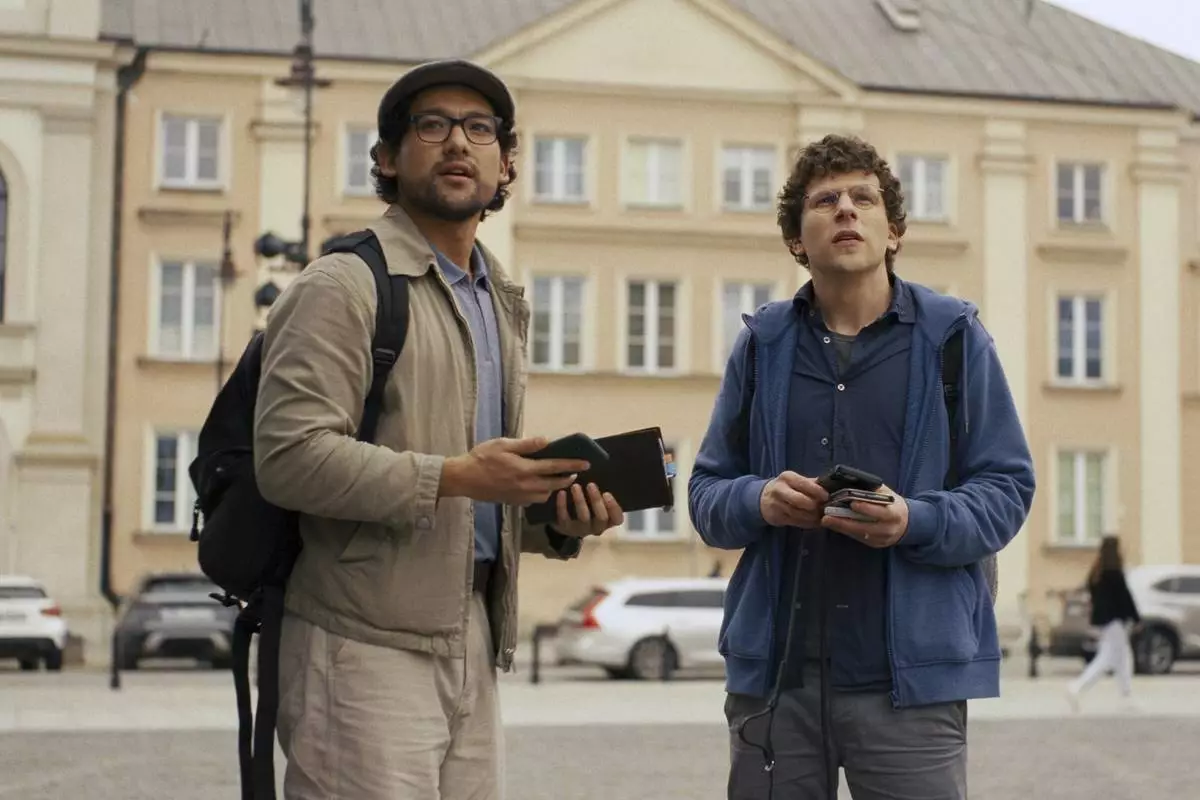
This image released by Searchlight Pictures shows Will Sharpe, left, and Jesse Eisenberg in a scene from "A Real Pain." (Searchlight Pictures via AP)
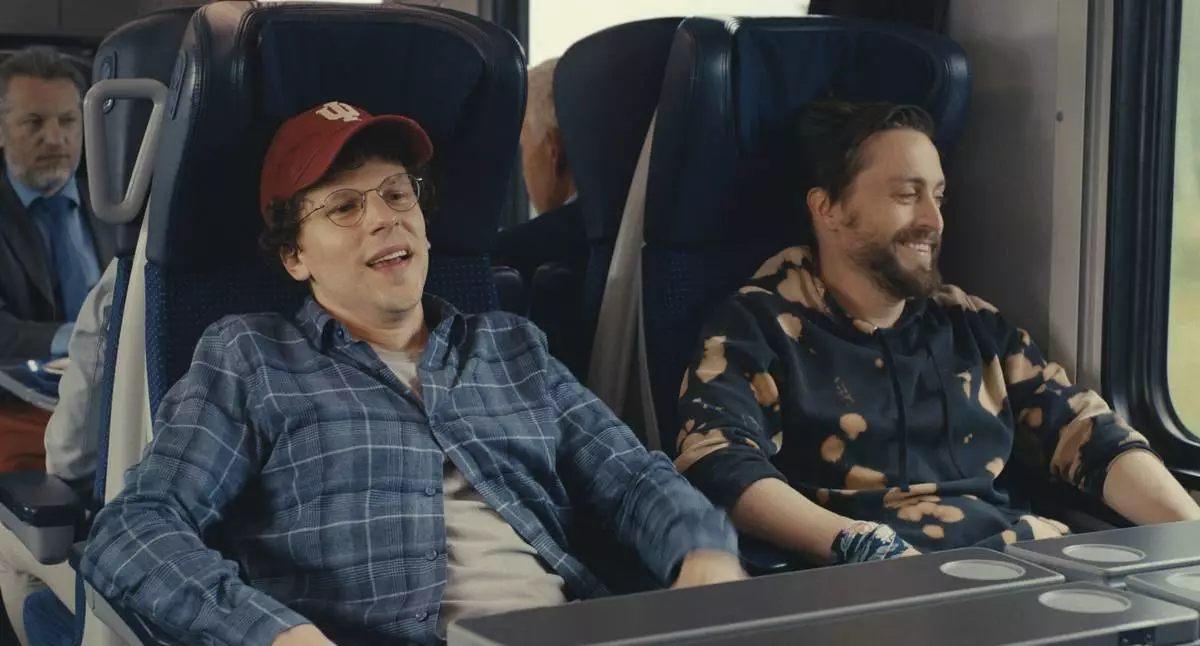
This image released by Searchlight Pictures shows Kieran Culkin, right, and Jesse Eisenberg in a scene from "A Real Pain." (Searchlight Pictures via AP)
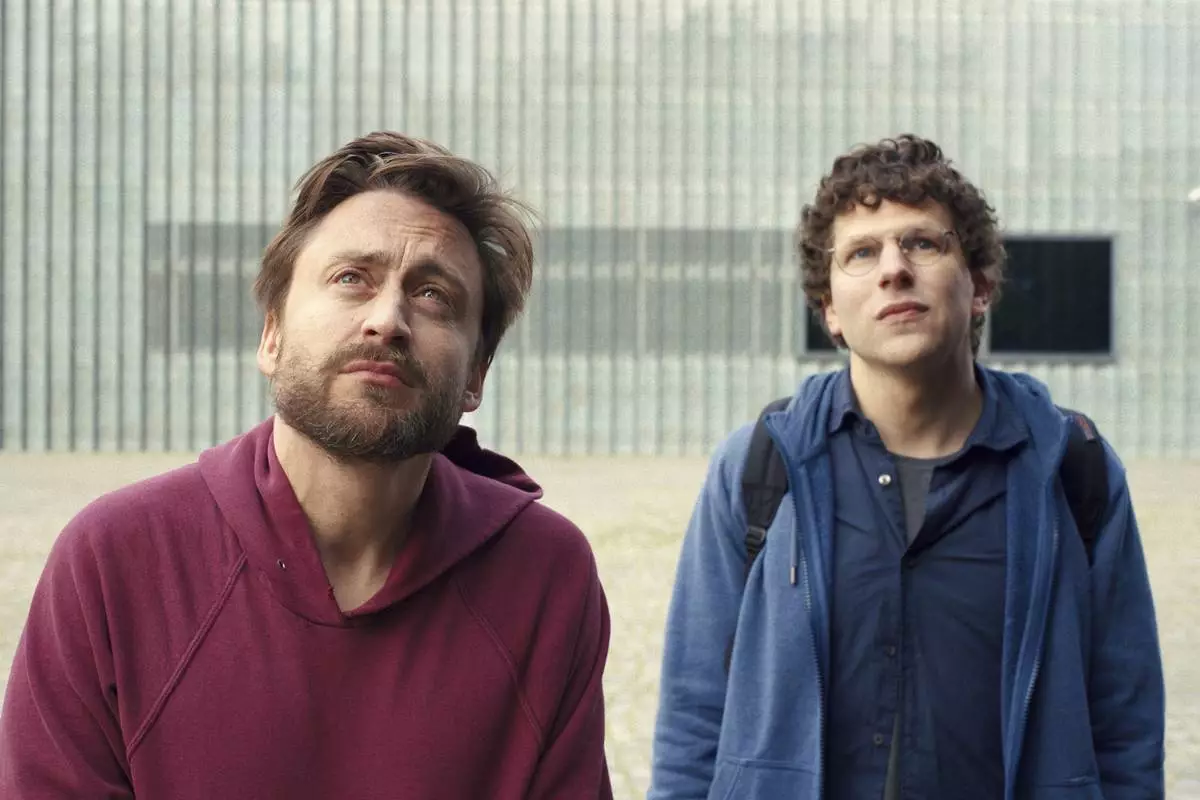
This image released by Searchlight Pictures shows Kieran Culkin, left, and Jesse Eisenberg in a scene from "A Real Pain." (Searchlight Pictures via AP)