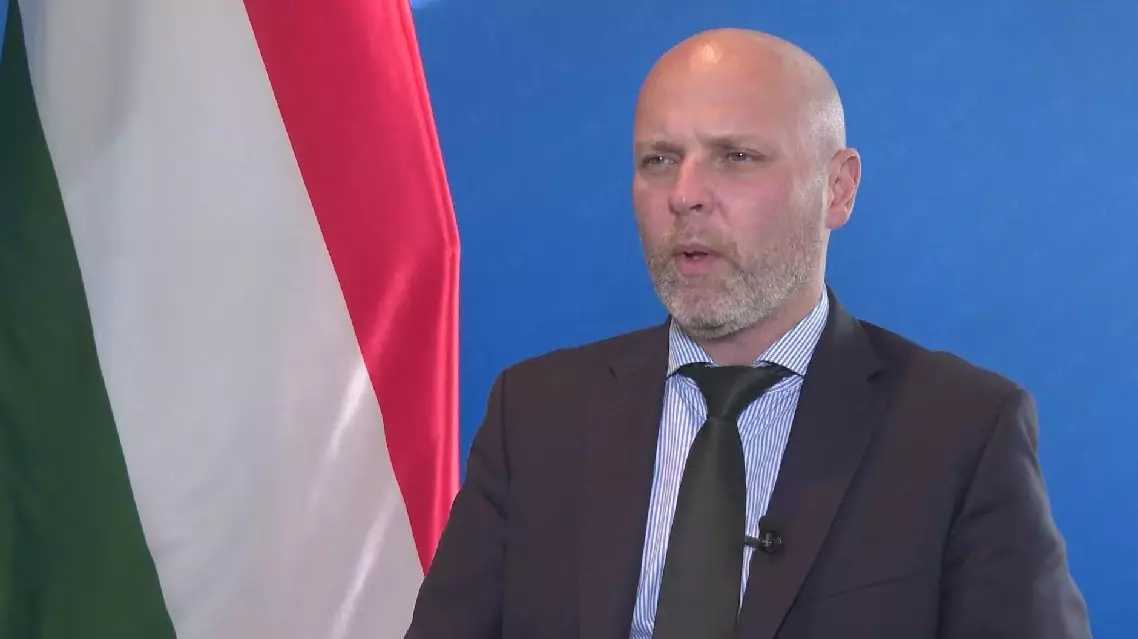
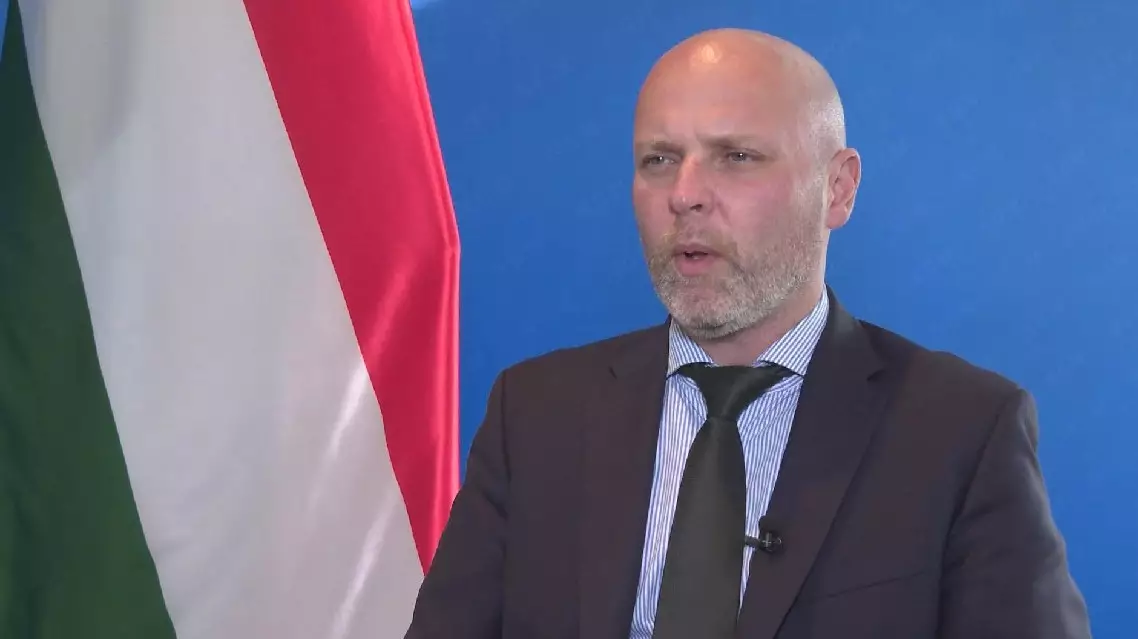
The decision of the European Union (EU) to impose additional tariffs on Chinese electric vehicles (EVs) is "a misguided protectionist action," said Adam Nagy, deputy state secretary for Industry Affairs of the Hungarian Ministry for National Economy.
The European Commission, the executive arm of the 27-nation EU, announced on Tuesday the conclusion of its anti-subsidy investigation, resulting in the imposition of definitive countervailing duties on EVs produced in China. The measures will expire at the end of a five-year period unless an expiration review is initiated before that date. The announcement has sparked criticism from several European countries and auto industries which warned that it could also jeopardize the EU's competitiveness.
"I must add that Hungary was one of the five countries that were opposing this tariff system. Ten countries were supporting this and 12 countries abstained. So this is a very mixed judgment on the situation and I think it shows very well that not all the member states of the European Union are in line with those types of actions. These tariffs are benefiting no one, including the consumers, including the market players. This is, in our opinion, a misguided protectionist action," Nagy said.
In the short term, the tariffs make the global trade achievements that all countries have worked together for in the past few years and decades fade away, he said, adding that tariffs can even cause tensions between the EU and China in the long term.
"We and also the big car manufacturers are on the same platform that these types of tariffs are not helping the carbon goals, they are not helping the marketing and promotion of the new and more green technology of electric vehicles," said the official.
Nagy emphasized that now is a very important time when EVs shall be promoted to consumers.
"Because right now without benefits, they (consumers) are not choosing to buy electric cars instead of same category traditional type of cars. So all and every measure and action should be taken to promote the EV market because of the global climate purposes and because of the technological transfer," he said.
Nagy termed the EU's decision to impose additional tariffs on China-produced EVs as a "very simple and short term logic decision." The prices of European and Chinese EVs might be the same after the imposition of the tariffs, which may increase the sales of European cars in a short run, he said, adding this action will not help the decision of each buyer in the long run as EVs will still be more expensive than combustion-engine cars.
Consumers will always prefer better quality, said Nagy, who believes countries should cooperate for more advanced technology and quality.
"We think that we can balance this negative type of influence by starting and moving forward those investments. So now we have a big carmaker partner who will start this operation in Hungary from China. And we are having more than 10 huge or middle-size investments," said Nagy.
EU tariffs on Chinese EVs are "misguided protectionist action": Hungarian official
EU tariffs on Chinese EVs are "misguided protectionist action": Hungarian official