The Iranian rial has lost nearly half its value since June, triggering widespread protests and raising fears of social instability.
In addition to the economic turmoil, the country is grappling with the aftermath of a brief but intense conflict with Israel, further exacerbating the situation.
Since the United States withdrew from Iran's 2015 nuclear deal in 2018 and reimposed sanctions, the rial has weakened sharply. The U.S. dollar currently trades at a rate of over 1.35 million rials on the open market.
Analysts estimate inflation is running at more than 50 percent, well above the official figure of 43 percent.
Soaring prices have sparked protests, with daily demonstrations in several Iranian cities since Sunday and authorities responding with tear gas.
Public frustration has intensified amid international sanctions and declining trust in the government. In an attempt to address the crisis, the administration appointed a new central bank chief, though many believe the move came too late.
The critical issue now confronting the country's leadership is whether the economic pain could spill over into broader, more severe social unrest, according to experts.
"The security situation in Iran could deteriorate significantly if socio-economically disadvantaged groups take to the streets en masse. At the beginning of the week, merchants and shop owners were the primary demonstrators, driven by instability in exchange rates," Saeed Laylaz, an economist, said.
Iran is a major oil producer, and although sanctions have curtailed its exports, global energy markets remain on high alert over fears that internal instability could disrupt the international economy.
"Currently, Iran's role in the global oil market and international economy is negligible as reflected in its foreign trade share of under 0.4 percent," said Laylaz.
Inflation has hit food prices harder than non-food goods and services. The costs of dairy, eggs, and beverages have risen by 72 percent year on year, forcing many families to tighten their belts.
"While inflation is unlikely to reach the 2022 record, hitting that level in 2026 would almost certainly trigger widespread social and political unrest," said Laylaz.
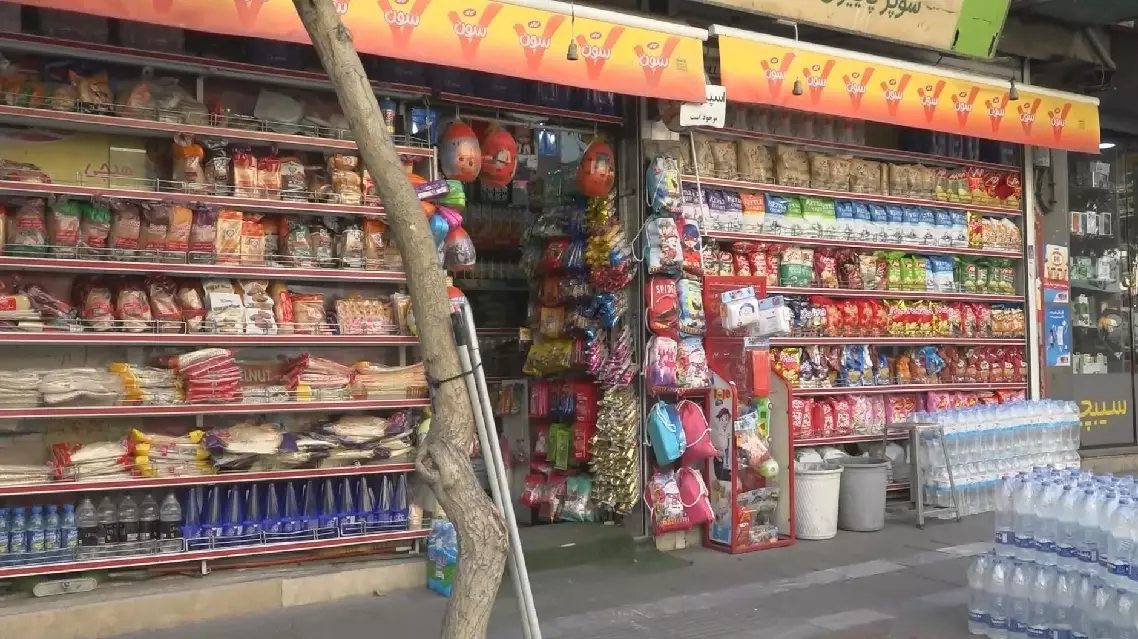
Iranian rial weakens sharply, triggering protests
China's two major power grid operators -- the State Grid Corporation of China (State Grid) and China Southern Power Grid (CSG) -- reported a surge in investment in the first quarter of 2026, underscoring efforts to strengthen infrastructure construction and support high-quality socioeconomic development in China.
The State Grid said it completed fixed-asset investment worth 129 billion yuan (about 18.77 billion U.S. dollars) in the first three months of this year, up 37 percent the corresponding period of the previous year. The spending has driven more than 250 billion yuan (36 billion U.S. dollars) of investment across the wider industrial chain.
Key projects such as the Panxi ultra-high-voltage (UHV) alternating current (AC) line and the Anhui-Hubei back-to-back direct current (DC) project have seen ground broken for their construction, while several west-to-east power transmission projects have been upgraded.
Investment in connecting renewable energy generation to the grid was reported to have exceeded 10 billion yuan (1.45 billion U.S. dollars) from January to March, a year-on-year rise of more than 50 percent.
The CSG also reported robust growth in investment in the three-month period, with fixed-asset investment reaching 38.45 billion yuan (5.58 billion U.S. dollars), up about 50 percent from a year earlier.
Among its achievements, the company completed and commissioned 80 key projects, including the 220 kV cross-sea power grid interconnection project, which was officially put into operation on March 20. The project ended years of grid isolation on the Weizhou Island in south China by linking it to the main power system of the Guangxi Zhuang Autonomous Region.
The construction of 17 other major energy projects, including one linking the power grid of the Xizang Autonomous Region in southwest China with that of Guangdong Province in south China, is advancing rapidly. These projects are expected to bolster regional industries, the maritime economy, digital collaboration and the transition to green energy.
"By accelerating major project construction, investment during the 15th Five-Year Plan period (2026-2030) is expected to approach 1 trillion yuan (145 billion U.S. dollars), driving a further 2 trillion yuan (290 billion U.S. dollars) of investment across upstream and downstream industries," said Dong Yanle, deputy general manager of the Engineering Construction Department under the China Southern Power Grid.
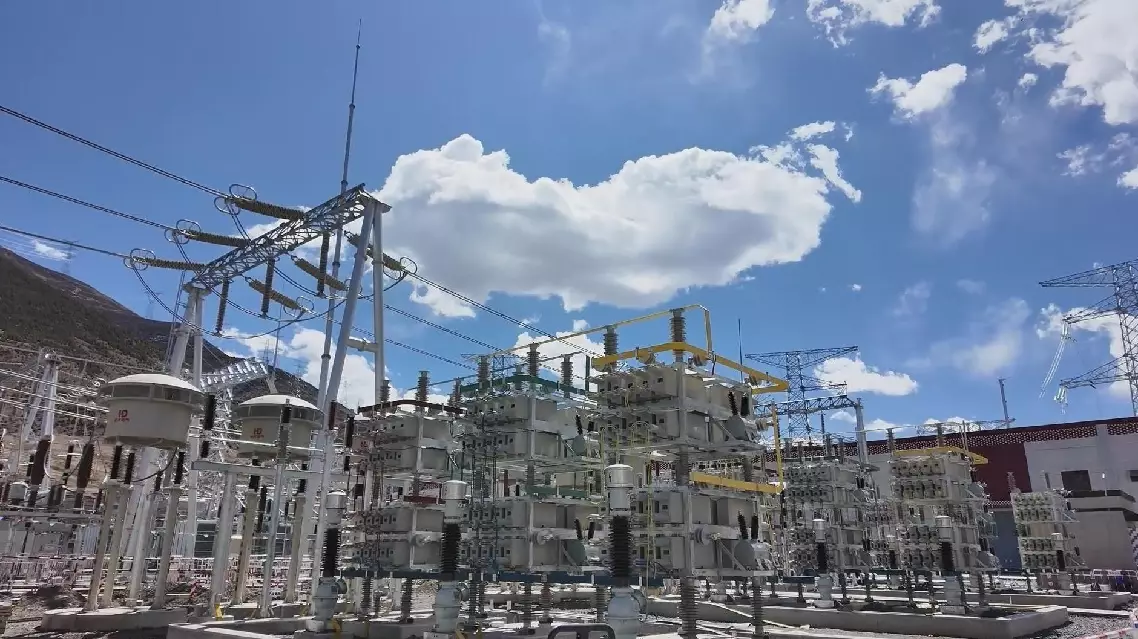
China ramps up power grid investment in January-March to boost growth