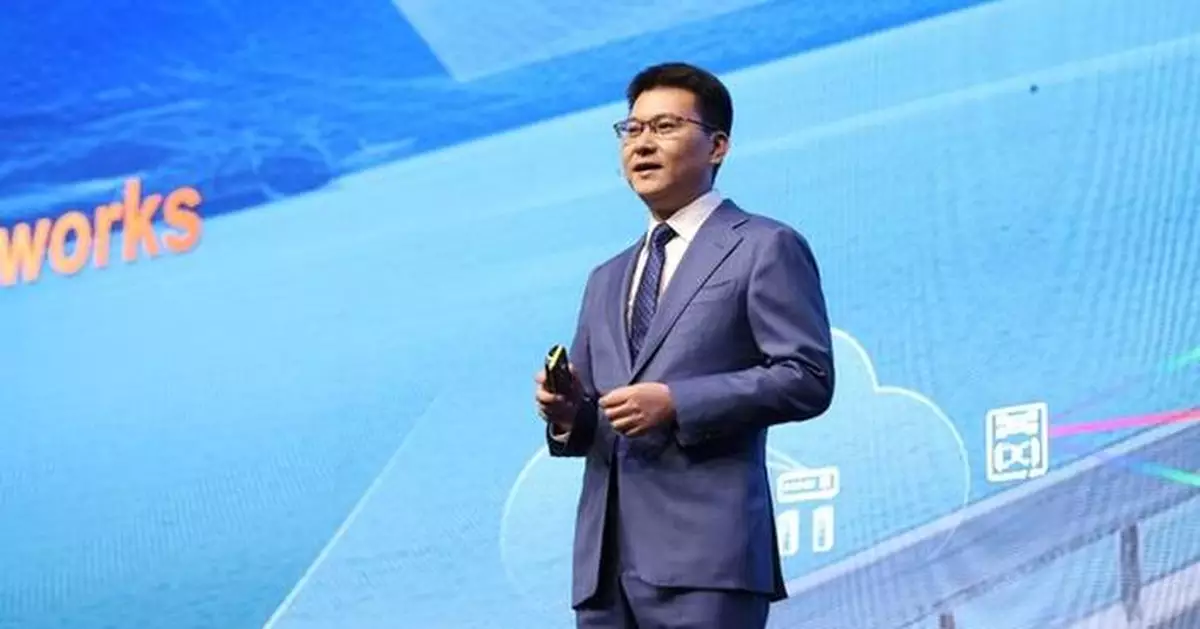
ISTANBUL, Turkey, Nov. 3, 2024 /PRNewswire/ -- Today, at the 10th Ultra-Broadband Forum (UBBF 2024), Bob Chen, President of Huawei Optical Business Product Line, delivered a keynote speech titled Build AI-Centric F5.5G All-Optical Network for New Growth.
The AI era is upon us. General foundation models are continuously enhanced, and are quickly applied to various industries. So far, more than 1300 foundation models have been applied. In addition, AI is widely used in mobile phones, PCs, and automobiles. In the future, AI will be an indispensable part of terminals. AI helps us in travel planning, code generation, and quality inspection. In the future, AI will transform every aspect of our life, work, and production.
Bob Chen noted that in the AI era, some carriers will transform to AI all-service providers, and some carriers will cooperate with third parties to provide services such as AI computing and AI applications. For carriers, building robust infrastructure networks and "enhancing computing with networks" will be the key to business success in the AI era. AI device-cloud synergy, and intelligent computing training require high network bandwidth, low latency, and high reliability. Huawei is continuously innovating F5.5G in optical transmission, optical access, and management and control platform, helping carriers build AI-centric all-optical networks.
In the optical transmission field, Huawei's leading optical switching technology is extended to data centers (DCs) and metro edges. First, with optical switching, DCs support the scale and efficiency improvement of AI computing. Huawei's DC optical switching solution supports the expansion of intelligent computing from 1000 cards to millions of cards based on ultra-dense ports and ultra-low power consumption. Compared with traditional solutions, the optical module-free deployment mode reduces the failure rate by about 20%. In addition, with all-optical switching at metro edges, Huawei helps carriers build 1 ms, 5 ms, and 10 ms latency circles through mesh networking, and all-optical one-hop connection for end-to-end all-optical switching from the backbone to the metro, ensuring ultimate AI experiences. Up to now, more than 50 carriers around the world have extended optical switching to metro edges and built 1 ms metro networks.
In the optical access field, Bob Chen noted that fixed broadband must provide premium services. Based on optical fiber connections, fixed broadband provides deterministic and guaranteed service experiences for every user. Globally, there are three monetization modes for fixed broadband: coverage monetization, bandwidth monetization, and experience monetization.
First, coverage monetization. Currently, no fiber connection is available to more than 28% of global users. Therefore, fiber coverage needs to be accelerated to seize the demographic dividend. Huawei solutions including QuickConnect ODN and all-scenario AirPON can help carriers achieve fast and low-cost network construction.
Second, bandwidth monetization. First, some carriers have deployed fiber broadband, but their package rates are only dozens of Mbps. As a result, the value of optical fibers is not unleashed. Therefore, we recommend that packages be gradually upgraded to provide more competitive broadband services. Second, some carriers have offered gigabit packages, but the experience is poor and video freezing often occurs. The root cause is that GPON is used to provide gigabit packages. Therefore, GPON should be upgraded to 10G PON as soon as possible to provide better network experiences.
The last is to monetize experience. Now, the industry has a consensus on the evolution from FTTH using one fiber to FTTR using one network. FTTR networking can ensure optimal experience for everyone anytime and anywhere. So far, the number of global FTTR users has exceeded 30 million. In addition, Huawei is accelerating the innovation and upgrade of FTTR+X to help carriers innovate AI applications, including AI plus storage, home guard, and healthcare. Our ultimate goal is to support one smart home based on one FTTR network.
As for the management and control platform, Huawei uses digital twin and AI foundation models to improve user experience and O&M efficiency in premium broadband and premium transmission solution scenarios. Huawei's Premium Broadband solution uses automatic fault locating to implement minute-level network fault diagnosis and proactive poor-QoE rectification, slashing user complaints by 30%. Its Premium Transmission solution uses automatic online planning to shorten the new service TTM from months to hours.
"The next decade will witness the fast popularization of AI," Bob Chen stated. "Huawei hopes to work with industry partners to build an AI-centric F5.5G all-optical network, extending optical switching to data centers and metro edges, building premium networks for optical access by monetizing coverage, bandwidth, and experience, and fully injecting AI capabilities to the management and control platform. In this way, we can accelerate AI popularization and achieve new business growth together in the intelligent era!"
** The press release content is from PR Newswire. Bastille Post is not involved in its creation. **
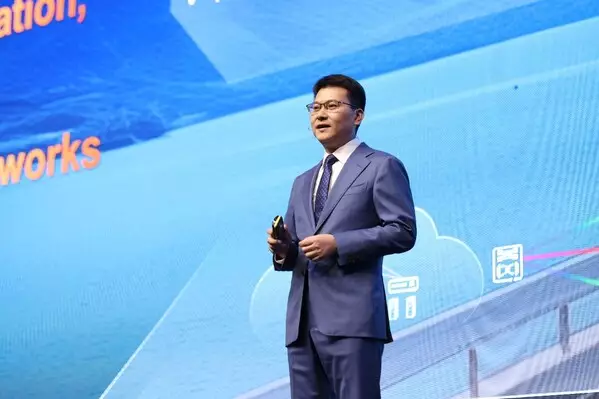
Huawei Proposes to Build an AI-centric F5.5G All-Optical Network to Help Carriers Achieve New Growth
APIA, Samoa, Aug. 23, 2026 /PRNewswire/ -- HTX Research, the dedicated research arm of HTX, has released a new report titled The Industrialization of Intelligence and the Bubble Cycle: Token Economics, Capital Expenditure, and the Repricing of Risk-Reward Across U.S. AI Equities. Its central argument is that the AI industry and AI equities are not at the same point in their respective cycles — technological diffusion remains in its early stages while capital expenditure, valuations, and investor sentiment have moved well ahead of it.
The Variables Driving Equity Prices
Markets first priced the scarcity of GPUs, high-bandwidth memory, servers, and data-center capacity, and later the capability gains delivered by frontier models and coding agents. In 2026, the variables driving equity returns are shifting away from model parameter counts and the scale of capital expenditure toward token production costs, task-completion reliability, usage intensity, enterprise-workflow penetration, and the ability of enormous AI investments to generate durable free cash flow.
Behind that shift is a change in the magnitude of capital spending. J.P. Morgan Asset Management estimates that five U.S. hyperscalers will spend approximately $697 billion in 2026, with capital expenditure rising from roughly 33% of their operating cash flow in 2023 to an estimated 93%. Once capital expenditure consumes the overwhelming majority of operating cash flow, market attention necessarily moves from revenue growth to return on capital.
The Bubble Sits in the Financial Architecture, Not the Industry
Cloud revenue, coding-agent adoption, semiconductor sales, and enterprise demand are all growing in real terms, meaning AI technology itself is not a false narrative. Capital expenditure, external financing, data-center projects, private-model valuations, and a number of high-multiple second-tier equities, however, display increasingly speculative characteristics.
Headline price-to-earnings ratios also fail to represent true valuation levels: Alphabet's multiple is distorted by investment income, and Amazon's current accounting profit does not reflect a normalized valuation. What genuinely offers value is the closest alignment among normalized valuation, competitive moats, cash flow, and AI optionality.
At current prices and cycle positions, the report views Alphabet as offering the most compelling overall asymmetry, and applies the same framework across Microsoft, Meta, TSMC, NVIDIA, Amazon, Oracle, Micron, AMD, Arista, and Vertiv — distinguishing businesses with high fundamental win rates from those whose valuations already demand near-flawless execution.
AI Is Reshaping How Crypto Investors Allocate Capital
AI's role as a shared theme across global capital markets extends beyond U.S. equity pricing into the allocation behavior of crypto investors. As names including NVIDIA, Micron, TSMC, Broadcom, Meta, and Alphabet enter the everyday portfolios of crypto users alongside gold, crude oil, ETFs, and pre-IPO assets, a growing share of users now treat crypto and U.S. equities as different allocation directions within a single global risk-asset system.
HTX has been one of the earliest crypto exchanges to systematically pursue this direction. According to data disclosed in August 2026, cumulative trading volume in the platform's TradFi perpetuals section has exceeded $2.5 billion, with support for more than 170 TradFi-related assets spanning U.S. equities, ETFs, gold, silver, crude oil, AI semiconductors, memory, aerospace, and pre-IPO themes such as OpenAI and Anthropic.
What makes this model work is the platform's existing base of crypto users who have completed registration, verification, and funding. Holding stablecoins such as USDT, they can trade TradFi assets within the same account without opening a brokerage account or moving capital into a separate financial system — allocating toward gold, ETFs, or large-cap technology when risk appetite declines, and raising crypto and high-beta AI exposure when it recovers.
The Competitive Boundary for Trading Platforms Is Shifting
Competition among trading platforms will extend beyond spot markets, derivatives, liquidity, and listing speed toward a broader contest spanning multi-asset access, wealth management, and AI investment tools. Platforms with durable competitiveness will see their core capability evolve from execution alone toward global asset distribution.
This confirms a larger judgment in the report: AI is changing not only model capability and compute demand, but capital flows, allocation behavior, and how financial products are organized. HTX's early positioning in TradFi corresponds with HTX Research's sustained tracking of the AI theme and cross-market capital flows — identifying cycle positions, reading capital flows, and understanding how assets move in relation to one another sits at the core of research work, and also forms a source of first-mover advantage in business decisions. As AI drives global markets into a new phase of convergence, institutions capable of understanding both industrial cycles and capital flows are better positioned for the next round of competition.
| *The above content is not an investment advice and does not constitute any offer or solicitation to offer or recommendation of any investment product. |
*The above content is not an investment advice and does not constitute any offer or solicitation to offer or recommendation of any investment product.
About HTX Research
HTX Research is the dedicated research arm of HTX Group, responsible for conducting in-depth analyses, producing comprehensive reports, and delivering expert evaluations across a broad spectrum of topics, including cryptocurrency, blockchain technology, and emerging market trends. Committed to providing data-driven insights and strategic foresight, HTX Research plays a pivotal role in shaping industry perspectives and supporting informed decision-making within the digital asset space. Through rigorous research methodologies and cutting-edge analytics, HTX Research remains at the forefront of innovation, driving thought leadership and fostering a deeper understanding of evolving market dynamics. Visit us.
** This press release is distributed by PR Newswire through automated distribution system, for which the client assumes full responsibility. **
HTX Research Examines U.S. AI Equities: Technology Remains Early, While Capital Expenditure and Valuations Have Entered the Late Cycle