Coffee companies from Rwanda, a major coffee producer in Africa, see the 7th China International Import Expo (CIIE), which opened on Tuesday in Shanghai, as the best-selling platform to increase brand visibility and expand market presence in China.
Since its first edition in 2018, the CIIE has served as a platform for Rwandan coffee companies to build bonds with Chinese importers and increase brand awareness in the Chinese market. It offers them not only a very good opportunity to access the Chinese market and increase export, but also to promote other beneficial bilateral cooperation.
"I want to participate in the CIIE every year now, so that more Chinese people can know about our products. The samples I brought to each edition of the expo would be sold out on the second day. It's a great opportunity. We won't quit. We must attend the CIIE every year," said Andy, a coffee trader.
Aside from displaying their products, Rwandan coffee companies have also gradually learned about the needs of Chinese consumers at the CIIE, based on which they would adjust their products and services to better adapt to the Chinese market.
"It's a good opportunity for us, for the company to have relationship with China market and to grow up. It's an opportunity and a good step for, in general Rwanda agriculture, particularly in coffee, which will help us to open some areas of doing business," said Diego, another coffee dealer.
Rwanda's exports to China rose by more than 87 percent to a record high 131 million U.S. dollars in 2023.
Themed "New Era, Shared Future", the 7th CIIE is scheduled for Nov 5 to 10. It is attended by 77 countries and international organizations in national pavilions, along with nearly 3,500 exhibitors from 129 countries and regions in the business exhibition.
As the world's first national-level import-themed expo, the CIIE has become an important stage spotlighting China's new development paradigm, a platform for high-level opening-up and a public good for the whole world.

Rwandan coffee exporters see CIIE as best-selling platform in market expansion
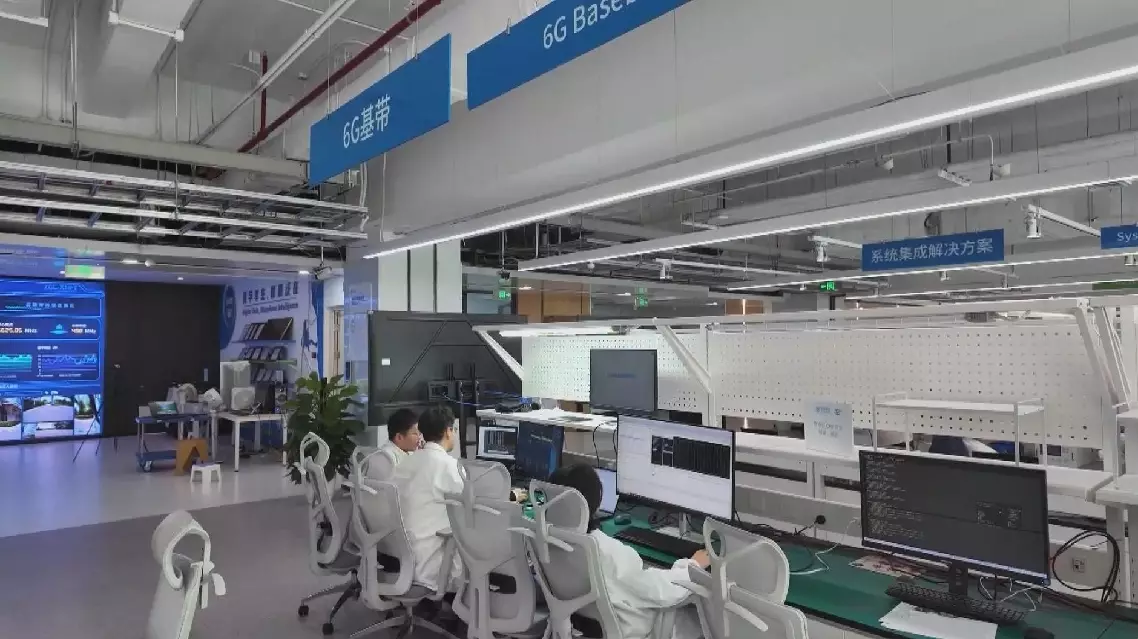
China's approval of the 6GHz band trial spectrum for 6G application will promote development of the 6G technology from laboratories to real-life scenario applications, marking another step forward in next-generation telecommunications, industrial experts say.
China's Ministry of Industry and Information Technology (MIIT) officially approved the trial spectrum in the 6GHz band for 6G technology development on May 8, signifying that China has taken a step forward in next-generation telecommunications.
The approval, granted to the IMT-2030 (6G) promotion group, authorizes 6G technology trials in selected regions. The move is aimed at advancing technical research, testing and validation based on the key scenarios and performance indicators defined by the International Telecommunication Union for 6G.
According to MIIT officials, the 6G will face the development trend of technological integration and rapid evolution, such as the integration of space, air and ground, the integration of communication and intelligence, and the integration of communication and sensing. Therefore, it has put forward higher requirements for spectrum resources, such as continuous large bandwidth and wide coverage across the entire region.
"The 6GHz band is a scarce, high-bandwidth, high-quality resource in the mid-band, offering advantages such as wide coverage, large capacity and high reliability. Furthermore, this band is highly compatible with the existing 5G mid-band industry ecosystem, allowing it to fully leverage a mature global industry base, effectively reducing network deployment and construction costs in smooth transition from the 5G to the 6G," said Wang Tan, director of the frequency planning division of the radio administration bureau under the MIIT.
Following this approval, 6G technology research and development will gradually move from laboratory simulation and indoor prototype testing to real-world scenarios such as cities and industries to complete performance verification, according to MIIT officials.
"The approval is conducive to integrating the efforts of industry, academia, research and application, leading domestic industrial forces to make early arrangements for key links such as 6G chips, terminals and instruments, and accelerating the maturity of the industrial chain," Wang said.
China has commenced the second phase of 6G technical trials following the completion of the first phase from 2022 to 2025, which had yielded a reserve of over 300 key 6G technologies, and industry experts generally expect the 6G to be officially commercialized around 2030.
"In general, the 6G development roadmap and technical framework are relatively clear. According to international consensus, our standardization process will complete the first version of the 6G standards in about two years. Technical standards are generally upgraded once every 18 months. After another one to two years, we will have commercially available products," said You Xiaohu, an academician with the Chinese Academy of Sciences.
China's approval of 6G trial spectrum to accelerate real-life applications: experts