German auto giant Volkswagen is confident in exploring more development opportunities in the dynamic Chinese auto market as it looks to strengthen its partnerships and joint ventures in China as the industry goes through a huge tech transition, according to a company executive.
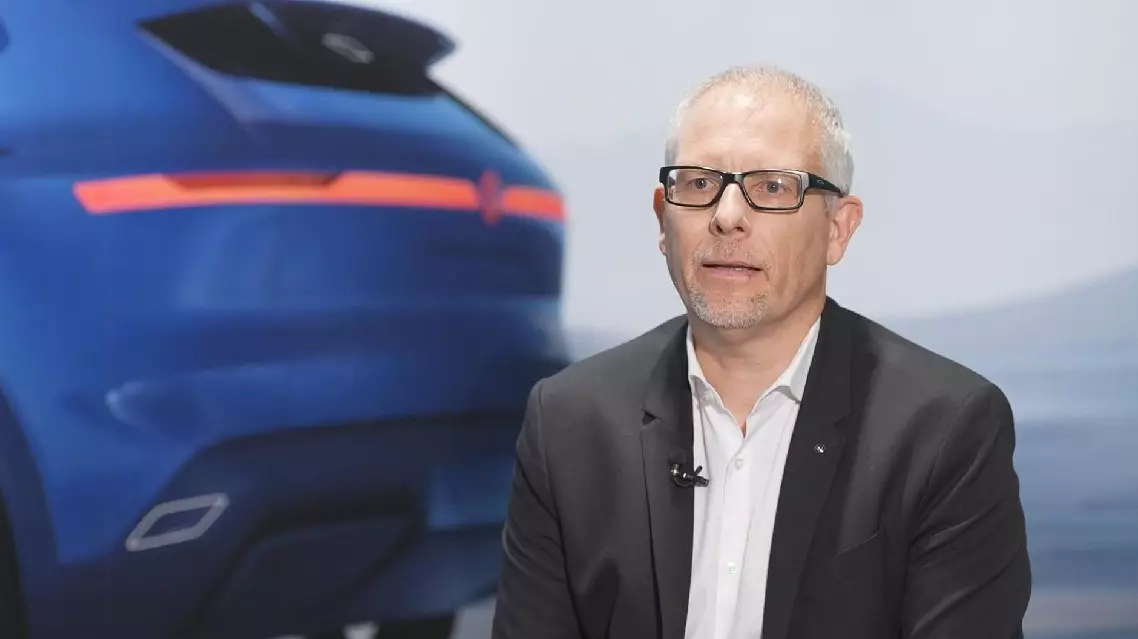
Stefan Mecha, CEO of the Volkswagen China Passenger Cars Brand, shared his insights on the brand's future plans and innovation capabilities, and gave his assessment of the current global auto market in a recent interview with the China Global Television Network (CGTN).
"When you look at this year, there are some markets in the world that go sideways. Europe [is] pretty much on the same level than last year - 12 million cars in total. The U.S. and China are pretty much on the same growth trajectory, around three percent, so I think that's good. Also, thanks to all the measures that the government has put on the road, so I think that's really positive," he said.
The Chinese new energy vehicle (NEV) market is becoming increasingly competitive, with traditional industry leaders pursuing transformation while a host of new entrants are looking to make their mark in the sector.
Noting these fast-paced developments, Mecha also re-affirmed his company's commitment to the China market, pointing to China's huge growth potential and noting Volkswagen's long-standing presence in the country which stretches back four decades.
"We truly believe that China is one of the few markets that will really substantially grow over the next years. We believe on average three or three and a half percent, so that by 2030 we land at around 29-30 million cars," he said.
"We have shaped mobility in China for 40 years, so our plan is also to continue the next 40 years, so we really have a strong feeling about the market," he added.
While NEVs and particularly electric cars gain more popularity among consumers, Mecha emphasized that advancing technological features is key to the brand’s development, while stressing it still has strong focus on the traditional fossil-fueled vehicles.
"A lot of intelligent connected features come into play. So, for us, this has two challenges. Number one, the backbone of our business in China is still the ICE, the combustion engine cars. What we are doing now is really to bring these cars into the era of intelligent connected vehicles, because that's really key. The customers demand this. You clearly see that these cars have all the tech features [like] autonomous driving, pillar-to-pillar display," he said.
Looking ahead, Mecha noted the company is gearing up to unveil 16 new models over the next two years, with 2026 also set to be a "big year" as Volkswagen prepares to launch several new cars in its expanding electric vehicle range.
"I think this is something which is natural in the market that was so quickly growing. Now, also, the technology feature stabilizes. So, this is why we are very confident with all the models that we bring in 2026, in close connection with our joint ventures. So, the building block that we had over 40 years [in China] remains with strong joint venture partners. And we have added one more layer, which is the tech ecosystem. With the transition that this market undergoes, we also need to rework our business model. We learned this in the past - cooperations, partnerships, joint ventures are pivotal to achieve great in the market and we continue doing so," said Mecha.
Volkswagen remains committed to dynamic Chinese auto market: executive
Volkswagen remains committed to dynamic Chinese auto market: executive