As Peru prepares to host this year's Asia-Pacific Economic Cooperation (APEC) Economic Leaders' Meeting in its capital Lima, its historic Chinatown stands ready to showcase the friendship and cultural bond between the two peoples.
The 2024 APEC meeting will be held in the Peruvian cities of Lima, Pisco, and Chiclayo from Nov 10 to Nov 16 under the theme of "Empower. Include. Grow."
Established in the 1850s, Lima's Chinatown, also known as Barrio Chino, has long been a hub of Chinese-Peruvian cultural exchange.
One of the most emblematic examples is chifa cuisine, a unique blend of Chinese and Peruvian ingredients and cooking techniques. According to Luis Yong, owner of the well-known San Joy Lai restaurant, this style of food gradually became popular as Chinese people integrated into local life.
"The Chinese taught how to cook their food. They taught to how to eat and cook eastern food here in Peru, and that is why the chifas were so popular, and that is why it is said here in Chinatown, 'come the rich and the proletarians, the famous and forgotten,'" Yong said.
According to the restaurateur, Lima's Chinatown stands out as a unique community in the country.
"It is the only ethnic neighborhood in Peru, there is no other ethnic neighborhood. Peru has peoples of all races, but there is no Japanese neighborhood, there is no Italian neighborhood, there is no Jewish neighborhood. There is the only Chinese neighborhood in Peru, and it is still going strong, 175 years later," he said.
Peru is now home to thousands of Chinese descendants, known as Tusan, and there are more than 10,000 chifa restaurants across the country. Today, Chinese-inspired dishes like fried rice and chicken noodles have become staples of the Peruvian diet.
"Peru is the most Chinese country in Latin America, and I am not referring to the fact that there are more Chinese immigrants in Peru. I'm referring to its different levels of integration at an economic, political, social, cultural and even biological level," said Gonzalo Paroy, a Peruvian Historian.
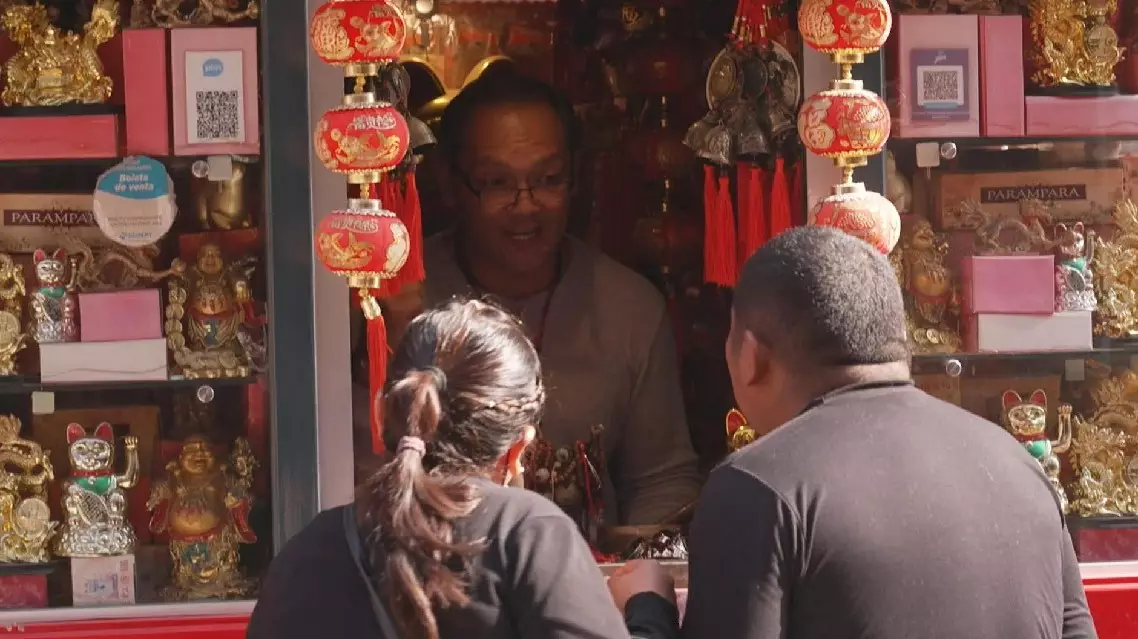
Peru’s Chinatown prepares to promote cultural exchange amid APEC summit
China's blue-chip CSI 300 Index made modest gains in the past week thanks to the huge electrification campaign that reduces the country's exposure to the volatile oil price as the continuing conflict in the Middle East enters the second week, said an analyst on Friday.
Chinese stocks closed lower on Friday, with the benchmark Shanghai Composite Index down 0.81 percent to 4,095.45 points.
Timothy Pope, a market analyst for China Global Television Network, said the CSI 300 Index made modest gains despite a rough week for both Chinese and global stock markets.
"The conflict in the Middle East really shows no sign of winding down and it has been as you said another rough week for the global markets. Today the Shanghai Composite Index closed down 0.8 percent, and ended lower for the week as well, but the blue-chip CSI 300 Index actually managed to make some modest gains this week. And that fits what we've been hearing from analysts and investment banks, including Morgan Stanley and UBS. They've said that China's got less oil exposure than other economies. This is partly because of the huge electrification campaign which has been happening in China from family cars to road haulage, and also just the total energy mix here. But we know that oil isn't the only thing that's not getting out of the Middle East at the moment. Fertilizer has emerged as another big disruption point and we have seen in the last 48 hours China already begin early releases of fertilizer reserves ahead of the spring planting season. With all that in the mix we have seen the likes of Morgan Stanley and UBS touting A-shares as a diversification option and a resilient market in this risk-off investment environment," said Pope.
"Sector-wise today we saw some consumer stocks rising -- led by liquor makers, in particular, Kweichow Moutai. There were also some limited gains for Chinese real estate and financial firms. But with the oil price still extremely volatile, Chinese resources and energy shares pulled back today to become the two worst-performing sectors," said Pope.
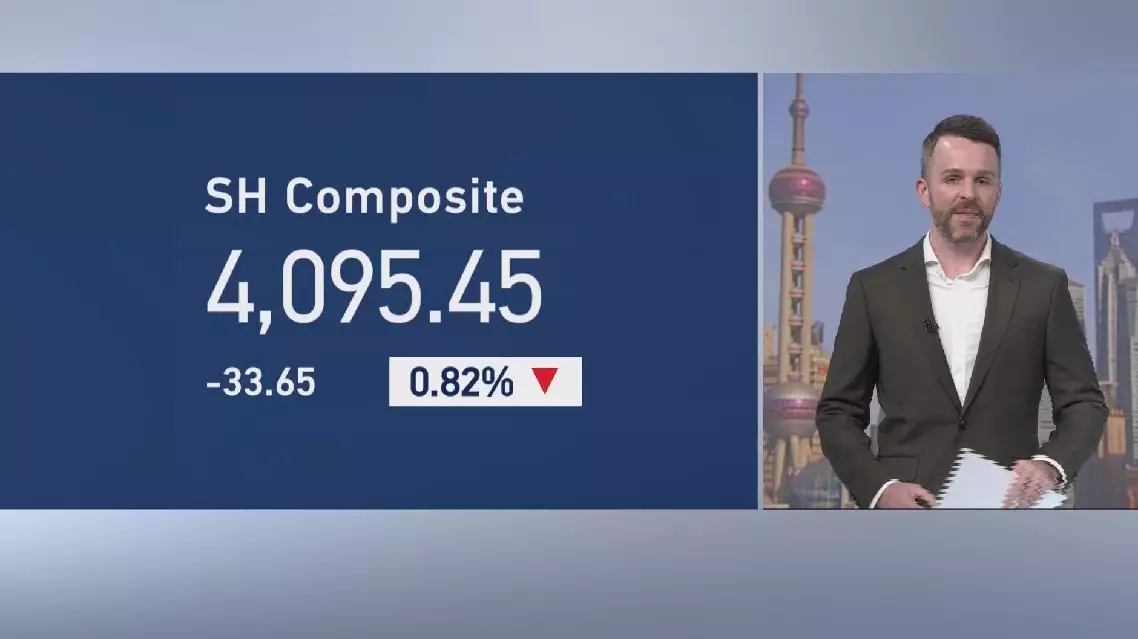
Chinese blue-chip stocks make gains amid a rough week for global markets: analyst