SITI continues visit to Canada
The Secretary for Innovation, Technology and Industry, Professor Sun Dong, continued his visit to Canada on November 6 (Toronto time).
Click to Gallery
SITI continues visit to Canada Source: HKSAR Government Press Releases
SITI continues visit to Canada Source: HKSAR Government Press Releases
SITI continues visit to Canada Source: HKSAR Government Press Releases
SITI continues visit to Canada Source: HKSAR Government Press Releases
SITI continues visit to Canada Source: HKSAR Government Press Releases
SITI continues visit to Canada Source: HKSAR Government Press Releases
SITI continues visit to Canada Source: HKSAR Government Press Releases
SITI continues visit to Canada Source: HKSAR Government Press Releases
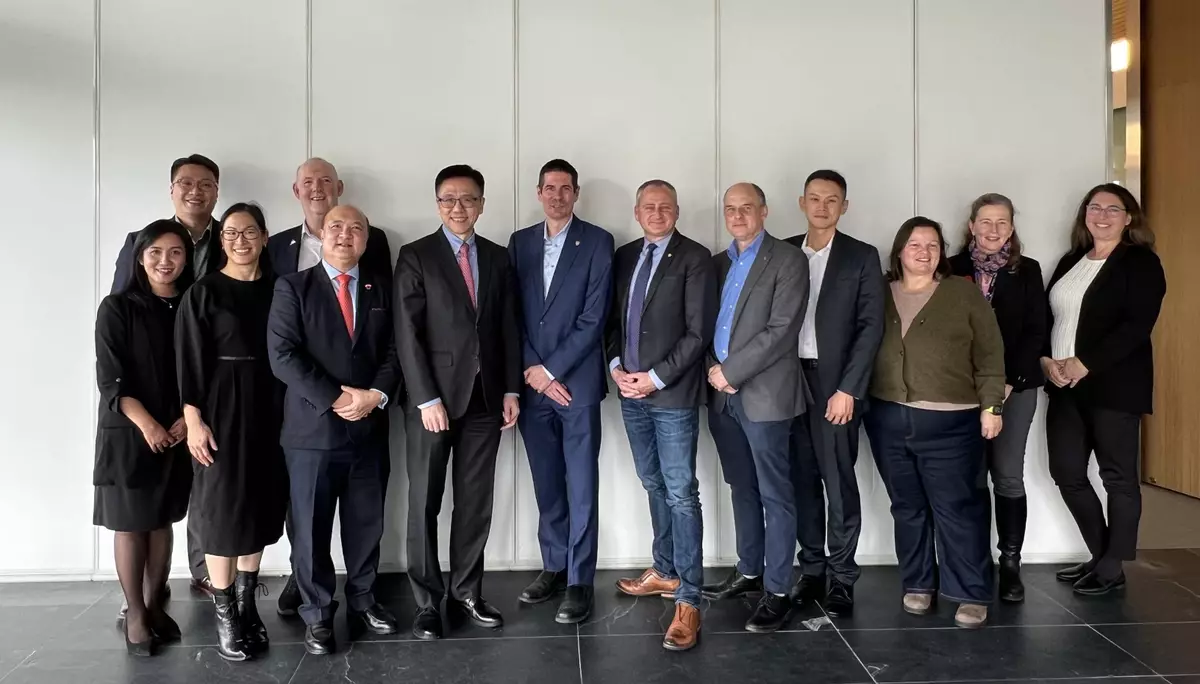
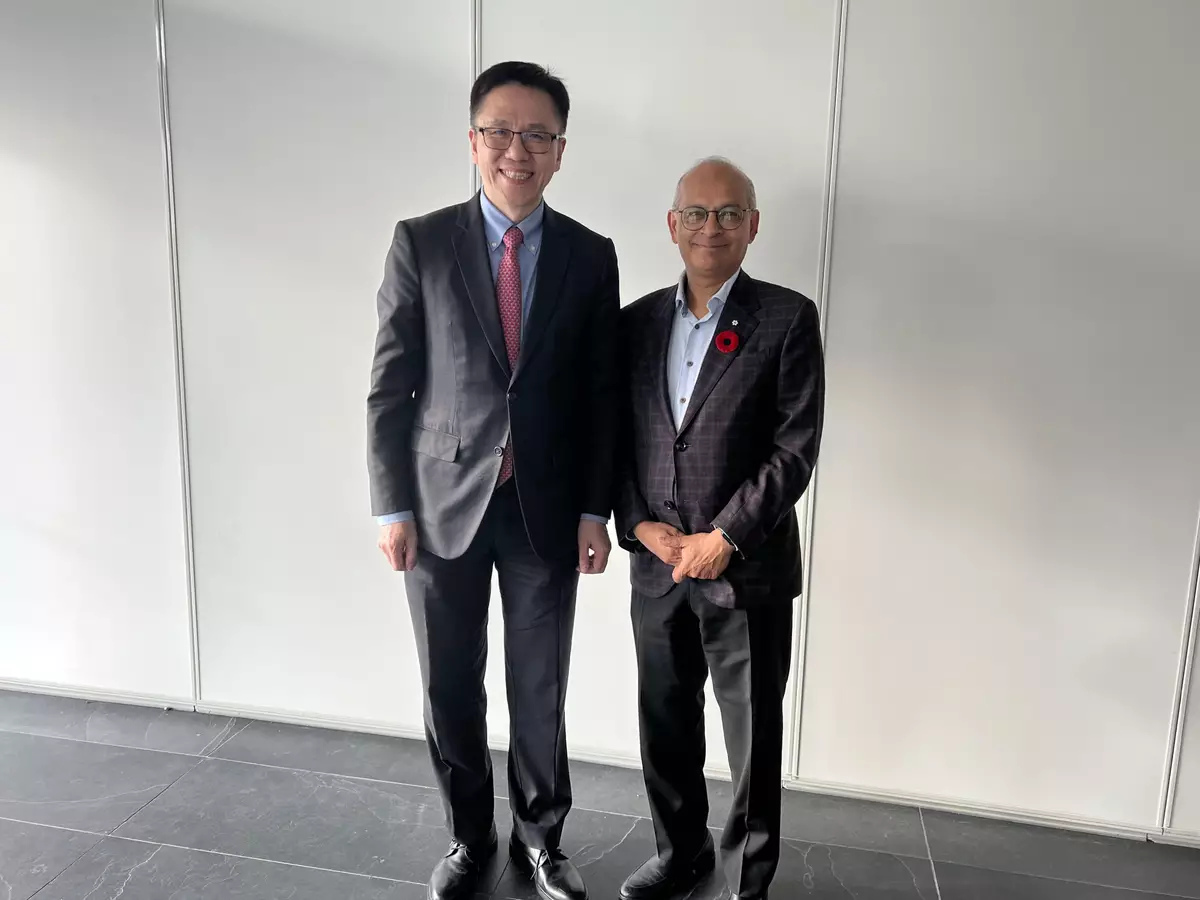
Professor Sun visited the University of Waterloo and met with the University's President and Vice-Chancellor, Professor Vivek Goel; the Dean of Arts, Professor Alexie Tcheuyap; the Dean of Engineering, Professor Mary Wells; the Dean of Faculty of Health, Professor Lili Liu; the Dean of Mathematics, Professor Mark Giesbrecht; the Dean of Science, Professor Chris Houser; and Associate Vice-President Professor Bernard Duncker. The University of Waterloo is a comprehensive and research-intensive university. It ranked 21st in computer science and information systems and 40th in engineering and technology in the Quacquarelli Symonds (QS) World University Rankings by Subject 2024.
Professor Sun was briefed on the University's work in transforming research outcomes. He noted that Hong Kong attaches great importance to the co-ordinated development among upstream, midstream and downstream in innovation and technology development. An array of measures have specifically been launched in recent years to provide support to start-ups, including the I&T Accelerator Pilot Scheme, which provides subsidies to attract professional start-up service providers with proven track records in and beyond Hong Kong to set up accelerator bases in Hong Kong.
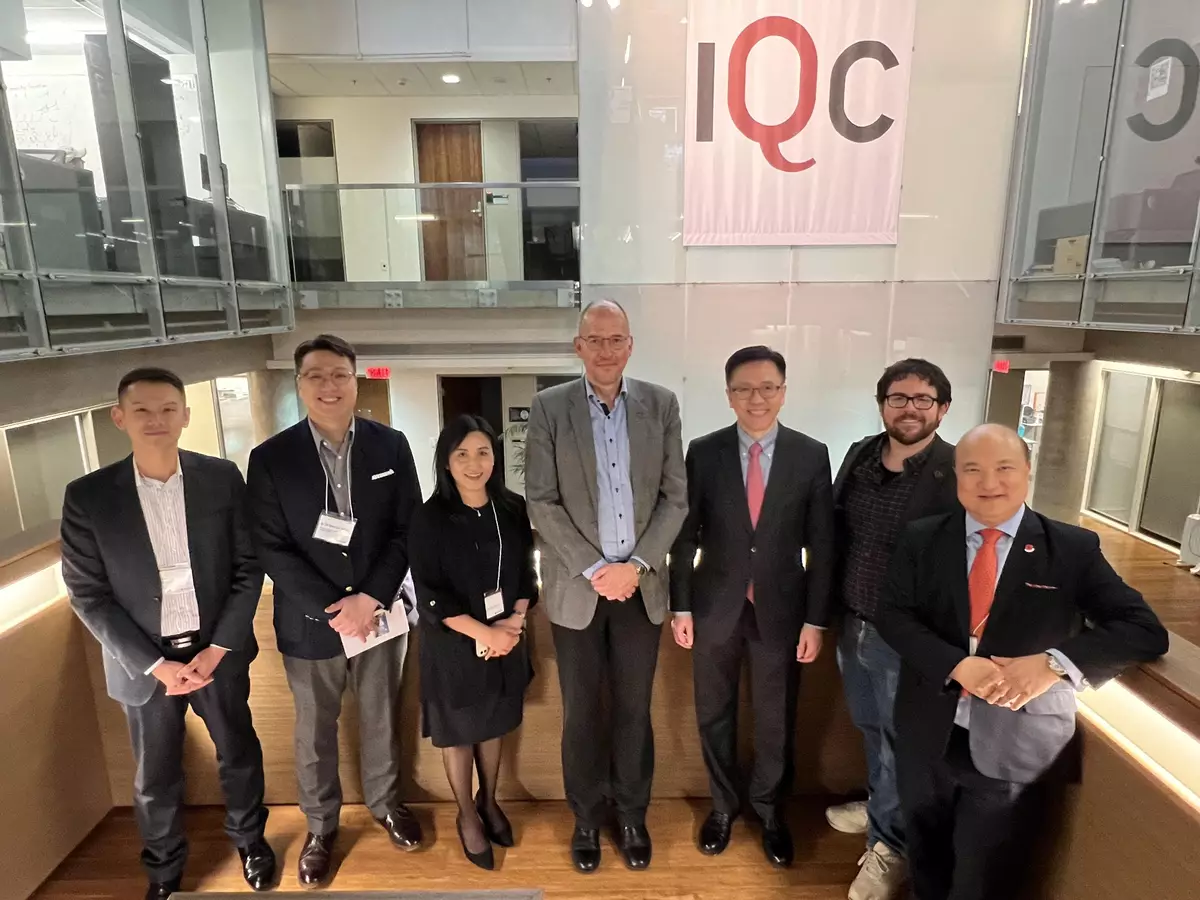
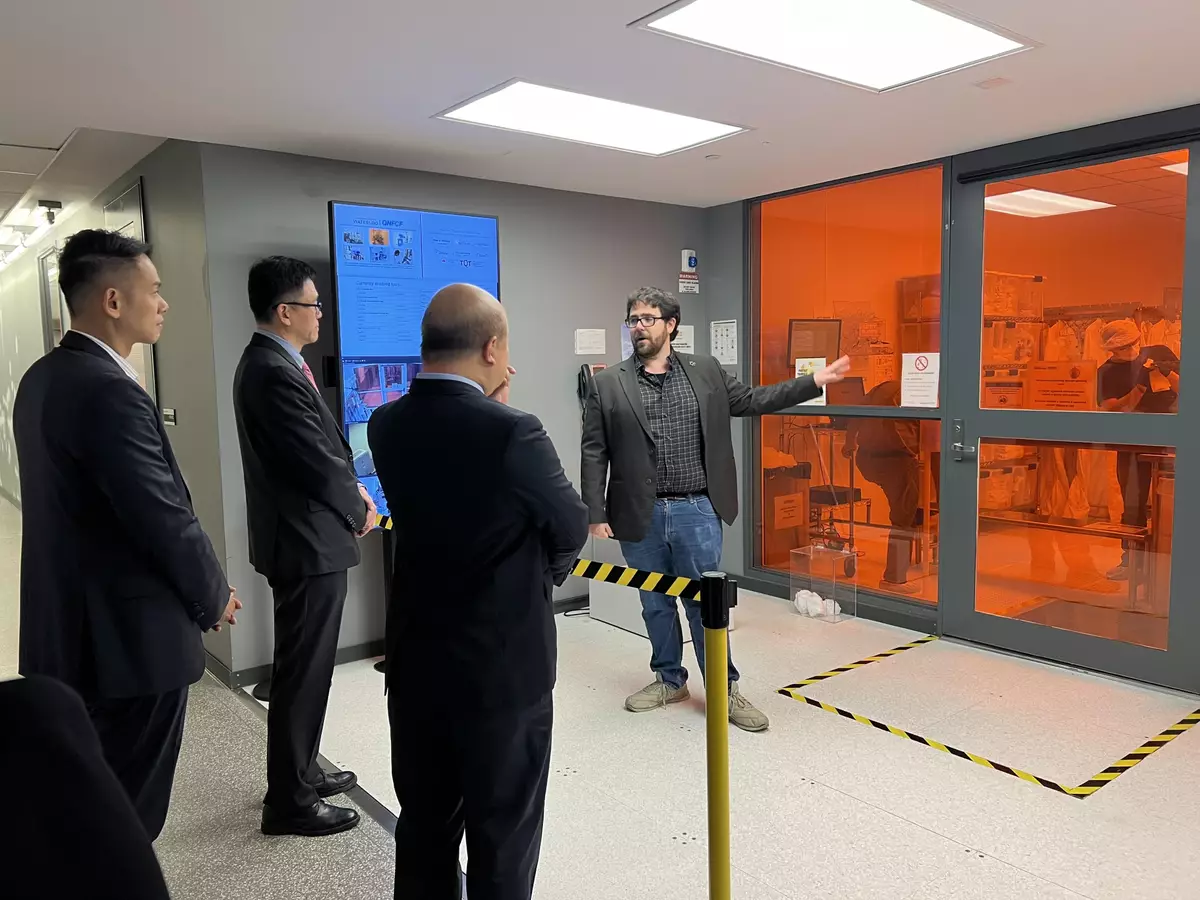
The University of Waterloo is one of the top quantum computing universities in the world. Professor Sun visited the Institute for Quantum Computing to learn more about the frontier technology developed by this cross-disciplinary Institute in the field of quantum computing, which consolidates Canada's leading position in the quantum research area through promoting research and innovation. The Institute also serves as a strategic partner for the emerging quantum industry and nurtures talent in the research area.
Professor Sun said that to further enhance research on frontier technology in Hong Kong, HK$3 billion has been allocated in the 2023-24 Budget to launch a scheme in support of the relevant development of frontier technology fields such as artificial intelligence and quantum technology, with a view to better realising basic technology research capabilities for making breakthroughs out of the blue.
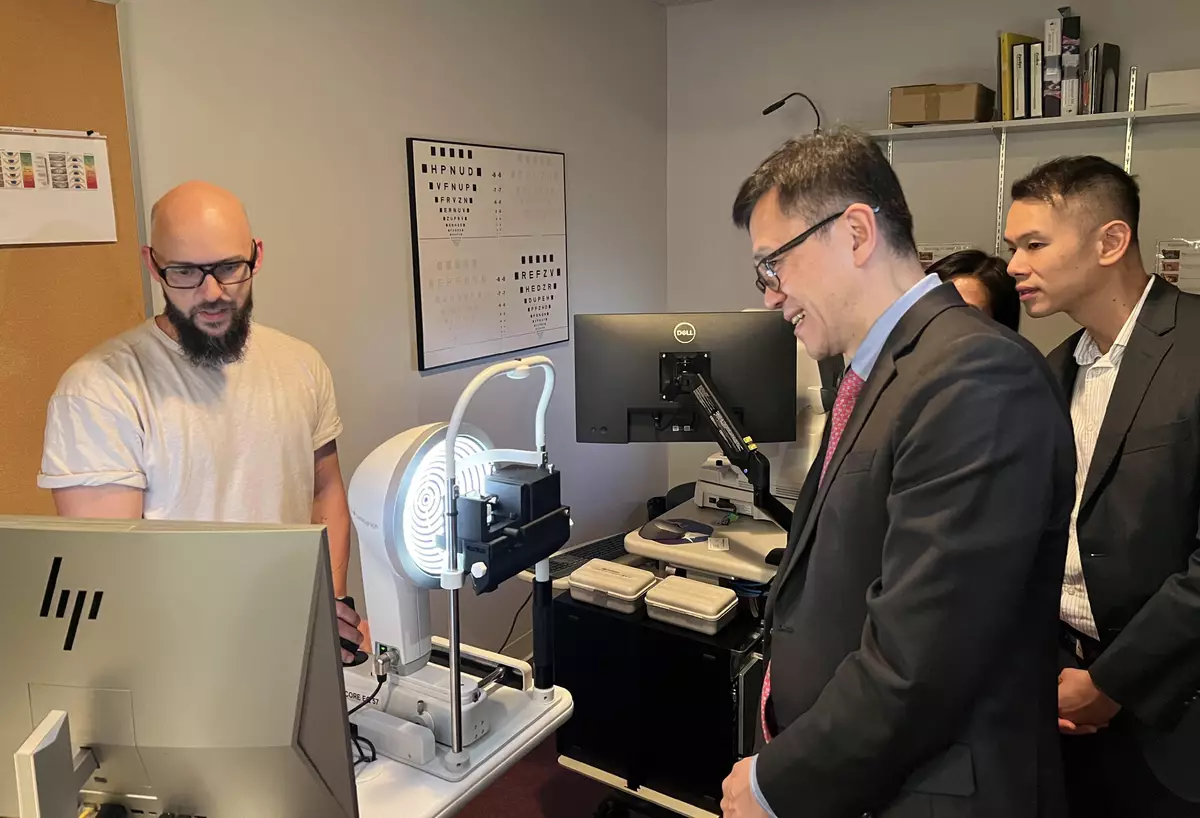
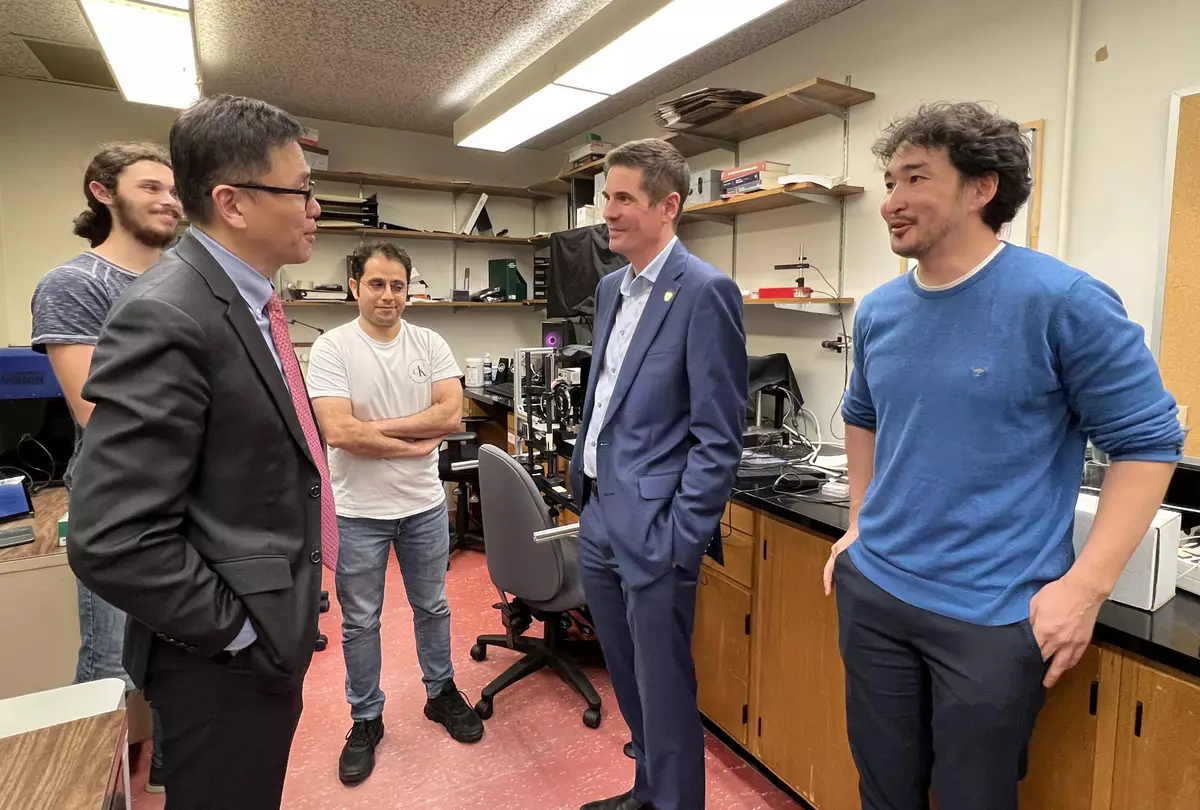
Moreover, Professor Sun toured the University's School of Optometry and Vision Science and was briefed on the latest developments, research projects and advanced research equipment of the School by Professor of the School of Optometry and Vision Science and CEO and Scientific Director of the Centre for Eye and Vision Research (CEVR) under InnoHK Clusters, Professor Ben Thompson. The University of Waterloo is one of the non-local partners of InnoHK Clusters. It established the CEVR with the Hong Kong Polytechnic University to promote vision health by making use of clinical, basic and applied research.
Professor Sun noted that InnoHK is committed to fostering global research and development collaboration, while the Hong Kong Special Administrative Region Government strongly encourages strengthening academic exchanges to advance translational research and innovative applications, pooling together outstanding researchers from around the globe for the benefit of innovation and technology development in Hong Kong and worldwide.
Professor Sun concluded his visit to Canada in the evening and will return to Hong Kong in the morning on November 8 (Hong Kong time).
SITI continues visit to Canada Source: HKSAR Government Press Releases
SITI continues visit to Canada Source: HKSAR Government Press Releases
SITI continues visit to Canada Source: HKSAR Government Press Releases
SITI continues visit to Canada Source: HKSAR Government Press Releases

SITI continues visit to Canada Source: HKSAR Government Press Releases
SITI continues visit to Canada Source: HKSAR Government Press Releases

SITI continues visit to Canada Source: HKSAR Government Press Releases
SITI continues visit to Canada Source: HKSAR Government Press Releases
Guangdong-Hong Kong-Macao Pearl River Delta Regional Air Quality Monitoring Network results for 2025 released
Guangdong, Hong Kong and Macao jointly released today (October 23) a report on air quality in 2025 under the Guangdong-Hong Kong-Macao Pearl River Delta Regional Air Quality Monitoring Network, which indicates a long-term downward trend of the concentrations of various air pollutants, namely sulphur dioxide, nitrogen dioxide, carbon monoxide, respirable suspended particulates and fine suspended particulates. Compared with 20 years ago,the 2025 annual average concentrations for these parameters have declined by between 23 per cent and 86 per cent (shown in Annexes 1 and 2). Among these, fine suspended particulates concentration dropped to 19 μg/m³, reaching a leading level nationwide. This reflects the effectiveness of the emission reduction measures implemented by the three places in improving air quality across the Pearl River Delta region.
Over the past few years, the governments of Guangdong, Hong Kong, and Macao have introduced various policy measures and co-operated to improve regional air quality. For Hong Kong,the Hong Kong Special Administrative Region (HKSAR) Government has continued to implement various air pollutant emission control measures covered in the Hong Kong Roadmap on Popularisation of Electric Vehicles (EVs), the Clean Air Plan for Hong Kong 2035, the Hong Kong's Climate Action Plan 2050 and the Green Transformation Roadmap of Public Buses and Taxis on marine and land transport, power plants and non-road mobile machinery to enhance air quality. Also, the Updated Version of the Hong Kong Roadmap on Popularisation of EVs, announced in February 2026, updates the strategies and measures for promoting the popularisation of EVs. In addition, the Air Pollution Control (Amendment) Ordinance 2025 came into effect in April, 2025, updating a number of air quality objectives (AQOs). Among the 15 updated AQOs, seven are set at the most stringent levels of the World Health Organization Global Air Quality Guidelines, which are on par with those of other advanced economies.
On the reduction of emissions from power plants, the HKSAR Government published the Tenth Technical Memorandum for Allocation of Emission Allowances In Respect of Specified Licences (TM) in May 2025 to further tighten the emission caps of air pollutants for electricity sector from 2030 onwards. Compared with the First TM (i.e. emission allowance for 2010), the emission allowances for sulphur dioxide, nitrogen oxides and respirable suspended particulates have been reduced by about 91 per cent, 80 per cent and 75 per cent respectively. The HKSAR Government has also amended the Air Pollution Control (Fuel Restriction) Regulations in 2025, and is planning to amend the Air Pollution Control (Marine Light Diesel) Regulation. These amendments tighten the sulphur content limit of local industrial and commercial liquid fuel and marine light diesel to 0.001 per cent, on par with vehicle diesel standards, achieving "three-oil integration" in Hong Kong.
Besides, the HKSAR Government continues to commit to phasing out approximately 40 000 Euro IV diesel commercial vehicles progressively by the end of 2027. As at end-August 2026, more than 33 700 target vehicles had been phased out, and roadside remote sensing equipment is deployed to monitor vehicle exhaust emissions. Hong Kong will cease new registrations of fuel-propelled private cars including hybrids in 2035 or earlier, and will introduce 700 electric buses and 3 000 electric taxis by the end of 2027 to actively promote the green transformation of vehicles, aiming to achieve zero vehicular emissions before 2050. As at end-September 2026, there are about 185 600 EVs in Hong Kong, including about 180 300 electric private cars, which is approximately six times the figure in 2021 and accounts for about 27.6 per cent of all private cars in Hong Kong. The number of parking spaces with charging facilities in Hong Kong exceeded 170 000, including around 18 090 public chargers. The overall charging infrastructure is sufficient to support more than 290 000 EVs.
Regarding marine vessels, Hong Kong and cities in the Guangdong-Hong Kong-Macao Greater Bay Area (GBA) have collaborated since 2019 to establish a domestic marine emission control area in the Pearl River Delta, requiring all vessels to use compliant fuel within Hong Kong waters while sailing or at berth. Since the implementation of the above measures, the annual average concentration of sulphur dioxide recorded in 2025 at the Kwai Chung Air Quality Monitoring Station in the vicinity of the Kwai Chung Container Terminals has reduced by about 50 per cent as compared with 2018, indicating that the control measures have been effective. The HKSAR Government has also been encouraging local ferries to adopt green transportation technologies to reduce air pollutant emissions. This includes the implementation of the Pilot Scheme for Electric Ferries. The three electric ferries that have commenced trials are operating smoothly overall, providing passengers with a diesel-odour-free, quiet and comfortable experience when crossing Victoria Harbour.
Meanwhile, Guangdong Province published and implemented the "Notice on Action Plan for Continuous Improvement of Air Quality in Guangdong Province Issued by the People's Government of Guangdong Province", the "Notice on Implementation of Monitoring Requirements on Fugitive Emission of Volatile Organic Compounds (VOCs) from Factories Issued by Department of Ecology and Environment of Guangdong Province", the "Notice on Strengthening Control of VOCs Emissions During Storage and Transportation in Oil Depots and Petrochemical and Chemical Enterprises", the "Notice on Further Reduction of Nitrogen Oxides Emission from Stationary and Mobile Sources issued by Department of Ecology and Environment of Guangdong Province", and the "Notice on Strengthening Environmental Control on Diesel Trucks of Key Vehicle-using Enterprises", as well as promulgating the local standard "Integrated Emission Standard of VOCs for Stationary Pollution Source". Guangdong Province launched the hierarchical management of VOCs-related enterprises, enhanced the total VOCs management, advanced the control of industrial boilers and furnaces, upheld a co-ordinated approach across vehicle regulations, fuel standards, roadway management, and enterprise compliance to strengthen emissions regulations for diesel trucks operated by key enterprises, conducted compliance checks on new vehicles, improved emissions management for non-road mobile machinery, and carried out regular sampling and inspection of the fuel quality and emissions of engineering machinery.
The Macao Special Administrative Region Government (Macao SAR Government) is continuously implementing measures to improve air quality in line with policies such as the Long-term Decarbonisation Strategy of Macao (including the Electric Vehicle Promotion Plan of Macao) and the Environmental Protection Planning of Macao, which include phasing out high-pollution vehicles, promoting EVs, and controlling vehicle exhaust emissions. The previously launched Subsidy Scheme for Phasing out Old Motorcycles with Replacement of New Electric Motorcycles and the Subsidy Scheme for Phasing Out Old Diesel Vehicles have effectively driven the elimination of highly polluting old motorcycles and diesel vehicles. In addition to this, the Government is launching a five-year Plan for Granting Financial Support for the Scrapping of Gasoline-powered Motorcycles and their Replacement by New Electric Motorcycles in 2025, and the third phase of the Subsidy Scheme for Phasing Out Old Diesel Vehicles in 2026. This new phase expands the scope of eligible applicants, further intensifying efforts to phase out high-polluting vehicles and promote electric motorcycles. Meanwhile, to effectively align with and implement the Nation's 15th Five-Year Plan and the Macao SAR's 3rd Five-Year Plan, and to contribute to achieving the national "Dual Carbon Goals", the Macao SAR Government has proactively advanced a series of EV promotion policies. These include lowering EV charging fees again in 2026, constructing supercharging stations for light and heavy vehicles, carefully analysing the charging characteristics of different public car parks and parking spots to adjust the ratio of EV fast and slow chargers, and enhancing public charging and battery-swapping facilities to increase incentives and convenience for using EVs. In addition, the Macao SAR Government has continuously reviewed vehicle tailpipe emission standards, tightening the limits for certain parameters of motor vehicle unleaded petrol in 2025, and will further tighten the emission limits for in-use motorcycles and diesel vehicles by the end of 2026. Furthermore, the Government continues to explore the potential of photovoltaic applications in public spaces and to optimise the proportion of clean electricity in the energy structure, thereby further controlling local atmospheric pollutant emissions and improving air quality.
The Network comprises a total of 23 air monitoring stations in Guangdong, Hong Kong and Macao. The Ecological and Environmental Monitoring Centre of Guangdong, the Environmental Protection Department (EPD) of Hong Kong, the Macao Environmental Protection Bureau and the Macao Meteorological and Geophysical Bureau are responsible for the co-ordination, management and operation of the monitoring stations in the respective places and the release of quarterly and annual monitoring results. The relevant reports are available on the following websites:
Looking ahead, the governments of Guangdong, Hong Kong, and Macao will continue to work hand in hand to build a beautiful bay area and further improve air quality in the GBA.