Hong Kong Customs detects suspected case of illegal importing of animals
Hong Kong Customs yesterday (September 5) detected a suspected case of illegal importing of animals at the Chung Ying Street Checkpoint in Sha Tau Kok. Three suspected illegally imported live cats with an estimated market value of about $24,000 were seized.
Customs officers yesterday intercepted a 56-year-old local woman at the Checkpoint. Upon examination, three suspected illegally imported live cats were seized from her shoulder bag, and she was subsequently arrested. The case has been handed over to the Agriculture, Fisheries and Conservation Department for follow-up investigation.
Customs reminds the public that importing animals into Hong Kong without a valid permit is an offence.
Under the Rabies Regulation, any person found guilty of illegally importing animals, carcasses or animal products is liable to a maximum fine of $50,000 and imprisonment for one year.
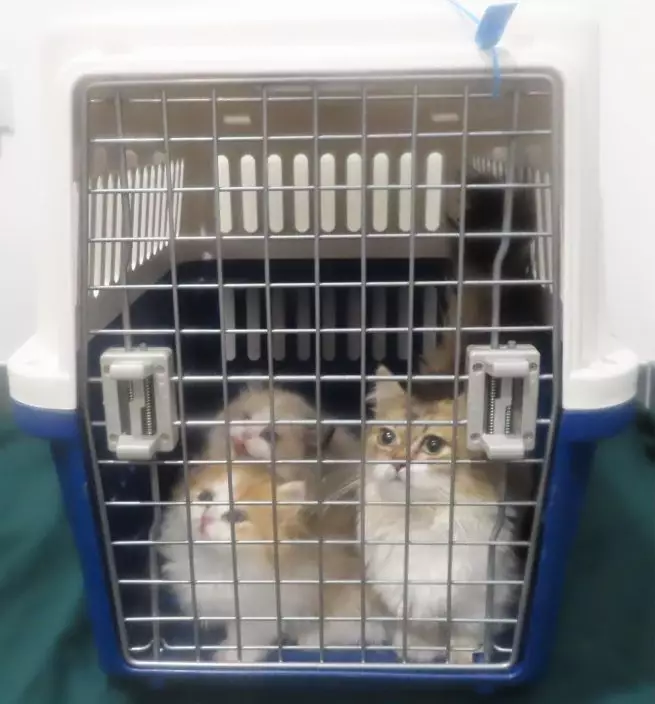
Hong Kong Customs yesterday (September 5) detected a suspected case of illegal importing of animals at the Chung Ying Street Checkpoint in Sha Tau Kok. Three suspected illegally imported live cats with an estimated market value of about $24,000 were seized. Photo shows the suspected illegally imported live cats seized. Source: HKSAR Government Press Releases
CHP investigates cluster of Carbapenemase-producing Enterobacteriaceae carrier cases
The Centre for Health Protection (CHP) of the Department of Health is today (October 9) investigating a cluster of Carbapenemase-producing Enterobacteriaceae (CPE) carrier cases involving three residents of a residential care home for the elderly (RCHE).
The CHP recently received a notification from the Hospital Authority (HA) that two residents living on the same floor of an RCHE in North Point had been admitted to a public hospital for treatment due to their underlying illnesses. Their admission screening samples tested positive for CPE upon laboratory testing and they were suspected to have been infected in the RCHE. The CHP immediately conducted epidemiological investigations, contact tracing as well as screenings, and subsequently identified one more infection case in the same RCHE. All three patients (two males and one female, aged between 74 and 94) are carriers. None of them exhibited symptoms associated with CPE infection. They are currently in stable condition.
The CHP's further investigation revealed that the source of infection for the aforementioned three carrier cases may have been two other previously identified CPE carrier cases on the same floor of the same RCHE. After inspecting the RCHE, CHP staff discovered that the RCHE had not implemented relevant infection prevention and control measures. The bacteria were highly likely to have been transmitted within the RCHE via staff, or contaminated environment and objects. The CHP reminded the staff of the RCHE to adhere to the guidelines and take necessary measures, including enhancing hand hygiene among staff and residents, and thoroughly cleaning and disinfecting the environment and objects. The CHP also recommended that the RCHE cohort the carriers in a single designated area.
The CHP will continue to investigate the cluster of cases and conduct screening at the RCHE concerned to determine whether there are any other CPE-carriers. The CHP will also continue to put the RCHE under medical surveillance.
Enterobacteriaceae (such as Escherichia coli andKlebsiella) are common pathogens that can cause infections in various parts of the body, including urinary tract infections, intra-abdominal infections or blood infection. CPE are enterobacteriaceae that produce carbapenemase, an enzyme that can deactivate carbapenems and other beta-lactam antibiotics such as penicillins. These bacteria are commonly resistant to multiple antibiotics, limiting therapeutic options, and may render severe clinical infections difficult to treat. The range of diseases associated with CPE varies from asymptomatic carriage to potentially life-threatening or fatal infections. The level of risk depends on which part of the body is affected by the infection and the patient's general health.
The proper use of antibiotics and maintaining good personal and environmental hygiene, especially hand hygiene, are important for preventing the emergence and cross-transmission of multi-drug resistant organisms (MDROs), such as CPE. In addition, susceptible individuals such as the elderly, infants, young children, people with weakened immunity and pregnant women can reduce their risk of contracting MDROs by avoiding raw or undercooked foods.

Source: AI-found images